

5 Full Frame Lenses a Sony Shooter Still Relies on After 6 Years
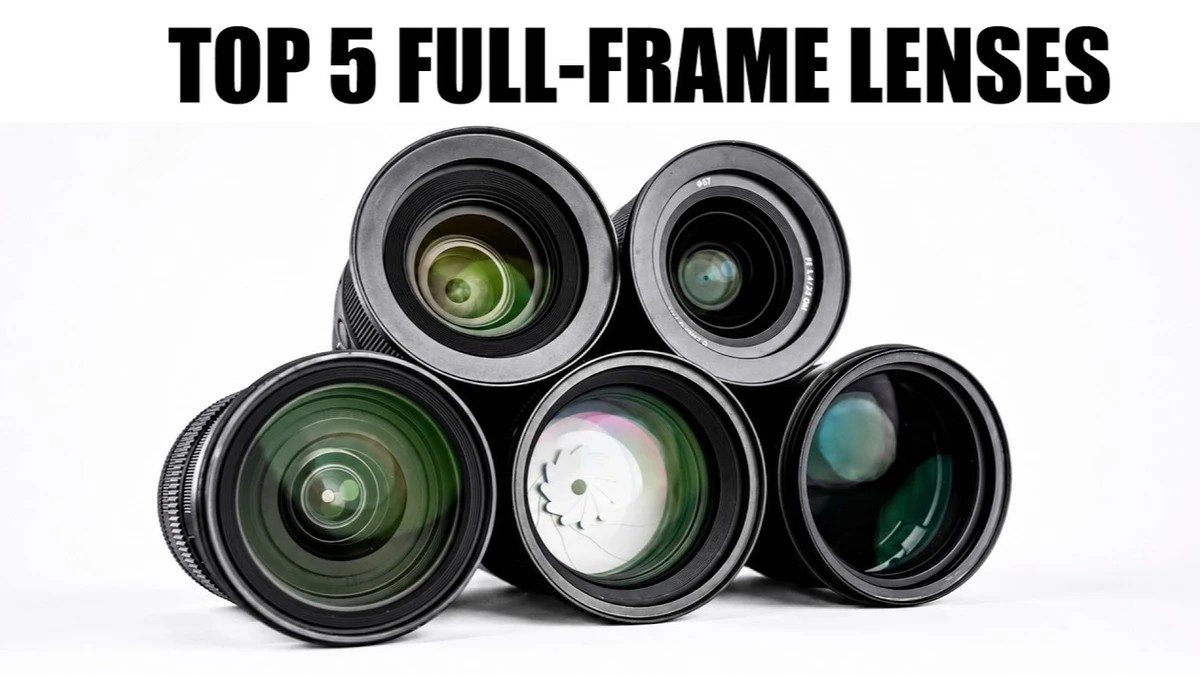
Sony full frame shooters can choose between Sony's G Master line and Sigma's Art glass at nearly every popular focal length, and both brands make lenses that look excellent on a spec sheet. Picking a lens from specs is easy, but predicting which one you'll still reach for three years later is much harder.
Curtis Padley has shot Sony full frame bodies for six years, and he ranks his top five lenses by how they've earned their spot in his bag, ignoring popularity and spec charts. Fifth place goes to the Sony FE 24mm f/1.4 GM, the only G Master he currently owns and one that cost him around $1,400 new. It now sells for $1,598. He uses it in two very different ways. On his Sony a6700, the 1.5x crop turns it into roughly a 36mm equivalent, close enough to the Sigma 23mm f/1.4 DC DN Contemporary that he couldn't justify buying the Sigma after reviewing it. He bought the 24mm for video, though, and every talking-head segment on his channel for the past three years has been filmed on it. He's also candid that it's too wide for a lot of full frame stills work. In his studio, the autofocus has never missed, f/1.4 gives a creamy background, and at 445 g, it's light for a G Master.
Padley expects fourth place to surprise longtime viewers. The Sigma 85mm f/1.4 DG DN Art used to be his favorite prime, and he still calls its sharpness wide open "off the chain," with strong low light performance and the kind of compression that makes subject separation look effortless. After four years of knocks, it's holding up fine, but at around 630 g, it's no featherweight. It slipped down the list because his style changed and his taste shifted toward wider primes, not because anything went wrong with it. Third place is the Sony FE 70-200mm f/2.8 GM OSS II, the most expensive lens he's ever bought, now $3,098, and one he uses for cars, street, motorsport, and travel. It produced one of his favorite moments behind a camera, photographing his favorite Formula One driver, Max Verstappen. At just over 1 kg, it's light for what it is, yet heavy enough that he often leaves it at home, and that alone keeps it from ranking higher. He still calls it absolutely worth the investment.
Before the top two, Padley gives an honorable mention to an APS-C lens, the Sigma 10-18mm f/2.8 DC DN Contemporary. It's now his vlogging lens on the Sony a7 V, chosen for its small size and low weight, and it replaced his Sony 16-35mm f/2.8 so completely that he sold the Sony.
Second place goes to the Sigma 35mm f/1.4 DG II Art, which has replaced the 85mm as his favorite prime. A 35mm takes in the surroundings and says more about the scene without the stretched look of a wider lens, while an 85mm isolates everything and can lose the sense of where the subject is. It's now his first choice for street, travel, portrait, and environmental shots, and if he could leave the house with only one prime, this would probably be it. He finds it ridiculously sharp at f/1.4, with subject separation that falls away gently.
His number one is the Sigma 24-70mm f/2.8 DG DN II Art. He stopped using it for a while after hearing other creators call the lens boring and uninspiring, until a trip to New York City reminded him why it had been a staple in his bag. The range lets him shoot establishing shots, cityscapes, street, cars, portraits, and details without swapping lenses, and he calls its sharpness prime-like across the whole zoom range. At 735 g, it's on the heavy side, but it's lighter and easier than carrying one or two primes and swapping between them, and f/2.8 rarely holds him back outside very low light. It sells for $1,319, which he considers a bargain next to Sony's version, and it's the one lens he'd recommend to anyone shooting full frame.
You can see Padley's sample photos from the lenses, including his Formula One shots, in the video.
What's Your Reaction?
 Like
0
 Dislike
0
 Love
0
 Funny
0
 Wow
0
 Sad
0
 Angry
0








Comments (0)