

5 Sci-Fi Shows That Are Perfect From Start to Finish

Published Aug 22, 2026, 1:00 PM EDT
Sci-fi stories that have consistently raised the bar
 Image: Syfy/Prime Video
Science fiction comes in many flavors. Some, like The Twilight Zone and Black Mirror, take a speculative look at our futures. Others, like The X-Files, dabble in the paranormal to unravel mysteries connected to the unknown. More recent entries like Silo and For All Mankind are firmly rooted in the dystopian future, where survival becomes the primary objective amid unprecedented chaos. Although some sci-fi tropes might feel overused now and then, the genre has always accommodated variety, along with rare offshoots.
Perfection is subjective, but some sci-fi shows have it all. They sport a strong thematic foundation that supports robust worldbuilding and clear rules that govern that universe. Characters are allowed to be morally flawed, while they are scrutinized in relation to the lived-in environments that shaped them. Good sci-fi shows also challenge viewer expectations. They ask difficult questions about what it means to be human.
Without further ado, here are five sci-fi shows that offer a lot of value and are perfect from start to finish.
1 Dark
Baran bo Odar and Jantje Friese’s Dark might’ve thrown some confusing curveballs over the course of its three-season run, but this time travel masterpiece is as engrossing and tight-knit as they come. Set in the fictional town of Winden, Dark opens with the aftermath of a child’s disappearance, which points toward an unsettling time travel conspiracy that has affected several generations. Although the initial episodes play around with time in a subtle way, the series boldly tackles the bootstrap paradox soon after, compelling us to keep every minor detail and event in mind. The result is a brilliant ending that brings a satisfying close to every deterministic loop and stray thread.
Dark combines the highs of a moody police procedural with that of a small-town mystery that hides something unsavory beneath the surface. Clues are peppered throughout the story, all of which tie beautifully together during the final stretch of the show. Although the temporal conspiracy remains the primary focus, Dark pulls us in with its complex portrayal of interpersonal dynamics, and how they change once affected by the ravages of time. Much of the eeriness that Winden exudes can be chalked up to Ben Frost’s haunting soundtrack for the series, which sustains its bleakness without making it feel overwhelming.
2 The Expanse
 Photo: Rafy/Syfy/Everett Collection
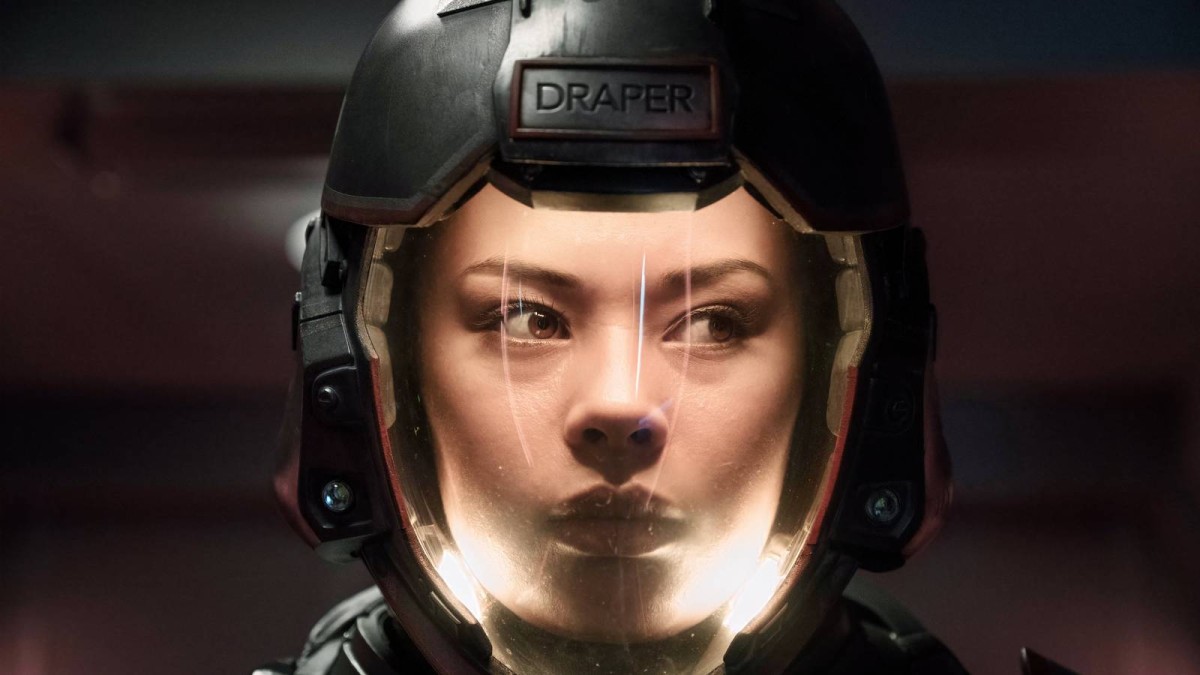
The Expanse might’ve had James S. A. Corey’s eponymous book series as a direct frame of reference, but most of the show’s merits rest on its ability to bring such a dense fictional world to life. A space story where humanity has already colonized the solar system, The Expanse follows three disparate protagonists — UN member Chrisjen Avasarala (Shohreh Aghdashloo), cynical detective Josephus Miller (Thomas Jane), and Rocinante officer James Holden (Steven Strait) — whose fates are inevitably connected. In this world, faction-based geopolitics expose the crux of human nature, which leads entire societies to fracture due to resource scarcity and outside threats.
Few sci-fi stories have achieved this level of thematic cohesion. The science featured is grounded and gritty, just like the high-stakes crises that the characters are concerned with. Space, once a frontier worth conquering, becomes a looming threat due to its vast and unknowable nature. Although faithful to the source material, The Expanse makes its sprawling premise work, achieving the perfect rhythm to keep audiences hooked over the course of its six seasons. Every locale, culture, and backdrop feels real and lived-in, which the show maintains through laborious consistency in every single episode.
3 Andor
 Image: Lucasfilm/Disney
Star Wars might’ve introduced us to Rebel intelligence officer Cassian Andor (Diego Luna) in Rogue One (2016), but we only learn the inner workings of the man in Tony Gilroy’s Andor. By virtue of it being a prequel, Andor already had Cassian’s fate set in stone, but the eventful journey that leads him up to that moment is both brilliant and beautiful. The two-season series hones in on the tactile reality of living at the mercy of the Empire, whose bureaucratic machine of oppression feels impossible to break or challenge. Andor maps Cassian’s arc from an ambivalent thief to committed rebel is nothing short of stunning, as Gilroy prioritizes gradual character growth that feels genuine and earned.
Andor isn’t solely Cassian’s story. It is a boots-on-the-ground look at the everyday reality of staging a rebellion in a perpetually hostile environment. Rebellion takes on new meaning for different people, including the likes of Saw Gerrera (Forest Whitaker), who is driven by militant extremism. Revolution is also draining and expensive, as there’s more to it than a grand cause and resentment towards a common enemy. Andor unmasks the true face of fascism, along with the banality of evil that’s ever-present in every corner of the galaxy. A mix of powerful ensemble performances and incredible writing ties everything together, making Andor an integral entry in Star Wars canon.
4 Stargate SG-1
 Image: Amazon MGM/Syfy
Roland Emmerich’s Stargate (1994) might’ve kickstarted the Stargate franchise, but it was Brad Wright and Jonathan Glassner’s series follow-up, Stargate SG-1, that made it immensely successful. SG-1’s arrival on television at the turn of the millennium filled a unique demand for soft sci-fi that was both entertaining and lore-heavy. This Emmy-nominated series follows the titular SG-1, a highly competent military team that ventures to distant planets with the help of extraterrestrial portals known as Stargates. SG-1’s aim is to defend Earth against alien threats while aiding those in need, which leads to their high-stakes adventures all across the galaxy.
Although sequel shows like Stargate Atlantis and Stargate Universe were competent enough to continue the franchise, SG-1 was special due to the way it paired military realism and witty humor to flesh out its intricate premise. The presence of various alien races, technologies, and motivations presented the opportunity to draw from myth and folklore, which bode well when combined with well-written characters that are quite easy to root for. Despite facing major production challenges over the years, Stargate SG-1 blazed through its 10-season run. Looking back, it is a marvel that the show did such an incredible job of sustaining its ever-evolving mythos and never compromising with its heartfelt core.
5 Devs
Alex Garland (Ex Machina, Annihilation) struck gold with Devs, a competent sci-fi mini-series that also happens to be the perfect binge. Although the plot of Devs often defies a simple explanation, it opens with Sergei (Karl Glusman) getting a coveted spot on tech company Amaya’s quantum computing team. The true purpose of this team, called Devs, is kept tightly under wraps, but a terrible inciting incident compels Sergei’s girlfriend, Lily (Sonoya Mizuno), to investigate. Devs starts as a pressing mystery that soon spirals into a philosophical puzzle about free will and determinism. Garland wastes no time taking detours, weaving this taut mystery with the skill and commitment it deserves.
Devs remains somewhat overlooked in the sea of well-crafted sci-fi television with something meaningful to say. The series’ striking minimalism serves a practical purpose, mirroring the themes of stark isolation in the face of an indifferent universe. The mind-boggling aspects of the narrative will appeal to those who relish puzzle-box premises with open-ended answers. Devs deliberately operates with a permeating sense of dread, opting to take an existential, if bleak, route to understanding the consequences of a machine taking on a prophetic role.
What's Your Reaction?
 Like
0
Like
0
 Dislike
0
Dislike
0
 Love
0
Love
0
 Funny
0
Funny
0
 Wow
0
Wow
0
 Sad
0
Sad
0
 Angry
0
Angry
0







Comments (0)