

7 Best Open-World Games Based On Real-Life Cities
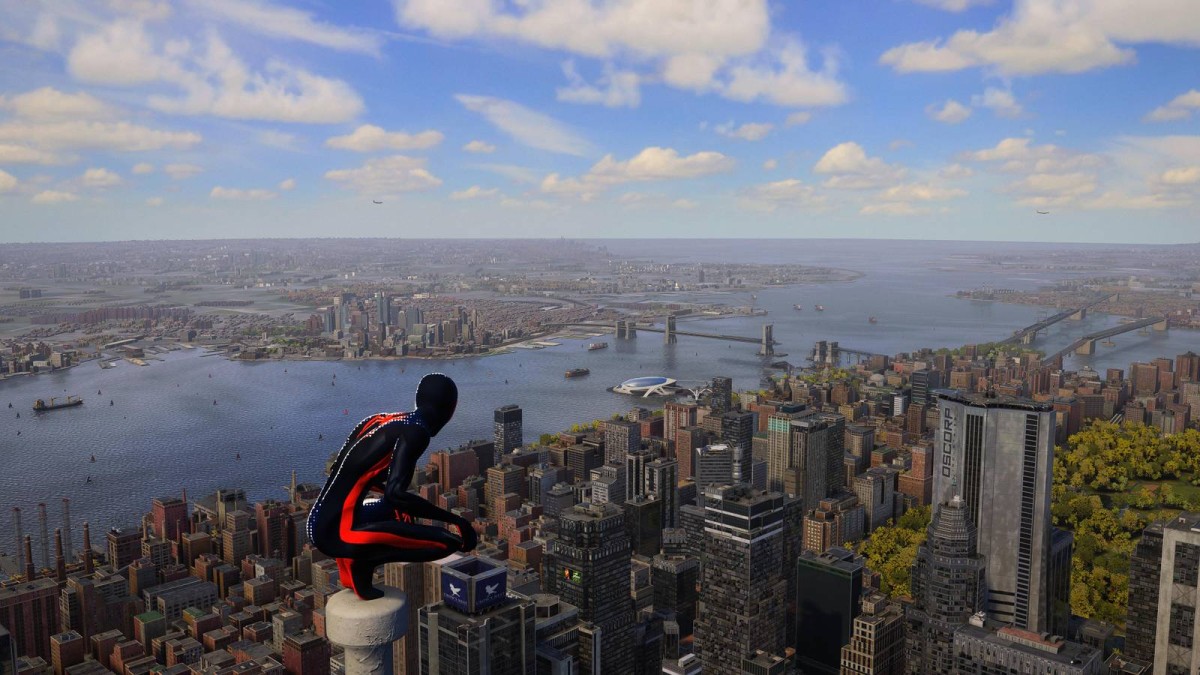
There is a unique feeling to open-world games like the Marvel's Spider-Man series, where the map is based on a real-life city. Not long after I was set loose in New York City while reviewing Spider-Man 2 a few years ago, I went hunting for my brother's apartment building in Brooklyn. His whole street has sadly been left out of its squashed version of the borough, but because the game uses real streets and street signs, getting a couple of blocks away (or what would be, in real New York) remains one of my standout memories of the game.
It's especially peculiar because that's not possible in other games. I can recall specific locations—even ultimately unimportant ones—from Cyberpunk 2077's Night City or the ill-fated ecumenopolis of Taris in Star Wars: Knights of the Old Republic, but those places aren't real. I suppose Spider-Man 2's Central Park isn't "real" either, but it's funny how we sort of subconsciously concede that we are in Central Park, even though we're not literally in the game, nor is its version of Central Park particularly concerned with being an accurate recreation.
For the seven games selected below, I've taken the phrase "based on" quite seriously, only including those that are so heavily based on a real-life city that they take place there. So Red Dead Redemption 2 didn't make the cut because, even though St. Denis is based on New Orleans, it's not New Orleans. Neither did any of the Grand Theft Auto games, despite Liberty City, Los Santos, etc. being adapted from real-life counterparts.
Marvel's Spider-Man 2
New York City
 Sony
SonyAh, the Big Apple, the City that Never Sleeps, Gotham—wait a minute. Spider-Man is inextricable from his hometown, and New York City's greatest digital rendering yet comes from Insomniac Games' latest series installment, Marvel's Spider-Man 2. Practically all of Manhattan is carried over from its two predecessors, but the addition of Brooklyn and Queens (parts of them, at least) goes a long way in making this adaptation of NYC more authentic. Staten Island and The Bronx residents, you'll have to hope for some representation in Spider-Man 3.
Marvel's Spider-Man 2's rendition of New York works so well because it's the perfect playground for its eponymous heroes. The downtown areas of the three included boroughs are perfect for Spidey's daring web-swinging, but don't discount the effect a recognizable landmark has on a cutscene or boss fight. Getting flung across the map by Sandman early on is all the more impressive because you can see the city blocks flying by.
Yakuza 0
Tokyo & Osaka

Yakuza 0's inclusion skirts the rules a little bit—the rules I imposed on myself by only including games that take place explicitly in real-life cities. Many games in the Yakuza franchise are set in and around Kamurochō, which is a fictional district based on Tokyo's Kabukichō district. I'm allowing myself this transgression because the series still specifically takes place in Tokyo, and parts of RGG Studio's Kamurochō are painstaking recreations of actual buildings in Kabukichō.
We're also going with Yakuza 0 over other games in the series because it's a great place to start if you're new to the series, being a prequel to the original game that leads into the original's remake, Yakuza Kiwami. (Another great entry point is Yakuza: Like A Dragon). Kamurochō is the smallest map on this list by square footage, but its adaptation of Tokyo doesn't suffer because of it. The district is packed with things to discover, and is essentially a character in and of itself, especially when you see how it changes between games.
Tom Clancy's The Division 2
Washington D.C.

Washington D.C. is a crumbling metropolis filled with violent, narcissistic opportunists—now let's talk about its depiction in The Division 2. I'm joking, of course, but some of the fascist characters featured in the 2019 game do, unfortunately, strike a bit too close to home nowadays. If you want a more compelling plot involving the series' Green Poison epidemic, the first Division game has a great take on New York in the wintertime, but the second is generally an improvement when it comes to gameplay.
The Division 2's contiguous D.C. map is more authentic than Fallout 3's fragmented take on the city, for instance, and it's also more accurate to the real version. Ubisoft used an exceptional amount of GPS and LiDAR data to recreate streets and buildings. Notable buildings and landmarks are where they should be, and even generally have a very high level of detail that's true-to-life.
Sleeping Dogs
Hong Kong

2012's Sleeping Dogs, developed by the now closed United Front Games, is often considered the greatest Grand Theft Auto clone, and the fact that it never received a sequel is lamented. Set in modern Hong Kong, Sleeping Dogs follows the story of a cop going undercover to infiltrate the Sun On Yee triad. This is likely the least accurate-to-life map included, but the game is generally celebrated for capturing the atmosphere of Hong Kong.
And exploring Hong Kong is a big part of the appeal. Like the GTA games it partially imitates, Sleeping Dogs lets you walk, run, and drive around the city, getting up to all sorts of things. Taking after real Hong Kong, Sleeping Dogs' rendition is densely packed and detailed, and it remains one of the more impressive recreations of East Asian cities in gaming.
L.A. Noire
Los Angeles

Welcome to the historical section of the list, where developers pored over old maps and documents to painstakingly recreate cities from a bygone era. First up is Rockstar's L.A. Noire, set in 1947 Los Angeles, which admittedly isn't so far back in the grand scheme of things, but it's a much different vibe than Yakuza 0's late-80s Tokyo. The now-defunct Team Bondi used hundreds of thousands of photos of Los Angeles, both contemporary and historical, to create the game's city, buildings, and cars.
While L.A. Noire is starting to grow dated, particularly its once cutting-edge facial animations, it's still a sprawling and impressive detective game, and a bona fide noir tale. The crimes investigated by Detective Cole Phelps seep into all echelons of L.A. society, but the game is also very much an exploration of post-World War 2 America.
Assassin's Creed Unity
Paris

Ubisoft's long-running Assassin's Creed series is a great source of open-world games set in real-life cities. Brotherhood's Rome and Mirage's Baghdad deserve honorable mentions, but Unity's recreation of Revolutionary Paris is still the series' crowning achievement when it comes to its sprawling historical cities. Unity was justifiably lambasted when it first released for a litany of bugs that made it a frustrating experience, and while opinions on its story are still divided, it's worth a playthrough to experience its open world and its unmatched parkour mechanics.
Social stealth reached new heights in Unity thanks to impressively large crowds of NPCs that occasionally flood the Parisian streets—and since the game begins in 1789 at the French Revolution's outset, there's plenty of occasion. Paris is lively and varied, and bursting at the seams with notable landmarks, like Notre Dame, one of the world's most famous cathedrals.
Kingdom Come: Deliverance 2
Kutná Hora (Kuttenberg)

Kingdom Come: Deliverance 2 takes place, in part, in the medieval Czech city of Kutná Hora, referred to in-game by its Germanic name, Kuttenberg. Warhorse Studios' latest begins in the nearby Trosky region, and since it's a long game, it will take you a little while to reach Kuttenberg, but even the small villages and towns have some degree of historical accuracy. The developers went to great lengths in KCD2's codex to explain what's actually accurate, what's been inferred, and why certain anachronistic features have been included.
One of KCD2's major attractions is its insistence on immersing the player in medieval Bohemian society (modern day Czechia). Things are done slowly, people have believable if often odd problems you can help with. Kuttenberg is one of the most impressively realized cities in gaming; it's not as big as some of the others above, and you can't go flying through it like New York in Marvel's Spider-Man, but it's so detailed that it feels like a lived-in, functioning city, and is an astounding host for an open-world game.

Systems

Released October 20, 2023
ESRB T For Teen Due To Blood, Drug Reference, Mild Language, Violence
Developer(s) Insomniac Games
Publisher(s) Sony Interactive Entertainment
Engine Insomniac Engine v.4.0
What's Your Reaction?
 Like
0
Like
0
 Dislike
0
Dislike
0
 Love
0
Love
0
 Funny
0
Funny
0
 Wow
0
Wow
0
 Sad
0
Sad
0
 Angry
0
Angry
0










Comments (0)