

AI has a $2.5 trillion problem and replacing 250 million jobs is the only way to solve it

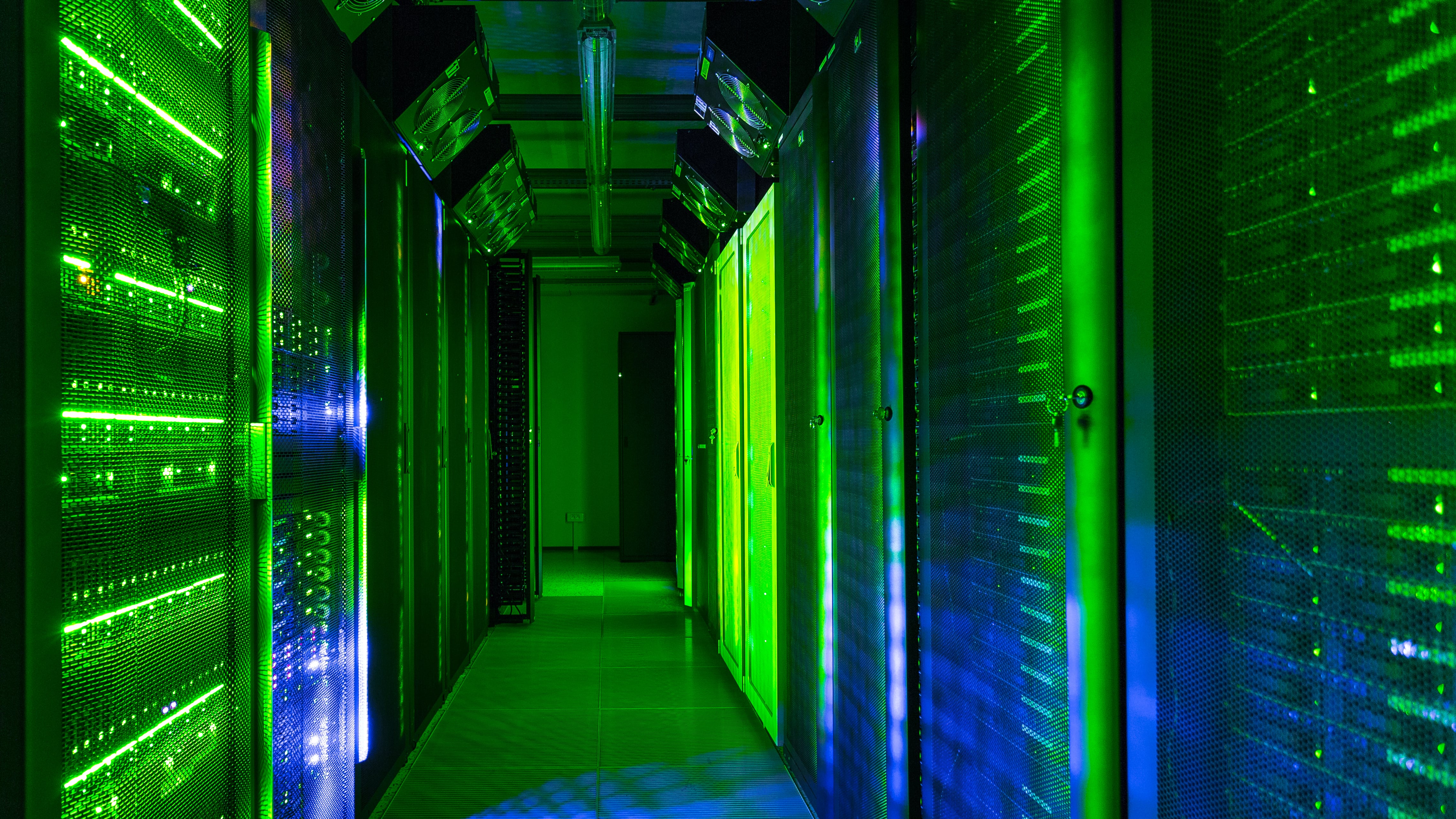 (Image credit: Shutterstock/Tomasz Wozniak)
- AI needs to replace 250 million jobs in order to make a return on the current $2.5 trillion investment
- AI is getting cheaper and more capable, but the underlying hardware is not
- Infrastructure providers for the AI boom could be left holding the bag
Since the release of ChatGPT in late 2022, AI developers have entered into a frenzied arms race of hyperscaler data center build outs, silicon development, and huge power grid expansions.
The level of investment made by AI developers is unlike anything that has been seen (or spent) before. But a key question that IT leaders, investors, and enthusiasts keep asking is how will all this investment be paid for?
New analysis by Marin Ivezic, Founder of Applied Quantum, has found that the math really isn’t adding up. In order to justify the colossal investment, AI would need to generate approximately $2.5 trillion in annual revenue. Current estimates aren’t even close.
AI must replace 250 million jobs
Optimistic estimates put AI’s current revenues at between $150 billion and $250 billion per year, which is a multi-trillion shortfall.
Ivezic theorizes that AI would need to replace or deliver the equivalent productivity gains of 250 million full-time jobs in order to meet the $2.5 trillion revenue requirement - assuming each full-time employee costs $100,000.
The $2.5 trillion investment can be broken down into the $1.5 trillion already spent on hardware investments since 2022, with a subsequent $1 trillion being spent on additional investments every year. But there is one small problem: the US only has 159 million nonfarm jobs.
The infrastructure providers are also having difficulties reckoning with spending. High-performance AI chips are made obsolete around every five years, but the data centers infrastructure they are installed in is expected to last around 20 years - resulting in enormous depreciation costs. This problem is what Ivezic calls the ‘50-Cent Rule’; providers must generate around 50 cents in annual revenue for every single dollar they invest.
Sign up to the TechRadar Pro newsletter to get all the top news, opinion, features and guidance your business needs to succeed!
This is compounded by AI models that become cheaper to use but deliver far superior capabilities over previous models. GPT-4-class capability models for example have dropped in price 100-fold since 2022, but the costs borne by infrastructure providers have not dropped at all - and are rising instead - making it even harder for them to make a return on their initial investment.
This is a concerning development that echoes the dot-com bubble, Ivezic says. Similarly to how providers are footing the bill for the underlying AI infrastructure, telecommunications companies spent a fortune laying the fiber networks that powered the dot-com boom. Those telecommunications companies could not claw back their investment and - in the famous case of Global Crossing - went bankrupt.
The point Ivezic makes is that the companies that built on the infrastructure made a fortune, while those who funded the buildout were left holding astronomical investment costs without a way out.
This $2.5 trillion of investment eventually needs to be paid, and the entire infrastructure market rests atop this bubble. AI is getting cheaper, more advanced, and businesses are finding new ways to leverage the technology. But growth requires stability - and resting on a bubble is anything but stable.

Follow TechRadar on Google News and add us as a preferred source to get our expert news, reviews, and opinion in your feeds.
Benedict is a Senior Security Writer at TechRadar Pro, where he has specialized in covering the intersection of geopolitics, cyber-warfare, and business security.
Benedict provides detailed analysis on state-sponsored threat actors, APT groups, and the protection of critical national infrastructure, with his reporting bridging the gap between technical threat intelligence and B2B security strategy.
Benedict holds an MA (Distinction) in Security, Intelligence, and Diplomacy from the University of Buckingham Centre for Security and Intelligence Studies (BUCSIS), with his specialization providing him with a robust academic framework for deconstructing complex international conflicts and intelligence operations, and the ability to translate intricate security data into actionable insights.
What's Your Reaction?
 Like
0
Like
0
 Dislike
0
Dislike
0
 Love
0
Love
0
 Funny
0
Funny
0
 Wow
0
Wow
0
 Sad
0
Sad
0
 Angry
0
Angry
0












Comments (0)