

Arctic Senza AI 370 review: Strix Point in a stealthy under-desk fanless design
This silent mini PC punches above its weight despite using last-gen AMD silicon. Weaknesses include soldered 32GB RAM and the single M.2 storage slot, which limit expansion options.
Pros
- +
Silent passive design
- +
Strong, mostly metal build
- +
Its performance rivals actively cooled and newer-gen competitors
- +
Fast and ample 32GB DDR5-8000 RAM on-board
- +
Port selection is decent
- +
Good pricing compared to rivals
Cons
- -
Fitting under the desk requires care and effort
- -
Soldered RAM and just one M.2 storage slot
- -
Not AMD’s newest mobile silicon
Why you can trust Tom's Hardware Our expert reviewers spend hours testing and comparing products and services so you can choose the best for you. Find out more about how we test.
Arctic's latest under-the-desk Senza PC design is using an AMD Ryzen AI 9 HX 370 mobile processor. Sure, the upgrade has also allowed Arctic to shove ‘AI’ in the product name, but this is a very appealing design with great build quality, good performance, a reasonable selection of ports, and silent operation as the cherry on top.
Design of the Arctic Senza AI 370
Image 1 of 6
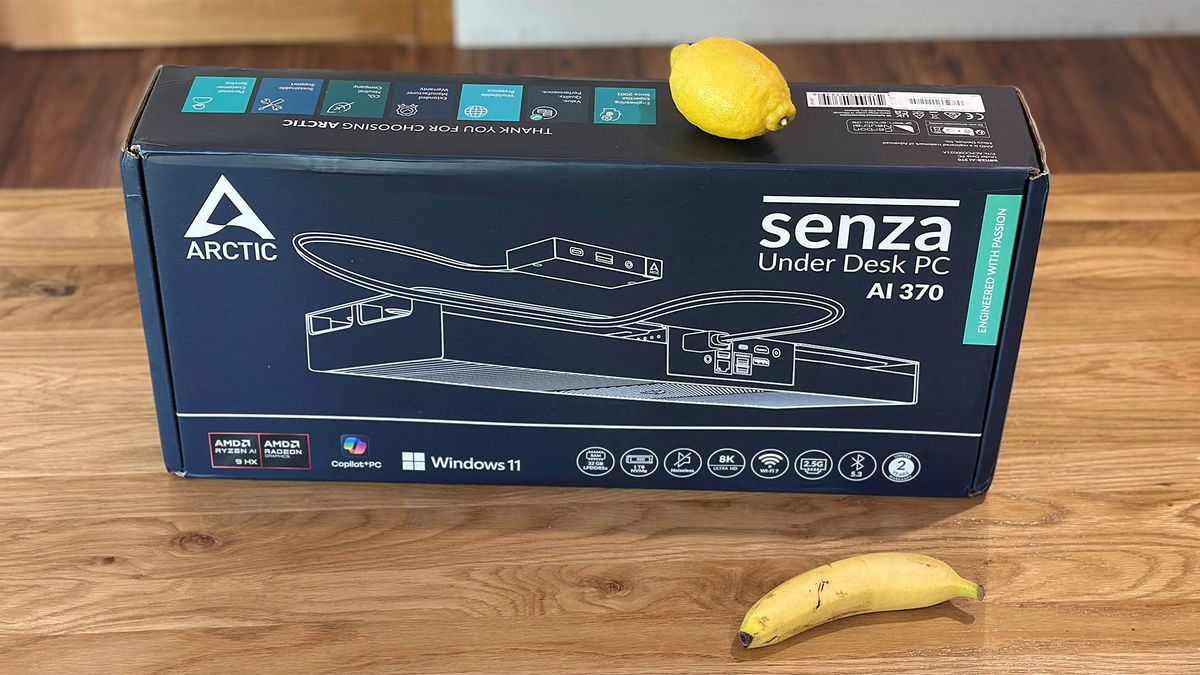
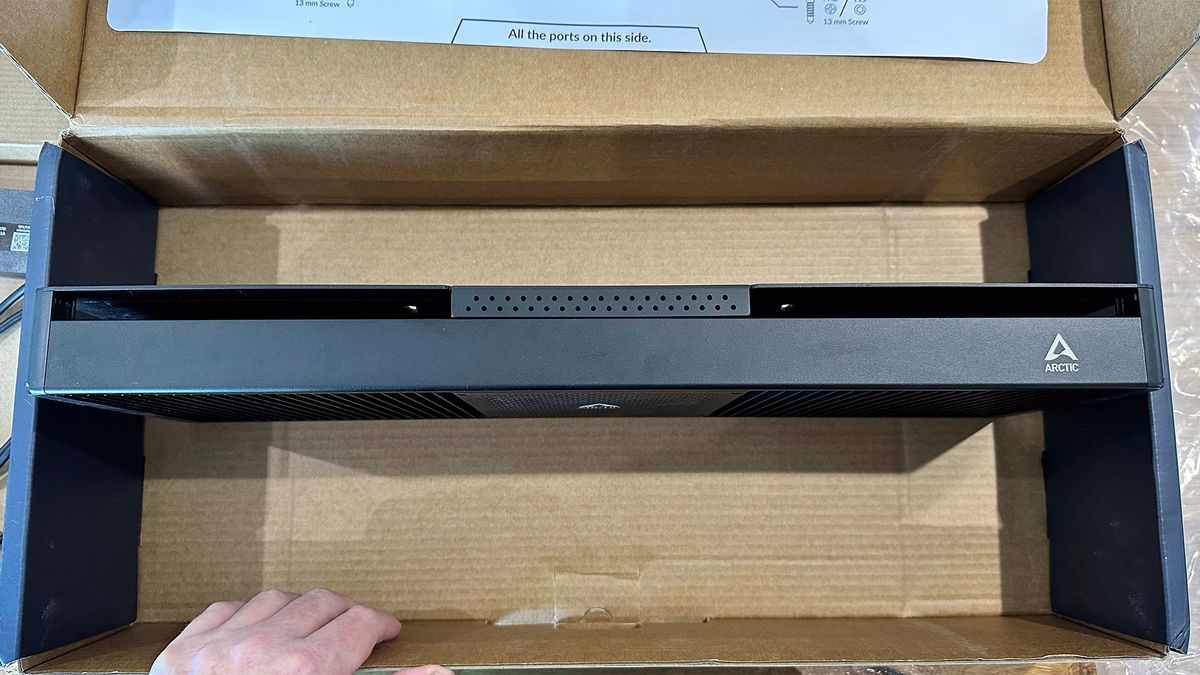
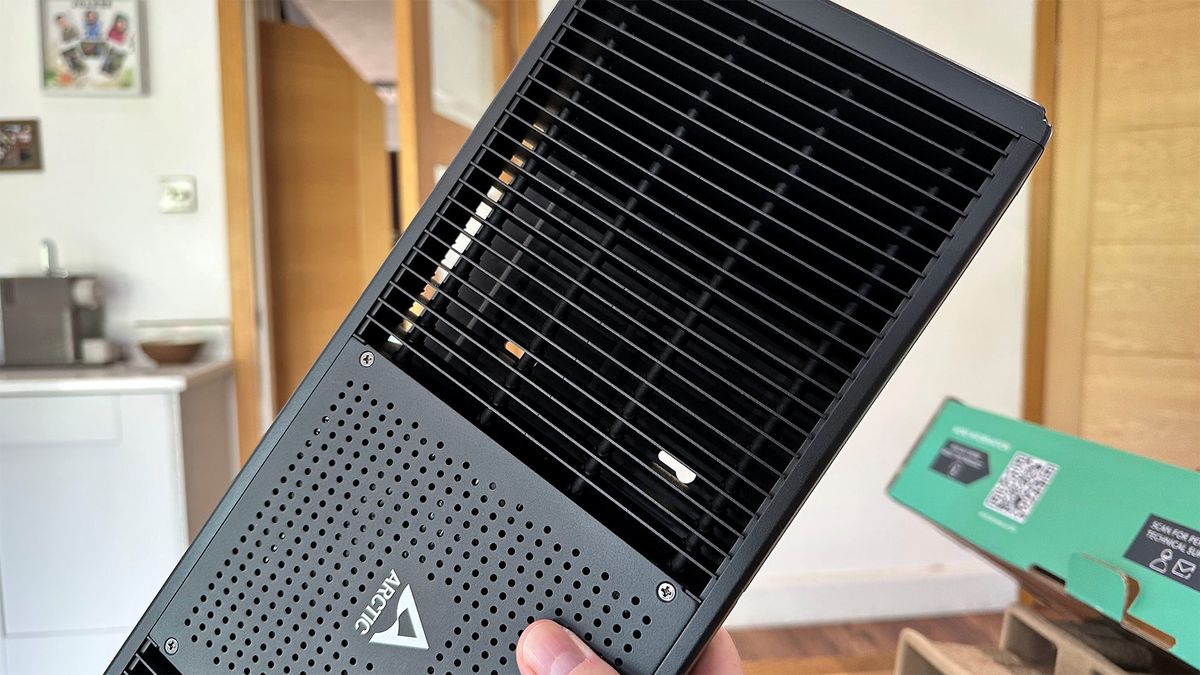
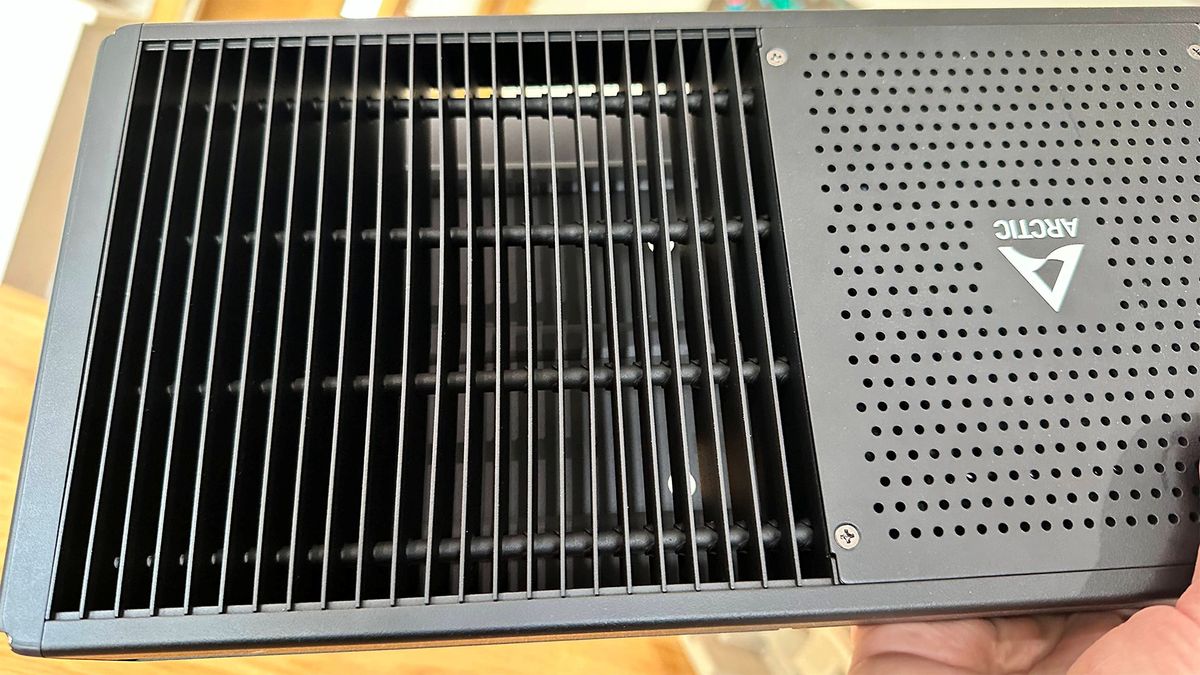
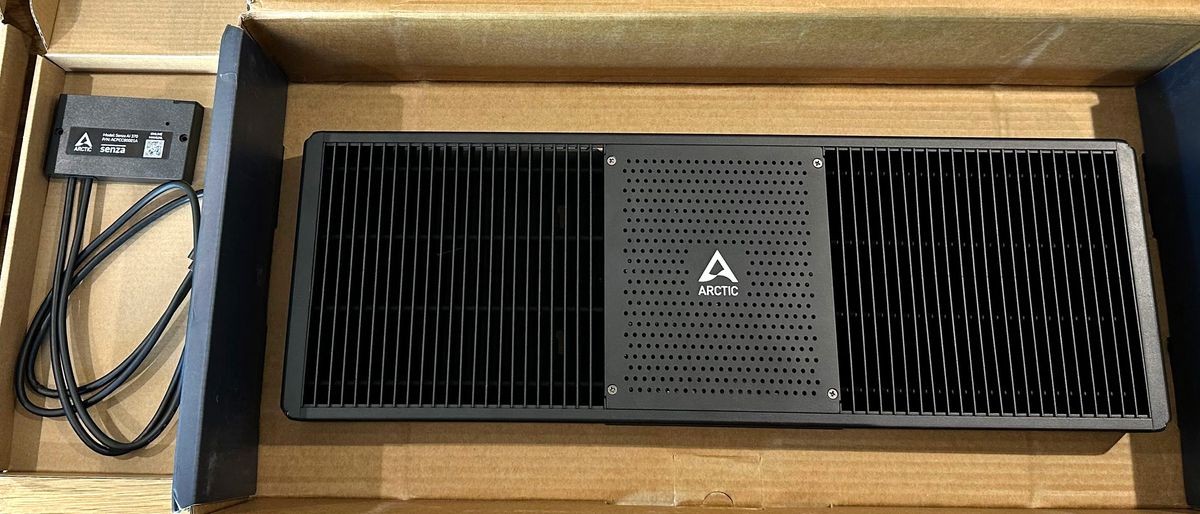
This definitely isn’t the smallest mini PC around. Its dimensions could probably fit more like three mini PCs in a row. The largest part of this device measures 21.10 (L) × 7.09 (W) × 1.97 (H) inches. In addition to the sizable main unit, there’s also a 120W external PSU and a front panel dongle with some handy ports and an LED-illuminated power button.
Image 1 of 4
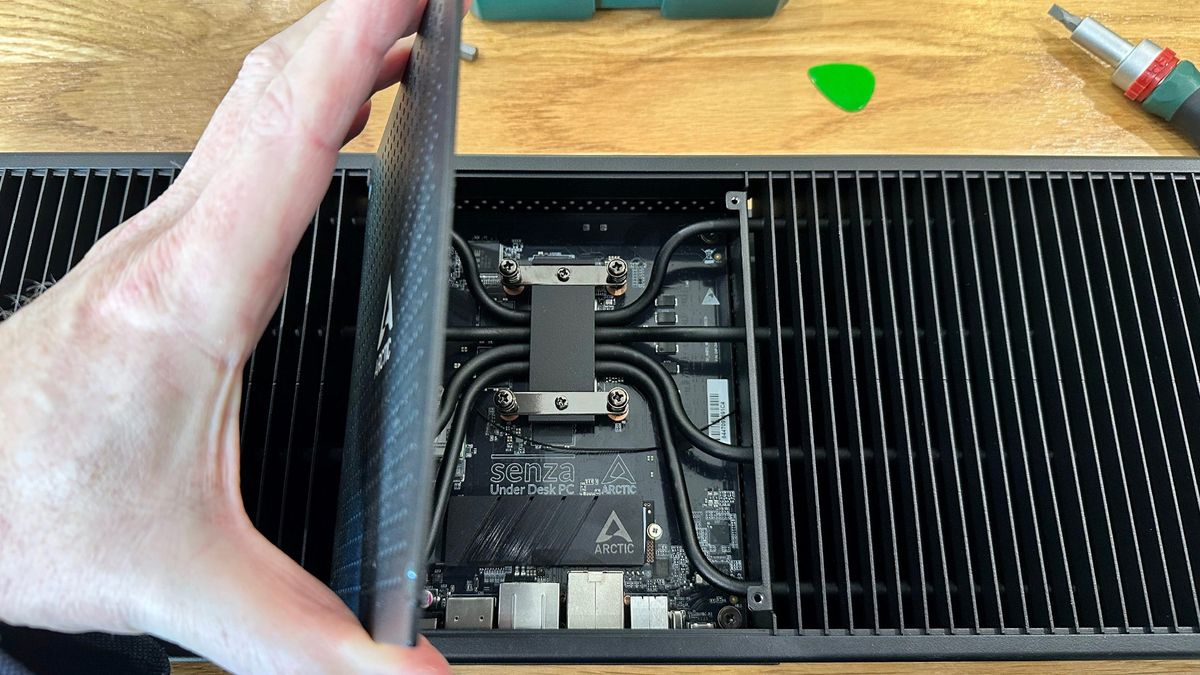
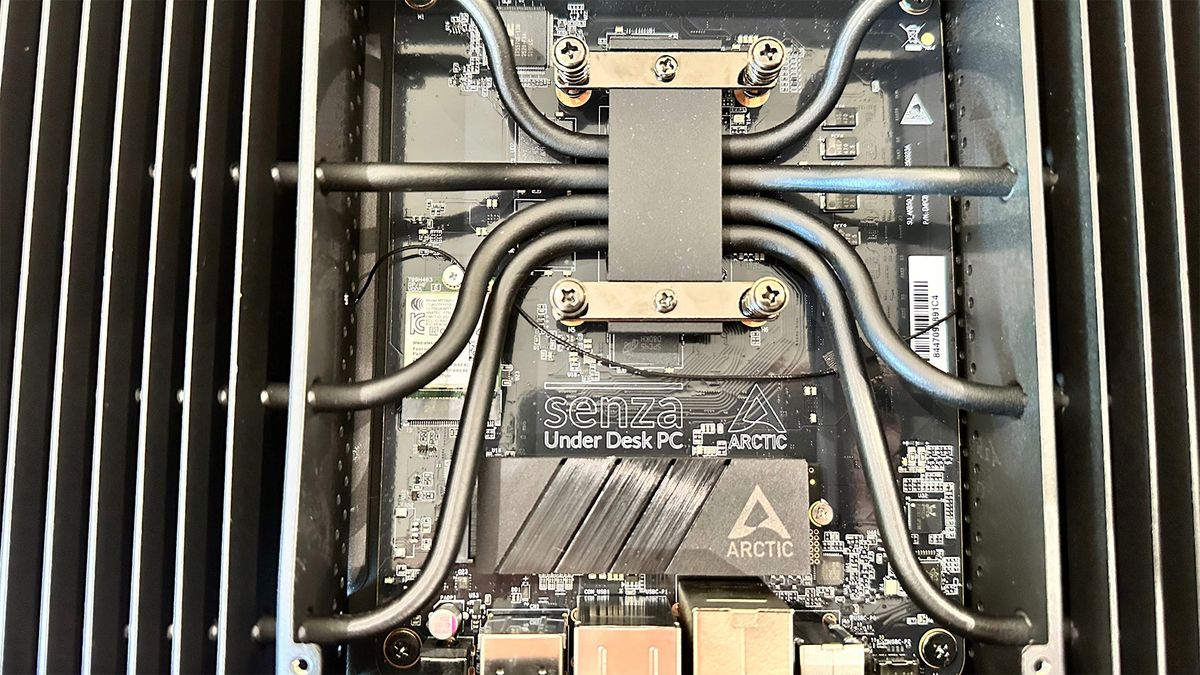
The central section of the main unit is where all the performance components are located. Its ‘wings’ are basically passive cooling radiators with heatpipes spreading out from the center, perforating a multitude of fins on either side.
Latest Videos From

Image 1 of 4
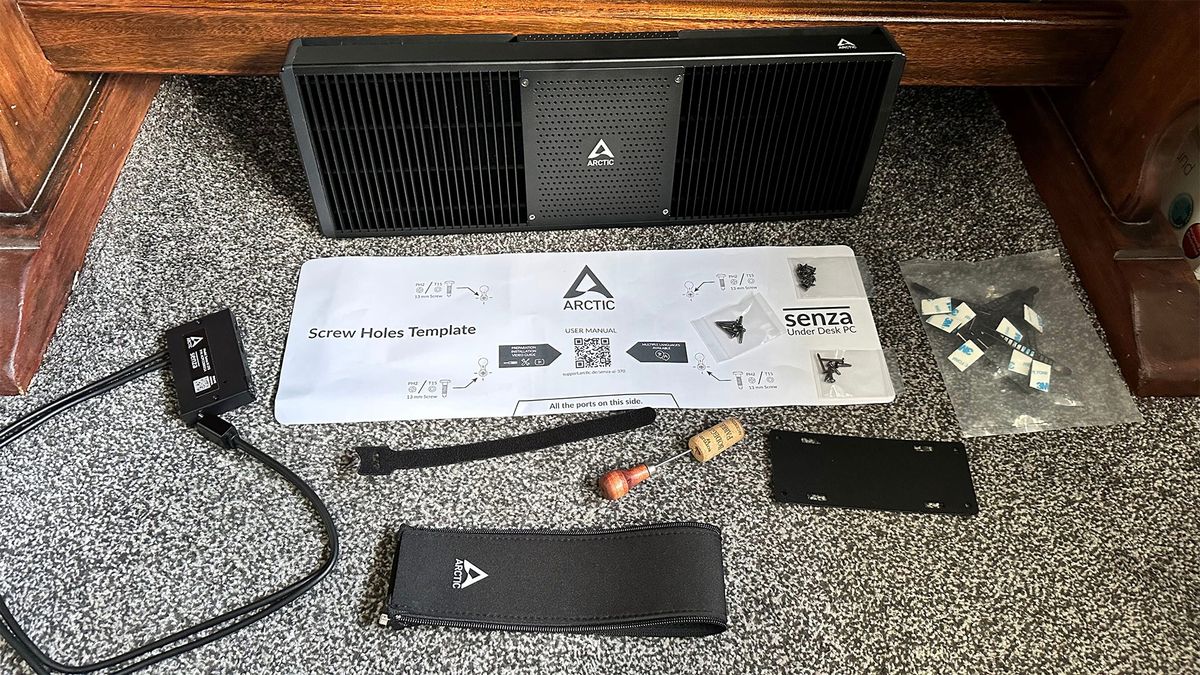
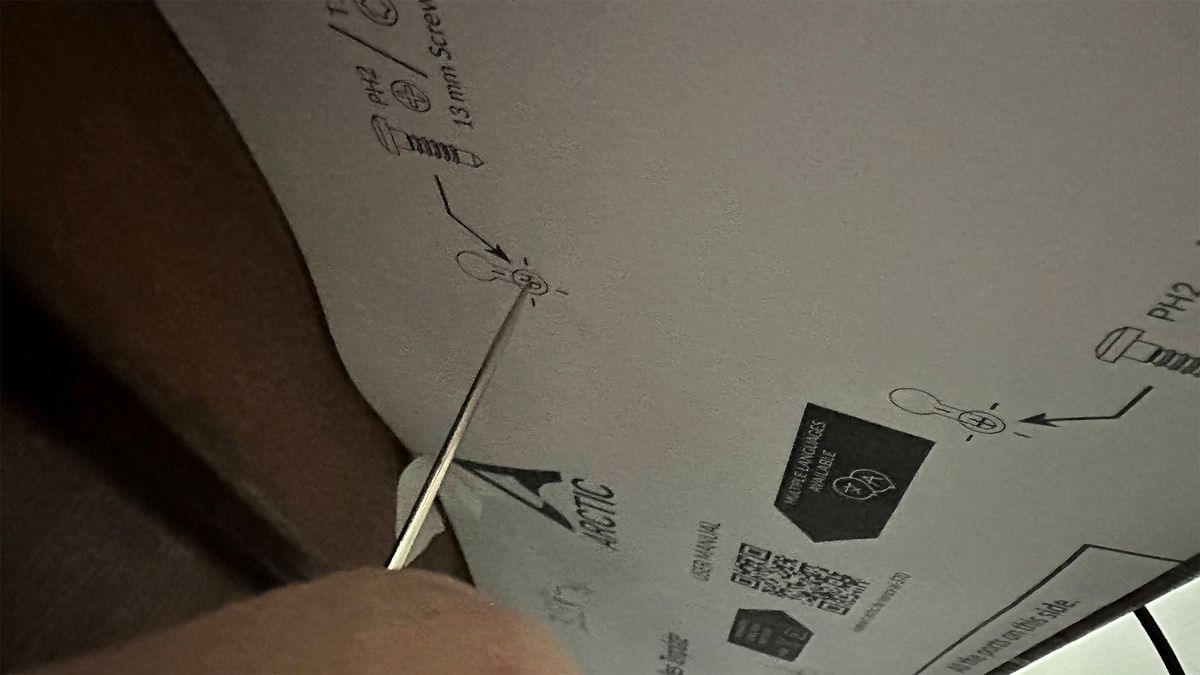
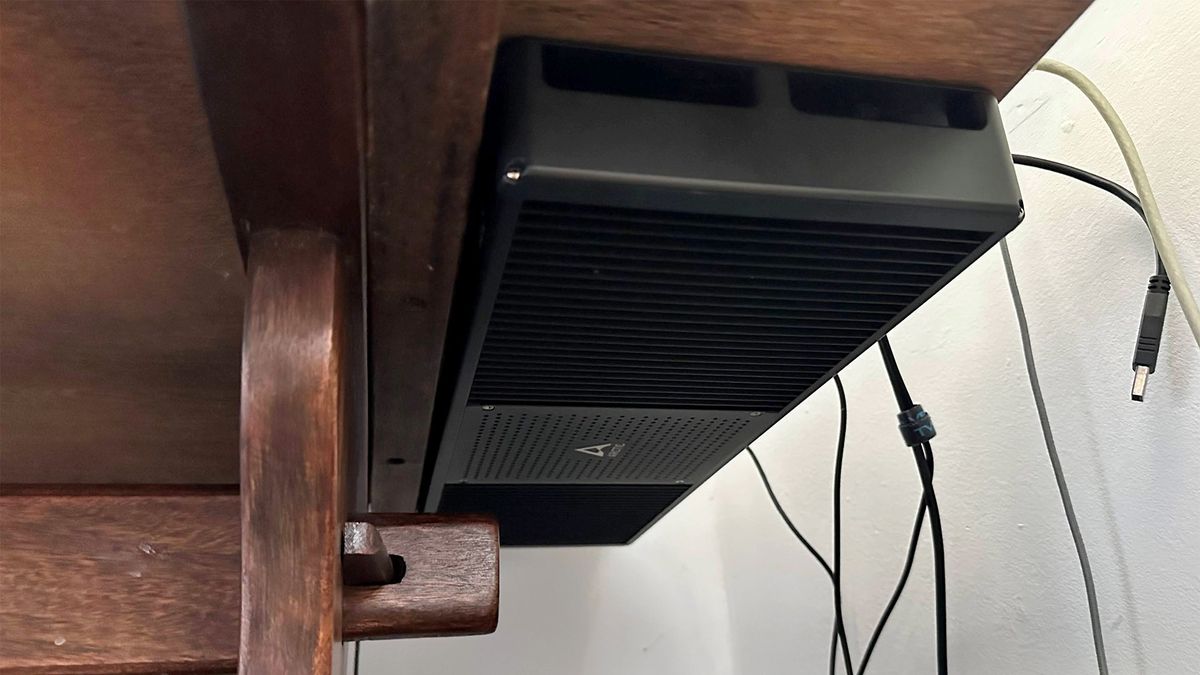
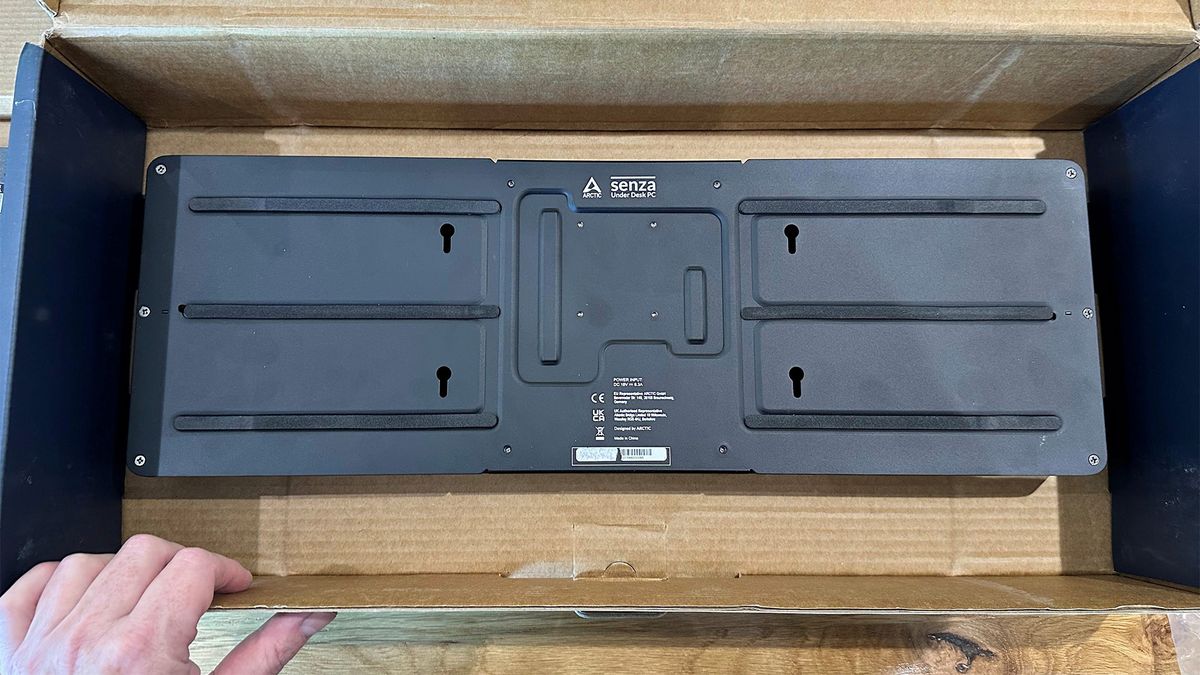
The Senza, its front panel dongle, and PSU are designed to mount discreetly under your desk. After confirming that everything worked post-unpacking, I dutifully followed the instructions and used the printed template to mount the PC and front panel neatly beneath my oak desk. My desk is so heavy I had to work on it as if I were working under a car, lying on my back, but it slotted into place the first time thanks to the accuracy of the template and my deft use of an awl. All the fittings (screws, fabric fasteners, braces, and straps) are provided in the box with the Senza AI 370.
Arctic Senza AI 370 specifications
Swipe to scroll horizontally
Processor | AMD Ryzen AI 9 HX 370 |
Graphics | AMD Radeon 890M (RDNA 3 iGPU) |
RAM | 32GB LPDDR5X‑8000 dual‑channel (soldered) |
Storage | 1TB PCIe 4.0 NVMe SSD (M.2 2280, TLC) |
Physical Ports | 2x USB4 Type‑C (40 Gbps); 2x USB‑A 3.2 Gen 2 (10Gbps); 1x USB‑A 3.2 Gen 1 (5Gbps); 2x USB‑A 2.0; HDMI 2.1 ; DisplayPort 2.0 ; 3.5 mm audio jacks; 2.5Gb LAN; DC‑in (120W) |
Wireless | Wi‑Fi 7 (2x2 MIMO) + Bluetooth 5.3 |
Other Features | Fanless passive cooling; detachable front panel; under‑desk mount kit; cable sleeve; TPM 2.0 |
Dimensions | Main unit: 21.10 x 7.09 x 1.97 inches (536 x 180 x 50mm); Front panel: 3.76 x 2.22 x 0.63 inches (95.6 x 56.3 x 16mm); System weight: 5.36 pounds (2.43kg) |
OS Installed | Windows 11 Pro (Linux compatible) |
Price (as configured) | €1,199.99, 2-year warranty |
Ports and Upgradeability
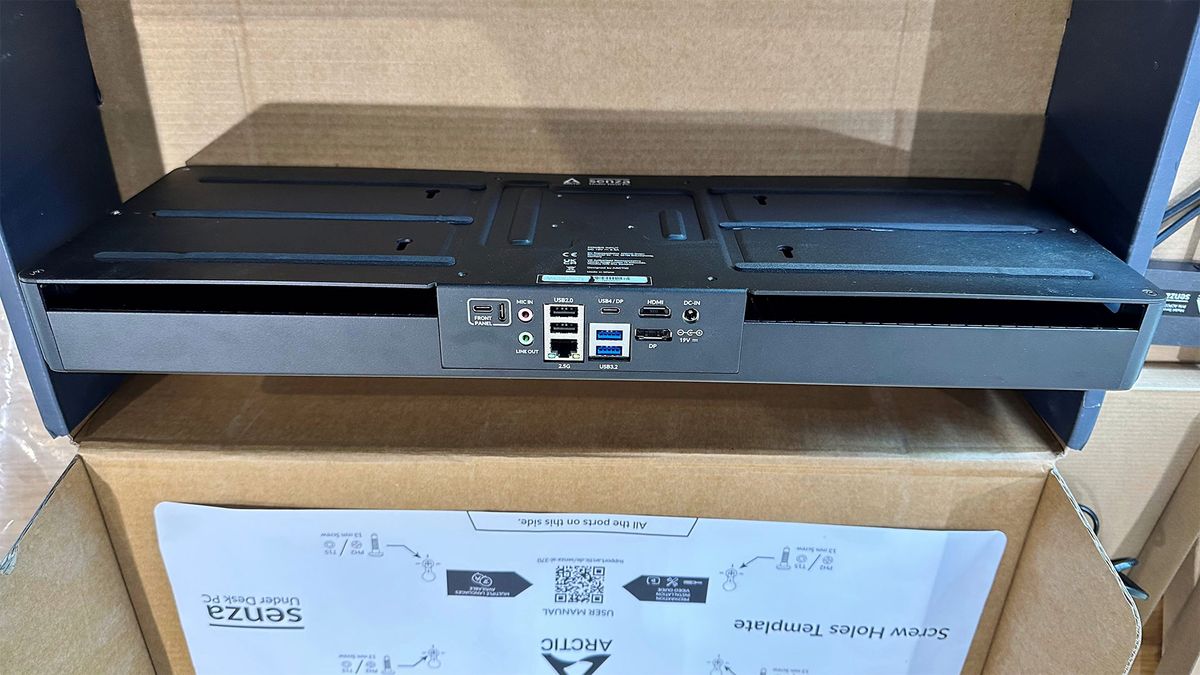
On the PC back panel, there is a decent selection of ports. The mix includes a USB4 Type-C port, two USB 2.0 Type-A, and two USB 3.2 Gen 2 Type-A ports. Dedicated video out options are provided with HDMI 2.1, and DisplayPort 2.0 - but the rear USB4 port can also handle video out, too. Two 3.5mm jacks are also there for audio in and out. Wired networking support is provided with a 2.5G LAN port.
Image 1 of 3
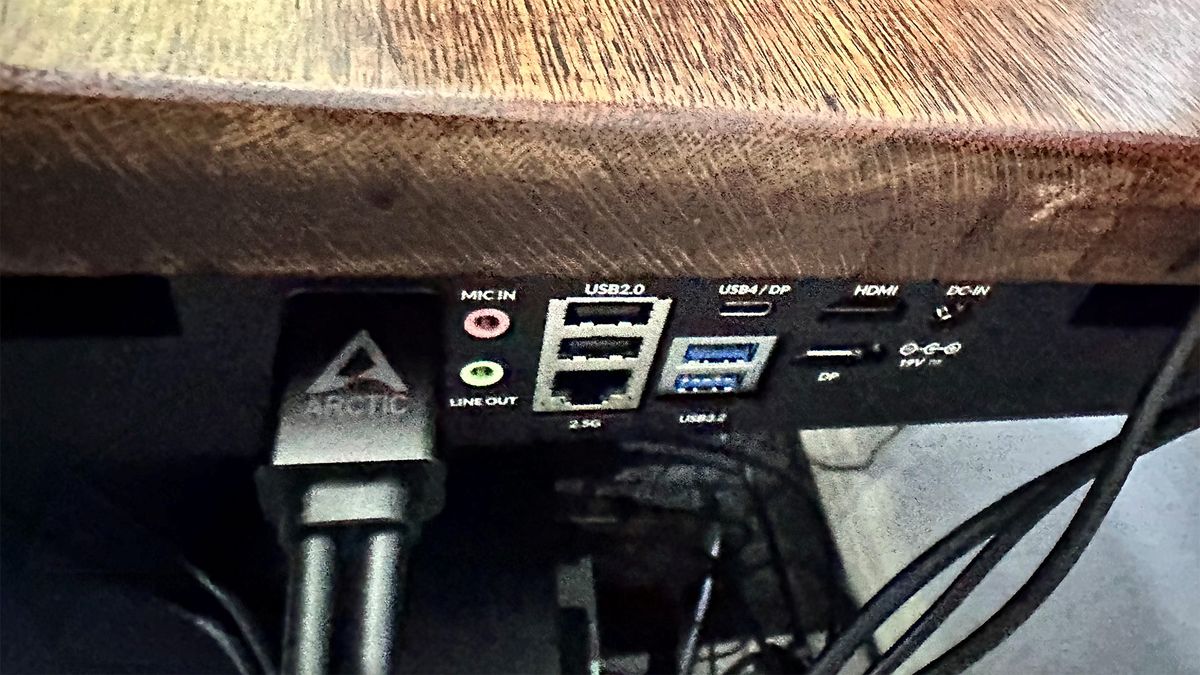
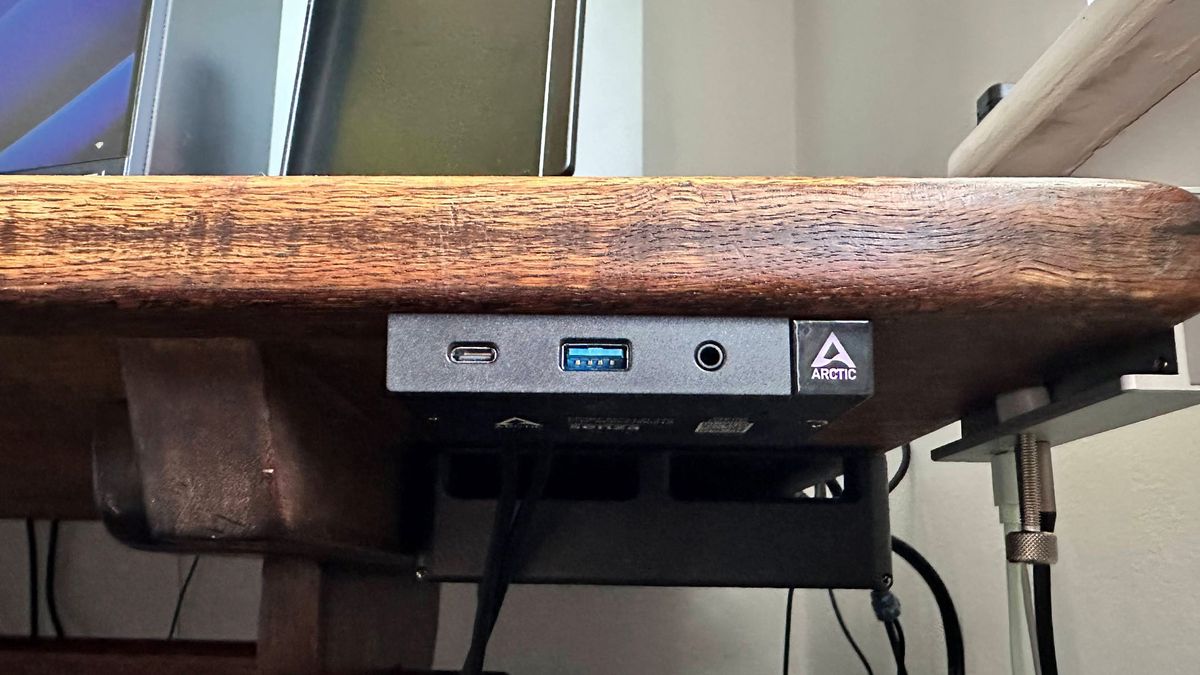
The rear is also where you plug in the supplied 120W PSU via a barrel jack. Lastly, there’s an unusual looking dedicated dual USB-C (two Type-C ports positioned at right angles to one another), which mates with the front panel I/O dongle cable supplying USB4 data and power.
The use of a front panel I/O dongle is a great idea, and it makes thepower button easy to reach. I would have liked to see more ports, here, personally.
Stay On the Cutting Edge: Get the Tom's Hardware Newsletter
Get Tom's Hardware's best news and in-depth reviews, straight to your inbox.
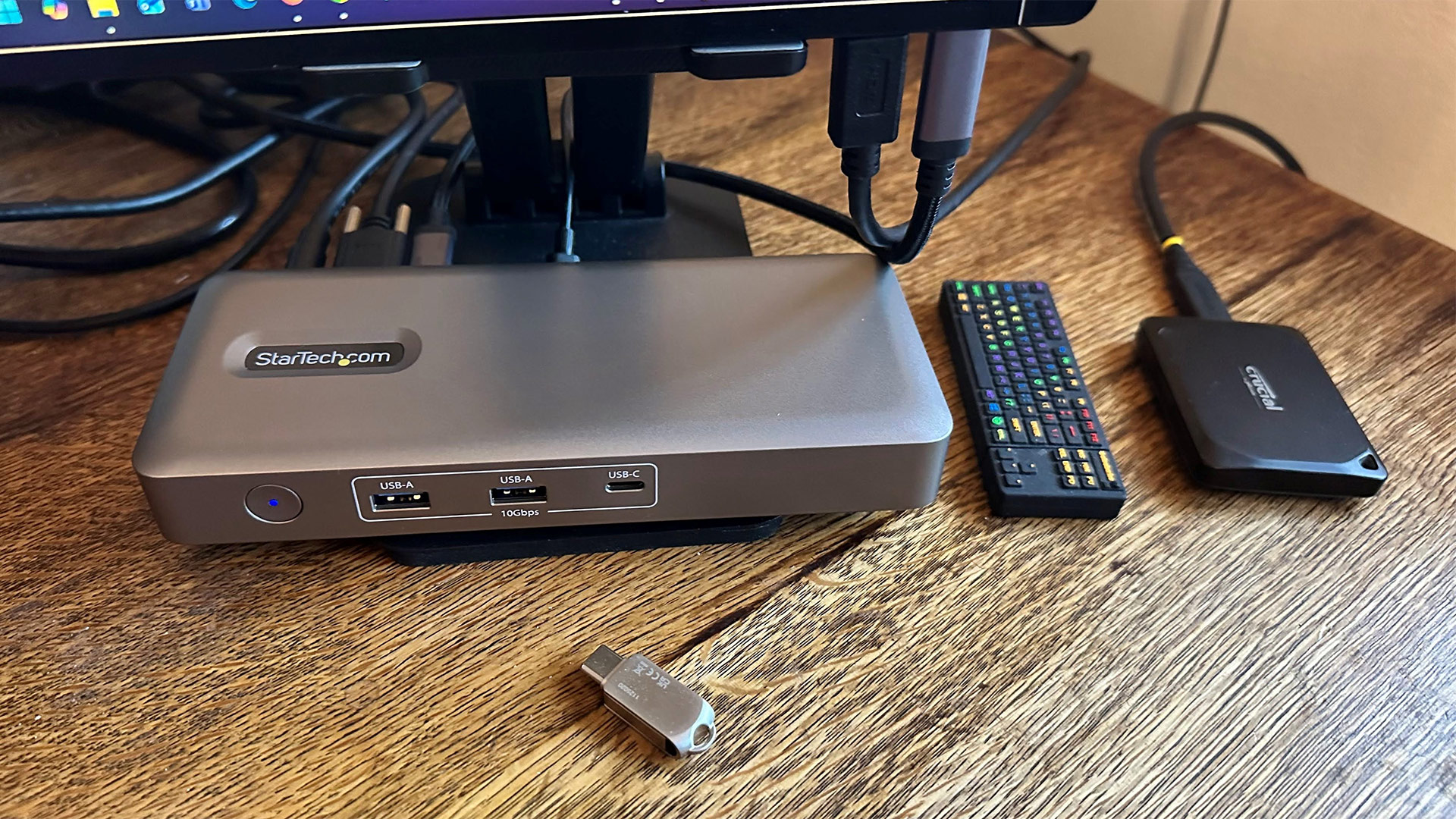
As I am always plugging various peripherals into my PCs, I decided to connect the under-desk USB4 port on the main body of the Arctic Senza AI 370 to an above-desk dock. Specifically, I used StarTech’s driverless 208UE USB4 dock to give easy access to a host of fast connectivity options.
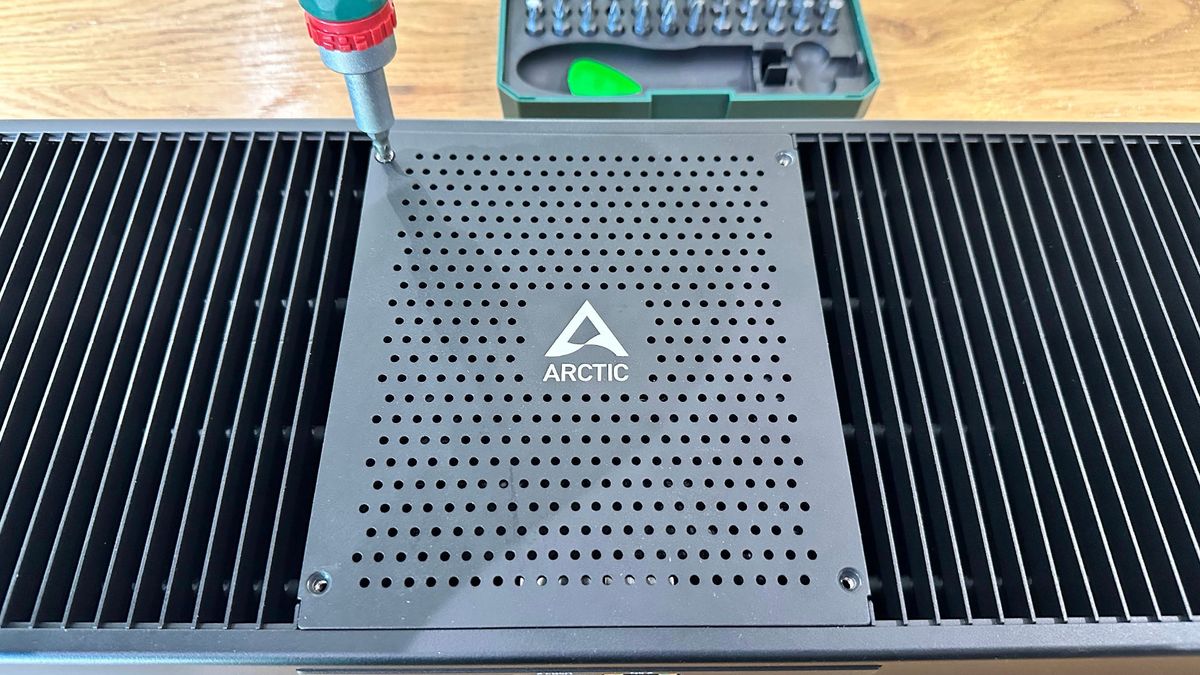
Inside the Senza AI 370, there is quite a lot of empty space but limited expandability. It’s easy enough to get in and see the guts of the device, with just four Phillips screws holding the metal panel in place. Under the panel there are no RAM slots, but you can see the soldered Micron DDR5-8000 chips surrounding the AMD processor. Before you buy, ensure 32GB of RAM will be enough for you for the foreseeable future.
I also found an Arctic heatsink atop an M.2 2280 slot. The sample device came with 1TB of fast PCIe 4.0 NVMe storage installed. System tools revealed it to be a Chinese YMTC PC411 SSD.
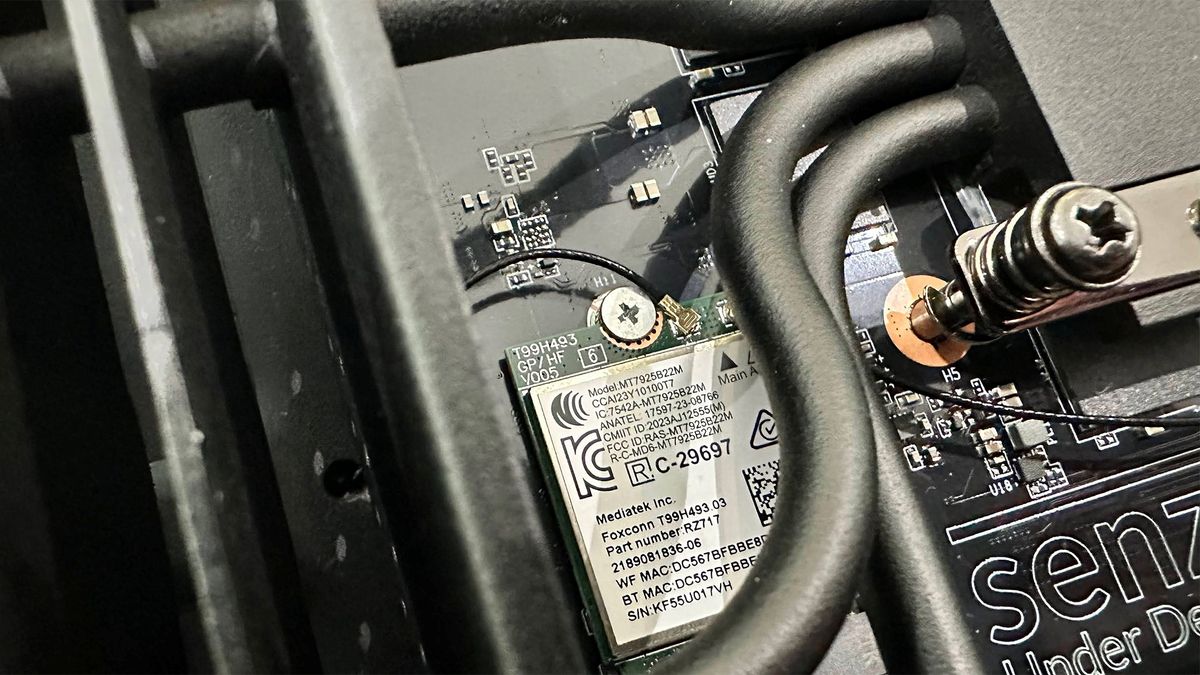
We also spied an M.2 2230 slot populated with a Mediatek Wi-Fi 7 (2x2 MIMO) + Bluetooth 5.3 card. You could swap that out for repair or upgrade purposes one day, if required. There are no further internal expansion ports.
Test System Setup
Swipe to scroll horizontally
System | CPU | (i)GPU | Memory | Chassis |
GMK EVO-T2 | Intel Core Ultra X7 358H (16C/16T: 4P + 8E + 4 LPE), up to 4.8 GHz | Intel Arc B390 (Xe3, 12 cores, up to 2.5 GHz) | 2x 32GB LPDDR5X-8533 soldered | Dual-fan,1.72 liters |
MSI Cubi NUC AI+ 3MG | Intel Core Ultra 9 386H (16C/16T: 6P + 8E + 2LPE), up to 4.9 GHz | Intel Graphics (Xe3, 4 Cores, up to 2.5 GHz) | 2x 16GB DDR5-5600 Sodimm | Single fan, 0.52 liters |
Geekom A9 Max 2026 | AMD Ryzen AI 9 HX 470 (12C / 24T: 4x Zen 5 , 8x Zen 5c), up to 5.2 GHz | Radeon 890M (RDNA 3.5, 16 CUs, up to 3.1 MHz) | 1x 32GB DDR5-5600 Sodimm | Single fan, 0.82 liters |
Arctic Senza AI 370 | AMD Ryzen AI 9 HX 370 (12C / 24T: 4x Zen 5 , 8x Zen 5c), up to 5.1 GHz | Radeon 890M (RDNA 3.5, 16 CUs, up to 2.9 MHz) | 2x 16GB LPDDR5X‑8000 soldered | Passive, 4.82 liters |
Beelink SER10 MAX | AMD Ryzen AI 9 HX 470 (12C / 24T: 4x Zen 5 , 8x Zen 5c), up to 5.2 GHz | Radeon 890M (RDNA 3.5, 16 CUs, up to 3.1 MHz) | 2x 32GB DDR5-5600 Sodimm | Single fan, 0.81 liters |
Productivity Performance on the Arctic Senza AI 370
The Arctic Senza AI 370 doesn’t break a sweat with day-to-day productivity tasks, browsing, and similarly light workloads. AMD’s Ryzen AI 9 HX 370 is a very capable chip with its Zen 5 CPU architecture featuring 12 cores and 24 threads, the integrated Radeon 890M graphics, and a power-efficient NPU for on-device AI.
Image 1 of 8
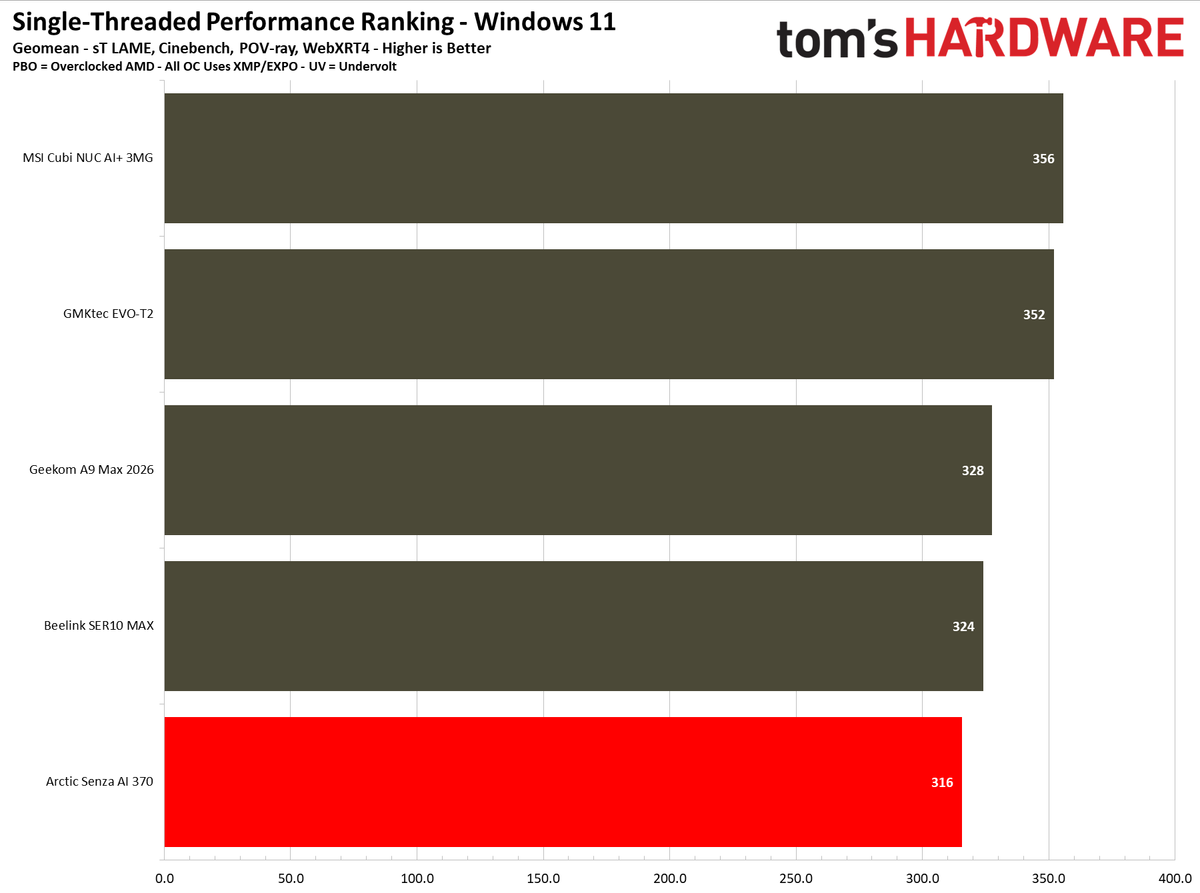
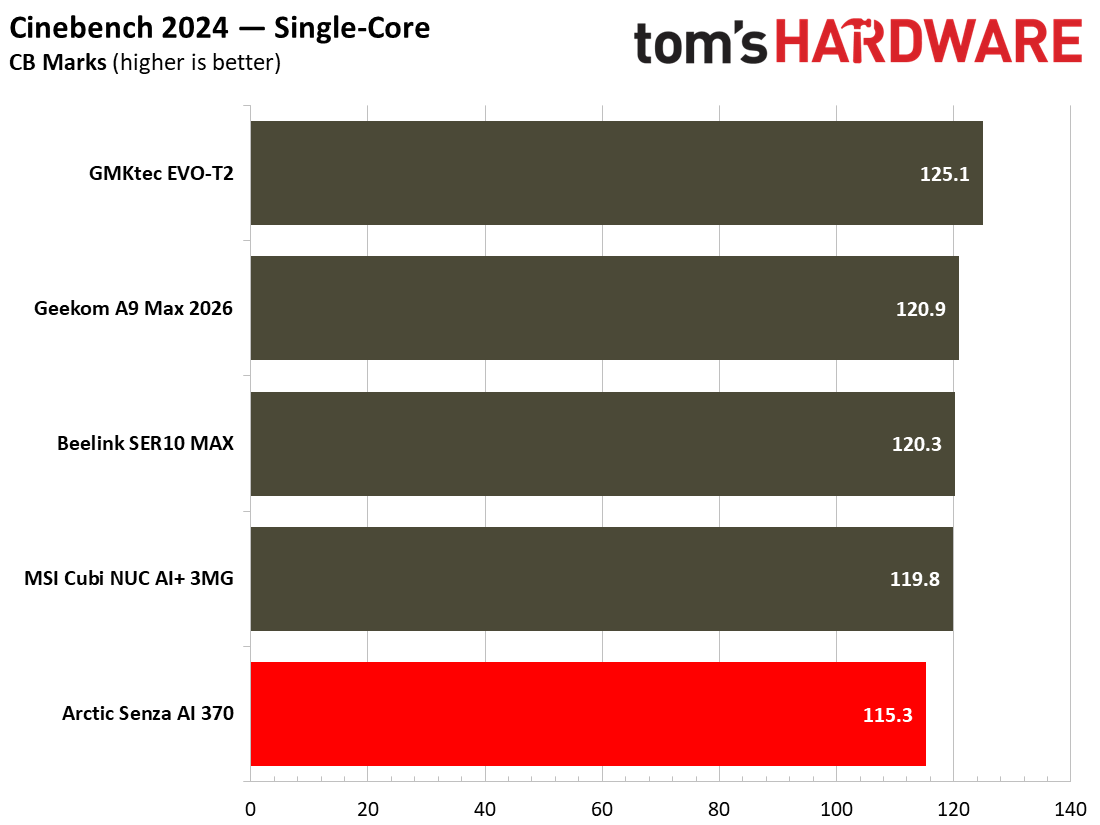
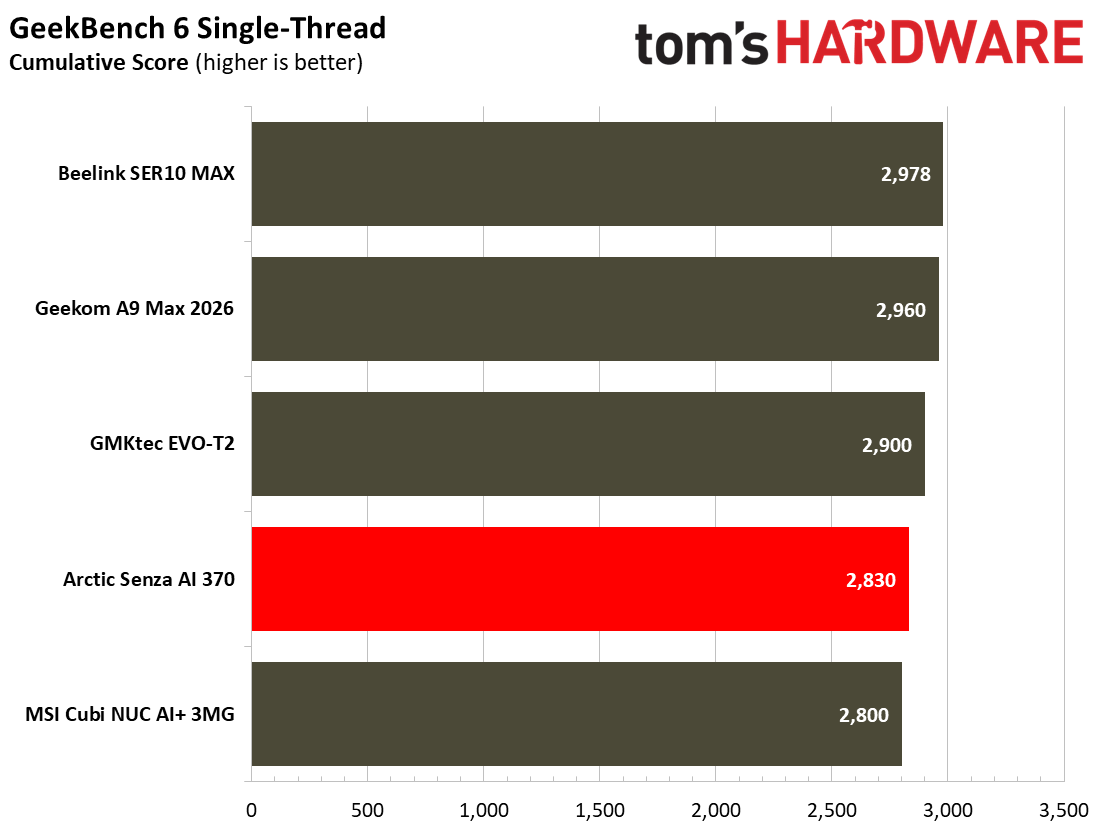
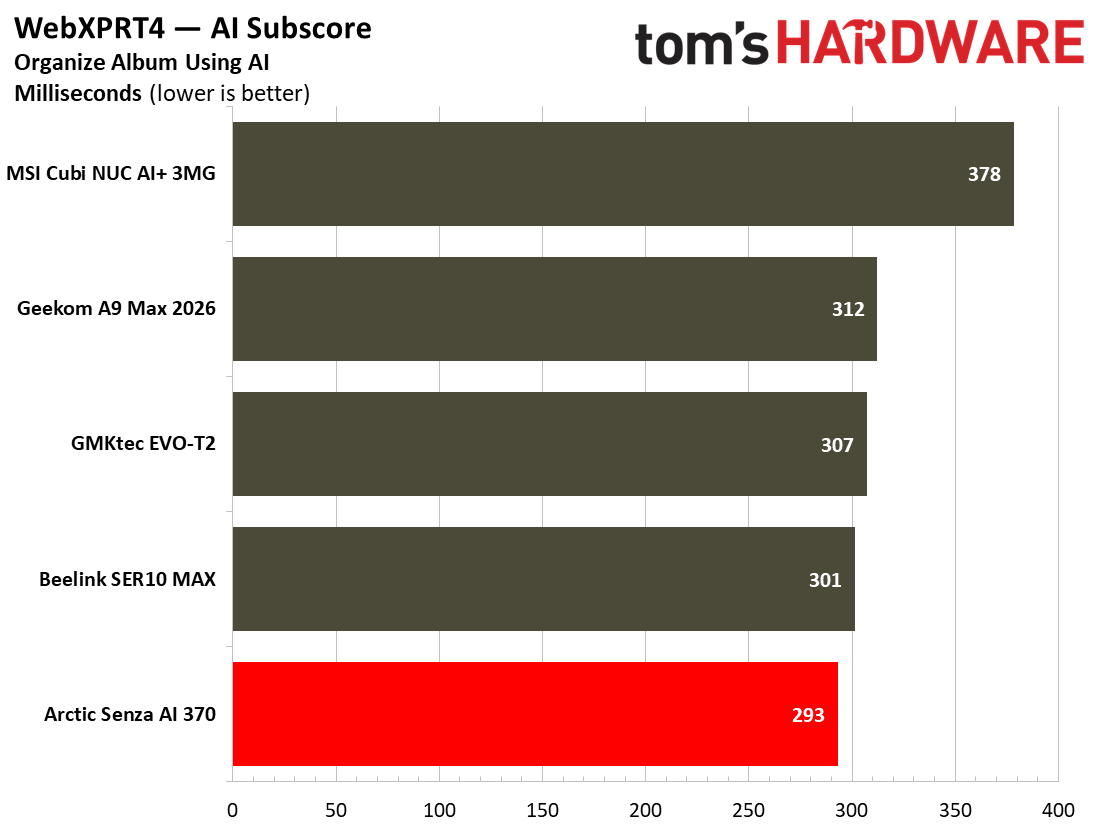
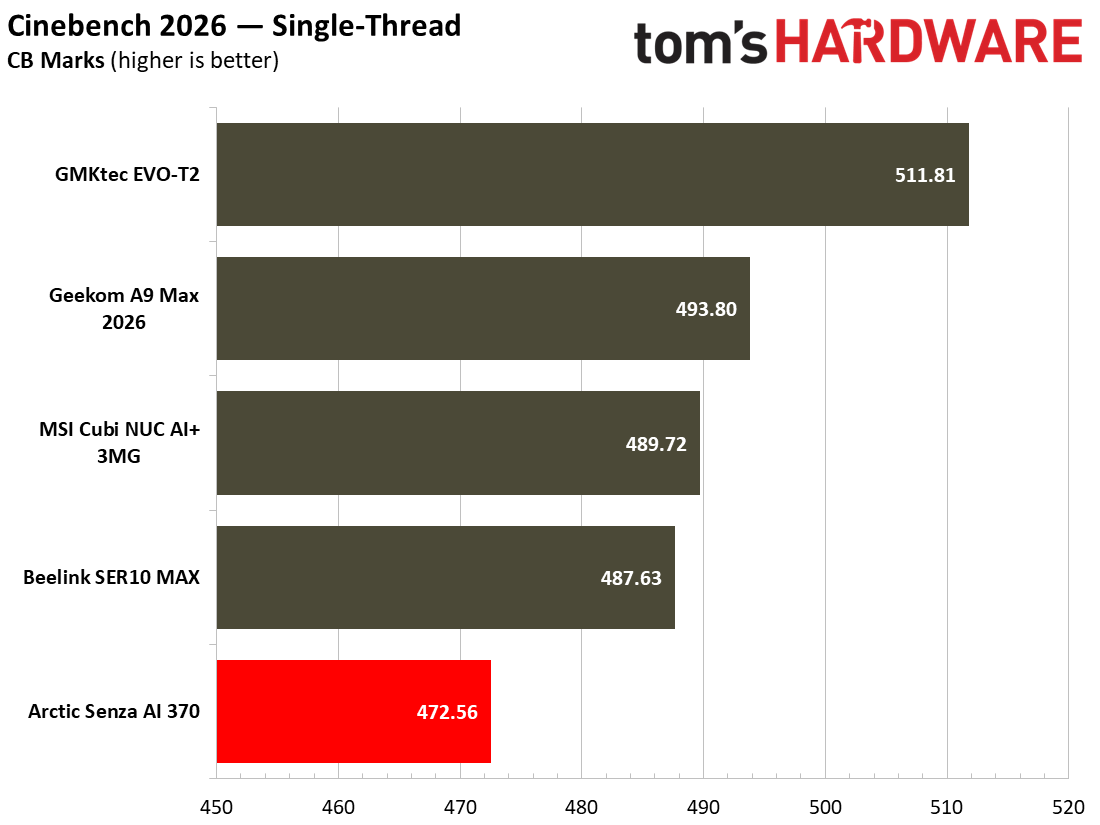
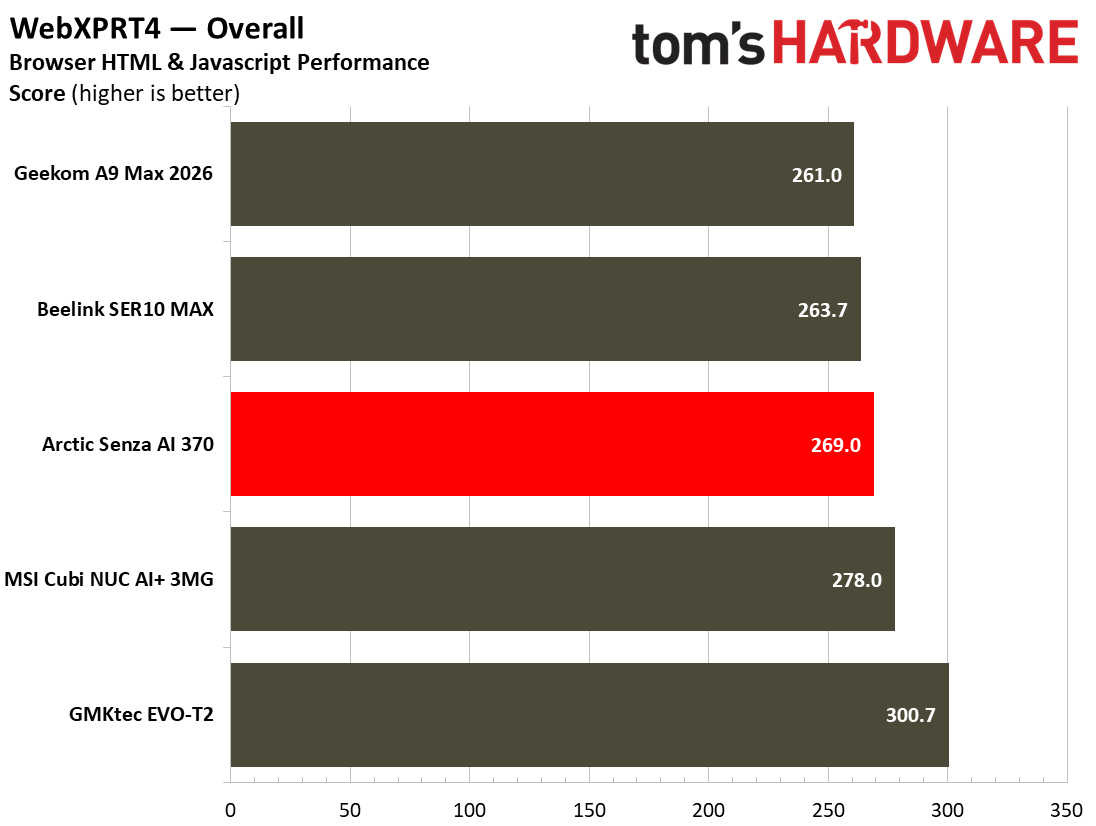
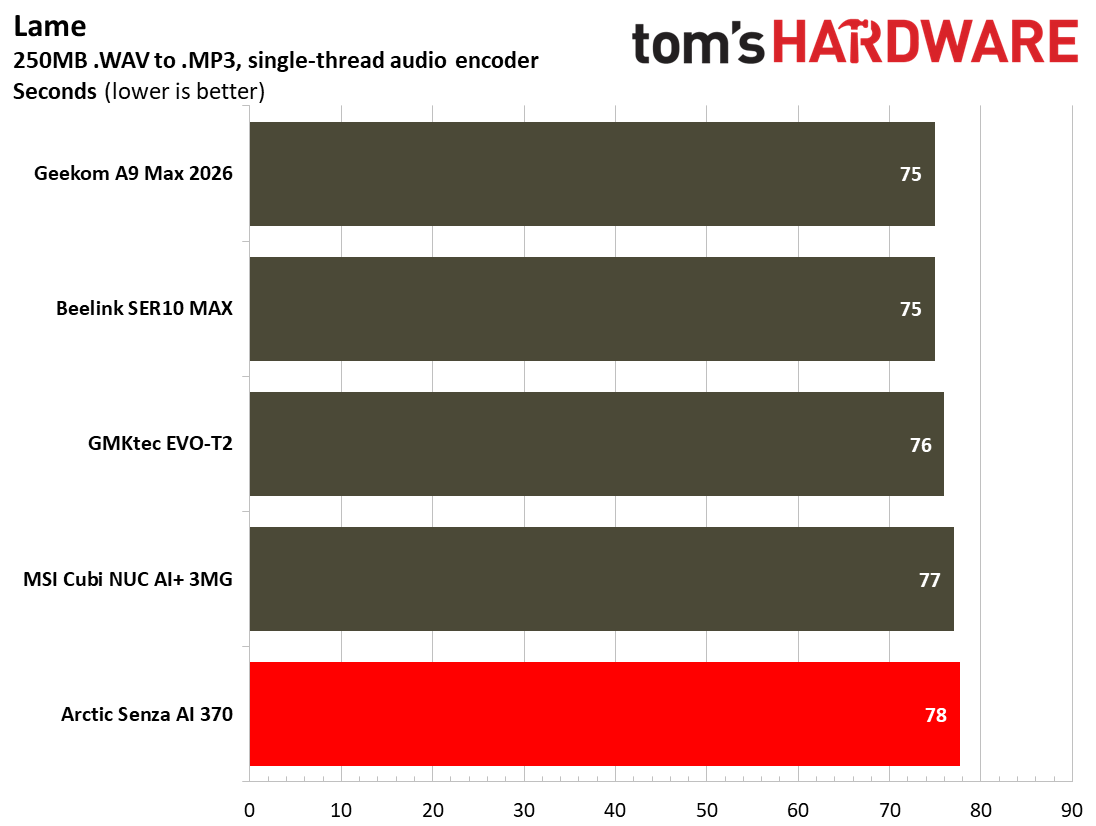
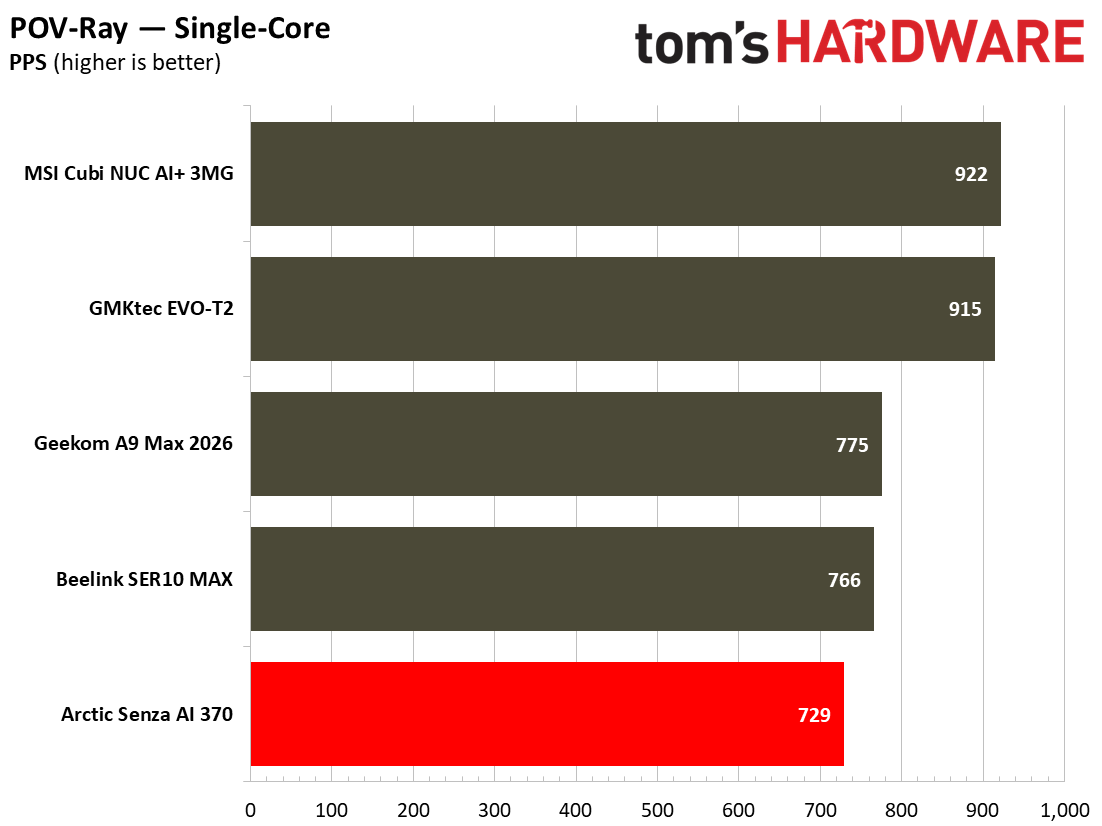
Image 1 of 11
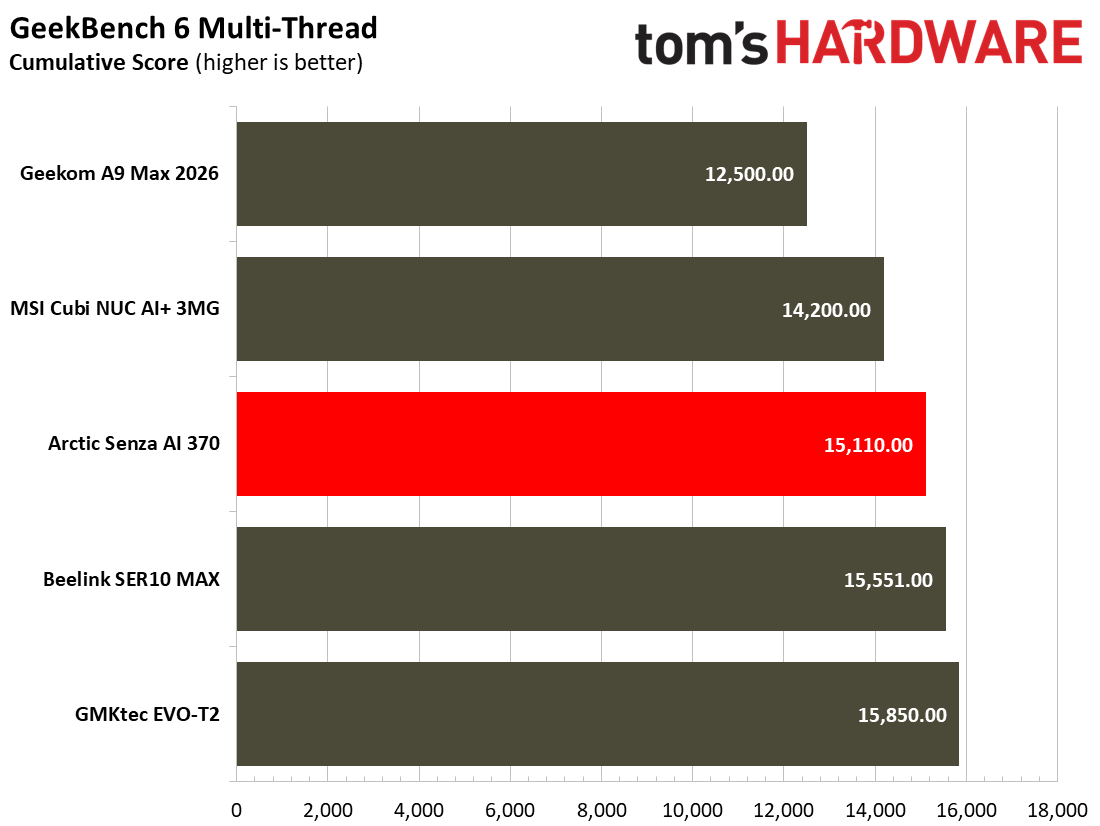
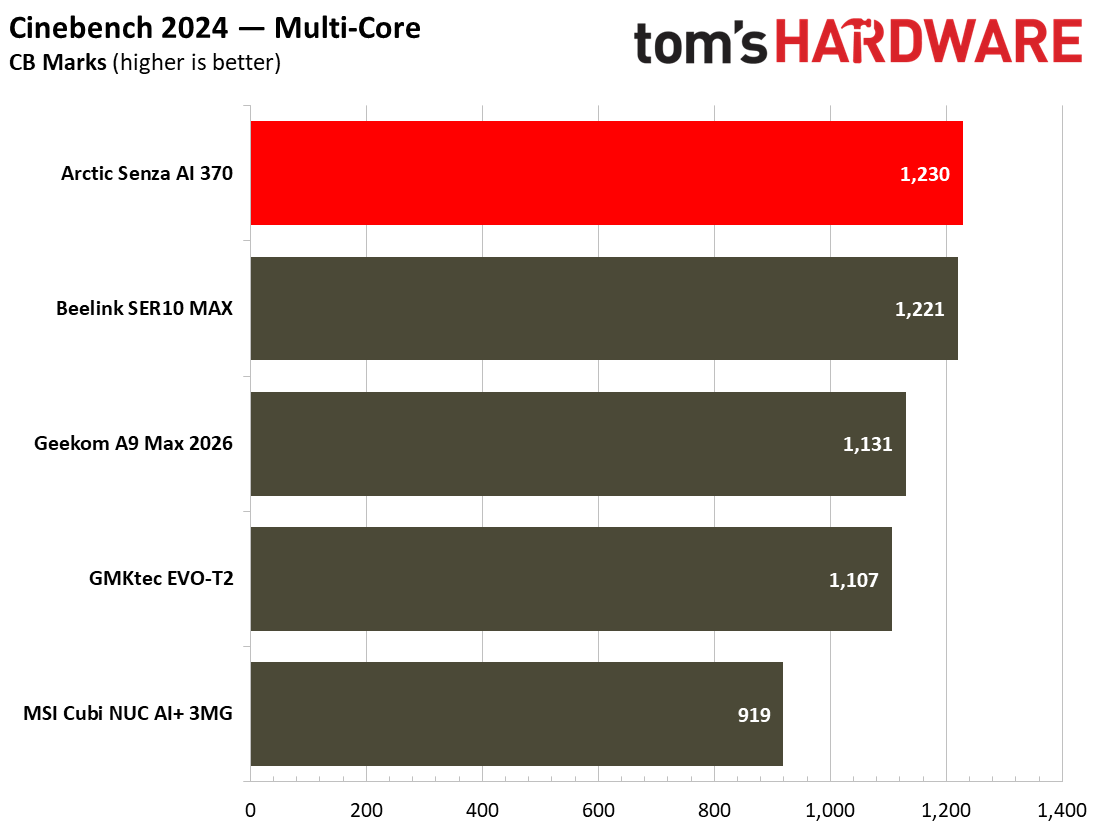
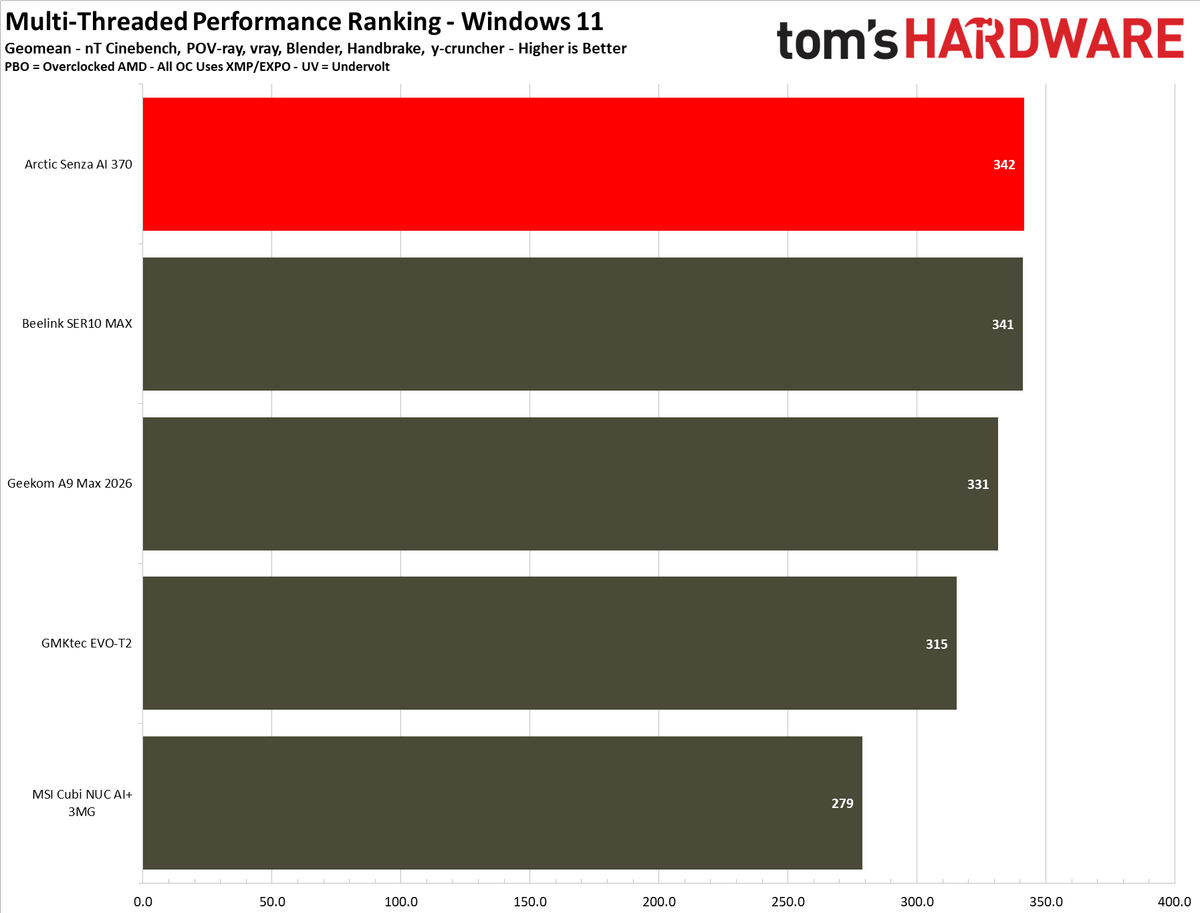
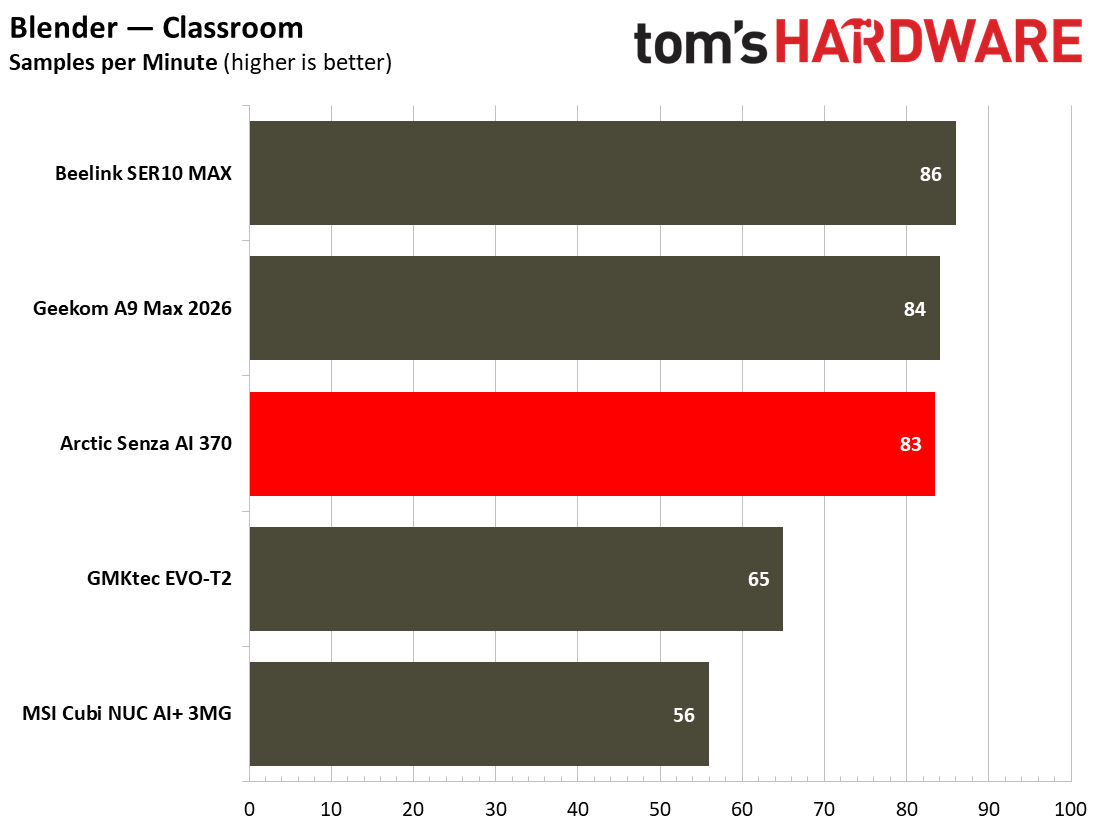
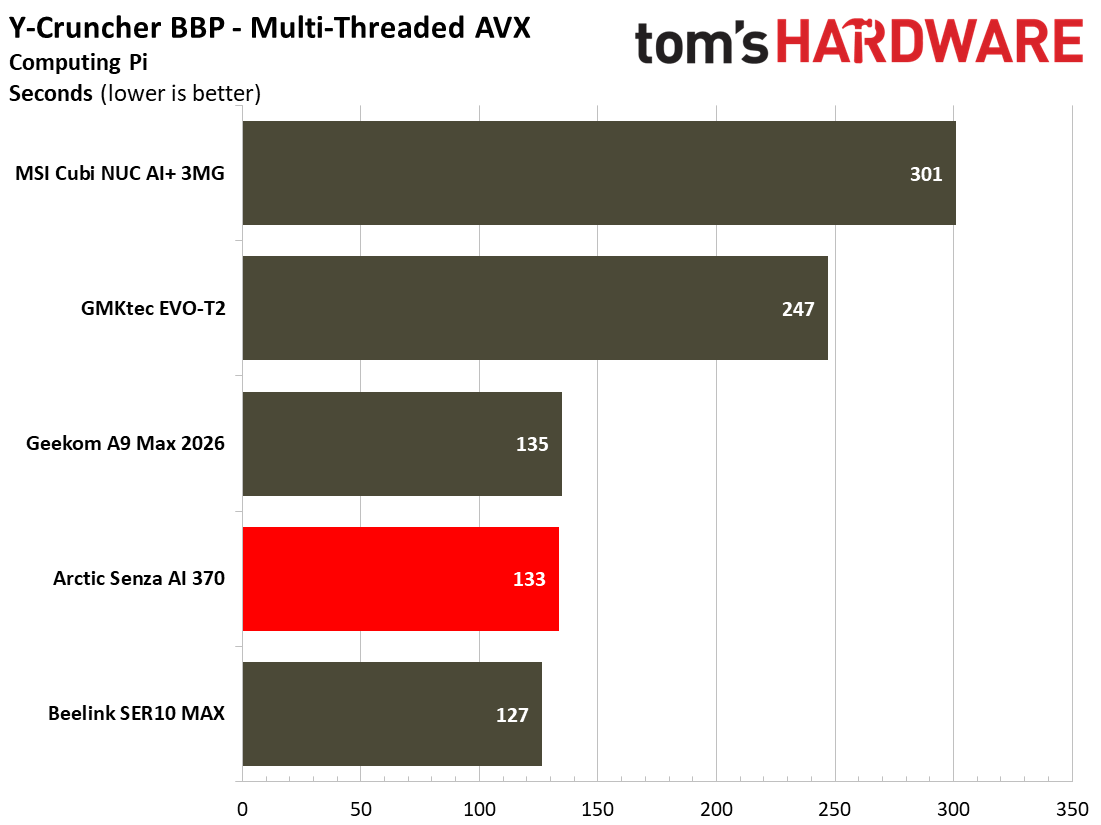
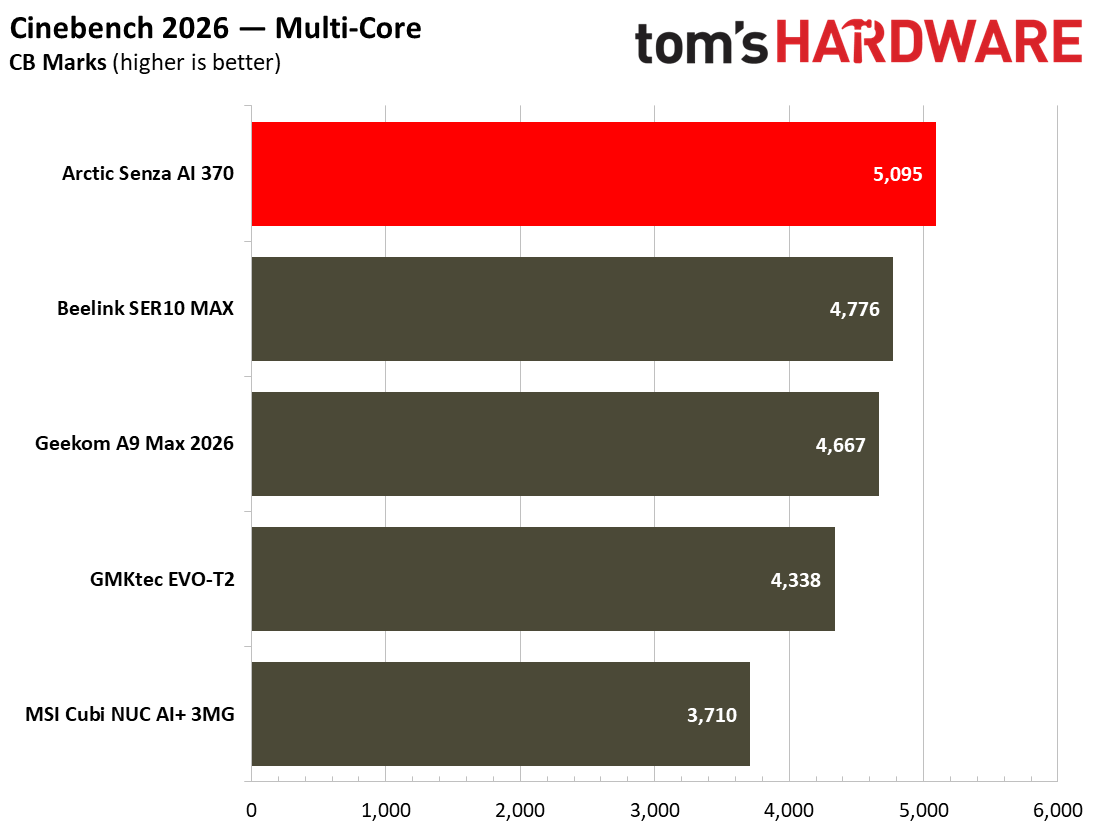
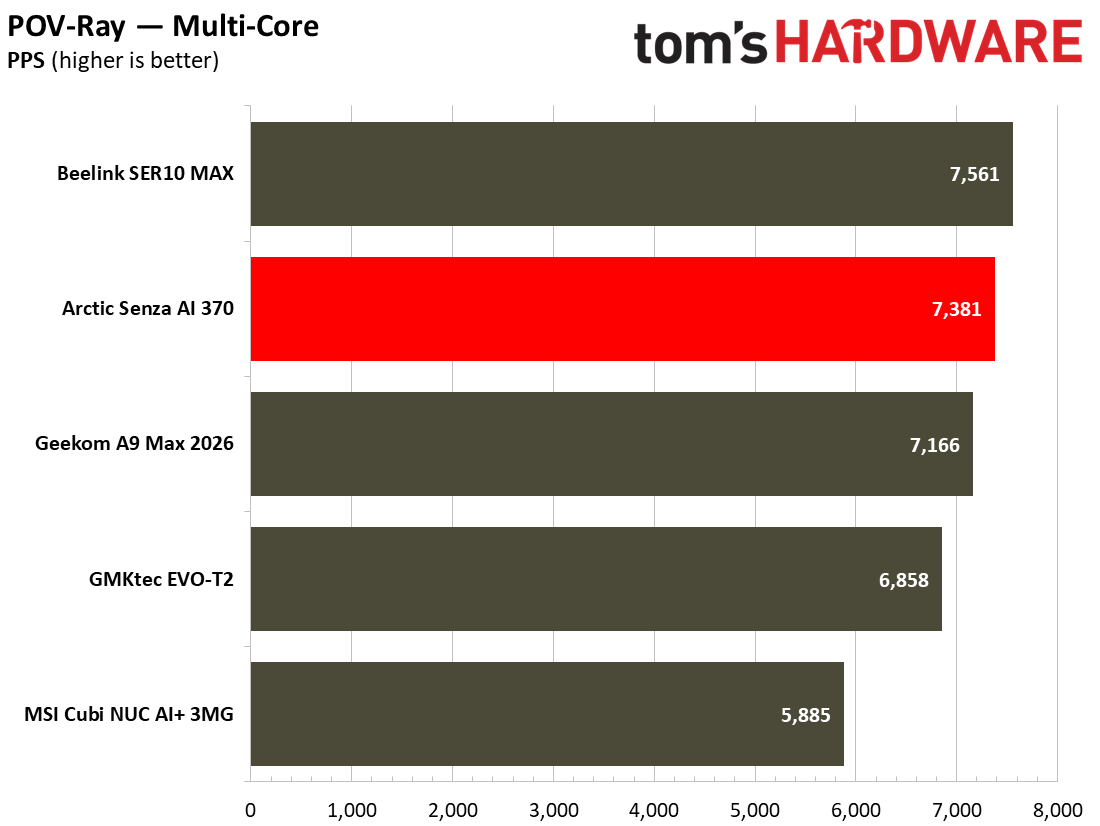
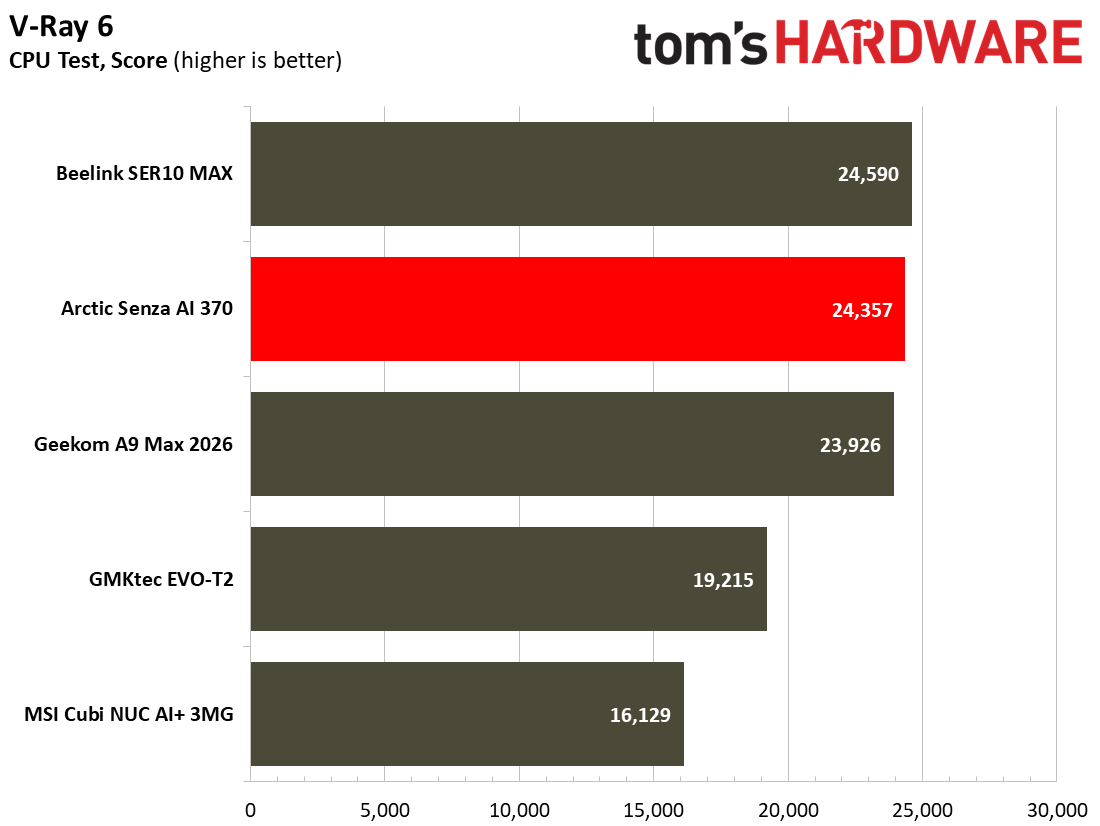
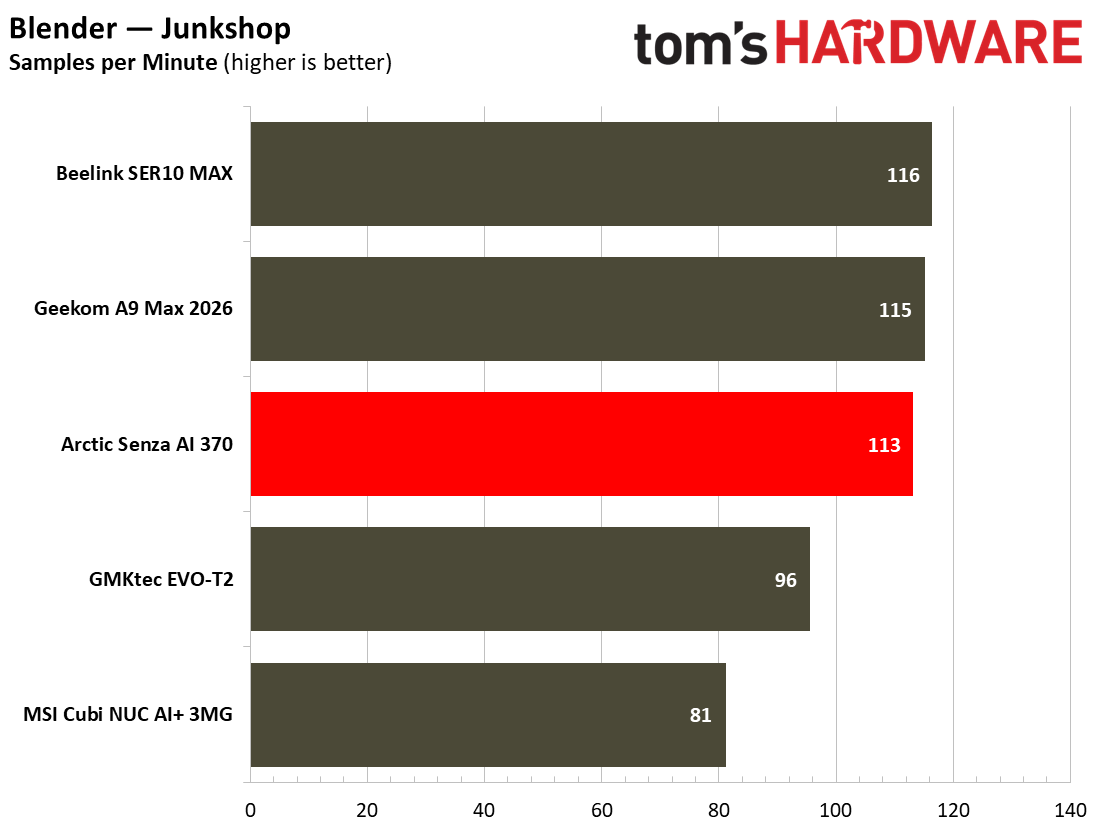
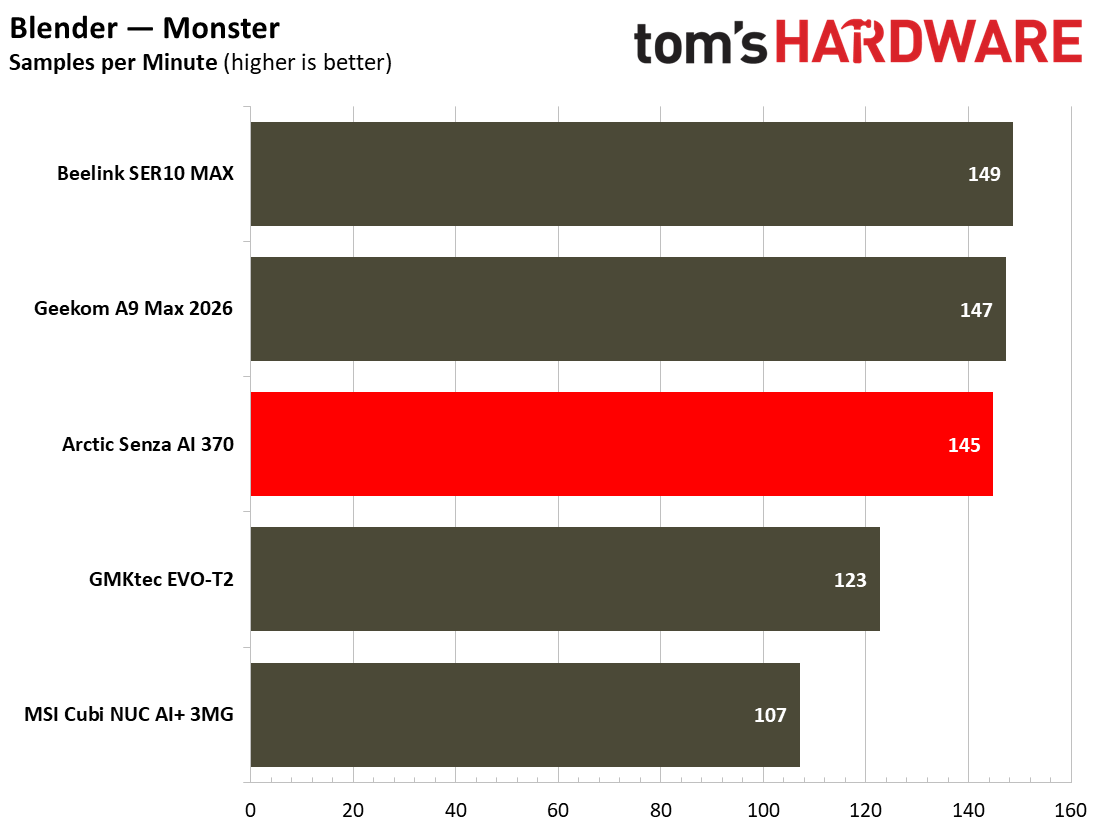
Despite relying on an older AMD processor, the Arctic Senza AI 370 shows it can match and even beat the two Ryzen 9 AI HX 470 mini PCs that have also recently been subjected to our newest suite of tests. Let’s single out Cinebench 2026 multicore scores first. Here the Senza clearly leads the pack of newer AMD Ryzen and Intel Core Ultra mini PCs, at almost 7% faster than the second-placed Beelink SER 10 Max. In the Blender Monster render test, the Senza’s HX 470 rivals actually do win by a tiny amount, but the difference is small enough to be within the margin of error.
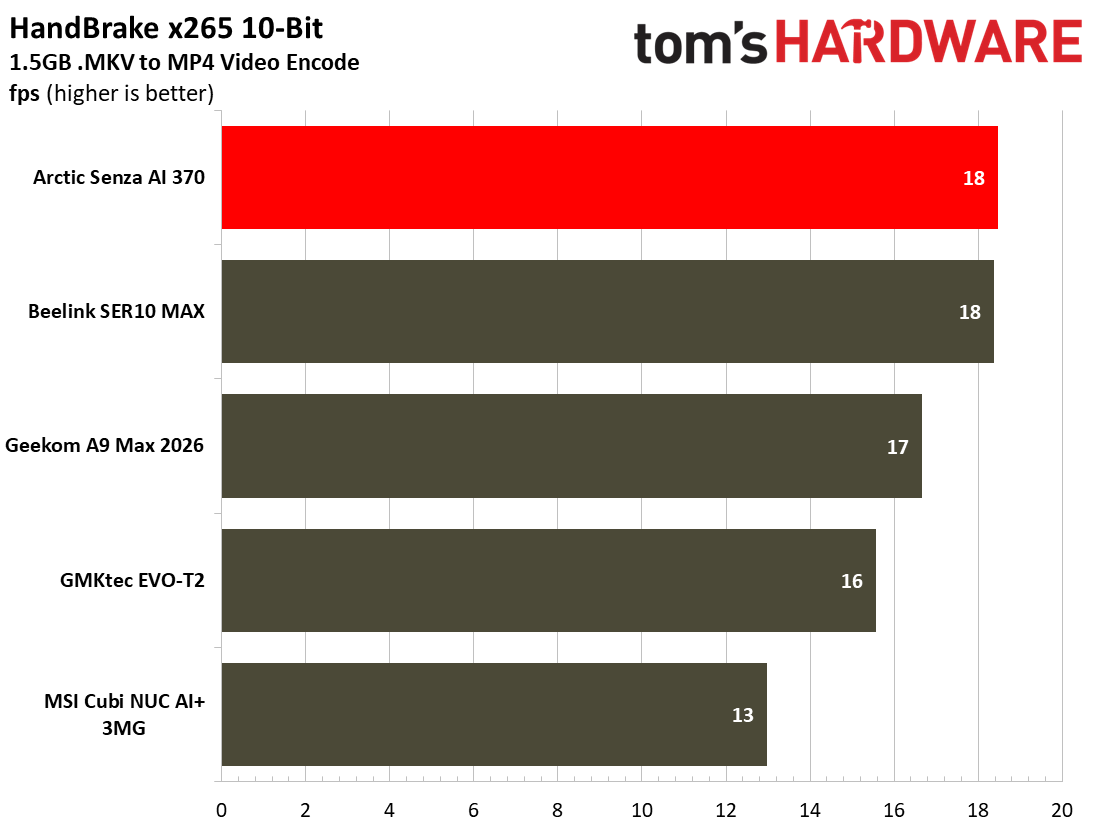
Another productivity test, targeting video encoding performance this time, shows that the Arctic won’t be usurped by its newer generation challengers. The Senza AI 370 proudly leads the Handbrake table, and a victory is a victory, but the actual difference is so small it is essentially a draw between the three AMD mini PCs.
I think the Arctic’s good performance in these productivity tests can be put down to the system’s significantly better memory bandwidth.
Gaming and Graphics on the Arctic Senza AI 370
The Senza AI 370’s APU should make it a decent enough performer in games, at least if you're realistic with the settings. Its Radeon 890M iGPU comes with 16 RDNA 3.5 CUs, and it is accompanied by fast dual-channel DDR5-8000 in Arctic’s silent machine.
Before moving onto our standard synthetic and iconic PC gaming tests, I decided to run around in one of my favorite 3D gaming titles, Ubisoft’s The Division 2. I enjoyed taking down a Bloodhound and its high-tech escort troops, and liberating an enemy control point. The action was fluid enough, without experiencing any stutters or other low-performance tells. I played in FHD using the High preset, and later saw using the built-in benchmark tool that the Arctic Senza AI 370 achieved an average of 53 FPS across a diverse set of game scenarios.
Image 1 of 2
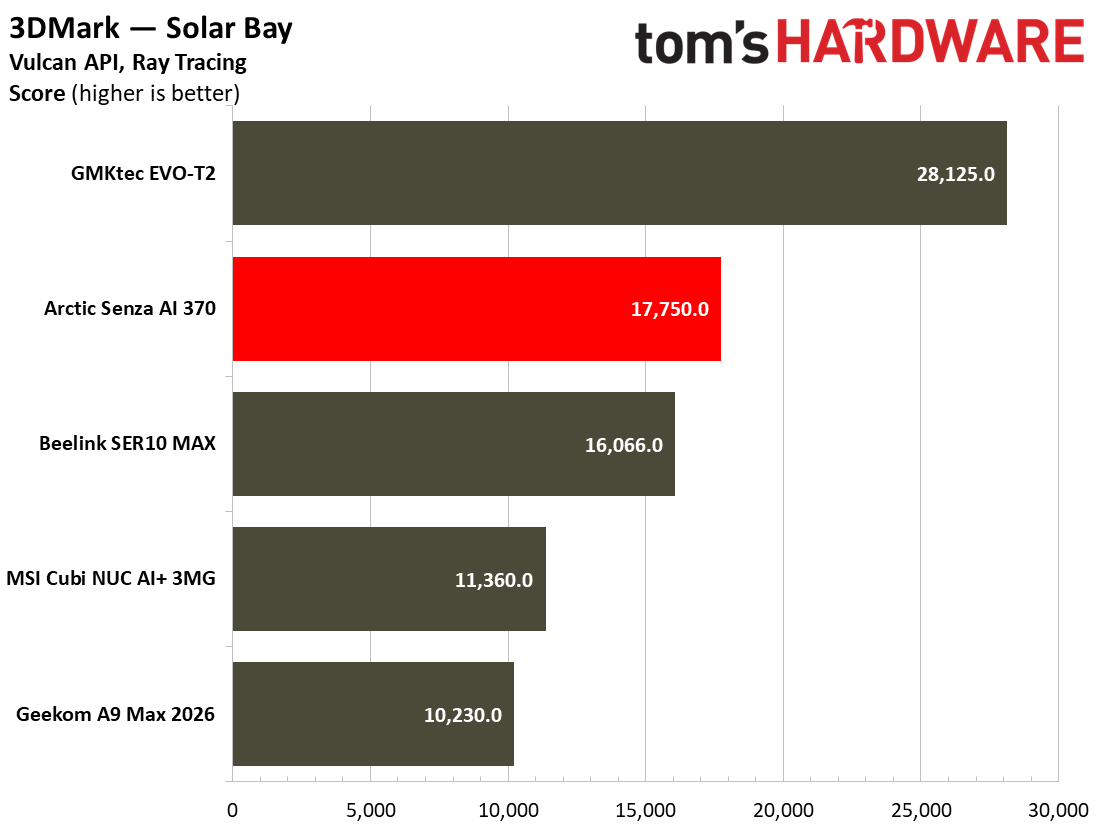
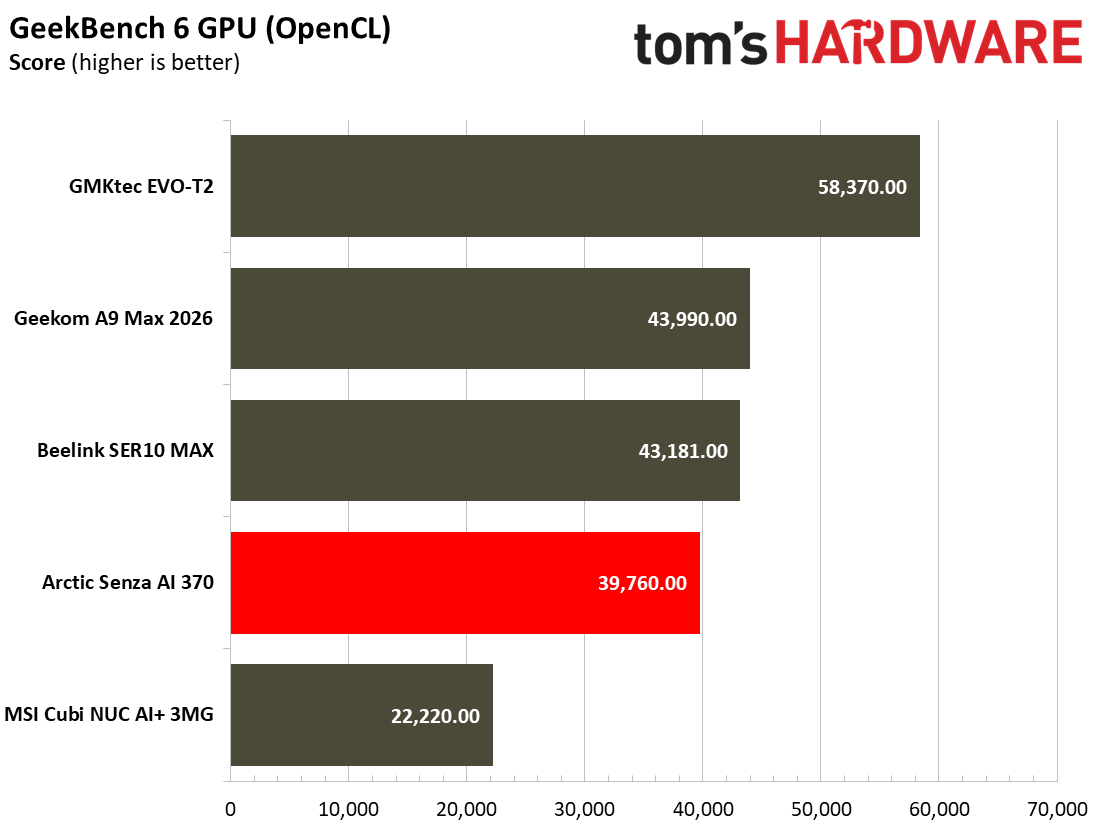
Next up, our benchmarks include a trio of 3DMark synthetics and two PC gaming standards. 3DMark Solar Bay is a great way to frame and compare cross-platform iGPU performance. Meanwhile, Steel Nomad turns to screws on raw graphics performance with its heavy modern GPU load, and will be better for comparisons when we start testing the higher-end mini PCs, some with dGPUs. Last and definitely not least, Speed Way is a 2025 benchmark from UL that uses DirectX Raytracing tier 1.1 for real-time global illumination and real-time ray-traced reflections.
In 3DMark Solar Bay, which uses an engine / resolution most appropriate to the graphical firepower of most of this crop of iGPU-only mini PCs, the Senza AI 370 easily beats the newer-gen Ryzen competition. However, it is clearly outclassed by the Intel Arc B390 iGPU in the GMKtec EVO-T2.
Moving on to more real games, let’s check the data provided by the multi-scene benchmarks built into Shadow of the Tomb Raider and Cyberpunk 2077. The former scales well with processor resources and can still often look and run great on humble iGPUs. As for Cyberpunk 2077, it can really push and tax even the strongest modern GPUs, so here we've used two settings to show how the silent Senza can perform.
Image 1 of 6
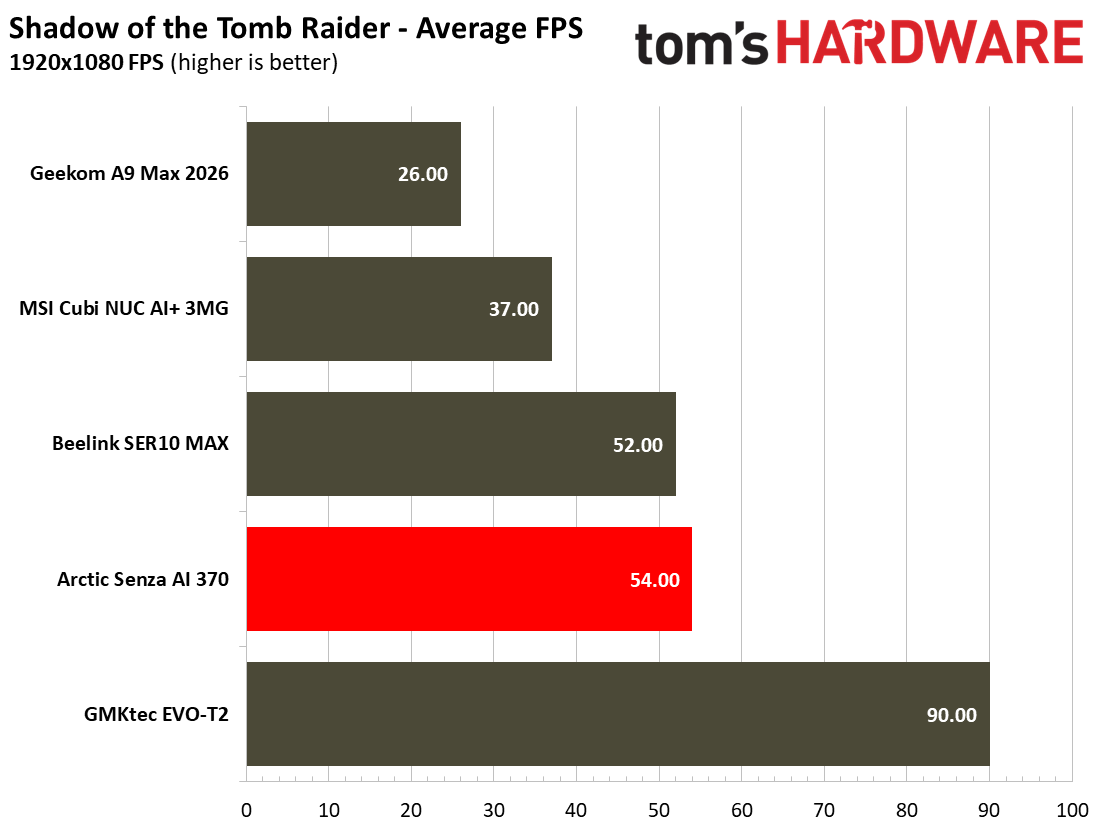
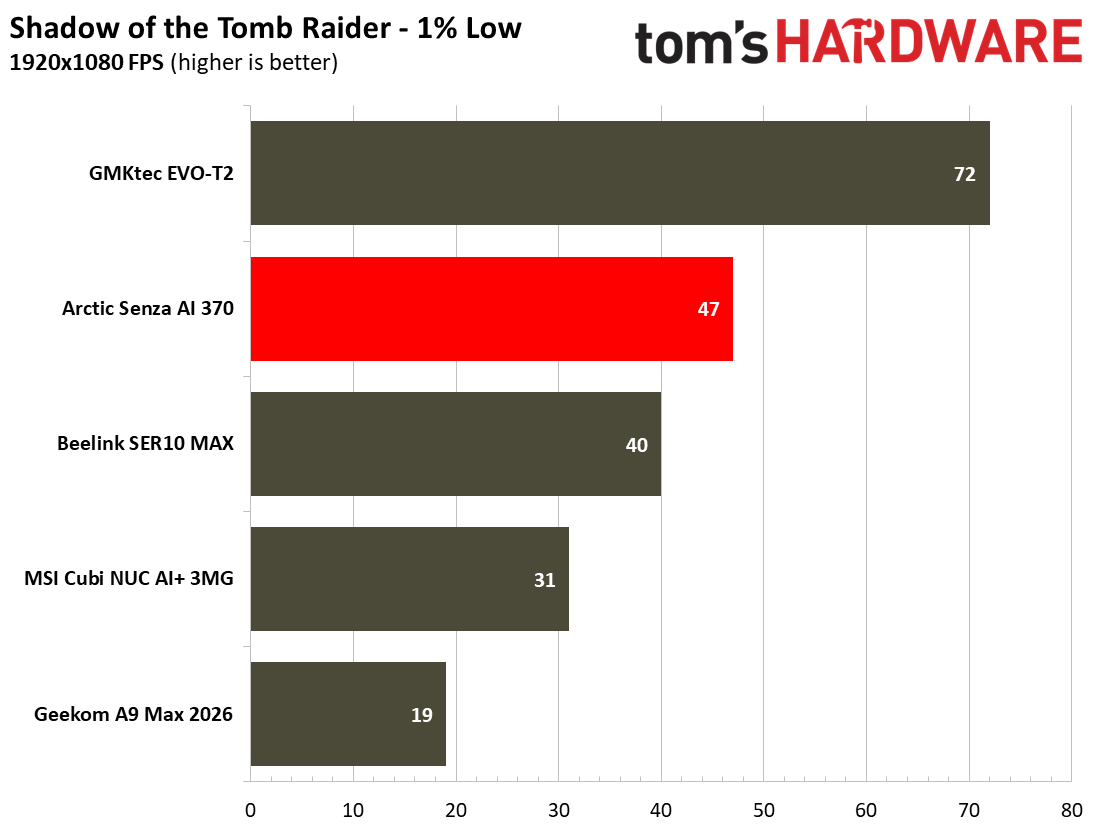
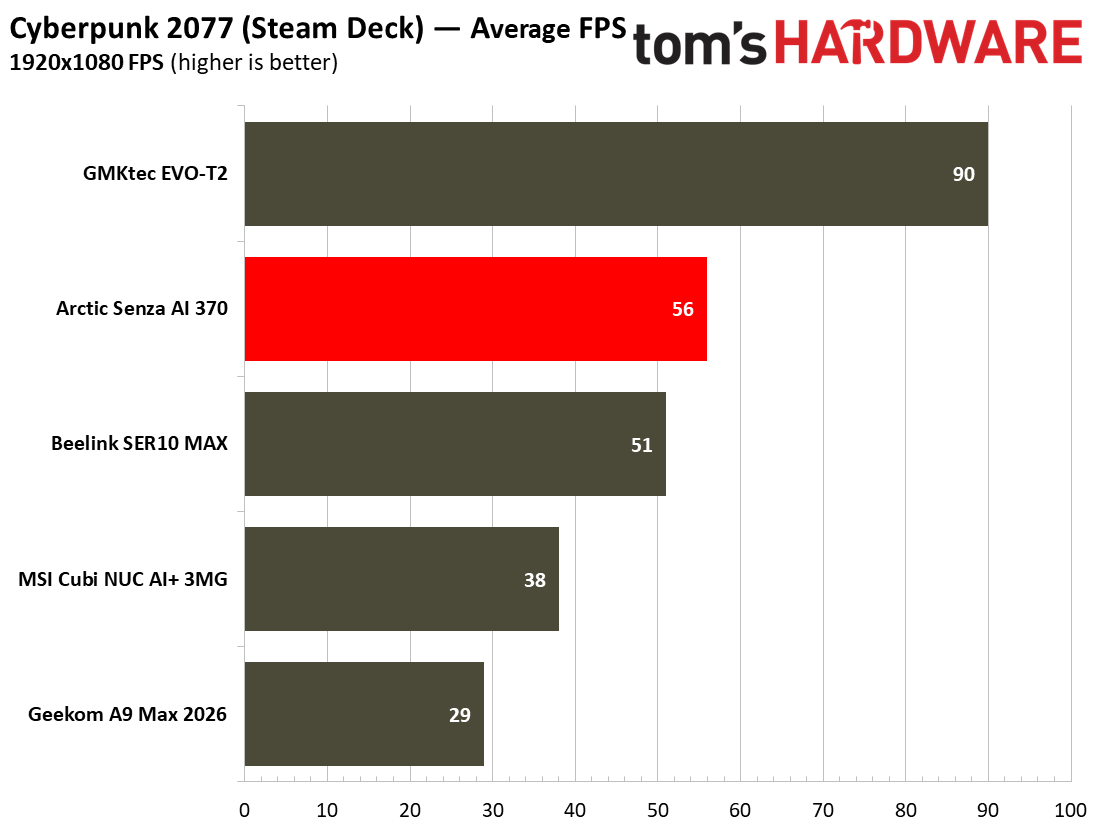
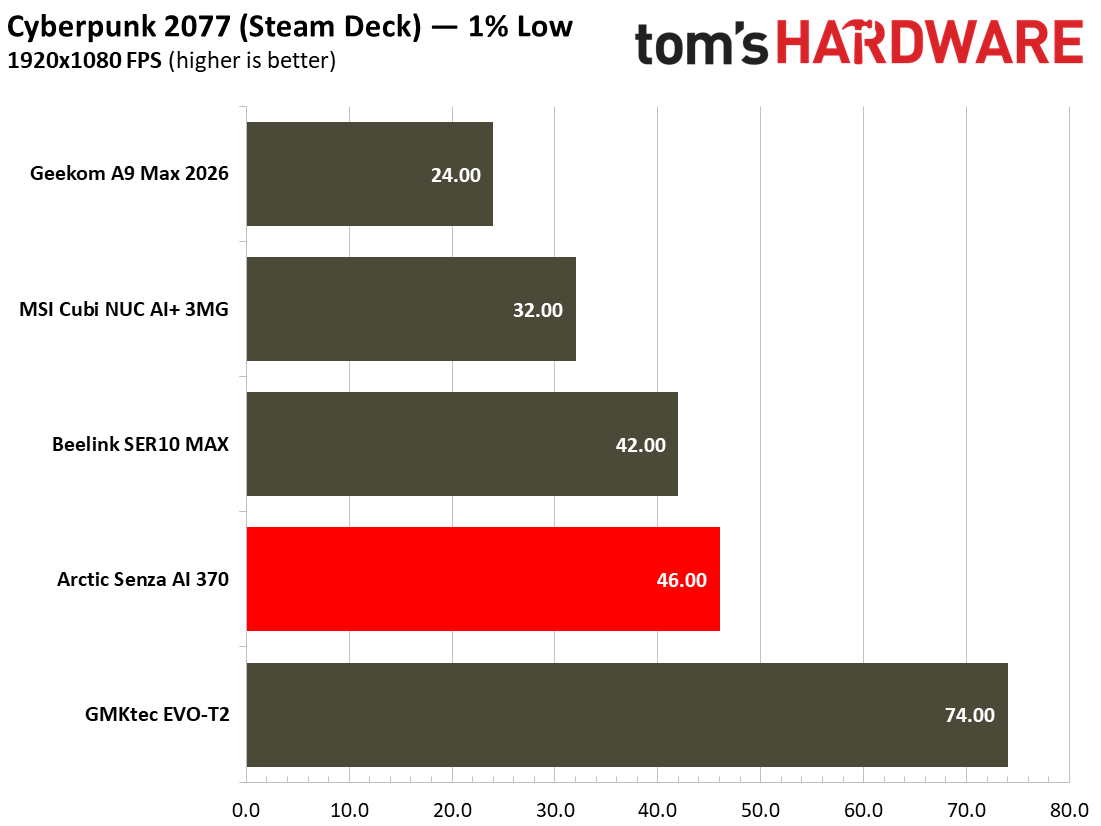
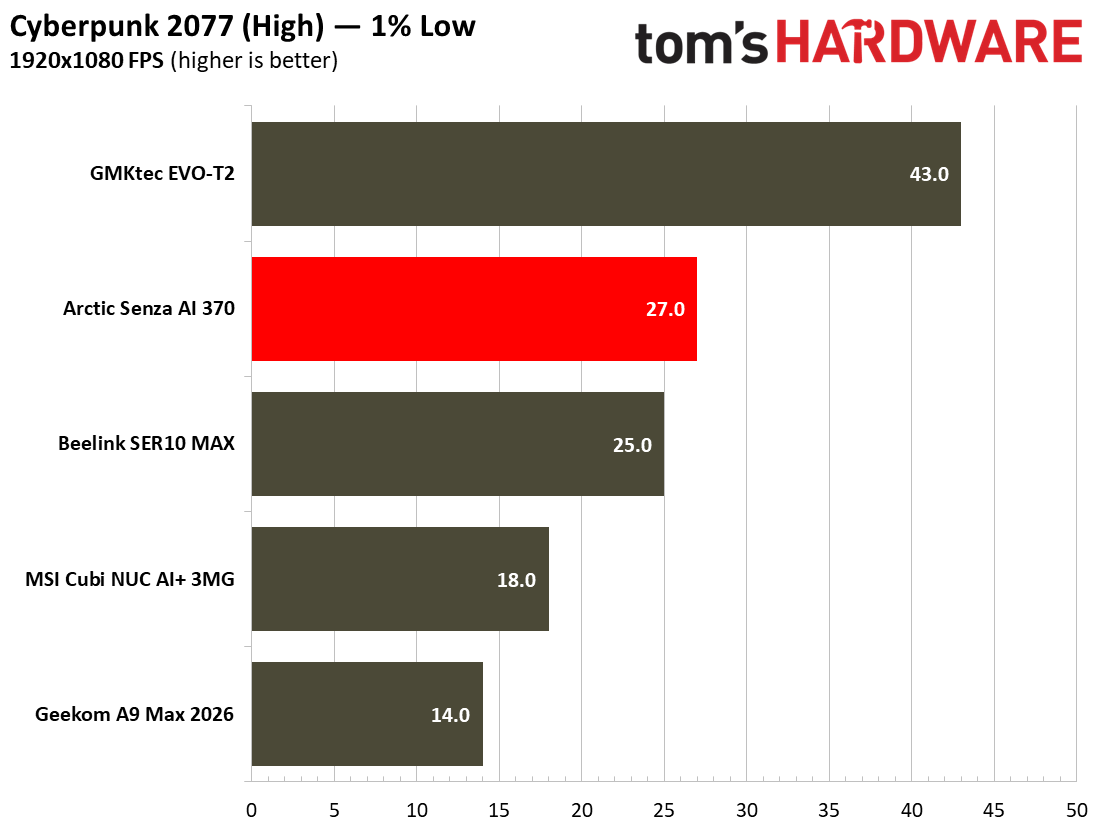
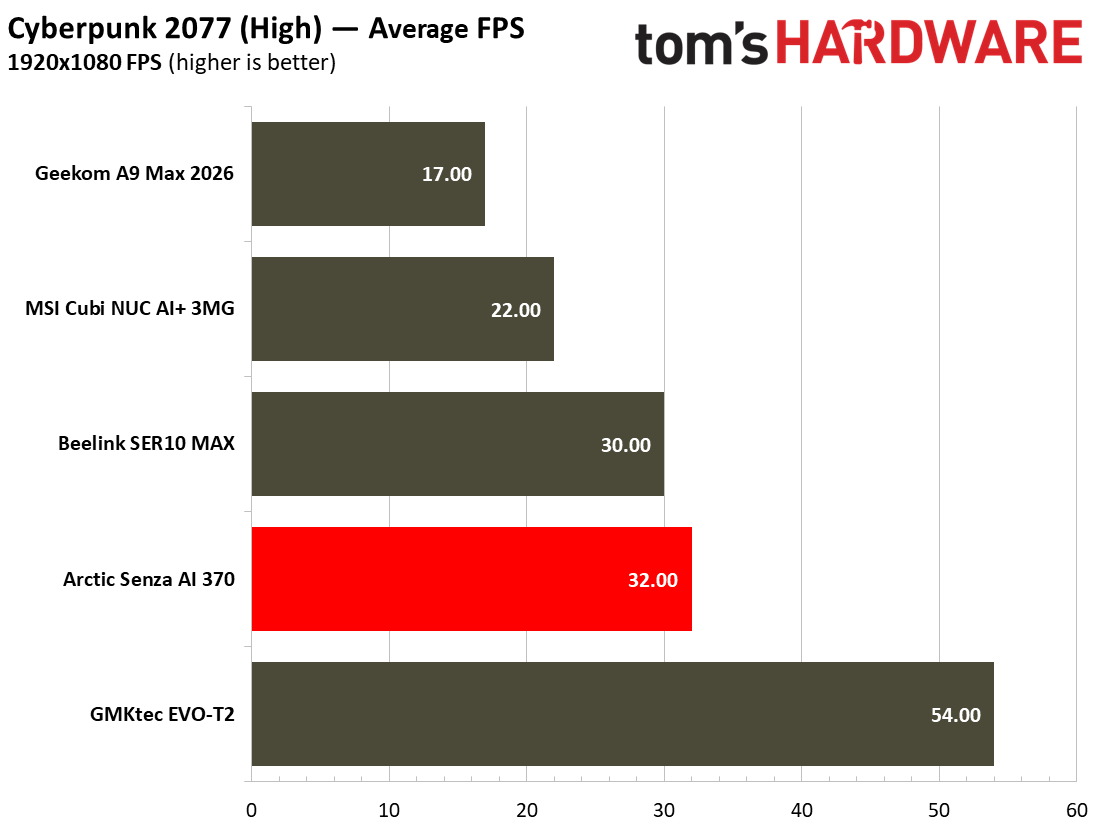
A pattern seems to be established in the synthetics above, which continues into our real gaming tests. Specifically, the passively cooled Arctic Senza AI 370 is the best choice for iGPU gaming if you don’t want to spend far more cash on the potent Panther Lake GMKtec EVO-T2. The Arctic consistently outclasses both the newer HX 470 processor-based challengers, though we see the Beelink SER10 Max with dual-channel RAM do much better than the Geekom A9 Max 2026, constrained by a single stick of DDR5-5600.
On Cyberpunk 2077, the Steam Deck and 1080p preset felt noticeably more fluid than the High 1080p option. If I were to persevere with this demanding title on the Senza AI 370, I’d perhaps try some form of upscaling to see if I could maintain the High quality setting but with an improved FPS.
It's worth repeating, the silent Senza seems to outclass the newer AMD challengers across gaming tests thanks to its superior memory subsystem based on its soldered 32GB LPDDR5X‑8000 dual‑channel RAM.
Power, Heat, and Noise when using the Arctic Senza AI 370
Image 1 of 2
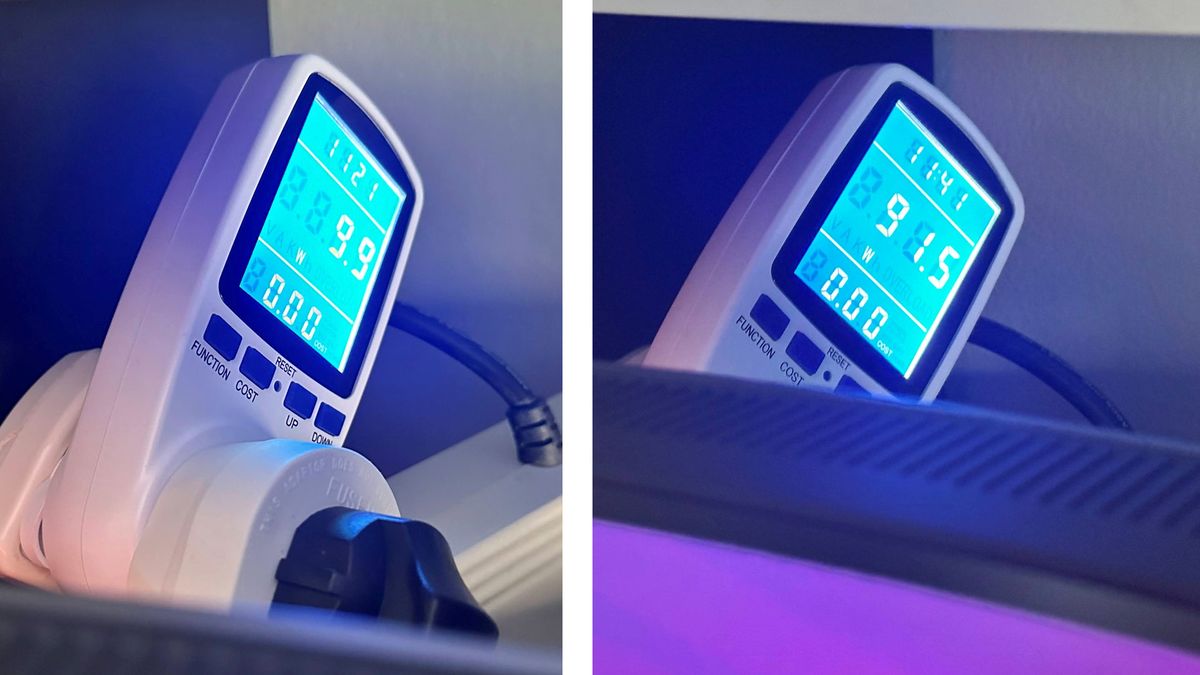
When I left the Senza AI 370 to idle, my power meter measured wattages at or below 10W from the wall for the whole system. When the system was pushed with simultaneous CPU and GPU benchmarks running, power draw seemed to peak at a little under 92W.
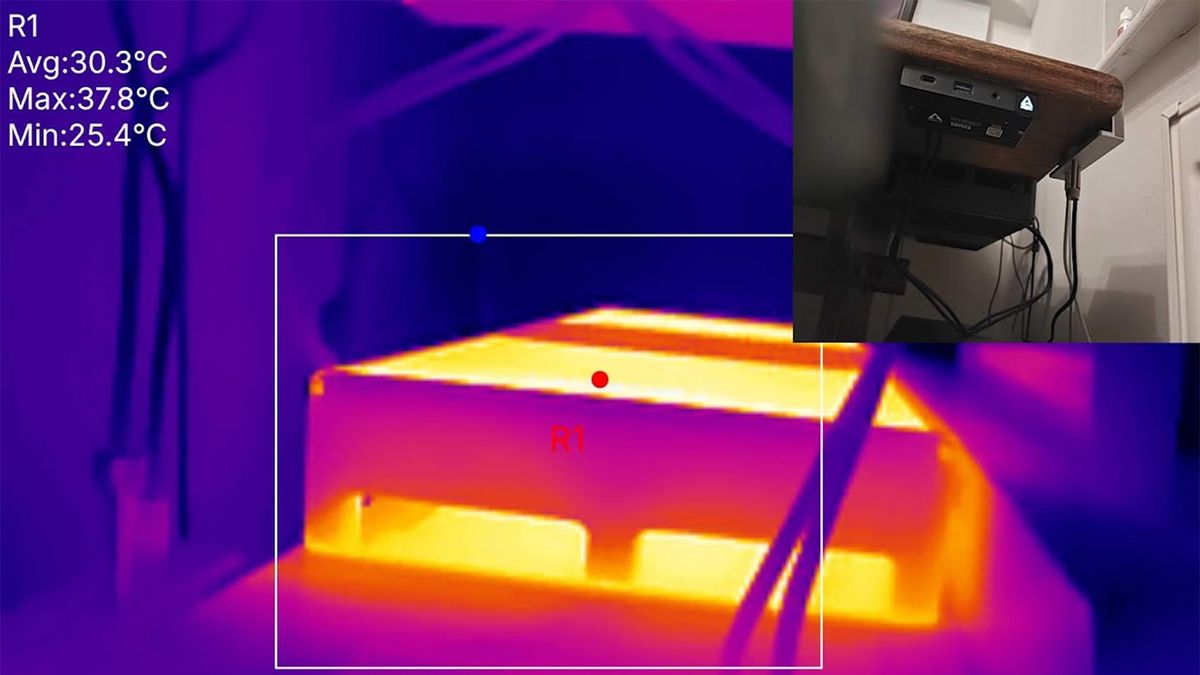
System tools showed that during light activities like browsing the web and typing reports like this one, the CPU temperature stayed around 30 degrees C. Playing The Division 2 for 30 or 40 minutes, the reported CPU temperature seemed to stay between 60 C and 70 C. It didn’t constantly creep upwards; it would sometimes go towards that upper bound, and sometimes fall again. However, running a workload like Cinebench R23 multicore the temperatures seemed to creep inexorably upwards, with the highest measurement I saw at 96 C.
Between tasks, the reported CPU temperature would fall very rapidly. I saw it dive from 75 C to 45 C in under 10 seconds after one of the recent benchmarks I completed. That’s pretty impressive given that there’s no fan.
In my testing before installing it under the desk, oddly enough, I could actually hear a sound when the YMTC PC411 SSD was being accessed. I'm unsure what it was, but I did notice it.
Software and Warranty on the Arctic Senza AI 370
Arctic’s Senza AI 370 ships with a clean copy of Windows 11 Pro installed. That's it. There were no bundled utilities, dashboards, or custom monitoring and tuning software. Arctic sells the Senza AI 370 with a two-year warranty.
Configurations of the Arctic Senza AI 370
Arctic sells just a single Senza AI 370 configuration: the one we tested with a AMD Ryzen AI 9 HX 370,32GB LPDDR5X-8000 memory and a 1TB SSD. Windows 11 Pro is included, but Arctic says that the machine is Linux compatible.
Those in Europe can head directly to the official company website and snag a Senza AI 370 for the MSRP of €1,199.99. Meanwhile, UK buyers can grab a device from Arctic’s official Amazon web store for £910.49. Compared with many of the other mini PC prices we are seeing, that seems very reasonable for a fully populated mini PC with fast memory and storage plus unique silent / passive appeal. Those German and UK prices include VAT at 19% and 20%, respectively.
I asked Arctic about the availability of the Senza AI 370 in the U.S. and was told that no official distributor had been set up for this device. The company is seeding the device to U.S. media, however, to gauge interest in devices like this.
Bottom Line
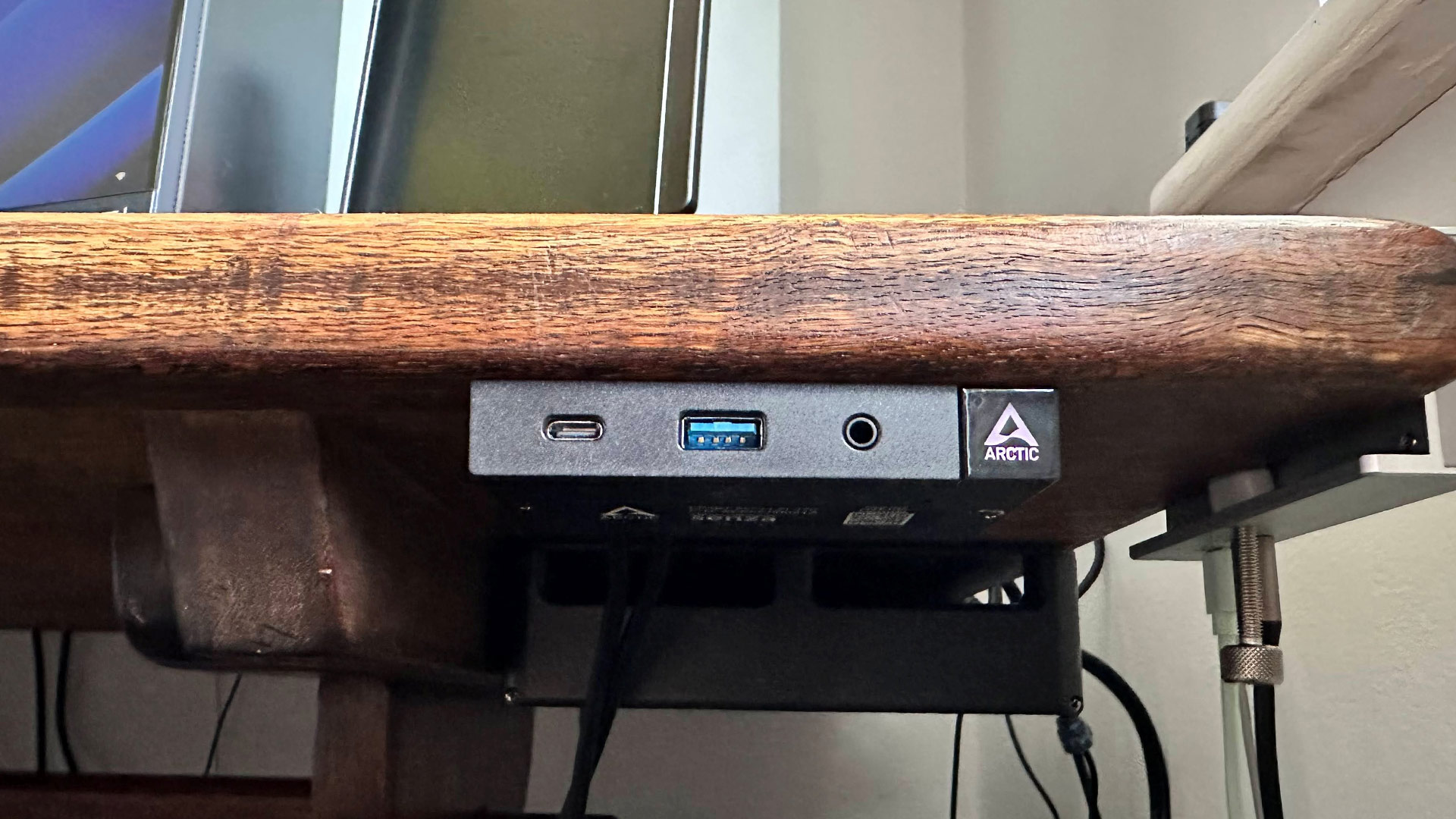
If you want a mini PC that you can't see or hear, the Arctic Senza AI 370 is for you. Many will be attracted by mini PCs for their minimal physical footprint, but Combine that with its silence, well-behaved thermals, plus solid performance, and there's really not much to complain about.
Concerning performance, Arctic’s choice of soldered 32GB LPDDR5X-8000 memory and a fast SSD gave this device equal or better application and gamingi performance compared to its newer-gen Ryzen 9 AI 470 HX equipped mini PC rivals we have tested recently. It is noticeably cheaper, too, but sadly not easy to grab if you live stateside right now.

Mark Tyson is a news editor at Tom's Hardware. He enjoys covering the full breadth of PC tech; from business and semiconductor design to products approaching the edge of reason.
What's Your Reaction?
 Like
0
Like
0
 Dislike
0
Dislike
0
 Love
0
Love
0
 Funny
0
Funny
0
 Wow
0
Wow
0
 Sad
0
Sad
0
 Angry
0
Angry
0







Comments (0)