

Astronomers Capture ‘Exceptionally Rare’ Star Explosion for Only the Second Time in 20 Years
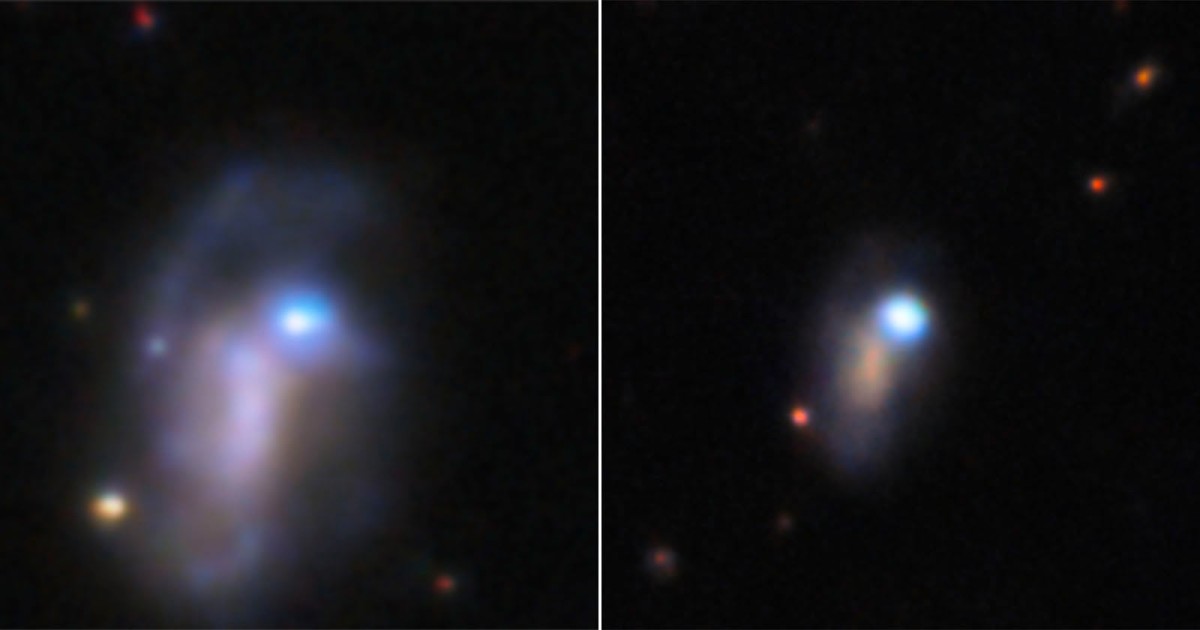
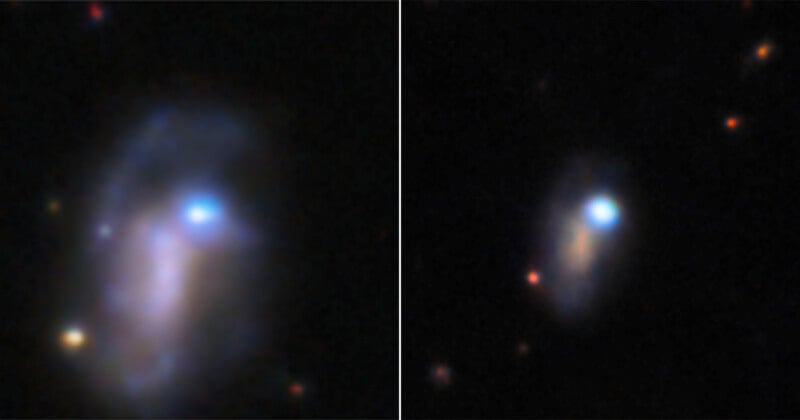 Left: Rubin image of SN 2026gzf host galaxy pre-explosion (May 2025–January 2026). Right: DECam image of supernova SN 2026gzf (April 3, 2026)
In March, the Einstein Probe, a satellite made by the Chinese Academy of Sciences in partnership with the European Space Agency, detected a very brief flash of “soft X-rays” emitted by a galaxy about 500 million light-years away. Within an hour, ground-based telescopes, including several at National Science Foundation (NSF) NOIRLab facilities, began investigating the region, getting a front-row seat to bombastic and very special star death.
Telescopes like the U.S. Department of Energy’s Dark Energy Camera, the U.S. National Science Foundation’s Nicholas U. Mayall 4-meter telescope, and the NSF-DOE Vera C. Rubin Observatory all turned their telescopes toward the flash, named EP260321a. Within an hour of monitoring the region, scientists discovered that the source of the soft X-ray detected by the Einstein Probe was a “rapidly brightening supernova,” later named SN 2026gzf.
“Two teams of scientists utilized several NSF NOIRLab facilities to observe the event and monitor its evolving light profile,” NOIRLab explains. “The teams were led by Brendan O’Connor, astronomer and McWilliams Fellow at Carnegie Mellon University, and Jillian Rastinejad, a NASA Einstein Fellow at the University of Maryland, College Park.”
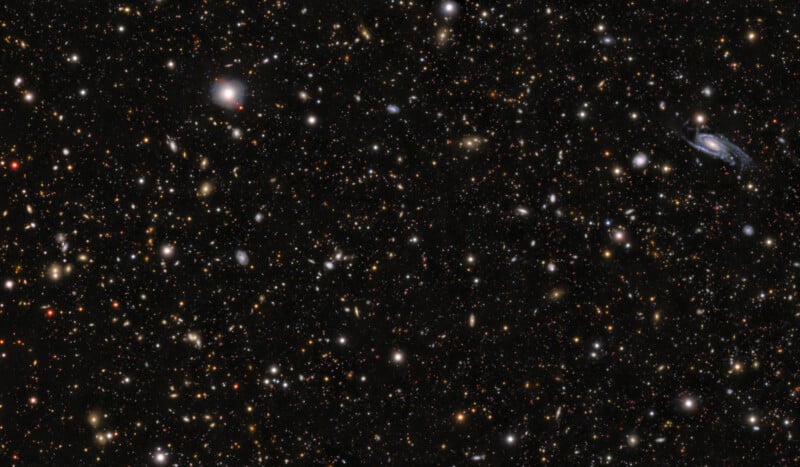 NSF–DOE Rubin image of the field around the progenitor to supernova SN 2026gzf
The teams have just published the results of their studies in The Astrophysical Journal Letters. O’Connor’s team’s paper is “EP260321a/SN 2026gzf: The Faintest Shock Breakout Associated with a Broad-lined Supernova,” while Rastinejad’s is “A Multi-Wavelength View of the First Type Ic-BL Supernova with an Einstein Probe X-ray Shock Breakout.”
Both teams independently arrived at a similar conclusion about the nature of the initial burst of X-rays. They each identified it as a “shock breakout,” which is the precise moment when a powerful shock wave from a stellar explosion breaks through the star’s surface and releases the first light of a supernova, or “colossal explosion of a star,” as the Department of Energy puts it.
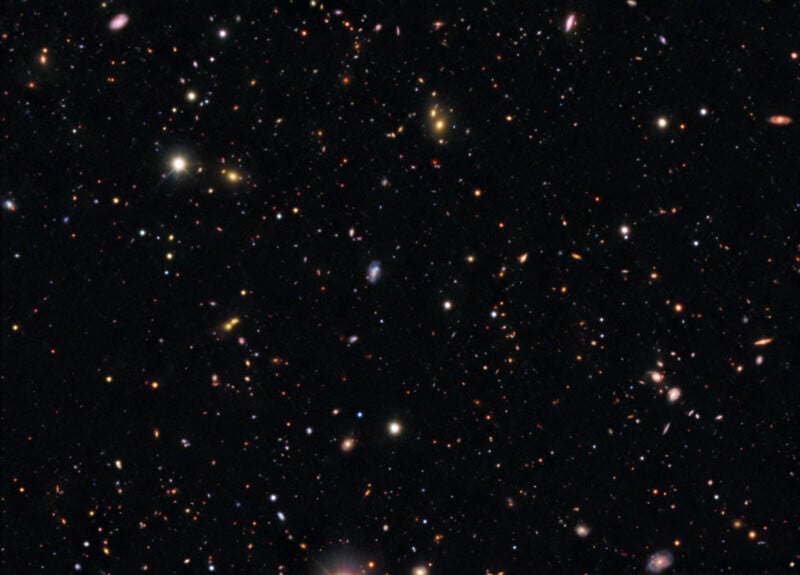 DECam image of the field around the progenitor to supernova SN 2026gzf
Scientists believe that these shock breakouts typically occur in all supernova explosions, but they are “notoriously difficult to observe” because they last only seconds or, if lucky, hours. In the past two decades, scientists have confidently identified an X-ray shock breakout just one other time. EP260321a is “exceptionally rare.”
Each team also identified that the explosion was a “broad-lined Type Ic supernova.”
“These supernovae typically possess jets of relativistic material — material that is moving close to the speed of light — and they are commonly linked to gamma-ray bursts, which are the brightest and most powerful class of explosions in the Universe,” NSF explains.
That said, SN 2026gzf is special for a few reasons. The initial shock breakout was the faintest ever associated with an Ic-BL supernova, although the explosion itself was not weak. Scientists also surprisingly found no evidence of a gamma-ray burst after the supernova itself, which is very unusual.
“SN 2026gzf looks remarkably similar to other energetic supernovae that have been previously linked to gamma-ray bursts. Yet multi-wavelength follow-up observations using the most sensitive facilities found no evidence for a relativistic jet or an afterglow, which are typically seen in those events,” says O’Connor. “One possibility is that the jet was ‘choked,’ either by the surface of the star or by circumstellar material surrounding the star.”
To investigate this “puzzling event,” O’Connor and his team used the 570-megapixel Dark Energy Camera (DECam) mounted on the NSF Victor M. Blanco 4-meter Telescope in Chile. The team used new images and compared them against archival data taken by the DECam 10 years ago. In both cases, the high-res camera revealed a blue light source at the same location, “offering rare clues about the progenitor system and its environment before the star died.”
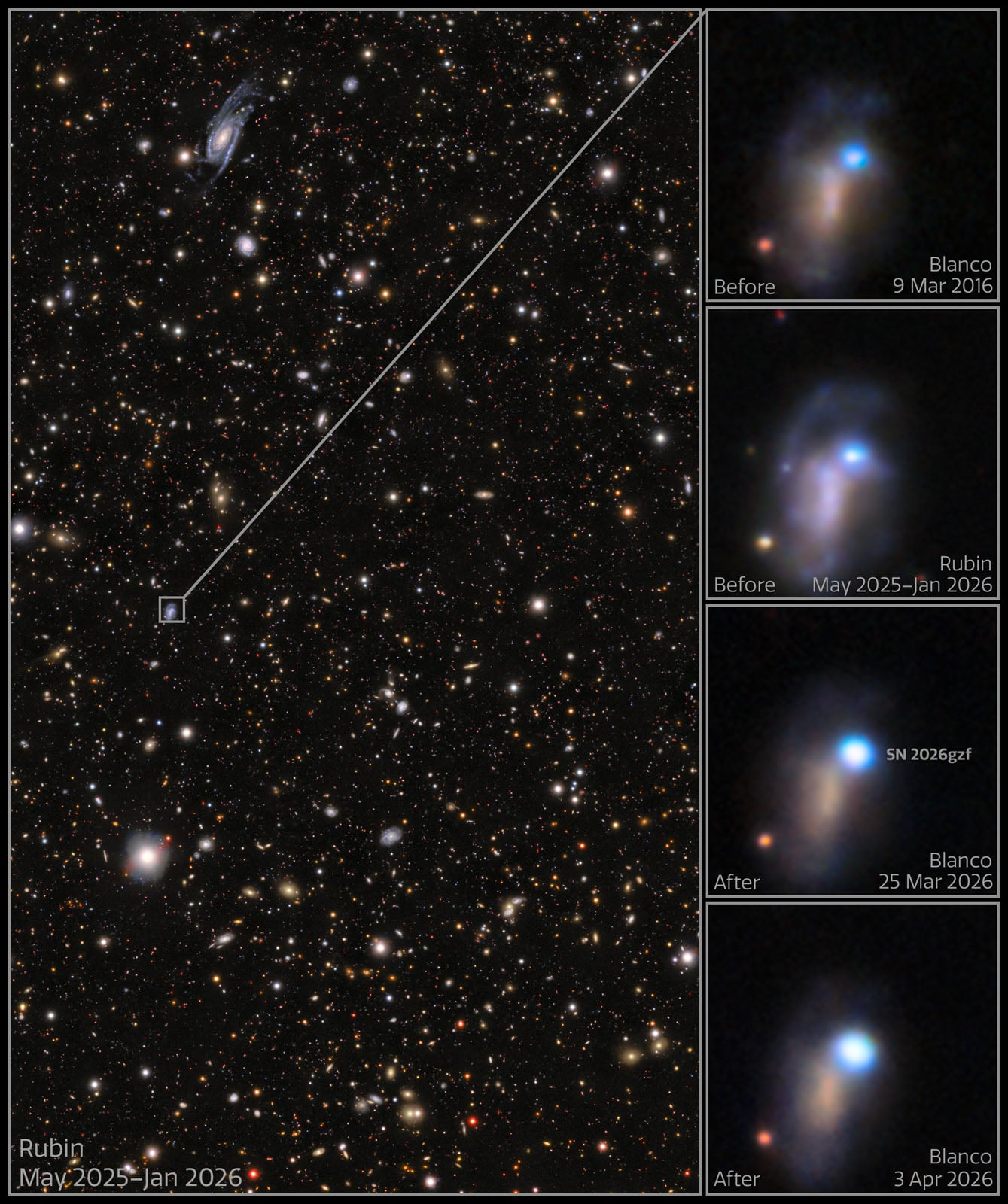 Rubin image of SN 2026gzf (annotated)
The new Vera C. Rubin Observatory supplied additional multi-band images of the area, as did the Dark Energy Spectroscopic Instrument. Scientists are especially excited about Rubin, which can deliver high-resolution images very often, providing detailed, long-term records of the supernova as it evolves.
O’Connor and his team also acquired observational data from NASA’s Chandra X-ray Observatory, the National Radio Astronomy Observatory’s Very Large Array, the Fraunhofer Telescope at Wendelstein Observatory, Caltech’s Palomar Observatory, the Hobby-Eberly Telescope, and the Southern African Large Telescope.
Rastinejad and her team used multi-wavelength observations from the Gemini Multi-Object Spectrographs, the International Gemini Observatory, and the Goodman spectrograph.
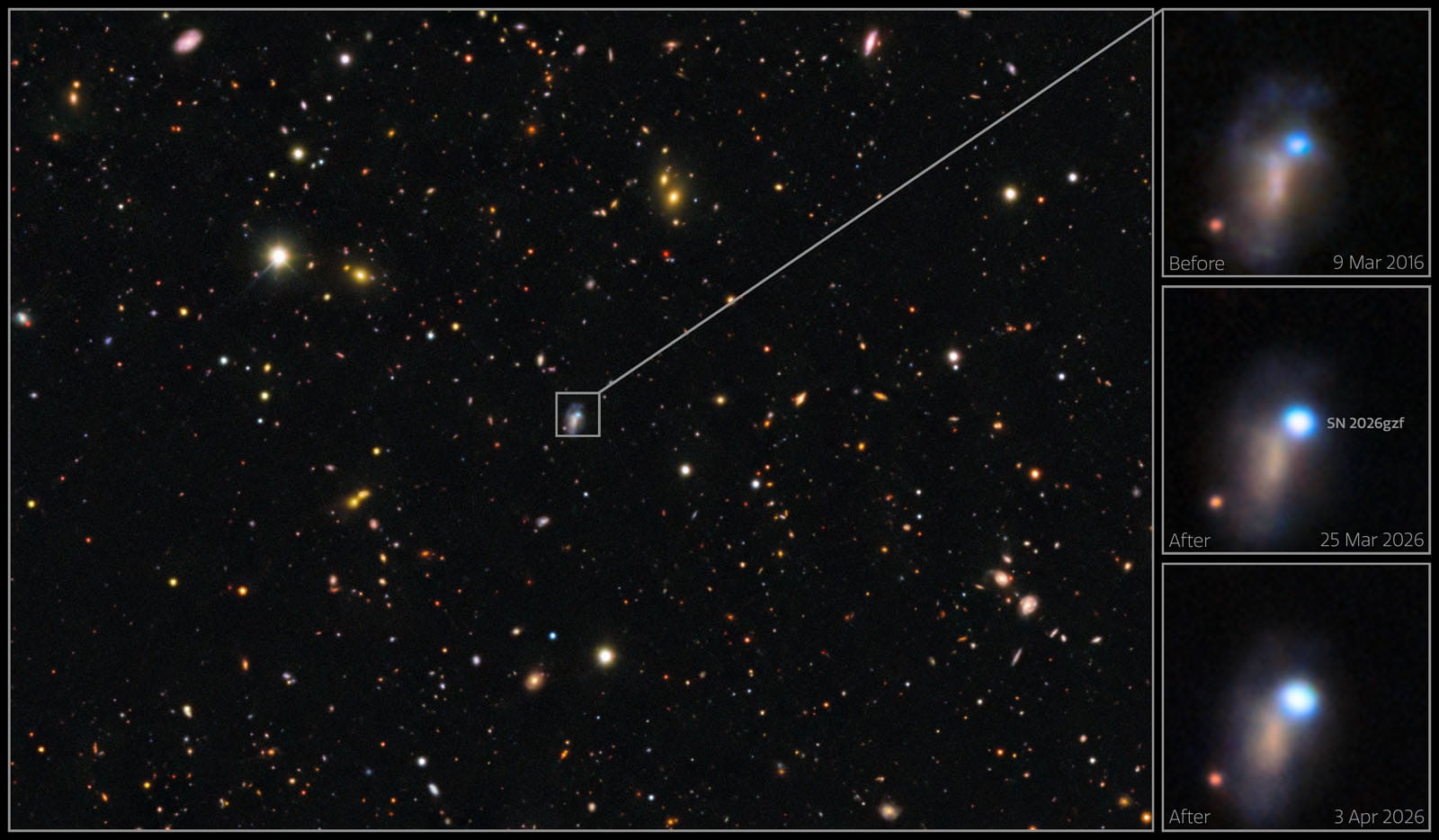 DECam images of supernova SN 2026gzf
Between the two teams of researchers, the hunt for information about EP260321a and SN 2026gzf was a truly global affair. The scientific community can be very cooperative, and it’s inspiring to see how quickly everyone came together to contribute.
“Our observations allowed us to study the physics of three pieces of this explosion: the X-ray shock breakout, the accompanying supernova, and the interaction of the supernova with material previously cast out by the dying star,” says Rastinejad. “With this information we were able to map out the structure of the material surrounding the star and understand the star’s violent lifestyle before it collapsed.”
Rastinejad’s team determined that the progenitor is a Wolf-Rayet star. This type of star is born with about 20 times the mass of the Sun and burns through its stock of hydrogen in its early life. Before this star blew up spectacularly, it had irregular episodes of mass loss, ejecting its hydrogen and helium. This meant the stripped remains comprised mostly carbon and oxygen.
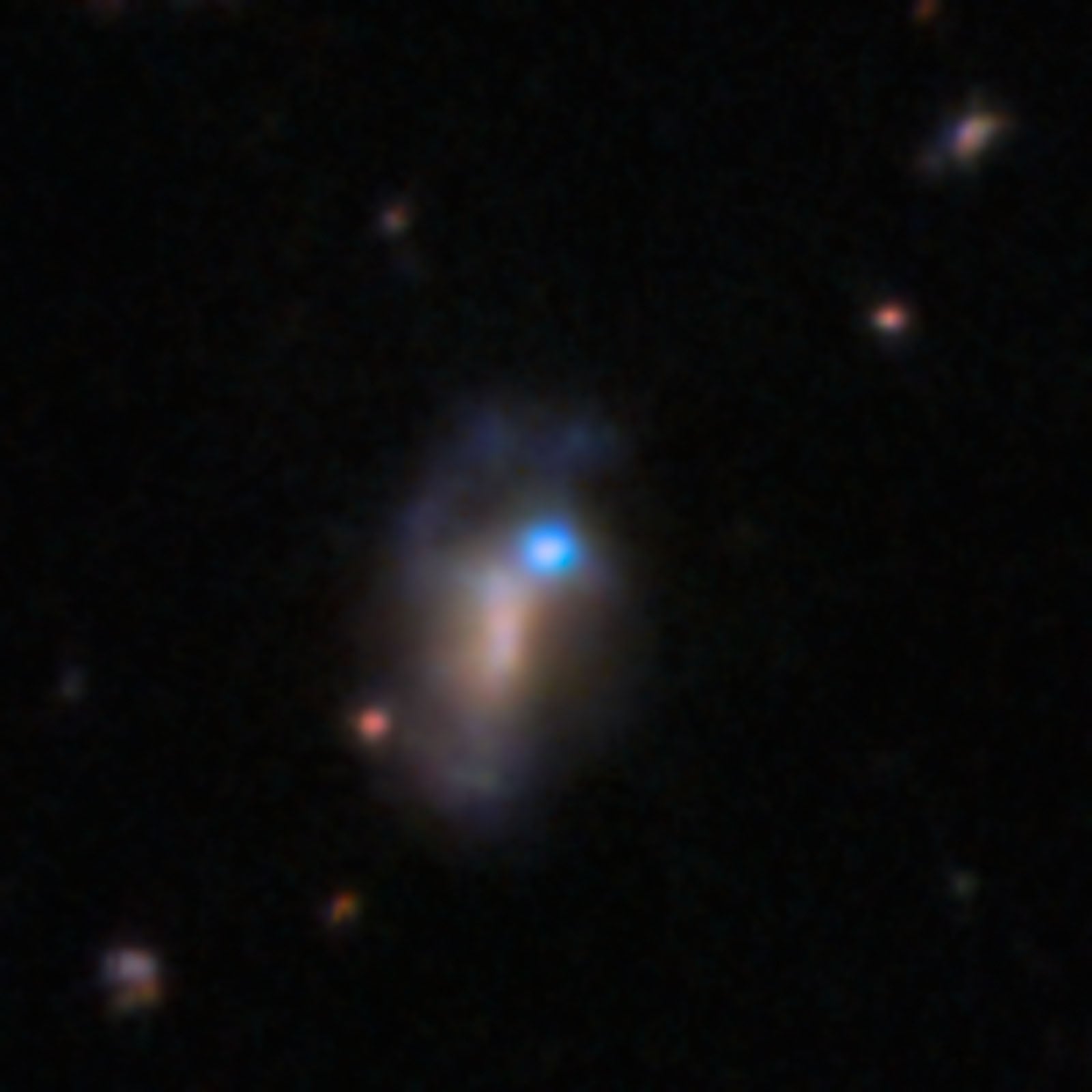 DECam image of supernova SN 2026gzf host galaxy pre-explosion (March 9, 2016)
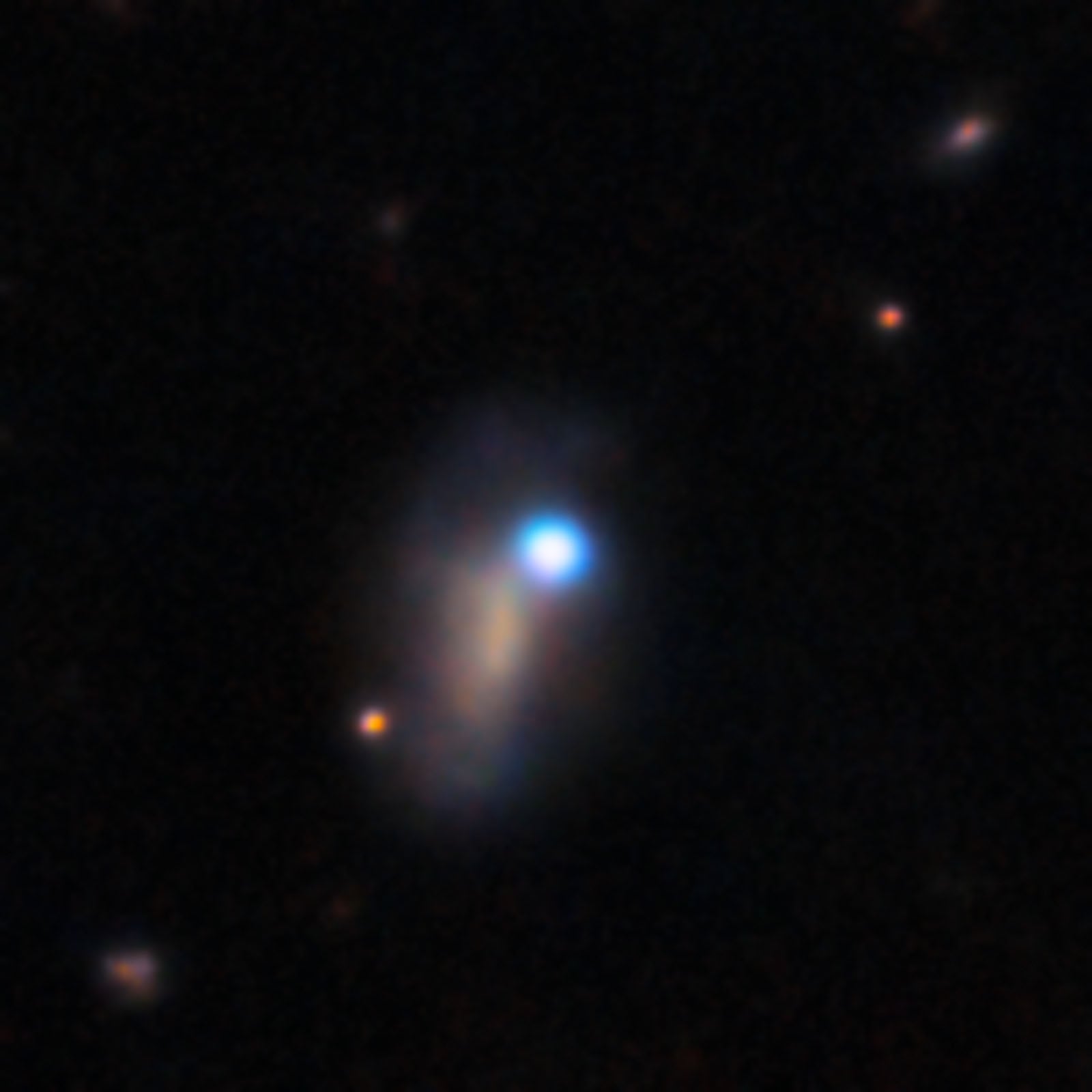 DECam image of supernova SN 2026gzf (March 25, 2026)
“The turbulent mass loss created multiple shells of material around the star: a nearby, compact shell of low-mass material that emitted the initial X-ray signal, plus an extended, non-symmetric shell of material that emitted the optical supernova signal,” NSF explains.
“This is the first time we’ve mapped out the pre-explosion environment of a star that has been stripped of hydrogen and helium,” says Gokul Srinivasaragavan, a recent PhD graduate from the University of Maryland and a member of Rastinejad’s team. Srinivasaragavan is the second author on the team’s paper. “Going forward, I’m excited to observe more shock breakout events in similar detail to test if all stripped stars have a similar ‘lifestyle’ prior to collapse and what, if any, differences we see.”
Thanks to the Einstein Probe’s initial observation and a very rapid response in the astronomy community, scientists have now learned that massive stars can die in more diverse ways than previously realized.
“The result also demonstrates the growing power of coordinated time-domain astronomy, where space missions and ground-based observatories work together to capture transient cosmic events in real time. By combining observations from Einstein Probe, NSF NOIRLab facilities, and partner observatories around the world, researchers were able to reconstruct a rare explosion in unprecedented detail,” NSF concludes.
Image creditsNSF–DOE Vera C. Rubin Observatory/NOIRLab/SLAC/AURA. CTIO/NOIRLab/DOE/NSF/AURA.
Affiliate Disclosure PetaPixel articles may include affiliate links; we may earn a commission if you buy through one.
What's Your Reaction?
 Like
0
Like
0
 Dislike
0
Dislike
0
 Love
0
Love
0
 Funny
0
Funny
0
 Wow
0
Wow
0
 Sad
0
Sad
0
 Angry
0
Angry
0










Comments (0)