

Budget Real Estate Photography Gear That Actually Holds Up
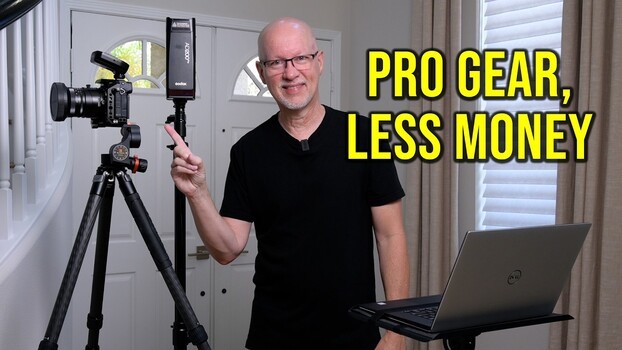
A $1,000 camera body, a $160 tripod, and a $12 umbrella can carry a full real estate photography business. The gear that separates clean interior work from amateur shots costs far less than most people assume, and much of it gets skipped entirely by people starting out.
Nathan Cool Photo walks through the budget kit he actually uses on paid jobs, starting with the camera. Cool shoots with a Nikon Z5, a 24-megapixel full frame body you can find around $1,000, paired with lenses that run between $400 and $800. His point is direct: the camera you already own is probably fine, and megapixel counts past 24 buy little for listing work. He spends most of the video on the parts of the kit that get overlooked, which is where the real decisions get made.
Tripods come first, and Cool gives three things to look for. Get carbon fiber for the weight and stiffness, look for "heavy-duty" rather than a travel model with thin legs, and choose twist-lock legs over flip locks. He points to the Innorel at $160 and a Sirui around $200, both carbon fiber with twist locks. Past $300, he says the returns flatten out. The same argument runs through his take on tripod heads, where he defends the K&F Concept and Benro geared heads against the "cheap head" reputation. Bad reviews, he explains, usually come from people using the fine-adjustment inner ring for large pans instead of loosening the outer knurled ring first.
For cases, Cool moves away from soft camera bags toward hard-sided protection built for daily abuse. The Pelican Vault line runs about $190, roughly 30% cheaper than the older 1510 case that once served as the standard. Storage gets a similar treatment. He recommends a SanDisk 32GB Extreme Pro SDHC card with 100 MB per second read speed, arguing that 32 GB is the sweet spot for a 24-megapixel body, and he leans on dual card slots for automatic raw backup rather than buying the most expensive media he can find.
The through-line here connects to a wider shift in how affordable gear has caught up to professional needs. Twenty years ago, geared heads and hard cases sat well outside a beginner's budget, which pushed everyone toward ball heads and soft bags to save money. That gap has closed. A geared head now costs nearly the same as a good ball head, and a Pelican-grade case runs under $200. The lesson worth carrying into your own buying: spend on the parts that touch composition and protection, then stop. Cool's SD card note also reflects something happening right now, with memory prices climbing as AI demand strains supply, which makes his case for a modest 32 GB card more practical than it would have sounded a couple of years back. Knowing where the diminishing returns kick in keeps money in your pocket without costing you a single usable frame.
Lighting rounds out the kit, and Cool keeps it lean here too. He mentions the Godox AD200 Pro as one flash he recommends, then makes the case that you can skip a heavy C-stand. A Neewer light stand around $60 reaches 9 feet, which he calls the practical ceiling for height, and the air cushion serves double duty as a shock absorber and a marker of build quality. His final piece is the one most people ignore: a shoot-through umbrella, about $25 a pair. Brand barely matters, and he treats them as near-disposable while insisting you carry a set for wood ceilings and tall rooms.
Watch the video above to see Cool demonstrate the geared-head technique and his full budget setup in action.
What's Your Reaction?
 Like
0
Like
0
 Dislike
0
Dislike
0
 Love
0
Love
0
 Funny
0
Funny
0
 Wow
0
Wow
0
 Sad
0
Sad
0
 Angry
0
Angry
0









Comments (0)