

Cooler Master V4 and V8 3DHP Review: A masterful engineering achievement
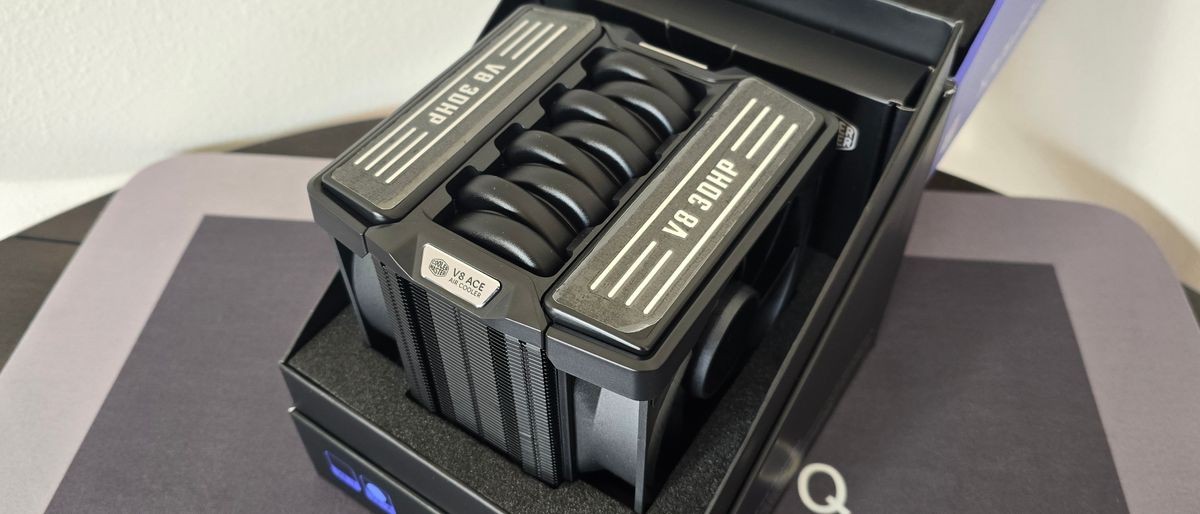
Cooler Master’s 3DHP tech, presented in its Master V4 and V8 air coolers, is the biggest advancement in air cooling in years. But early adoption comes at a price.
Pros
- +
3D heatpipes allow for reduced fin area
- +
V4 Alpha is one of the quietest coolers on the market
- +
V8 Ace is on par with the best dual-tower air coolers
- +
Excellent RAM thermals in Karhu testing
- +
Strong noise-normalized performance
Cons
- -
Doesn’t perform as well in gaming scenarios
- -
V8 Ace carries a premium price tag
Why you can trust Tom's Hardware Our expert reviewers spend hours testing and comparing products and services so you can choose the best for you. Find out more about how we test.
What makes Cooler Master’s new V4 Alpha and V8 Ace 3DHP air coolers stand out against their competitors? Well, it’s in the name of the product – the company’s new 3DHP (3D heatpipe) technology represents a serious advancement in cooling.
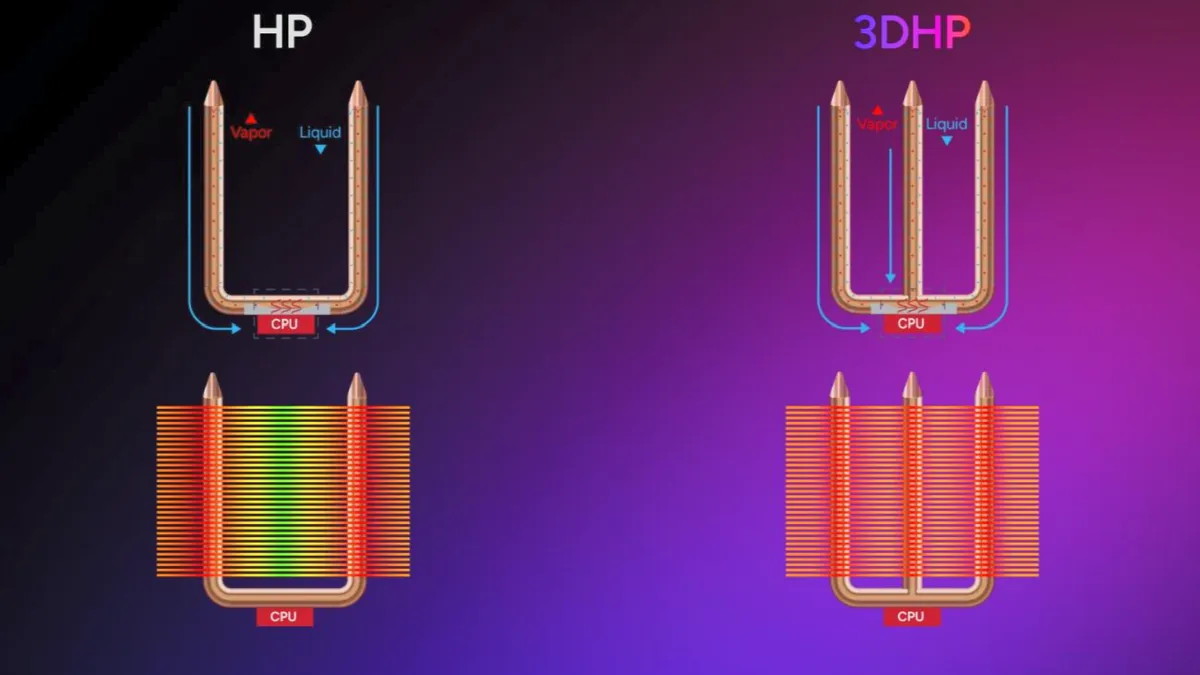
Traditional copper heatpipes are typically formed in a “U” shape, and work well enough in most scenarios. But Cooler Master’s 3DHP heatpipes look more like a trident, with three ends instead of two. There’s more to the tech, which we will cover in more detail below.
Additionally, the V8 Ace 3DHP features two of the strongest fans we’ve ever tested from a Cooler Master product, with liquid crystal polymer blades and backed by a six-year warranty.
Latest Videos From

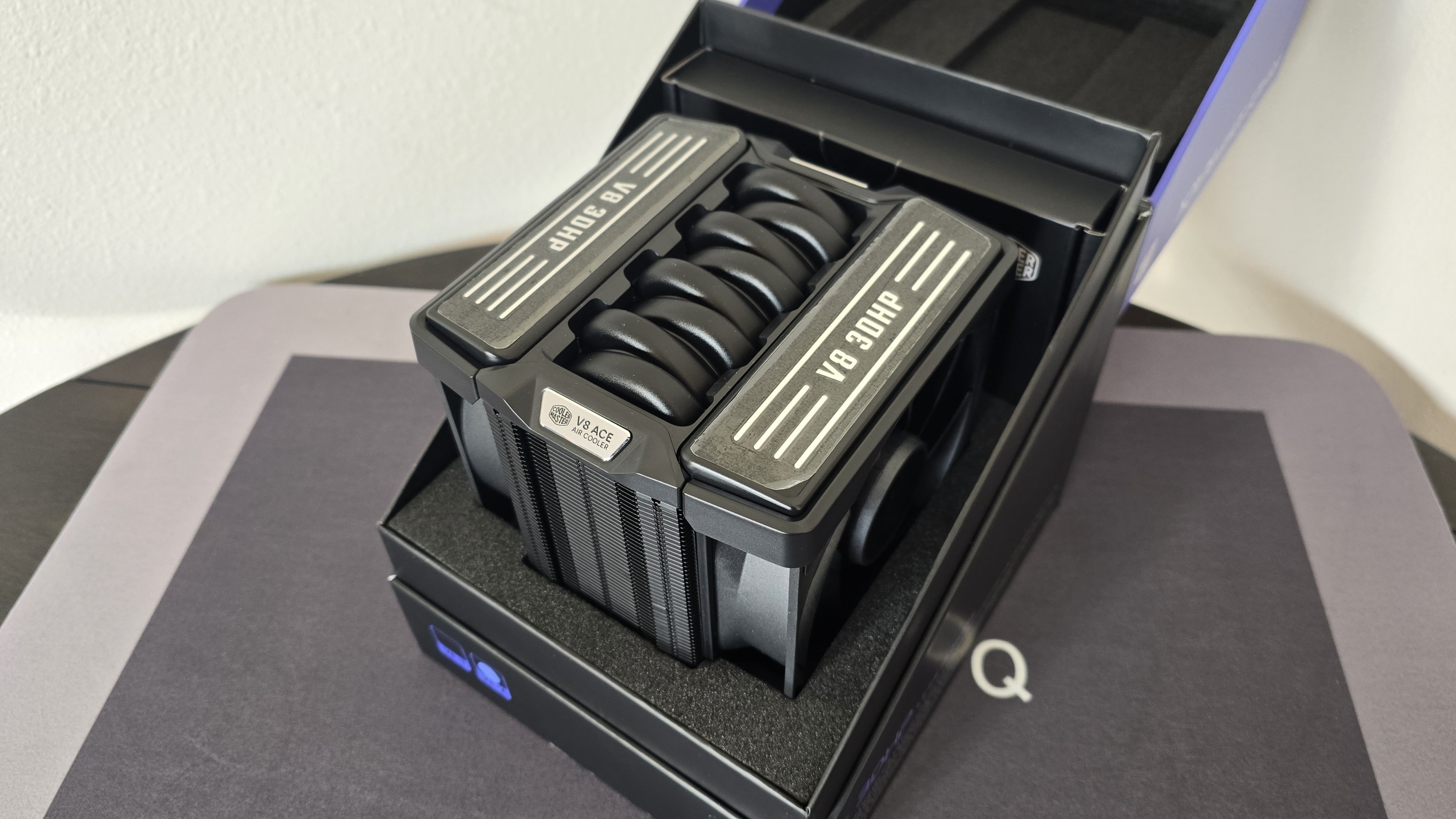
Let's take a look at the specifications and features of these coolers. Then we’ll go over thermal and noise benchmarks to decide if the V4 Alpha and V8 Ace 3DHP air coolers are good enough to make our list of the best CPU coolers we’ve tested.
Cooler specifications
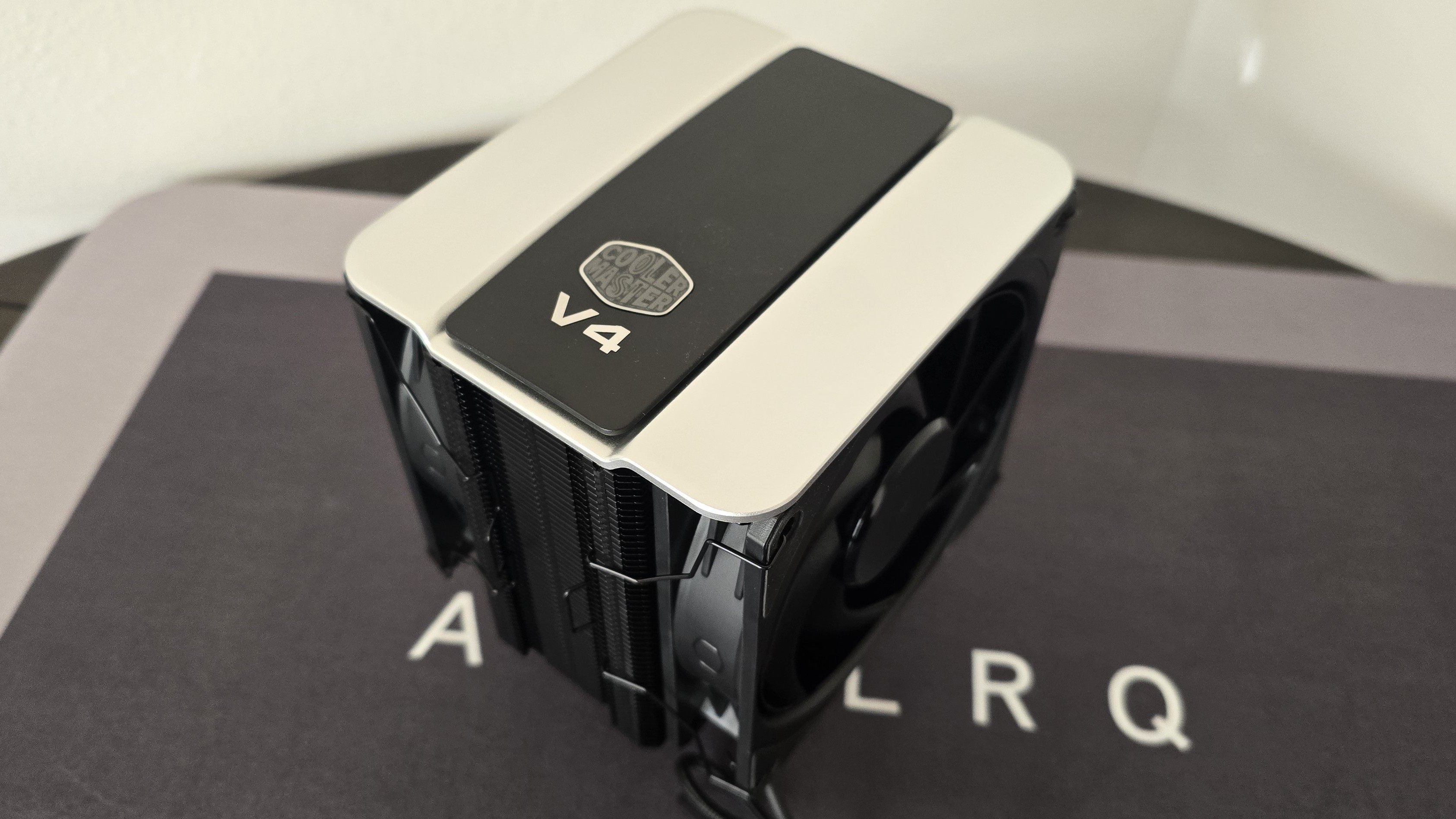
Swipe to scroll horizontally
Cooler | V8 Ace 3DHP/V4 Alpha 3DHP |
Colors | Black |
MSRP | $119.99/$49.99 |
Lighting | None |
Warranty | Six years/five years |
Socket Compatibility | AMD AM5/AM4 |
Dimensions | 138.95 (W) x 136.47 (D) x 167.3mm (H)/ 133 (W) x 114 (D) x 161mm (H) |
Maximum TDP with AMD’s Ryzen 9 9950X3D (Our Testing) | Full speed fans: >249W/237W Noise-normalized: >245W/237W |
Features of Cooler Master’s V4 Alpha and V8 Ace
▶️ Innovative 3DHP Heatpipes
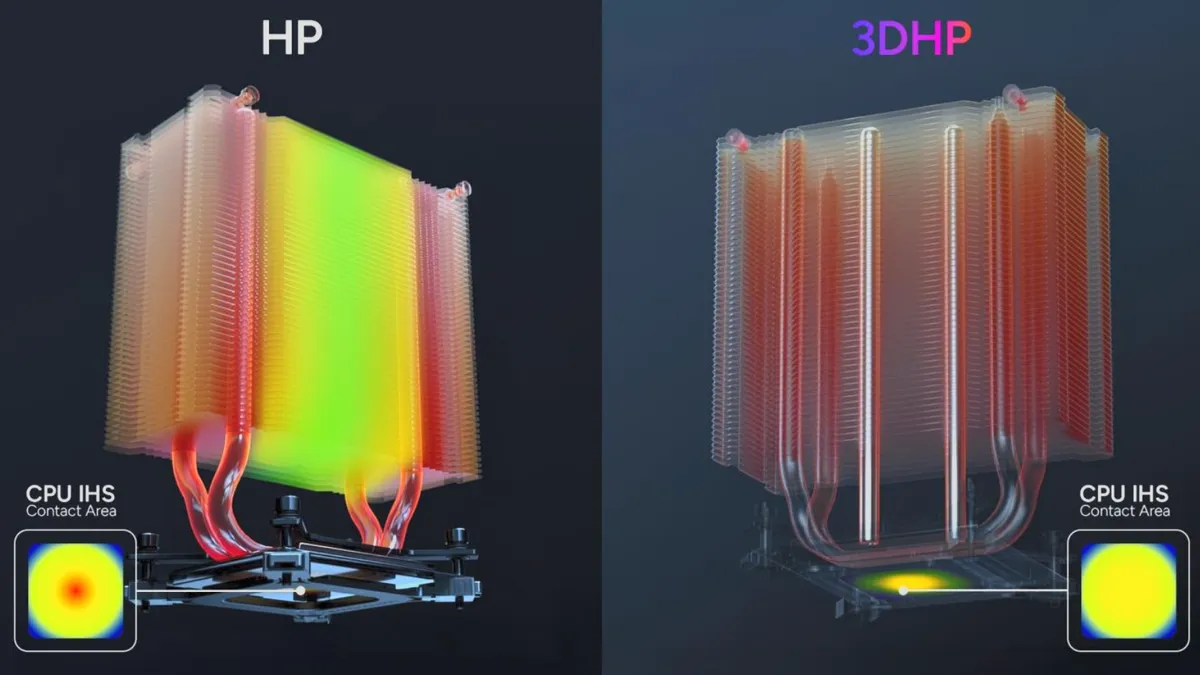
Both the V4 Alpha and V8 Ace are powered by Cooler Master’s innovative 3DHP heatpipe technology. To simplify things somewhat, while most heatpipes are “U” shaped, with one prong of each heatpipe on the left and right sides of a heatsink, 3D heatpipes add a prong in the middle to give it more of a trident shape, enhancing the efficiency of thermal transfer.
Traditional heatpipe setups don’t usually fully saturate the fins of a heatsink, only providing 70% fin utilization, according to Cooler Master. This makes sense, as you’ll often see that temperatures continue to rise in extended-length cooler testing as the fins become more fully saturated. Cooler Master claims that with its 3D heatpipes, fin utilization is increased to 95% or more. We’ll see how that plays out in our benchmark testing shortly.
Stay On the Cutting Edge: Get the Tom's Hardware Newsletter
Get Tom's Hardware's best news and in-depth reviews, straight to your inbox.
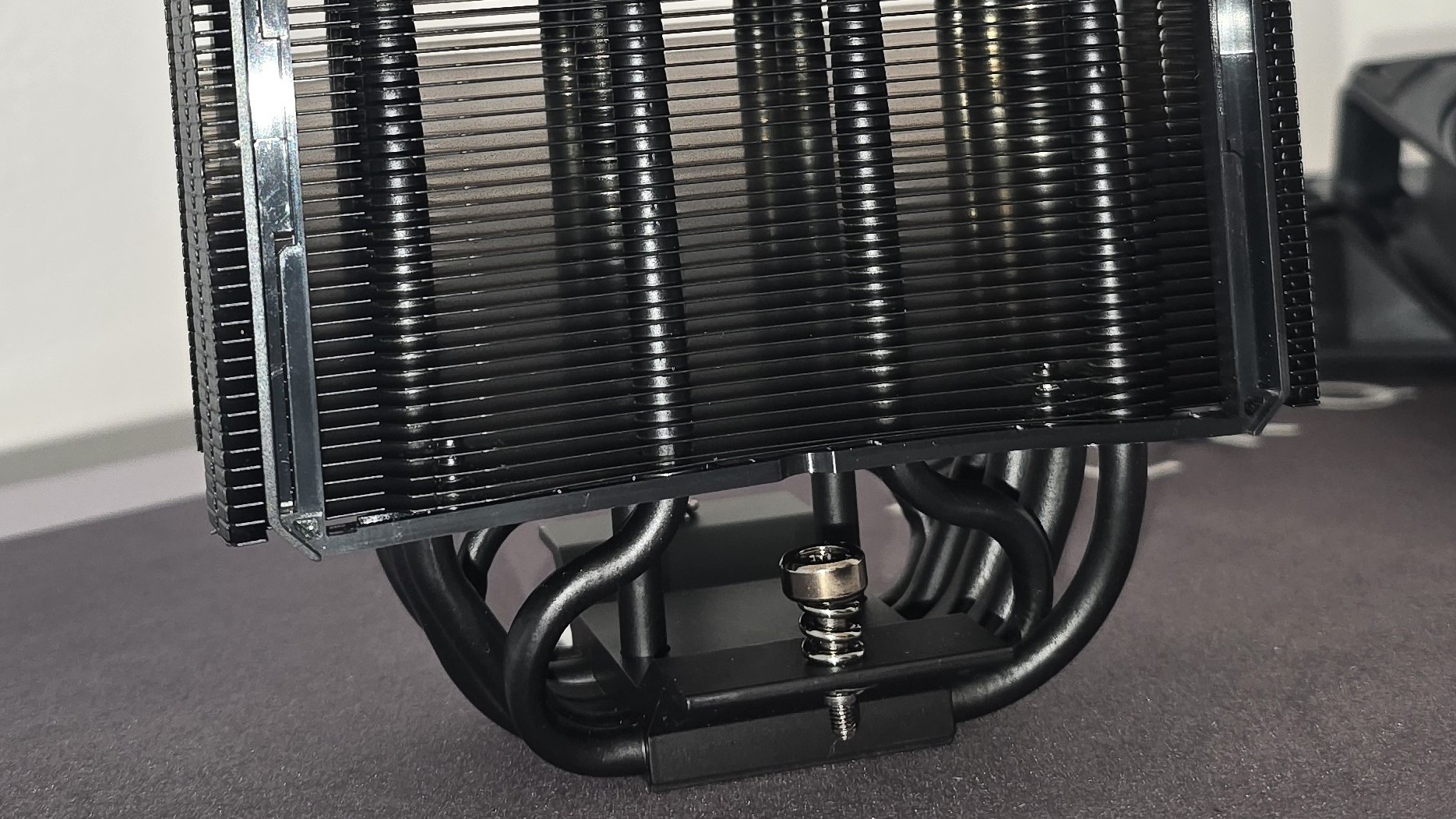
▶️ RAM Clearance
RAM compatibility is excellent with both of these coolers. The V4 Alpha doesn’t overhang or interfere with RAM DIMMs at all, allowing for compatibility with all sizes of DDR4 or DDR5 DIMMs.
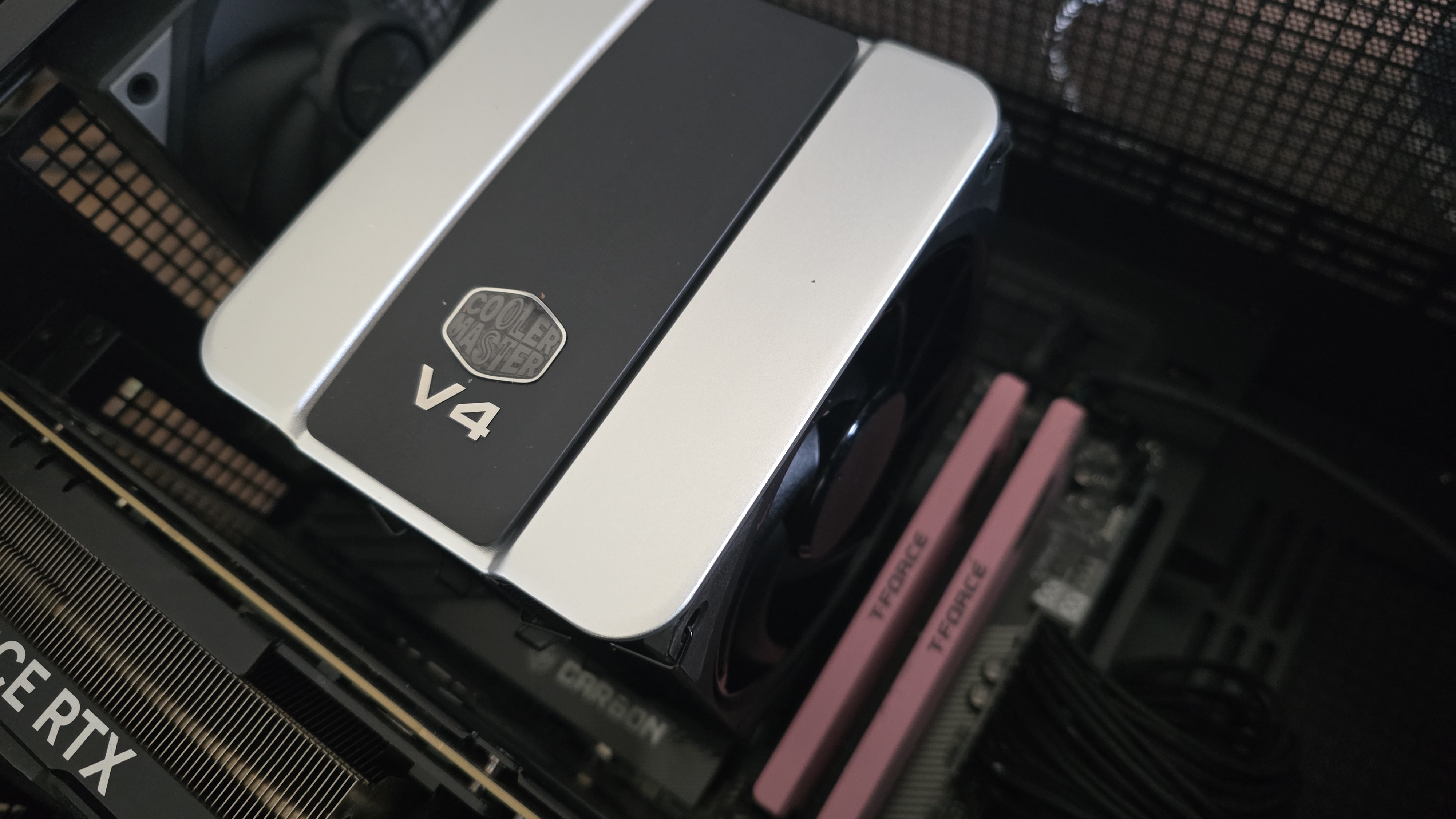
The V8 also has wide RAM compatibility. Its intake fan does overhang the DIMM slots, but if your RAM is particularly tall – like our T-Force Xtreem DDR5-7200 featured below – the sliding rail system allows you to easily adjust fan position, so things fit properly. We had to raise the fan by a few millimeters for proper clearance, but I think the sticks I’m using are about the tallest on the market, at 48.8mm height. Officially, RAM up to 45mm in height is supported.
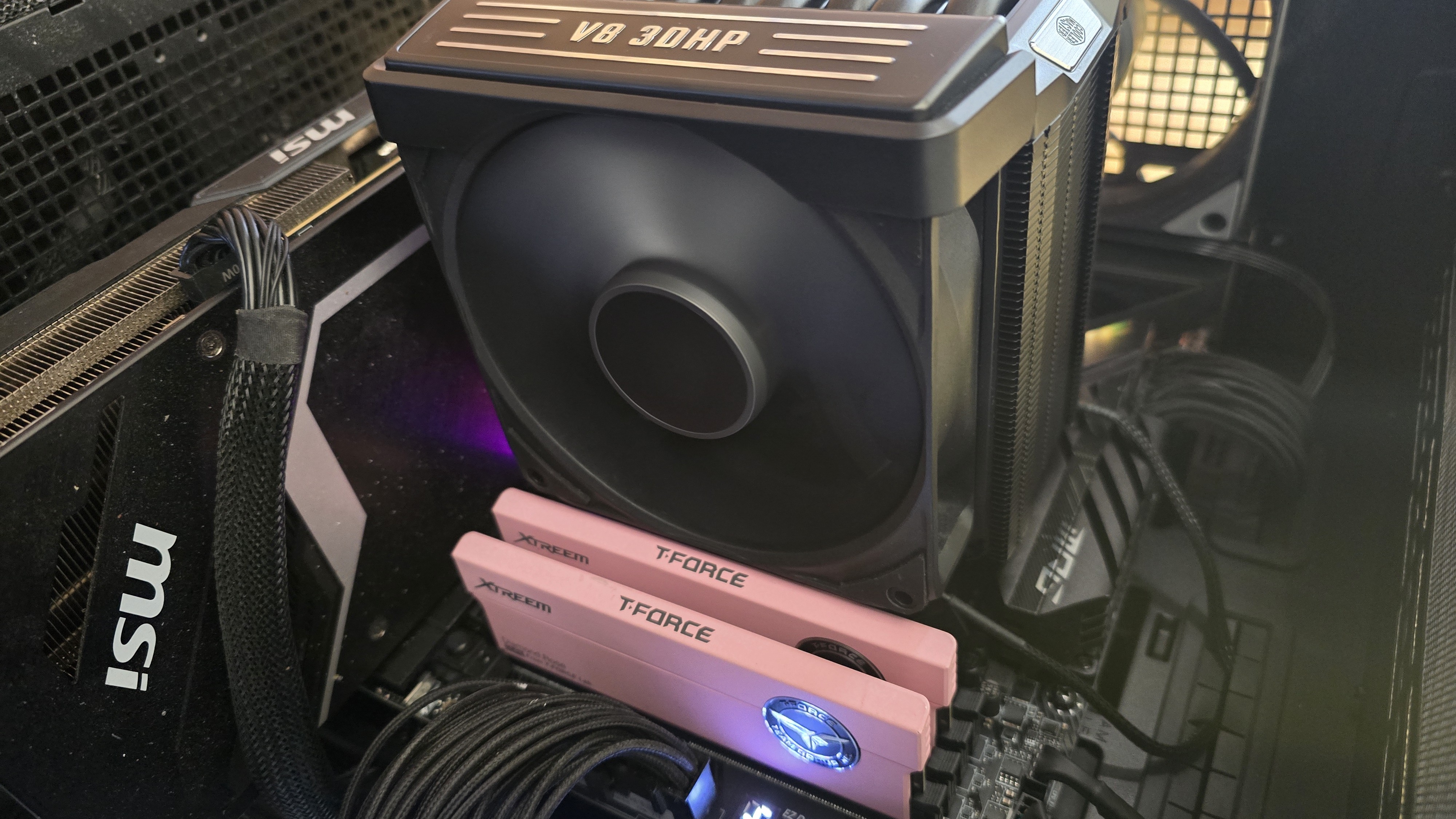
▶️ 30mm thick Liquid Crystal Polymer fans
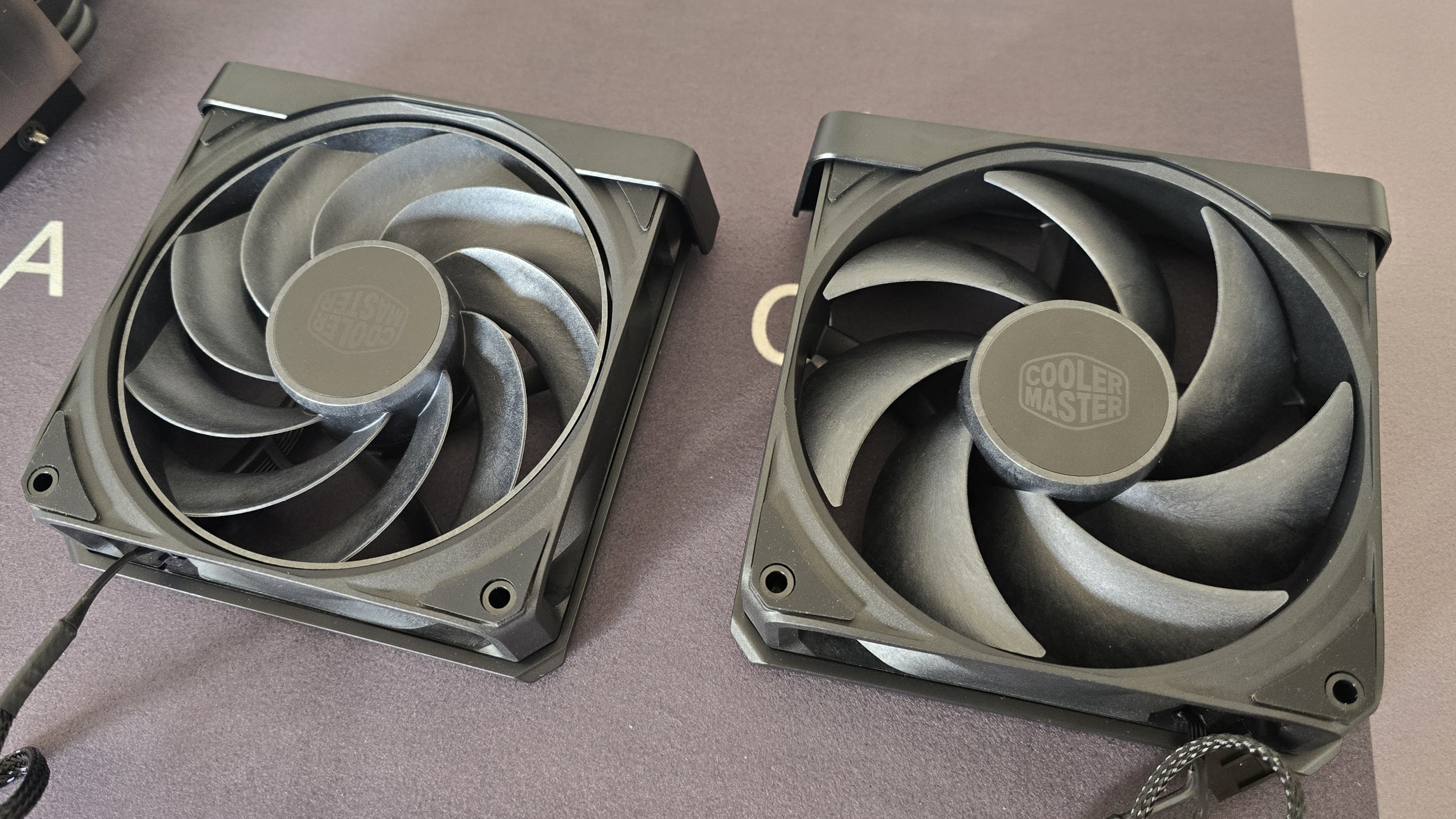
There’s more to a cooler than just the heatsink. The included fans have a direct impact on aesthetics, noise levels, and overall thermal performance. The fans on the V8 Ace 3DHP are made for longevity, built with liquid crystal polymer (LCP) blades and loop dynamic fan bearings.
They come pre-installed with a sliding rail system, allowing for simple installation and height adjustment.
Swipe to scroll horizontally
Fan Speed | 0–2500 RPM ±10% |
Dimensions | 120 x 120 x 30 mm |
Airflow | 89.6 CFM (front fan), 61.0 CFM (rear fan) |
Air Pressure | 3.85 MMH20 (front fan), 2.00 MMH20 (rear fan) |
▶️ Aesthetics
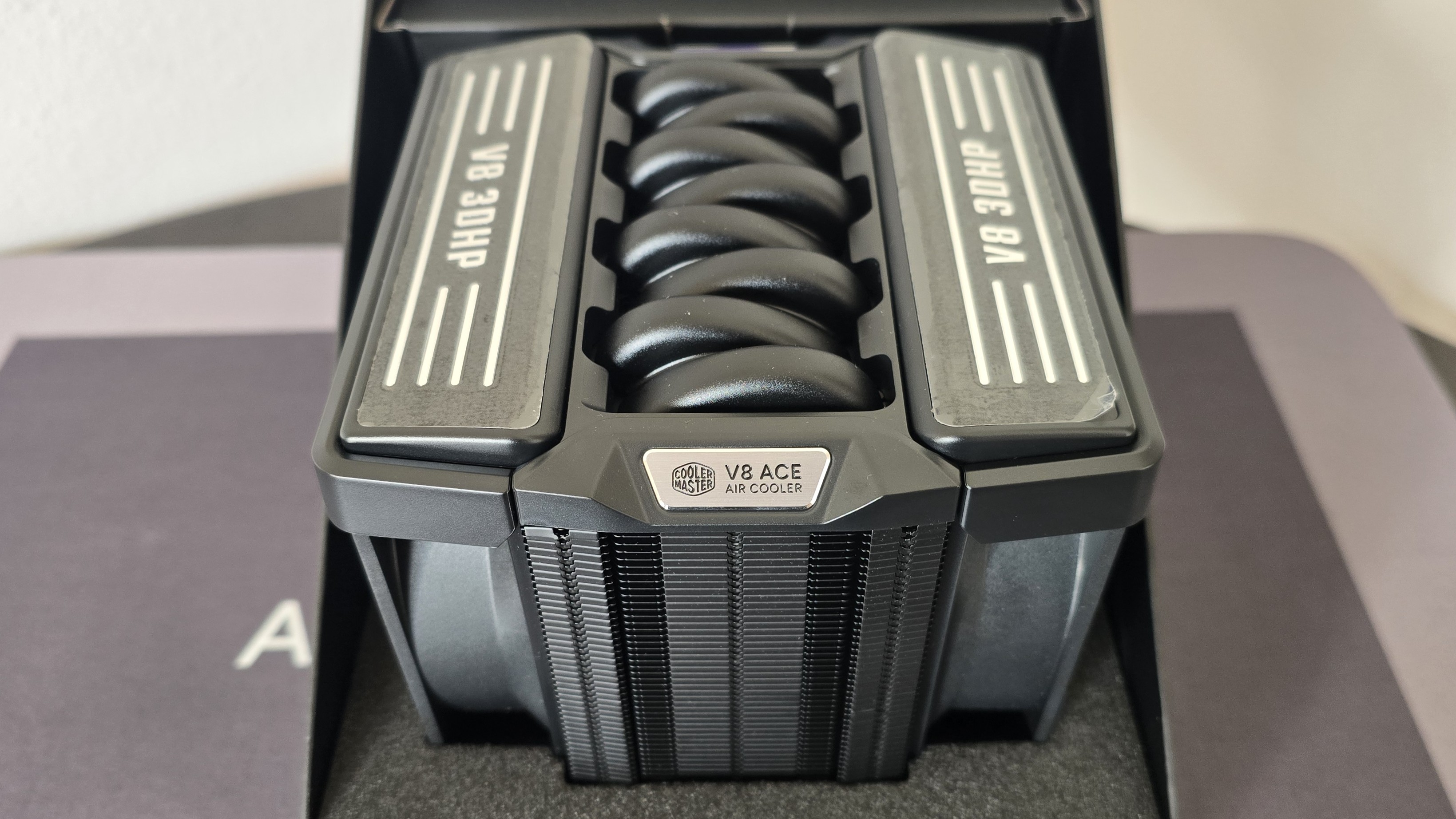
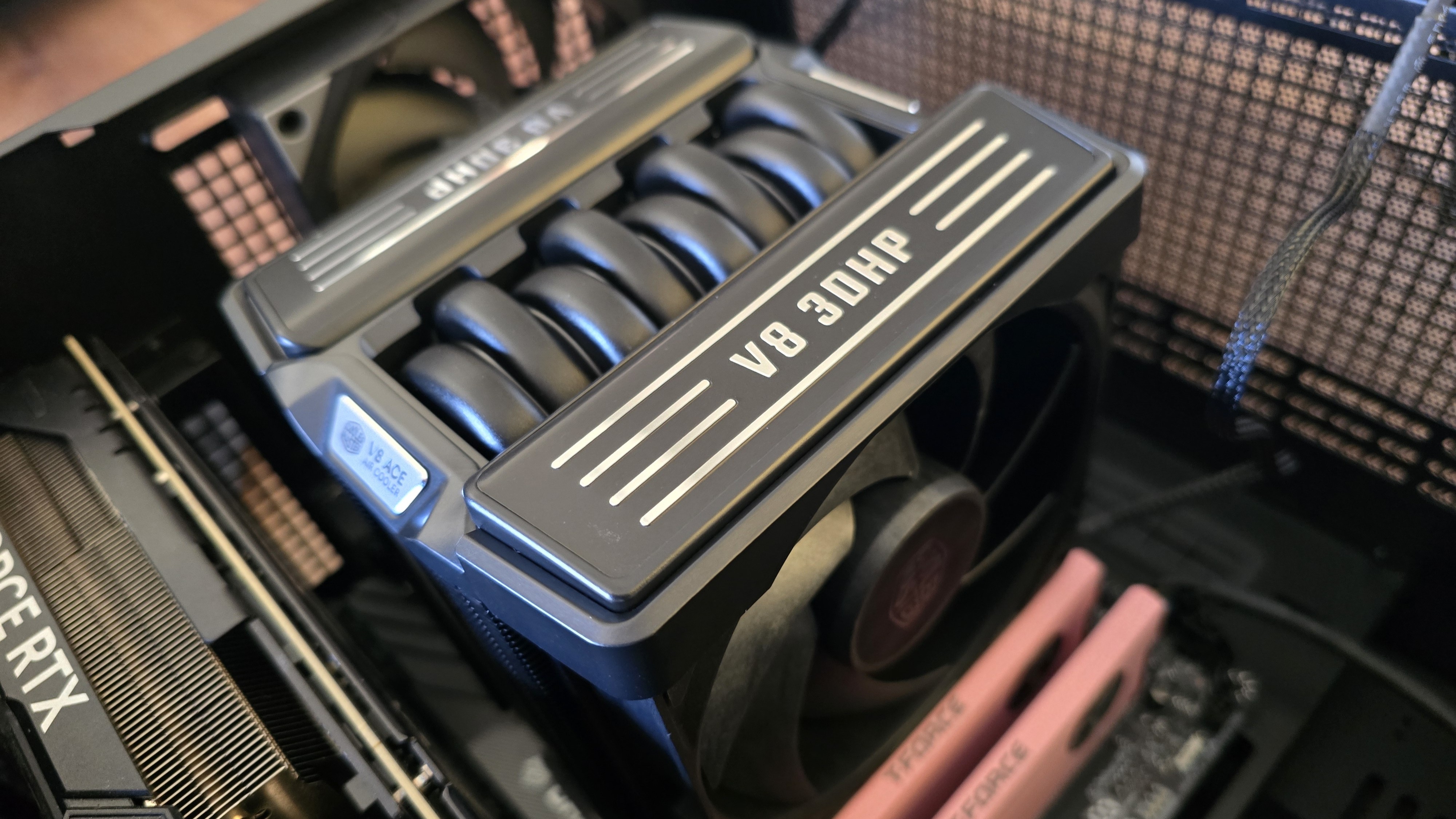
You might notice the top of the V8 Ace 3DHP looks like it has eight gigantic heatpipes – but note they’re not actually real heatpipes. Does that mean it’s only decorative, and serves no real purpose? I wouldn’t say that. The “fake” heatpipes here seem to be made from metal and are cold to the touch, indicating that they do have the ability to absorb heat.
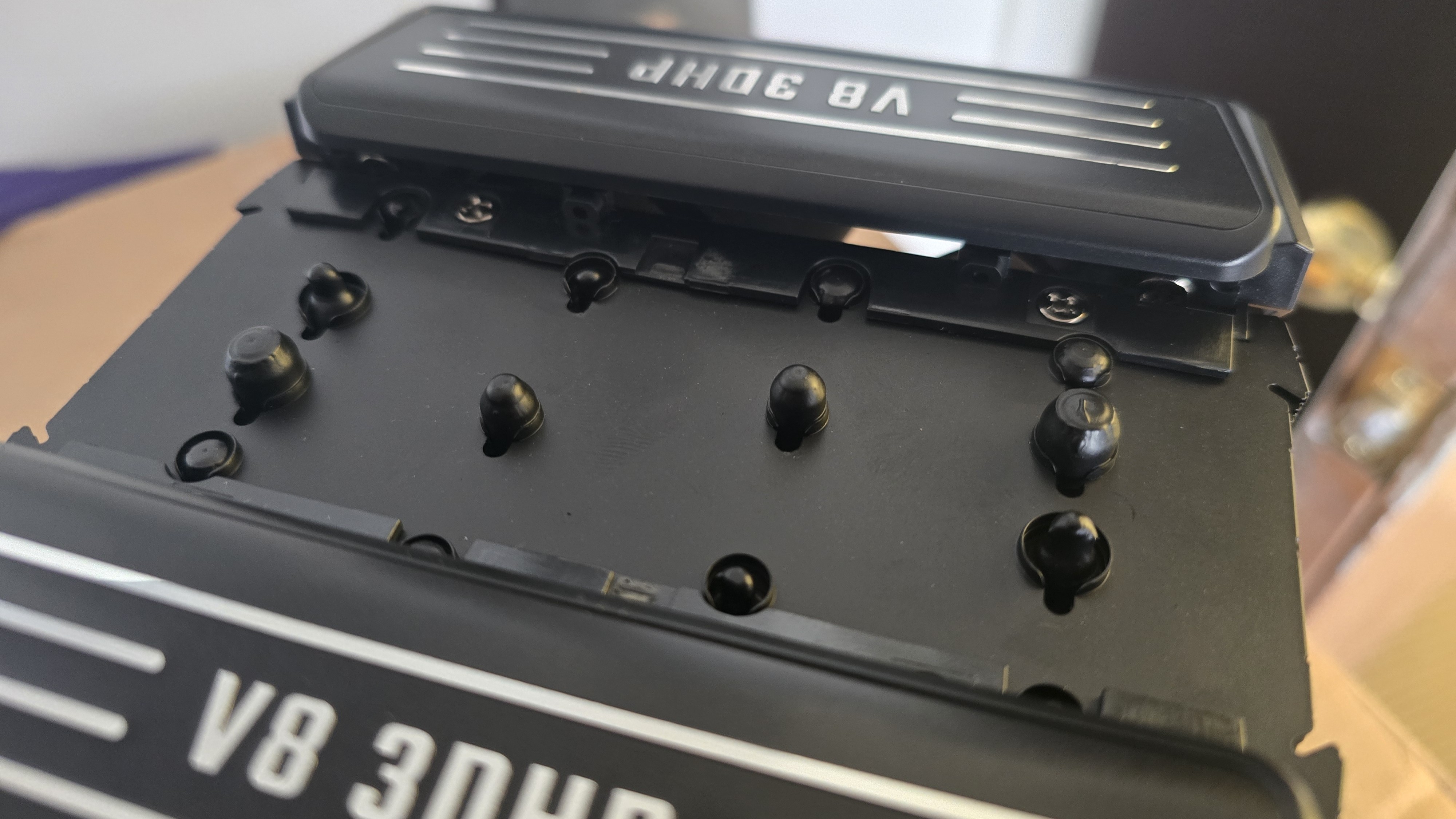
I decided to take the cooler apart for a better look at this piece, and it appears the primary function is actually to prevent air leakage. If you look closely at the picture below, you’ll see the fans are slightly taller than the heatsink. If that’s not a concern for you and you prefer an “old-fashioned” look that shows the ends of the copper heatpipes, the cooler works just fine without the top, though you’ll lose a small amount of thermal efficiency.
▶️ Packaging
The outer packaging highlights the design of the product in a colorful but subtle way, incorporating a purple background on the top and black on the bottom.
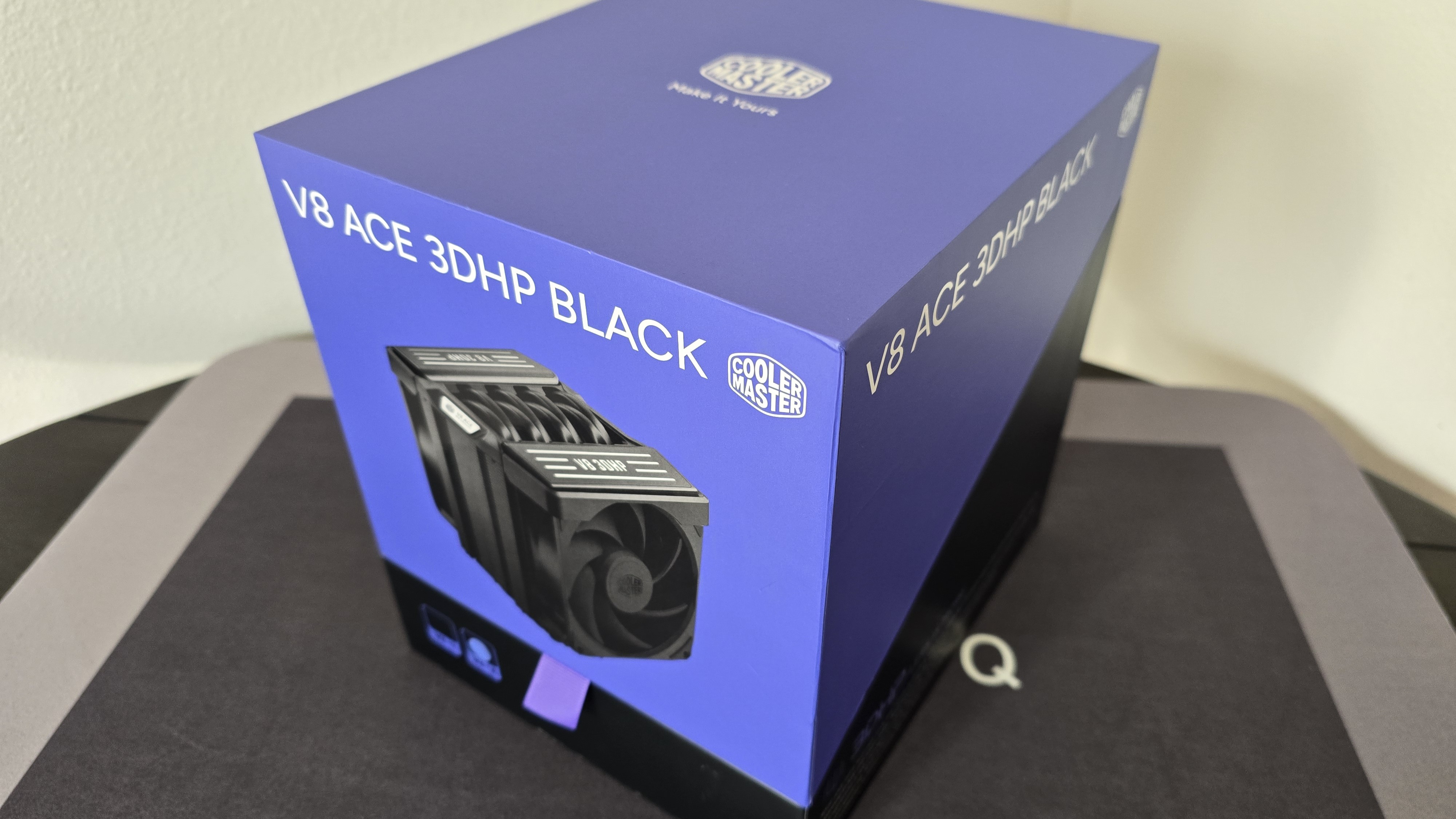
Pulling on the purple tab in the front reveals the fanciest inner packaging I’ve ever seen for an air cooler, seemingly designed for store displays.
Intel and AMD-specific models
Cooler Master sells versions of these coolers labeled specifically for Intel or AMD CPUs. We tested the AMD model with our 9950X3D. Both versions do come with mounting hardware for platforms from both companies, so you could install, say, an Intel-specific version of this cooler on an AM4 or AM5 CPU / motherboard.
But a Cooler Master rep told us that the AMD version has a flatter IHS, while the Intel version is more convex, to make the best contact with CPUs from each platform. The V8 Ace reportedly also has different internal liquid volumes to best target heat on each platform. We're told both versions target the same performance metrics, but you should use the correct cooler for your platform for the best results – as we did when running our benchmarks, shown below.
Included with the package are:
- Mounting hardware for AMD and Intel platforms
- 120mm fans
- Cryofuze thermal paste
- Installation manual
▶️ V8 Alpha 3DHP AM5 Installation
To begin putting things together, you’ll first need to remove the default AM4/5 retention bracket. Next, place the studs over the exposed holes.
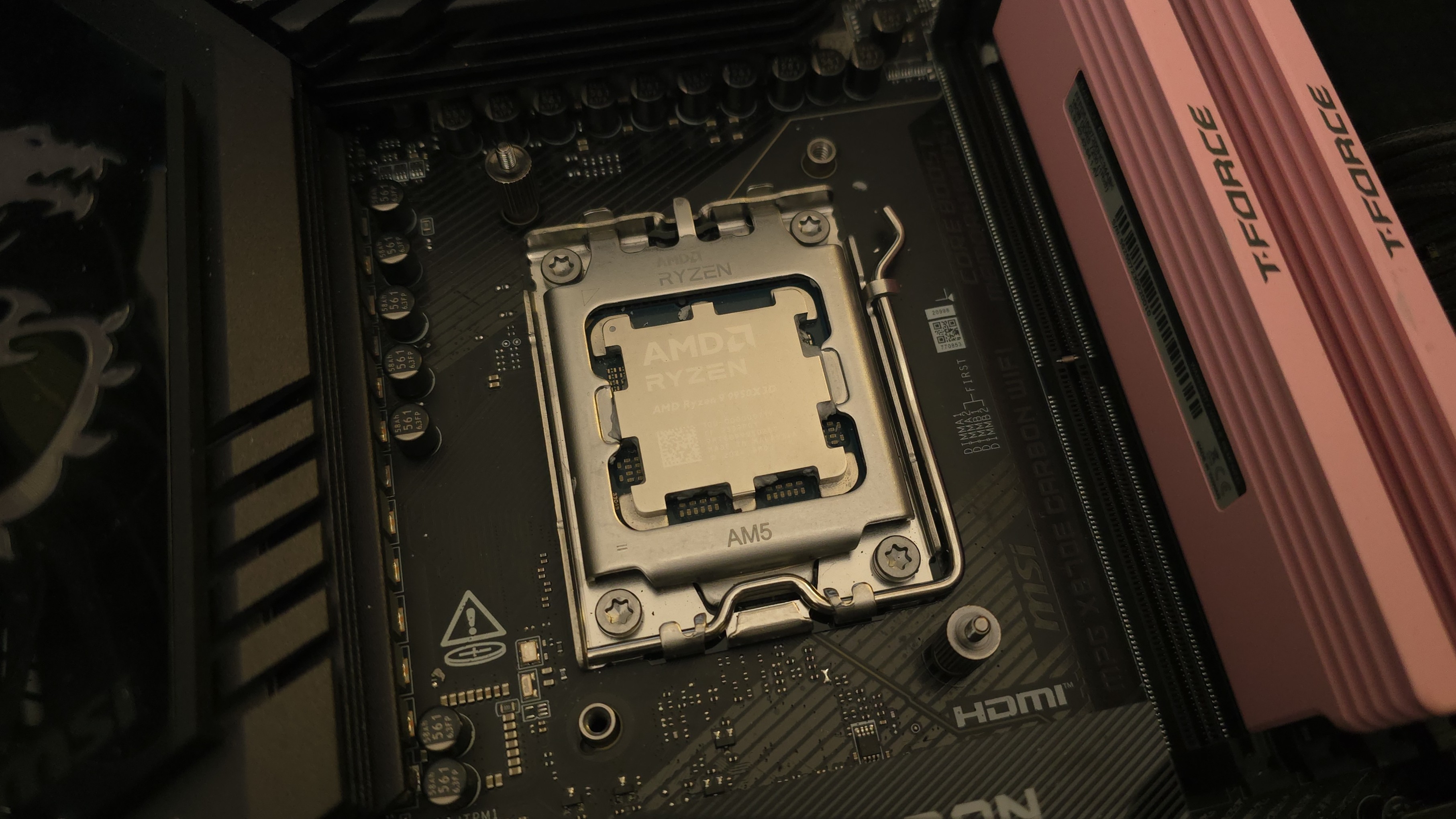
Afterwards, take the mounting bars and secure them with the included screws.
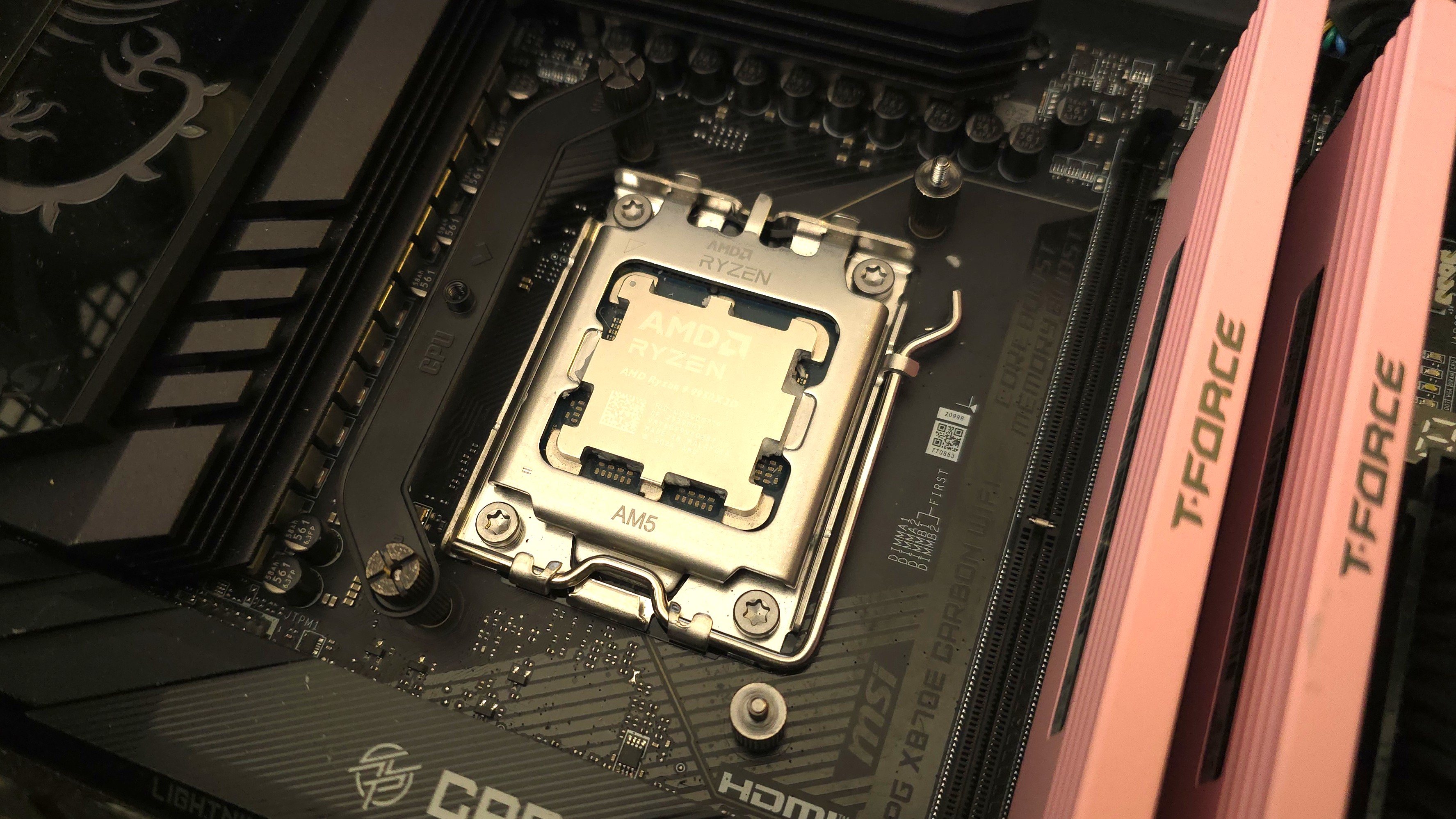
It’s time to apply the thermal compound. If you’re not sure how to do that, we have a handy thermal paste application guide that covers the different methods you can use.
After thermal paste is applied, take the CPU block and press it against the mounting bars, using the built-in screws to secure it in place.
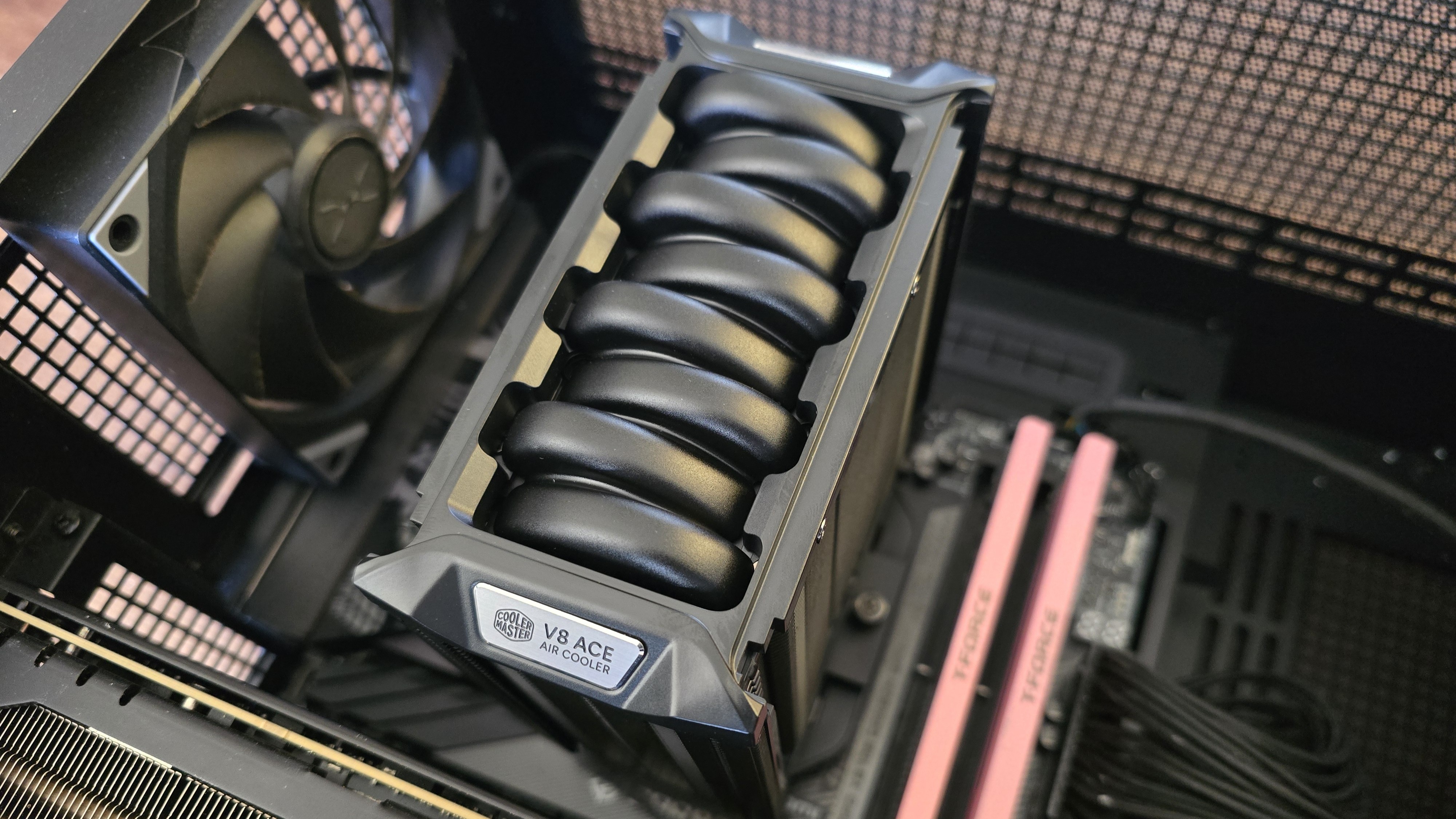
Finally, you’ll want to attach both fans by sliding them into the rail system built into the cooler, then connect their cables to the motherboard’s PWM header.
Real-world testing configuration – AMD AM5 platform
We’ve tested coolers with both the Ryzen 9950X3D and its non-V-Cache sibling, the 9950X in the past year. There are some differences in how the 9950X and 9950X3D CPUs are impacted by thermal events. While the heat output of the CCDs of AMD’s 9950X3D is relatively balanced, the 9950X I used has one CCD that runs much hotter than the other, with a difference of over 10 degrees Celsius in some scenarios, shown below.
For now we’ve returned to using a 9950X3D for cooler testing, as it has a more balanced heat profile, and is almost certainly a more widely adopted CPU. The benchmark results shared in these reviews may differ from others because I emphasize results that are comparable to real-world use. This means I generally test CPU coolers inside of a closed desktop case, which increases cooling difficulty compared to other testing methods.
Many reviewers test coolers on open test benches, which have a combination of lesser airflow needs and lowered ambient temperatures. This results in making weak coolers appear stronger than they really are. Some publications have also used generic thermal plates to test cooling solutions. I reject both of these methods because they don’t accurately reflect real-world cooler conditions.
Swipe to scroll horizontally
CPU | AMD Ryzen 9 9950X3D |
GPU | MSI Ventus 3X RTX 4070Ti Super |
RAM | TeamGroup Diamond Rose T-Force Xtreem DDR5-7200 |
Motherboard | MSI X870E Carbon Wifi |
Case | Tryx FLOVA F50 |
Our latest testing setup uses the FLOVA F50 computer case from Tryx.
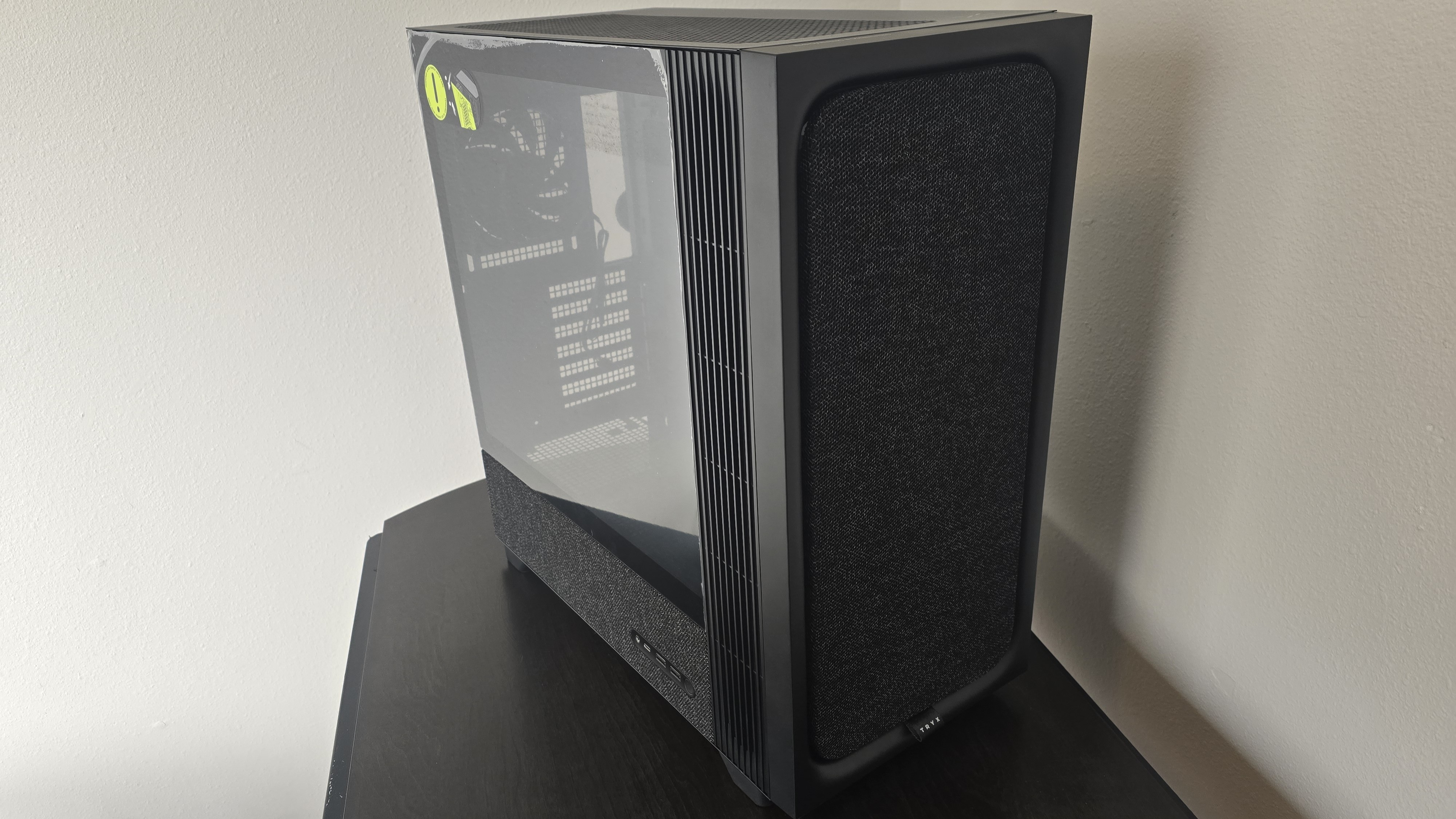
This case features a unique “crossflow” fan that pulls air from the side, which the company claims is more effective than traditional intake fans. For air cooling tests, we’ve added a single Noctua NF-A12 G2 intake fan.

Freelancer, CPU Cooling Reviewer
Albert Thomas is a contributor for Tom’s Hardware, primarily covering CPU cooling reviews.
What's Your Reaction?
 Like
0
Like
0
 Dislike
0
Dislike
0
 Love
0
Love
0
 Funny
0
Funny
0
 Wow
0
Wow
0
 Sad
0
Sad
0
 Angry
0
Angry
0










Comments (0)