

Critical Role Opens Up About How Its Players Get Paid If They ‘Die’

Published Aug 26, 2026, 11:32 AM EDT
Critical Role has a plan for making sure dead players don’t get screwed over
 Image: Mike Schmidt/Critical Role
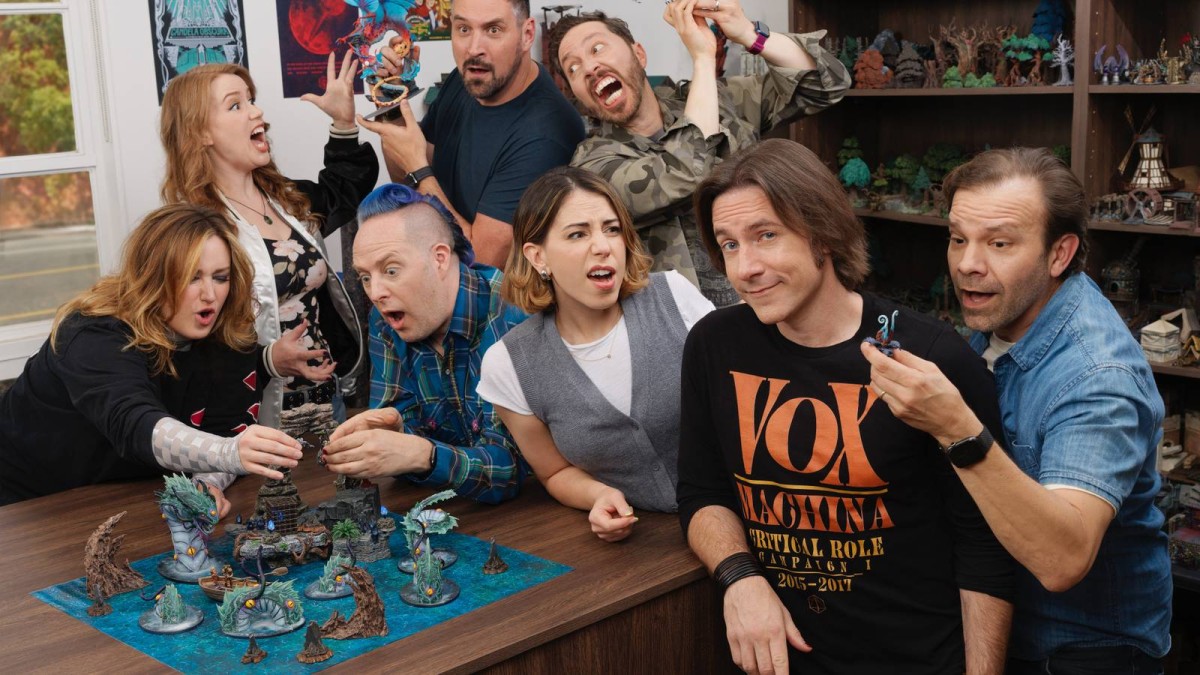
After eleven years sitting at a table playing Dungeons & Dragons together, Critical Role has grown from a streaming show on Geek & Sundry into a multimedia empire. Its campaigns have animated adaptations, spin-off books, and novels, and Critical Role now has its own tabletop publishing arm, Darrington Press.
No matter how much fun the cast has, this is still a job for them. Besides the eight co-founders, Critical Role employs a rotating host of guest stars and semiregulars. They have to get paid somehow, but unlike other shows, the dynamics of a D&D game mean that a player doesn't know how long their character will be around. Death is always a possibility, especially in the unforgiving Campaign 4, where Dungeon Master Brennan Lee Mulligan isn't pulling any punches. With a flexible number of episodes in each campaign, and the lingering possibility of character death, there’s always been a niggling question about how the Critical Role’s cast gets paid.
Thanks to the latest Tale Gate, a Critical Role live talk show, we now have a much clearer picture of what goes on behind the scenes with the cast, how they are paid, and a particularly interesting aspect that is part of each Critical Role player’s contract.
What is Critical Role's kill fee?
During the Night Cap segment of Tale Gate, Marisha Ray — Critical Role’s creative director and one of the company’s co-founders — addressed how the show handles character death beyond its impact on the game’s narrative.
 Graphic: Polygon/Images: Critical Role, Wizards of the Coast and Tyler Jacobson
“This might be a little revealing our hand too much, but we do have [...] I think we call them ‘kill fees’ in all yall’s contracts,” Ray explained.
These kill fees mean that even if a player's character dies during an episode, the player still receives payment for the next few episodes. Whether this means each cast member gets paid per episode hasn’t been confirmed, but it seems likely and, given the size of the cast, makes more sense than being paid per campaign.
While the talk show’s other guests, Travis Willingham and Sam Riegel, joked that the fee was a “death benefit” for players, Ray clarified that the fee stemmed from a legitimate concern: without it in the contract, it could negatively affect how players act.
“We didn’t want people to feel like they didn’t want to take risks in fear of dying,” Ray said.
In a long-running campaign like Critical Role's, the prospect of character death — and the fact that it could affect a player's paycheck — can cause hesitation. For a game like Dungeons & Dragons, and given the high expectations Critters' have, anything that could affect how players would handle a situation would put a damper on the choices and consequences that make Critical Role so intense and engaging in the first place.
 Image: Critical Role
Overall, this behind-the-scenes reveal from Ray helped Critters learn more about how a successful company like Critical Role runs its shows. This "kill fee" practice is commendable compared to TV — which often pays actors per episode, so if a character is killed off at some point, then bad luck. It’s also not the first time the company has shared more about its logistics; it previously revealed in a newsletter that Critical Role shoots most episodes close together.
What's Your Reaction?
 Like
0
Like
0
 Dislike
0
Dislike
0
 Love
0
Love
0
 Funny
0
Funny
0
 Wow
0
Wow
0
 Sad
0
Sad
0
 Angry
0
Angry
0











Comments (0)