

Deco Gear DG49OLED240 49-inch 32:9 OLED gaming monitor review: Two 27-inch QHD screens without the dividing line
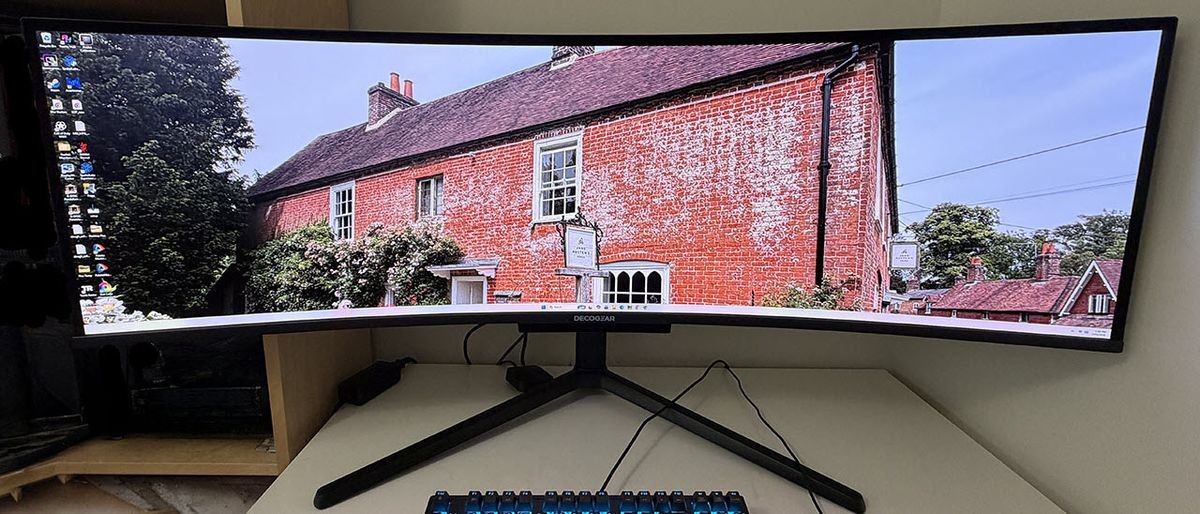
If you already have two screens and can’t stand the dividing line, or you want to double your screen area from the 27-inch QHD monitor you’re currently running, the Deco Gear DG49OLED240 is a no-brainer. It delivers addictive gaming with smooth performance and a stunning image.
Pros
- +
Addictive gaming performance with perfect smoothness and low input lag
- +
Stunning image with deep contrast and balanced color
- +
Accurate color out of the box
- +
Audio quality that’s well above the norm
- +
A perfect replacement for dual 27-inch QHD display
Cons
- -
Unintuitive OSD with unusual controls
- -
Slightly dark gamma
Why you can trust Tom's Hardware Our expert reviewers spend hours testing and comparing products and services so you can choose the best for you. Find out more about how we test.
Few, if any, users will say that they have too much screen real estate. There’s always one more window you’d like to open, or you’ll often wish you could see just a little more of a game environment. To this end, many people run two or three of the best gaming monitors together. This approach solves many problems, and if you go for something common like a 27-inch QHD, the price isn’t too high. But there’s one thing you can’t escape: the dividing line.
Monitors always have a frame; even the flush ones are visible. And no one will say that they like the line. It can perhaps be ignored, but it doesn’t just magically disappear. The simplest solution is to go for an ultra-wide display. If you’re currently running two 27-inch QHD monitors, you can replace them with a single 49-inch 32:9 panel. Add a curve, and you have a screen that’s great for productivity, gaming, and simulation.
This isn’t necessarily the least expensive solution, but if you buy one from Deco Gear, you can put the DG49OLED240 on your desk for $1,230. That will get you 5120x1440 pixels, a Quantum Dot OLED panel, 240 Hz, Adaptive-Sync, HDR400, and wide gamut color. Let’s take a look.
Latest Videos FromTom's Hardware
Deco Gear DG49OLED240 Specs
Swipe to scroll horizontally
Panel Type / Backlight |
Quantum Dot Organic Light Emitting Diode (QD-OLED) |
Screen Size / Aspect Ratio |
49 inches / 32:9 |
| Row 2 - Cell 0 | Curve radius: 1800mm |
Max Resolution and Refresh Rate |
5120x1440 @ 240 Hz |
| Row 4 - Cell 0 | FreeSync and G-Sync Compatible |
Native Color Depth and Gamut |
10-bit / DCI-P3+ |
| Row 6 - Cell 0 | HDR10, DisplayHDR 400 |
Response Time (GTG) |
0.03ms |
Brightness (mfr) |
250 nits SDR |
| Row 9 - Cell 0 | 400 nits HDR |
Contrast |
Unmeasurable |
Speakers |
2x 5w + 1x 10w |
Video Inputs |
2x DisplayPort 1.4 |
| Row 13 - Cell 0 | 1x HDMI 2.1, 1x USB-C |
Audio |
3.5mm headphone output |
USB 3.0 |
1x up, 2x down or None |
Power Consumption |
71w, brightness @ 200 nits |
Panel Dimensions WxHxD w/base |
47.2 x 17.6-22.2 x 14.2 inches (735 x 447-564 x 240mm) |
Panel Thickness |
6.7 inches (170mm) |
Bezel Width |
Top/sides: 0.47 inch (12mm) |
| Row 20 - Cell 0 | Bottom: 0.59 inch (15mm) |
Weight |
20.9 pounds (9.5kg) |
Warranty |
1 year |
The 49-inch 32:9 display format is the exact equivalent of two 27-inch 16:9 QHD screens; it’s the perfect solution for those who would otherwise run two monitors. The only downside is that it costs more than two 27-inch QHD panels. But given the specs in play here, the DG49OLED240 delivers a lot for the money.
With Quantum Dot color, you get a healthy 112% coverage of DCI-P3. That’s more than many 34-inch 21:9 screens I’ve reviewed. It’s reasonably accurate out of the box as well. My sample measured well before calibration and better after a few adjustments.
Light output is around 430 nits for SDR and HDR content. That’s with variable brightness engaged and measurement of a 25% window pattern. Full field white comes in around 360 nits. The DG49OLED240 provides more than enough brightness for impactful HDR in an indoor space with some ambient light. It also plays well in the dark with lower levels that maintain full color and contrast.
Video processing is excellent in all respects with a 240 Hz refresh rate and Adaptive-Sync. I measured panel response on par with other OLEDs and lower input lag than other 49-inch 32:9 screens in my test database.
Stay On the Cutting Edge: Get the Tom's Hardware Newsletter
Get Tom's Hardware's best news and in-depth reviews, straight to your inbox.
Gaming is enhanced by a pair of internal five-watt speakers accompanied by a 10-watt woofer plus a 3.5mm headphone jack. And you can hang those cans on a stout metal hook that flips out from the stand. Video inputs include two DisplayPort 1.4, one HDMI 2.1, and a USB-C that includes 90 watts of charging power. Additional USB ports support things like input devices and webcams. You also get LED lighting in the back with control in the OSD.
If you’re wondering about the Deco Gear brand, it is a subsidiary of Beach Camera, a very experienced vendor of electronics and technology. You can buy the DG49OLED240 directly for $1,229.99, or in one of Beach Camera’s brick-and-mortar locations.
Assembly and Accessories
The DG49OLED240 showed up in a large white carton with just the words “49” OLED Ultrawide Monitor” printed on it. A visit to Deco Gear’s website revealed that several variants of this display differ mainly by refresh rate. The DG49OLED240 is the flagship model at 240 Hz. The contents are packed in crumbly foam and assembled tool-free. The accessory bundle includes an IEC cord for the internal power supply plus DisplayPort, HDMI and USB cables.
Product 360
Image 1 of 4
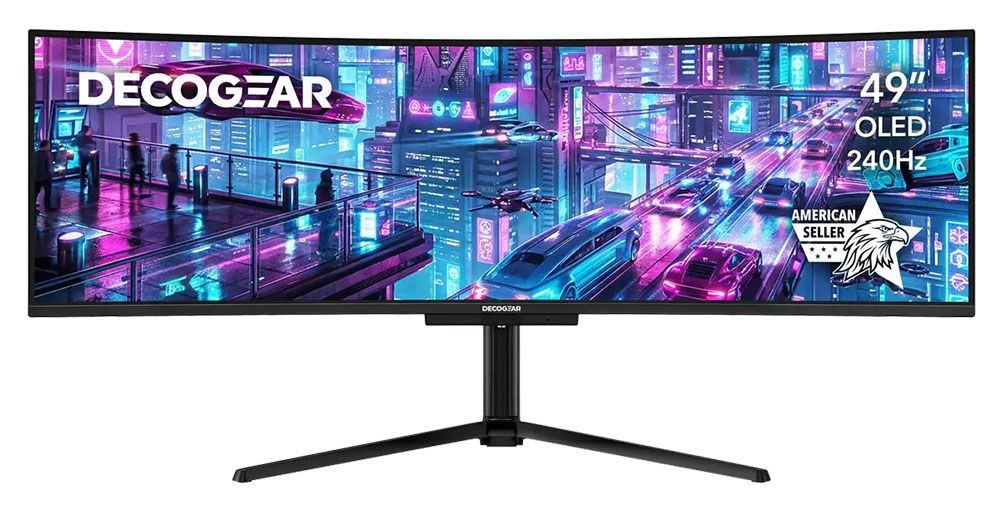
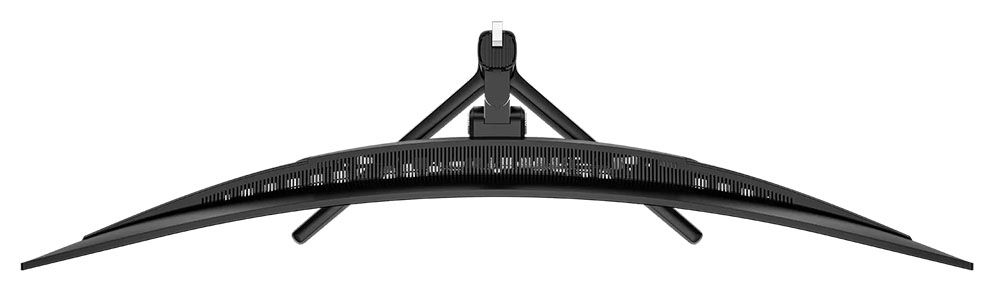
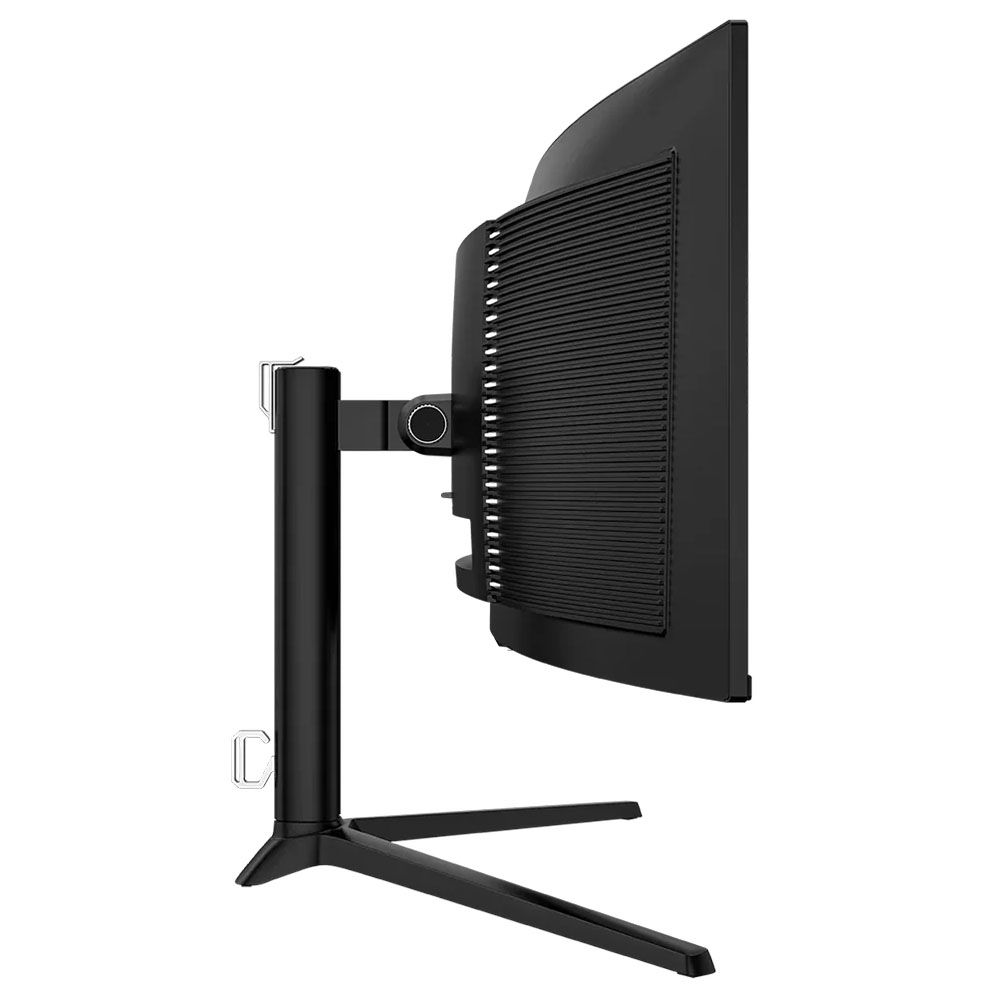
The DG49OLED240 is styled simply with just a Deco Gear logo on the front, screened on above a small protrusion. This is where you’ll find the only control, a tiny joystick. It covers all monitor functions. A word of warning: pressing it only toggles power. It doesn’t select functions like every other joystick on every other monitor. So, unless you plan to turn the DG49OLED240 on or off, do not press it.
The screen’s bezel is flush so you can’t see it when the power’s off. But it is a tad wider than average at 12mm around the top and sides and 15mm at the bottom. In practice though, you’ll be so glad to get rid of the line down the center after chucking your two 27-inch screens that you won’t care.
The stand is super solid with a wide and deep base made from cast aluminum and finished in a matte black powdercoat. It’s almost monolithic, but there is a bit of wobble where the panel snaps on. This is typical of super wide monitors. Ergonomics include a 4.6-inch height range plus 5/20 degrees tilt and 20 degrees swivel.
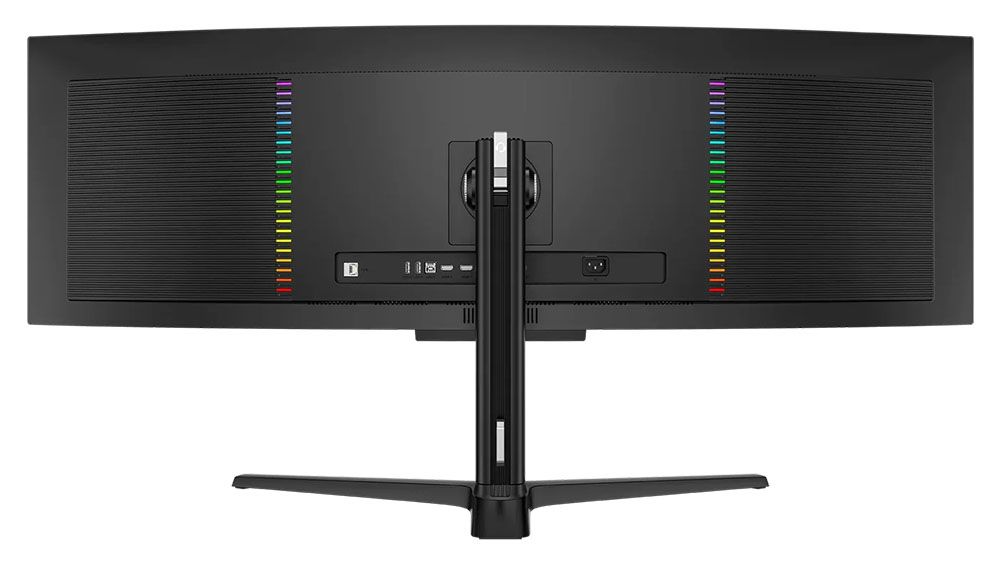
In the back are LED lights in two vertical arrays that frame the rear-facing I/O panel. There are two DisplayPort 1.4s and an HDMI 2.1. A USB-C handles video signals and provides 90 watts of power. There are USB ports too, one upstream and two downstream. A 3.5mm headphone jack delivers audio, and there’s an RJ-45 network port.
OSD Features
The DG49OLED240’s OSD is somewhat frustrating to control because the joystick doesn’t work the same way as nearly every other monitor I’ve encountered. One major issue I had was that pressing it toggles the power no matter what menu you’re currently in. I lost count of how many times I accidentally turned off my review sample. To select a function, right-click. To back out of the menu, left-click. Once I got the hang of it, I was able to find everything I needed for image control and video processing.
Image 1 of 5
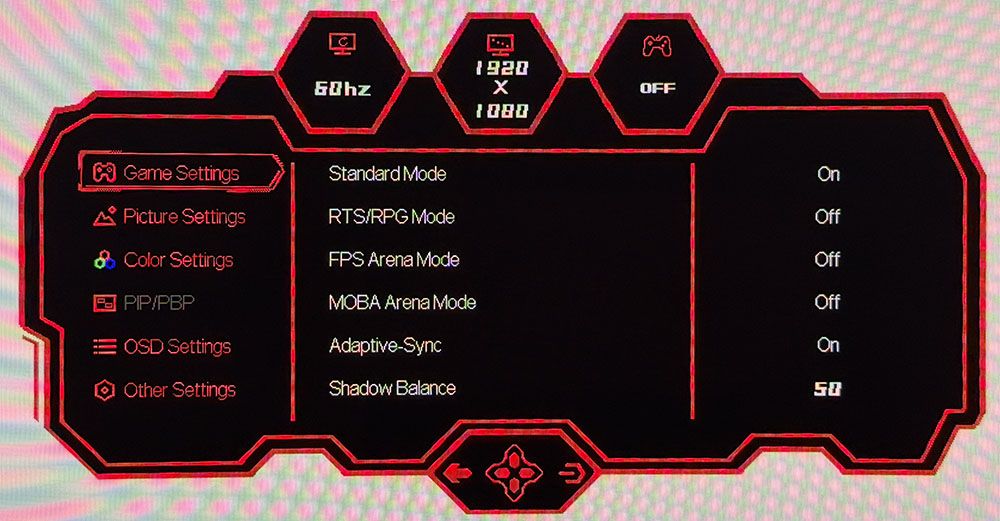
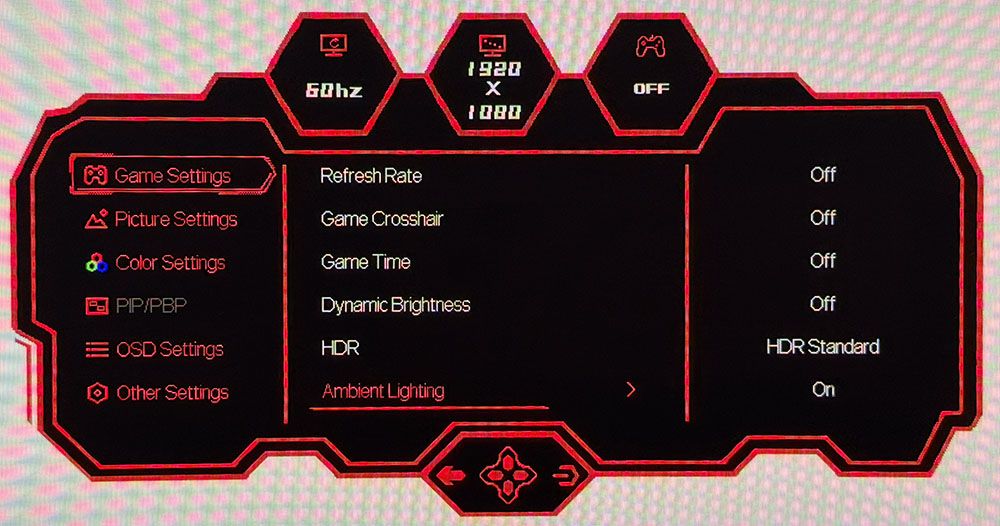
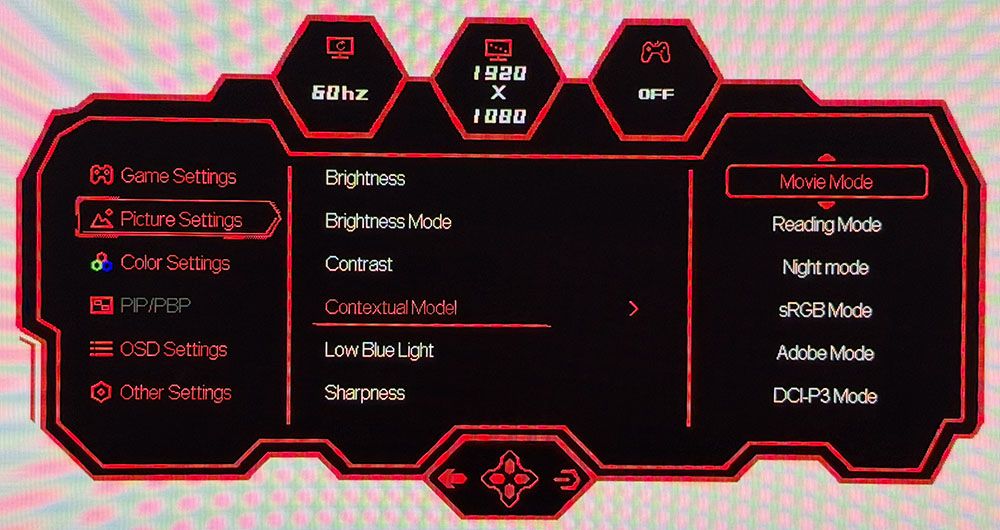
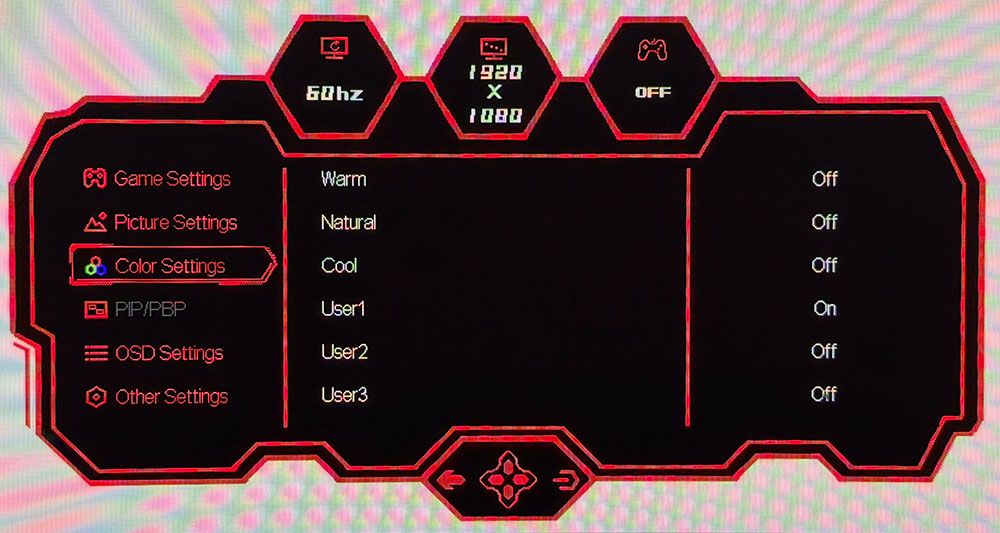
Every menu screen has basic signal information at the top in three small portholes. The menu graphics are game-focused with a purposeful red border on a black background. Game Settings is up first with four image modes, an Adaptive-Sync toggle, and Shadow Balance, which brightens darker areas for better visibility. On the second screen, you get a frame counter, two aiming points, and a timer. Dynamic Brightness is a global dimming feature. HDR can be turned off or engaged with two different modes. Ambient Lighting refers to the LEDs on the back.
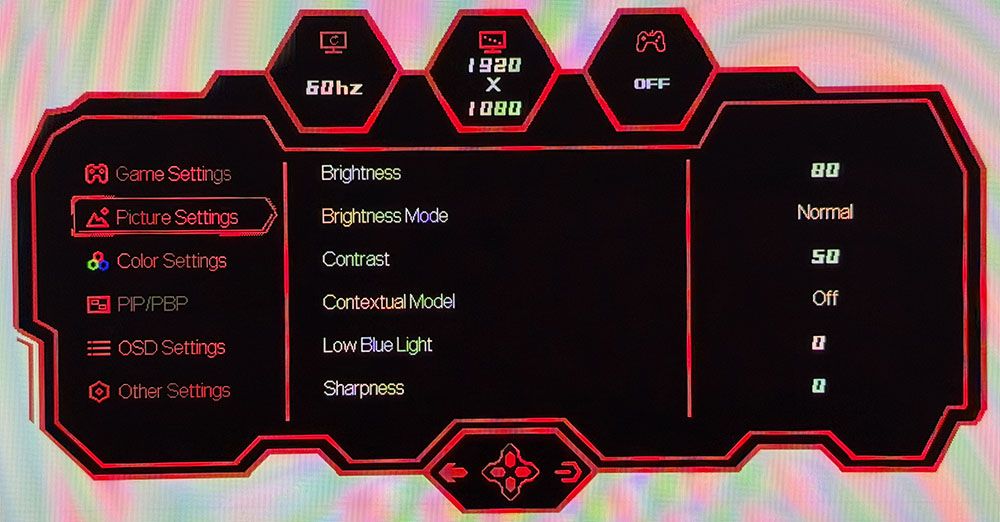
Picture Settings has the usual basic controls and an unusual one called Contextual Model. I don’t know where this terminology comes from, but here, it means more picture modes. Specifically, this is where you’ll find sRGB along with other activity-specific options. An important one here is Brightness Mode. Deco Gear calls the two settings Normal and Highlight, and what they actually are is fixed or variable brightness. I’ll talk more about that later. The second screen, not shown above, has six gamma presets.
In Color Settings, you get three fixed color temps plus three more user memories with RGB sliders. These are difficult to adjust thanks to the joystick’s unusual operation. But they are effective and allowed me to dial in grayscale tracking to a very accurate level.
Additional settings include PIP/PBP for viewing two video sources at once. You can adjust the position of the OSD, and there are port version options. The one thing I didn’t find was OLED care options. But Deco Gear assures me that the DG49OLED240 has automated logo dimming and panel refresh, which runs every few hours to guard against burn-in.
Deco Gear DG49OLED240 Calibration Settings
The DG49OLED240 can be calibrated in its Standard picture mode, which uses the full native color gamut, 112% of DCI-P3. There are three user color temps with RGB sliders that helped me get grayscale tracking from good to great. Gamma runs a tad dark but tracks close to the 2.2 reference. For sRGB color, go to the menu called Contextual Model and select it from the options there. You can also specify Adobe RGB or P3 color. There is a variable brightness option as well called Brightness Mode. For fixed, choose Normal and for variable, choose Highlight. I’ve included brightness values for both modes in my settings list below.
HDR signals get two modes that vary only in their EOTF tracking. The best choice there is HDR Standard.
Swipe to scroll horizontally
Picture Mode |
Standard |
Brightness Mode |
Normal / Highlight |
Brightness 200 nits |
79 / 45 |
Brightness 120 nits |
47 / 25 |
Brightness 100 nits |
39 / 20 |
Brightness 80 nits |
30 / 16 |
Brightness 50 nits |
18 / 8 (min. 10 / 17 nits) |
Contrast |
50 |
Gamma |
2.2 |
Color Temp User |
Red 49, Green 49, Blue 50 |
Gaming and Hands-on
Gaming on the DG49OLED240 was instantly addictive. It delivered very balanced performance with perfect motion resolution, lighting-fast reflexes, and a gorgeous image. The extra width provided by the 32:9 aspect ratio really drew me into the gaming environment with a VR-like feel that enveloped my peripheral vision.
You’ll see on the next page that the DG49OLED240 has a tad less input lag than the other 49-inch OLEDs I’ve reviewed. Though the numerical difference is small, I experienced a quickness and precision that I don’t get with every OLED. Clearly, 240 Hz is more than enough speed to ensure blur-free operation and instant control response. A seasoned competitor will want to give this monitor serious consideration. And I had no problem maintaining 240 fps on a GeForce RTX 4090 in Doom Eternal with detail set at maximum in HDR mode.
The DG49OLED240 also has exceptional color balance. Even though it covers more than 112% of DCI-P3, it never looked overblown in SDR mode. There is an available and accurate sRGB mode, but I only needed it when working on photos and graphics for web publication. For all other activities, including watching SDR video, I enjoyed the extra color. And HDR looked stunning thanks to linear saturation tracking and no visible hue errors.
With the same 109 ppi as a 27-inch QHD screen, clarity is excellent but not quite at the level of a 4K screen. It is more than sharp enough for gaming though. Documents also render with clean fonts, no apparent fringing, and that signature OLED contrast. I found smooth scrolling in Windows by running at 120 Hz. You can certainly run at 240 Hz all the time if you wish, but it will increase power consumption.
Putting a monitor as wide as the DG49OLED240 on your desk will require some adaptation if you aren’t already used to multiple screens. I habitually put the work I’m focusing on at the center of the screen, but with a mega-wide, I had to spend more time with pages to my left and right. Photoshop was my favorite use since I could put the photo in the center and leave the sides for toolbars and supporting dialog boxes. It’s also great for very wide spreadsheets, like my monitor test database which has 25 horizontal fields. For my work, it is less suited to writing since I prefer more height when using Word or Notepad.
A standout feature I noticed immediately was the DG49OLED240’s excellent audio quality. It has a pair of internal speakers which alone are not extraordinary, but they are accompanied by a 10-watt woofer which rounds out the bass frequencies. This makes the sound presentation much fuller and more realistic. It adds to the screen’s immersive quality and is a completely viable alternative to headphones or external desktop speakers.
Takeaway: The DG49OLED240 delivers gaming performance on par with the best OLED screens I’ve reviewed. It has perfect motion resolution and responds instantly to control inputs with less lag than other 49-inch monitors. It’s super useful for workday tasks like Photoshop and Excel and not quite as well suited to word processing or web browsing. Sound quality is equivalent to a good pair of headphones or external desktop speakers. If you’re looking to get rid of the line between your two 27-inch QHD monitors, the DG49OLED240 is a no-brainer.
MORE: Best Gaming Monitors
MORE: How We Test PC Monitors
MORE: How to Buy a PC Monitor

Christian Eberle is a Contributing Editor for Tom's Hardware US. He's a veteran reviewer of A/V equipment, specializing in monitors. Christian began his obsession with tech when he built his first PC in 1991, a 286 running DOS 3.0 at a blazing 12MHz. In 2006, he undertook training from the Imaging Science Foundation in video calibration and testing and thus started a passion for precise imaging that persists to this day. He is also a professional musician with a degree from the New England Conservatory as a classical bassoonist which he used to good effect as a performer with the West Point Army Band from 1987 to 2013. He enjoys watching movies and listening to high-end audio in his custom-built home theater and can be seen riding trails near his home on a race-ready ICE VTX recumbent trike. Christian enjoys the endless summer in Florida where he lives with his wife and Chihuahua and plays with orchestras around the state.
What's Your Reaction?
 Like
0
Like
0
 Dislike
0
Dislike
0
 Love
0
Love
0
 Funny
0
Funny
0
 Wow
0
Wow
0
 Sad
0
Sad
0
 Angry
0
Angry
0










Comments (0)