

Dyson just made the robot vacuum I've been crying out for — and it's not the new flagship
 (Image credit: Future)
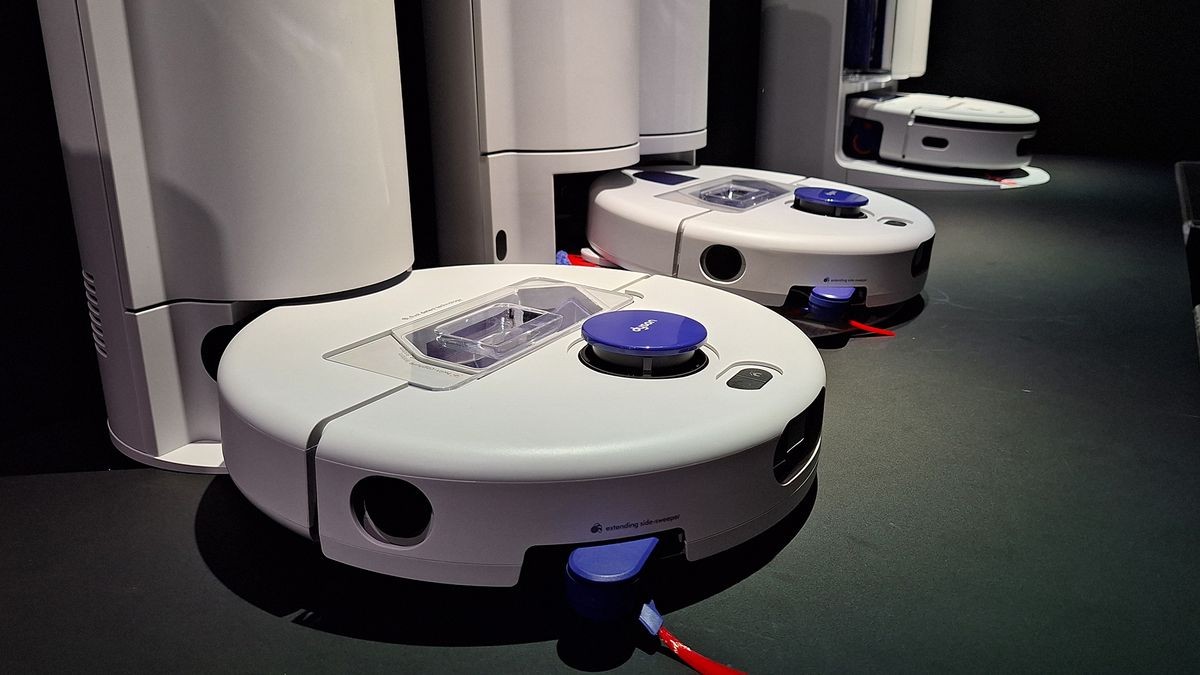
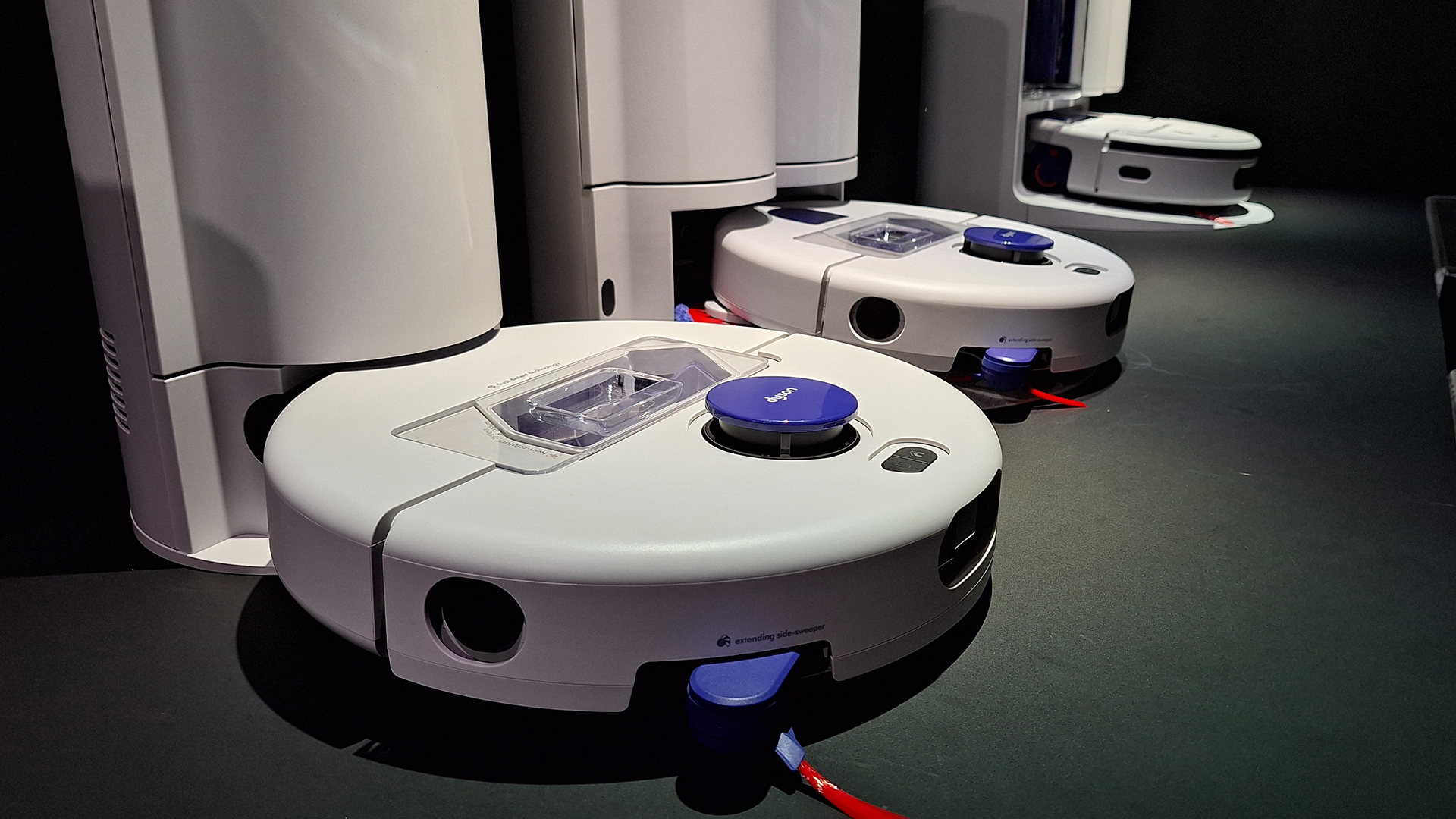
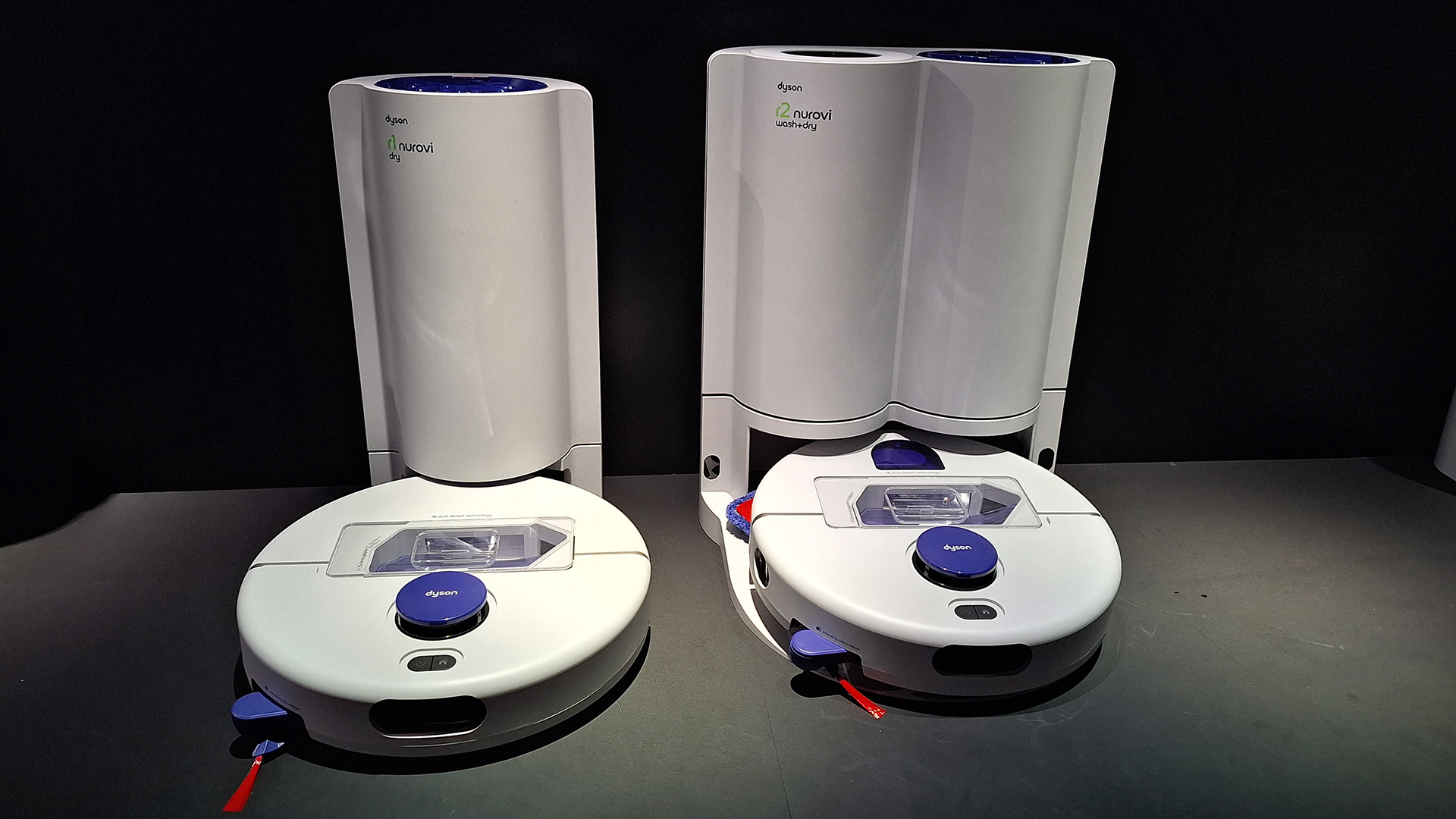
Traditionally, Dyson has been a one-robovac-at-a-time kind of brand. At its most recent launch event, though, we were treated to three new bots at once. And the one I'm most interested in is the R1, which sits right at the bottom of the lineup.
The R1 is the least flashy of the bunch. It doesn't have the grime-illuminating UV light of the R3, nor the mildly baffling triangular-ish mop pads of the R2. In fact, it doesn't have mop pads at all. The Dyson R1 — or the Dyson R1 Nurovi Dry, to give it its full name, is a vacuum-only model, and in many ways it's the robovac I think has been missing from the market.
Bigger but not better
Over the past few years, robot vacuums have been getting more complicated, bulkier (especially in the case of the docks), and more expensive. A lot of that is tied to the mopping functions. Docks have become giant all-in-one clean stations that top up the bot's water tank, wash its mop pads with hot water, and dry them with hot air.
The robots themselves increasingly have roller mops — which makes them taller than they'd need to be than with the now-out-of-fashion flat pads. Some of the incoming flagships even have the mechanics to produce steam.
In contrast, remove the wet cleaning functionality and the whole system can be streamlined considerably. The dock doesn't need to hold two giant water tanks, or all the mechanics involved in producing heat. The bot can be truly specialized for vacuuming, without having to worry about tanks and rollers and how you get the wet bits out of the way when they're not wanted.
And yet, in recent years, it's become really quite tricky to find a good robot vacuum that doesn't have all the mopping extras built in. In fact, "vacuum-only premium models" was one of the overdue robot vacuum innovations one of TechRadar's main reviewers bemoaned at the close of 2024. It's a gap that has continued to bug me as we near the end of 2026.
Rug danger
The Dyson R1 Nurovi Dry does away with the mopping — and all the paraphernalia that comes with it — in favor of keeping things simple, and focusing on vacuuming. I spoke with Nathan Lawson McLean, a Dyson senior design manager who works across the brand's home products, at the Nurovi launch, to get his insights on the new additions.
Sign up for breaking news, reviews, opinion, top tech deals, and more.
"We are super aware that when we look across the robotic market, you've got really different needs," he tells me. "You've got some people that are super familiar with robots. They want wet and dry. They want self-cleaning machines. They want rollers because they deep clean every single day."
However, that's not true for all people or all households. "[Some people] simply don't need it because mopping is not part of their routine," Lawson McLean continues. "They want something that's small, effective, the right price point, and sympathetic to their home. And maybe not a great, big, bloody dock like you might see some robot vacs have."
There's also, he concedes, some trepidation around automated mopping in general. "There are many people who — I know for a fact, through user trials — don't trust robotic vacuums [with mops] with their carpets," he adds. The R1 is a great solution for those customers. "[It can] perhaps even be a bit of an entry gateway to robotic vacuums, converting those people that don't really see the value of wet and dry robots just yet."
Suction master
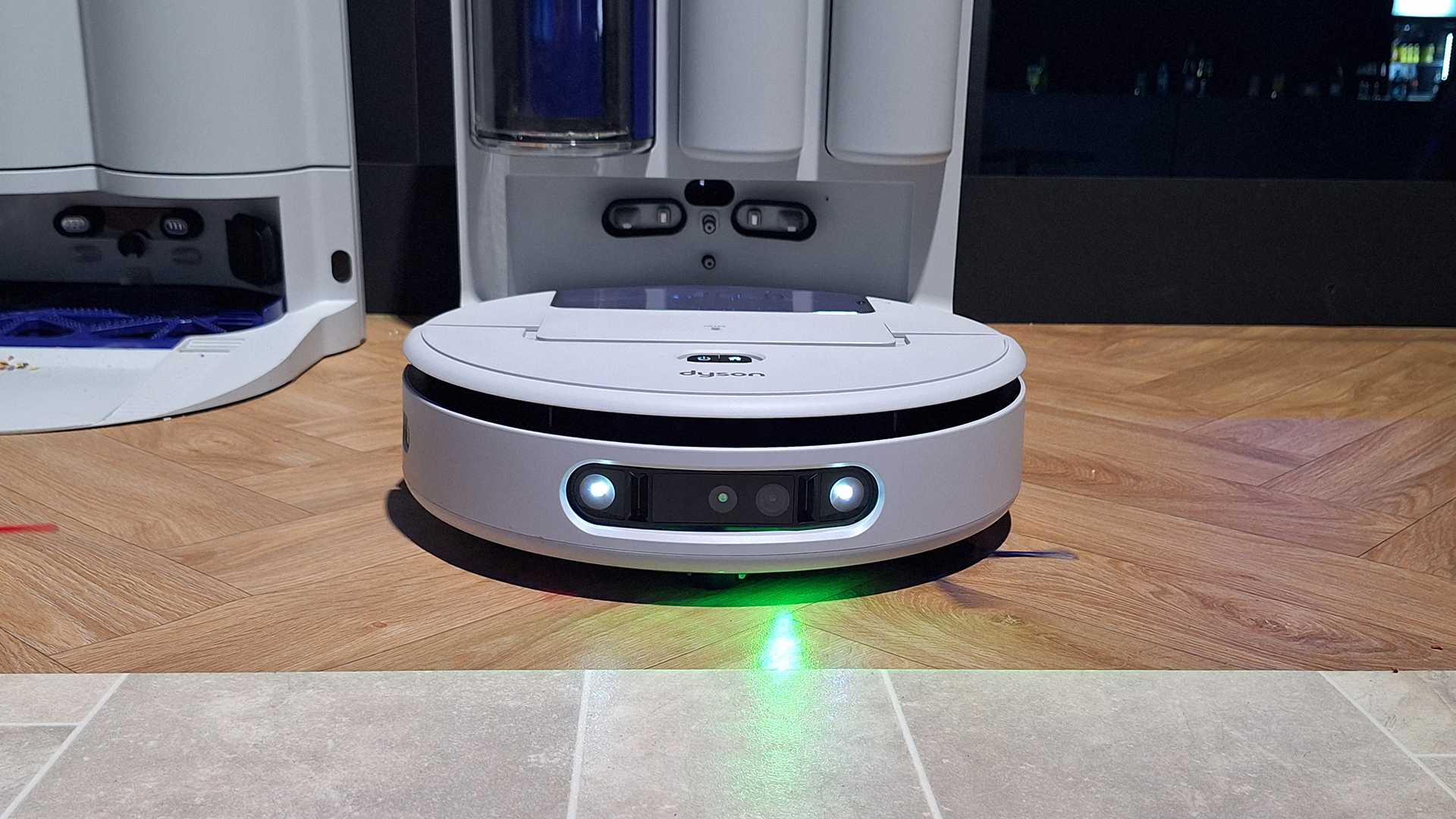
Earlier, I described the Dyson R1 Nurovi as 'simple', but I don't mean it's basic. Although I can't vouch for the real-life performance until we've tested one out, the specs and features look solid. 21,000Pa of suction is very respectable, there's an extending side sweeper, and an anti-tangle brush bar.
There are even a couple of features that elevate it from the competition. Dyson has built in a Piezo sensor that monitors dust levels and adjusts suction power in response (presumably similar to the setup in its stick vacuums such as the Gen5detect, which I have tried and was impressed by).
I am also intrigued by the 'Twin-capture system' — essentially a semi-sealed off suction area at the top of the suction inlet, designed to create (as Lawson McLean describes it) "a highly concentrated and efficient airflow path that's sealed down to the floor". This section will lift ultra-fine particles, while the more open main roller area can handle chunkier crumbs and debris.
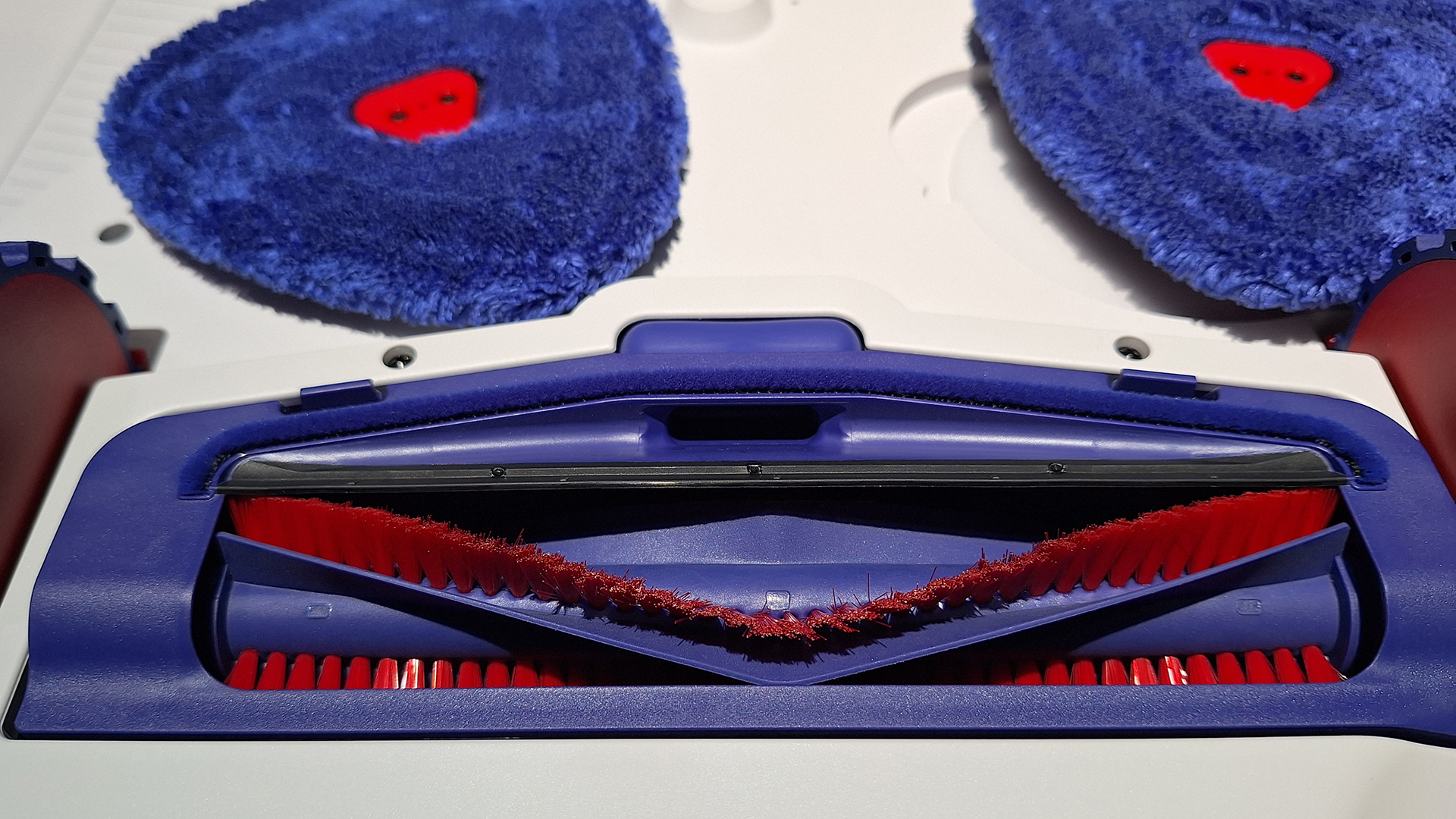
Rather unusually in the robot vacuum market, it doesn't use dust bags, so that's one fewer thing you'll need to remember to buy. The one thing I was initially disappointed about is the fact that Dyson hasn't used some of the dock space freed up by removing the mopping parts to supersize the dustbin. The R1 has the same dust capacity as the R2 — it's just missing the second and third 'pillars', where the water tanks live.
However, Lawson McLean is adamant that this column will provide ample space for the vast majority of people. Officially, it's meant to last 100 days, but his view is that only the owners of especially hairy pets will need to empty it that often. "From the early prototypes we started testing in the beginning of the year, I don't think I've emptied it once. It might be a bit disgusting, but it's still filling up."
It might not be especially flashy, but the R1 Nurovi checks a lot of boxes that many big robovac brands have been neglecting lately, and I think it could be the bot the market has been crying out for.

Follow TechRadar on Google News and add us as a preferred source to get our expert news, reviews, and opinion in your feeds.
Ruth is TechRadar's Collections Editor, responsible for masterminding TechRadar's approach towards the new Collections format — a themed, curated selection of product recommendations designed to provide readers with an exciting new way to shop for the very best new gadgets and gizmos.
What's Your Reaction?
 Like
0
Like
0
 Dislike
0
Dislike
0
 Love
0
Love
0
 Funny
0
Funny
0
 Wow
0
Wow
0
 Sad
0
Sad
0
 Angry
0
Angry
0








Comments (0)