

‘Edward Said: Between Worlds’ Review: A Straightforward Archival Documentary Pays Tribute to the Academic in His Own Words
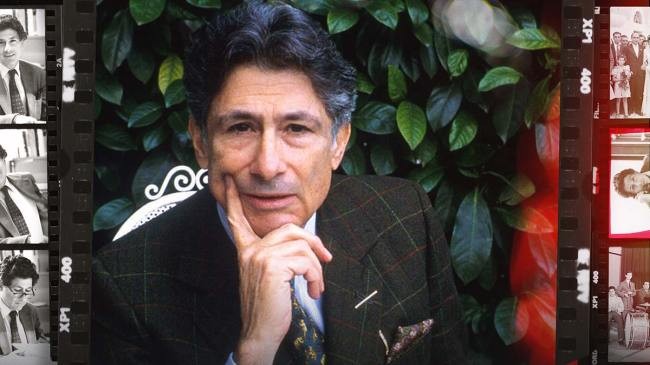
From documentarian Maiken Baird, “Edward Said: Between Worlds” is a wide-spanning retrospective on its eponymous activist. Perhaps best known for “Orientalism,” his 1978 work of cultural critique, the Palestinian-American Said has seen a resurgence in public discourse since October 7th 2023 and Israel’s subsequent assault on Gaza. Although the film doesn’t mention events more recent than Said’s death — he succumbed to leukemia in 2003 — it provides meaningful historical context, in the very same manner its subject often strived to.
Through home videos and news clips alike, “Between Worlds” proves academically interesting, even though its unveiling is quite straightforward. Its cavalcade of audiovisual material and wistful orchestrations (by composer Kareem Roustom) create a deceptive simplicity; the film doesn’t reveal much that isn’t already known, since it pulls from public archives. However, its method of assembly is its secret weapon, alongside its unique access to material from Said’s estate.


Co-edited by Jay Arthur Sterrenberg, Plummy Tucker and R.A. Fedde, the movie builds its two tracks simultaneously: the personal and political. Using film clips shot by Said’s father, it details his childhood in the 1930s and ‘40s while laying the groundwork for the wider turmoil to follow. Although Said was born in Jerusalem, he spent his adolescence (and beyond) in the United States, leading to a sense of ethnic outsidership, which he recalls in his own words, in both English and Arabic.
This chronology seems bog-standard at first. The idea of bringing a known figure to light through their formative years — via their own interviews — is hardly novel. But in Said’s case, any depiction of his history becomes intrinsically tied to his academic thought, and how it developed. In the process, Baird attempts to trace how someone comes to write books like “Orientalism” — and later, “Covering Islam,” about the role of media in shaping opinions — in the first place.
Although the film runs a mere 107 minutes, it draws from several decades of material and events. It’s quite comprehensive in that regard, but it’s unlikely to change anyone’s hearts or minds on the subject of Israel and Palestine — though this may not be its overarching goal. For better or worse, its latter half gradually tracks the evolution of Said’s outlook in the decades since his formative works, a change some might call a softening, but which others look to as a beacon of coexistence. However, the angrier, more frustrated parts of his political journey are hardly hidden in the meantime, owing to the suspicions foisted upon him, including by Benjamin Netanyahu early in his political career.
While “Between Worlds” traces where Said’s positions ended up by the turn of the century, it lends equal credence to how he got there, and where else his heart and mind may have stopped in the interim. Most biographical docs locate their subjects in the past, but Baird ensures not to entomb Said in amber. Instead, she treats him as a (still) living entity for us to project upon and relate to, as our own political convictions remain at the mercy of a fluid, complicated world. The film is, for all intents and purposes, Said’s essence distilled, down to a digestible, highly educational piece that, although it seldom challenges, seeks to illuminate and inform, through a tale of intellectual evolution grounded in the sensations of exile.
Grade: B-
“Edward Said: Between Worlds” premiered at the 2026 Toronto International Film Festival. It is currently seeking U.S. distribution.
What's Your Reaction?
 Like
0
Like
0
 Dislike
0
Dislike
0
 Love
0
Love
0
 Funny
0
Funny
0
 Wow
0
Wow
0
 Sad
0
Sad
0
 Angry
0
Angry
0










Comments (0)