

Elon Musk denies Tesla’s Autopilot caused crash that killed grandmother
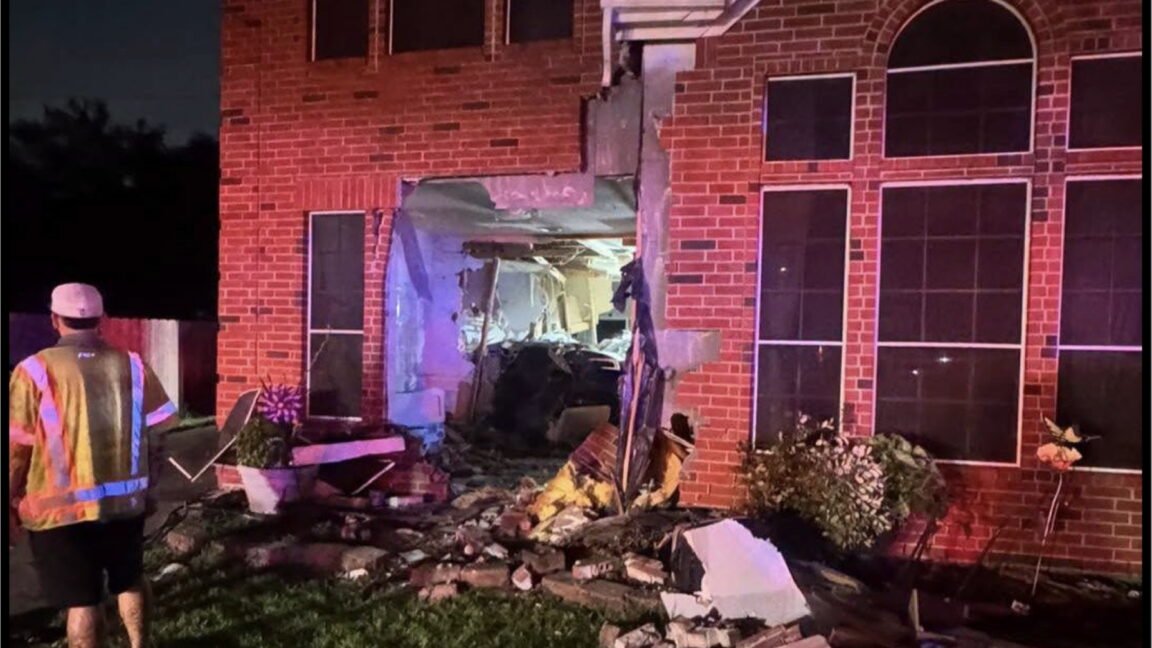
“Sudden Unintended Acceleration”
Tesla, accused of failing to fix design flaws, blames driver pressing accelerator.
Credit: via Jennifer Barbour's complaint
A few days after a Tesla plowed through a Texas home and killed a grandmother, the family sued the carmaker, alleging that the Model 3’s automated assist mode was defective.
In a complaint filed this week in Harris County District Court, Jennifer Barbour, the daughter of 76-year-old Martha Avila, and Barbour’s husband Justin confirmed they were seeking more than $1 million in damages following their sudden and tragic loss.
After the crash, the driver, Michael Butler, who is also a named defendant in the lawsuit, told police that the automated driver-assist feature was engaged when he lost control of the car. Cops told Ars on Monday that they’re still investigating whether the feature was in use and confirmed that Butler was not intoxicated and has been cooperating with police.
Tesla disputes that its “Full Self Driving” feature is to blame for the crash. A doorbell camera video shared by The New York Times showed the car slamming into the house at a high speed, which Tesla CEO Elon Musk claimed in a post on X is a sign that the technology didn’t cause the crash.
“FSD drives slowly through neighborhood streets, and this was a high-speed crash!” Musk wrote.
Tesla’s vice president of AI software, Ashok Elluswamy, went further than Musk to cast doubt on the family’s claims. Without sharing evidence, he accused Butler of causing the crash.
“In this case, the driver manually overrode self-driving by pressing the accelerator all the way to 100 percent of the accel pedal in this residential area,” Elluswamy said. “They reached a speed of 73 mph during the crash and had the accelerator pressed even after the crash.”
However, the family laid out two theories in their lawsuit about how FSD may have malfunctioned, at least in part, to cause the crash.
The first focused on a defect known as “Sudden Unintended Acceleration,” or SUA, which the family alleged Tesla knows has caused “numerous fatalities and injuries” but has not fixed. SUA occurs when “components of the vehicle require additional power” and the draw on the battery causes “significant spikes in the system,” their lawsuit explained. These voltage surges from the battery can be dangerous, causing the inverter to “incorrectly interpret that the accelerator pedal has been pressed” and causing the car to rapidly accelerate to an “extremely dangerous speed,” the family said.
The second theory suggests that because Tesla stripped its “vehicles of critical obstacle-detection hardware” during a global chip shortage, Butler’s Model 3 simply didn’t register the home “directly in its path” at the end of the street.
“Defendant Butler was operating the Vehicle in a reasonably foreseeable manner, with Tesla’s Autopilot and/or Full Self-Driving system engaged, when the Vehicle failed to detect the end of the street and crashed directly into Plaintiffs’ home and/or experienced Sudden Unintended Acceleration causing it to launch into Plaintiffs’ home,” the lawsuit said.
The Barbours hope a jury will find Tesla guilty of putting defective cars on the road without adequately ensuring public safety. If Tesla and Butler lose, they could be ordered to help the family pay for Avila’s medical expenses and funeral costs, as well as other damages the family suffered, including mental anguish and loss of inheritance.
Family demands Tesla preserve all evidence
On Monday, the National Highway Traffic Safety Administration (NHTSA) confirmed to Ars that it is also investigating the crash.
That extra scrutiny could help the Barbours support their claims that Tesla failed to properly design Autopilot and FSD features, test for proper obstacle detection, eliminate SUA, or “implement adequate driver-engagement monitoring.”
So far, cops have “found no evidence of a mechanical malfunction,” a Houston area news outlet reported. But the family’s attorney, Chris Adkins, told the outlet that the family is determined to hold Tesla accountable to ensure no other families endure a similar loss.
“They’re really focused on getting to the truth and figuring out what happened and how it happens so they can prevent it from happening to anyone else again,” Adkins said.
In the past, NHTSA “has received more than a dozen reports of Teslas slamming into parked emergency vehicles while Autopilot was active,” the lawsuit noted. Pointing to that track record, the family alleged that Tesla’s FSD and Autopilot have “a well-established inability to properly detect stationary objects.”
The lawsuit also cited a 2023 Washington Post analysis of government data that “identified at least 17 fatal incidents linked to Tesla’s Autopilot,” as well as a Post report saying that:
Tesla has a documented history of losing, withholding, or making it difficult for attorneys and other interested parties to obtain the comprehensive electronic data generated and stored in its vehicles when they are involved in severe collisions—a practice that compounds the danger Tesla’s defective systems create by obstructing accountability after crashes occur.
To ensure that Tesla maintains evidence the family believes will prove their claims, they’ve demanded that Tesla preserve all the Model 3’s component parts, its “black box” data, and its Autopilot and FSD system data, logs, and telemetry. Additionally, they want all sensor and camera data maintained, as well as any other related electronically stored information.
Perhaps most importantly, the family demanded that “as critical evidence,” the car itself must be “securely maintained and preserved in its post-collision condition for inspection and use in this litigation.”
Family thanks first responders
Still in mourning, the family took time this week to thank the first responders who tried to save Avila’s life.
After the crash, the grandmother was “pinned to the wreckage,” the lawsuit said. First responders managed to extract her and transport her to a nearby hospital, where she later died from her injuries. Justin Barbour, a co-plaintiff, was in the house when the car crashed and “sustained severe and grievous bodily injuries, including injuries to his neck, back, and shoulders,” the lawsuit said.
“We would like to recognize the efforts of the first responders and the medical professionals who were there to help us during this tragedy. From the men and women with EMS and Life Flight to the fire crews who had drinks for our family and stuffed animals for the children, your quick response, professionalism, and kindness have been a significant reason that we have been able to deal with this unimaginable situation,” the Barbours said. “Thank you for all that you do to help families like ours during the hardest moments of our lives.”
Previously, Jennifer Barbour told the NYT that Avila was on no medications and was expected to have many more years with her grandkids due to her good health. The family feels robbed of their grandmother and unsure what role Tesla played in their sudden loss.
“I don’t know if it’s [the driver’s] fault or the car’s fault or what really happened,” Barbour said. “I’ve never seen a car go that fast.”
Ashley is a senior policy reporter for Ars Technica, dedicated to tracking social impacts of emerging policies and new technologies. She is a Chicago-based journalist with 20 years of experience.
What's Your Reaction?
 Like
0
Like
0
 Dislike
0
Dislike
0
 Love
0
Love
0
 Funny
0
Funny
0
 Wow
0
Wow
0
 Sad
0
Sad
0
 Angry
0
Angry
0





Comments (0)