

Elon pledges to give Nvidia a virtual monopoly over the stars
SYSTEMS
In space, no one can hear you scream when the LLMs hallucinate
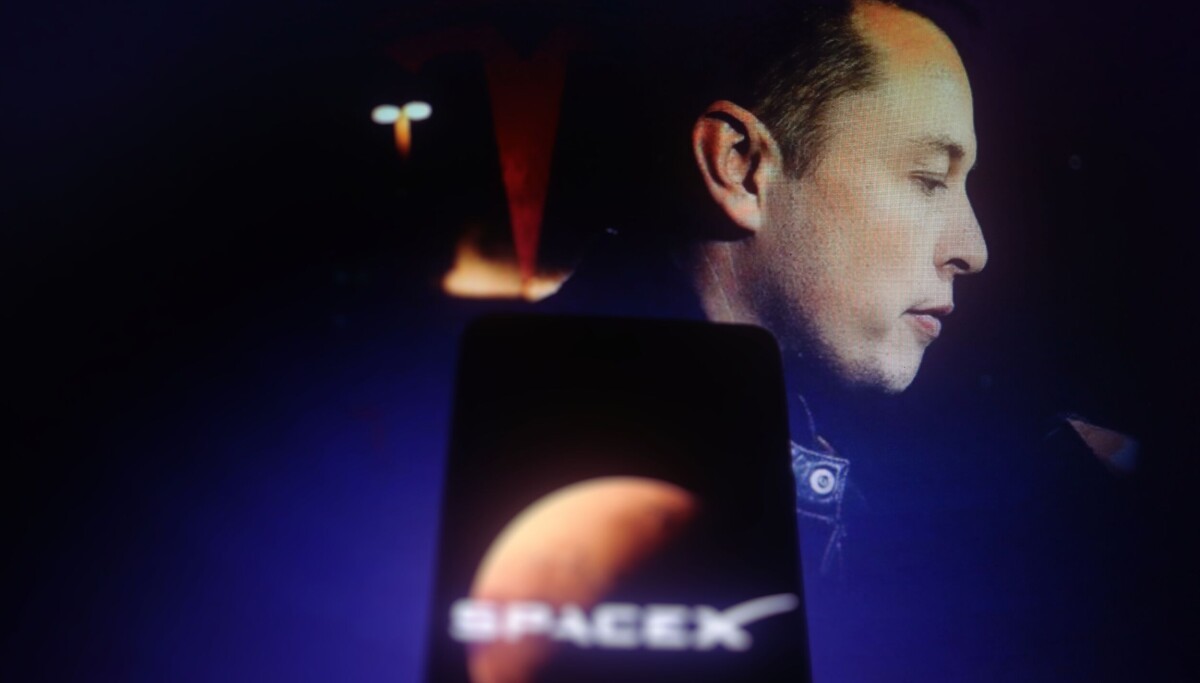
Nvidia commands about 85 percent of the datacenter GPU market today, and if Elon Musk has his way, the AI infrastructure giant will have a virtual monopoly over the stars.
On Tuesday, Musk wrote on the social media network he owns that “SpaceX has committed to using Nvidia GPUs exclusively because they are the best.”
The collab should surprise absolutely no one. It’s not like AMD or anyone else out there is making hardened versions of their GPUs for orbital datacenters. Why, you might ask? Well, to quote one Gartner analyst, the idea that space-based datacenters will ever be economically viable is “peak insanity.” Nvidia just happens to have $13.2 billion in cash to burn on pipe dreams like these.
Specifically, SpaceX says that it will be deploying Nvidia’s Space-1, a specialized version of its upcoming Vera Rubin compute platform designed to operate high above the Earth’s atmosphere where no one can hear you scream because the LLM is hallucinating again.
In a separate X post Tuesday, SpaceX announced it was “partnering with Nvidia to design the Starmind AI1 satellite compute payload,” and that “Each of the Starmind satellites will include Nvidia Rubin GPUs and Vera CPUs for datacenter class space compute.”
According to SpaceX’s website, when fully deployed, the Starmind AI1 will measure 30 meters tall, have a wingspan of 75 meters from solar array to solar array, and support a compute payload of 250 kW.
That might sound like a lot of power, but to put that in perspective, that’s only enough power for roughly a single Vera Rubin NVL72 rack. So, if you thought Nvidia’s rack systems were expensive, just wait till you have to loft them into orbit.
Speaking of orbit, before any of this can happen, SpaceX needs to get its super heavy rocket, Starship, into orbit, which still hasn’t happened.
An even bigger challenge is making it cost-effective to lob the 3.33 ton satellites into orbit.
It currently costs about $7,000 to put a kilogram into orbit aboard a Falcon 9 rocket. That puts the current price of launching the AI1 at north of $23 million, assuming you manage to pack the thing into a Falcon 9 in the first place.
For orbital datacenters to be cost-effective, Starship is going to need to get the cost per kilogram down to Elon’s stated goal of $10, Ortibal CEO told El Reg earlier this year. That would bring the cost to orbit to about $33,300, assuming the target is anything more than aspirational.
Now is probably about the time we remind folks that Elon doesn’t exactly have the greatest track record of following through on his “commitments.” Remember how SpaceX was going to put humans on Mars by 2022 or how Tesla would field a million robo-taxis by 2020?
But even if they don't go to space, Musk still might get something valuable out of Starmind AI1’s development. In yet another X post, Elon opined that the satellite's architecture was so efficient that SpaceX properties would be deploying them, sans solar and thermal management systems, in their terrestrial datacenters.
“It’s a major improvement in data center efficiency,” he wrote.
The notes came on the heels of SpaceX's first earnings report as a public company, during which it said that capital expenditures grew by a factor of 6x versus a year ago to $18.4 billion as the company goes into overdrive building out xAI, the company's artificial intelligence offering. The company posted a quarterly net loss of $541 million on revenues of $7.81 billion. The stock was down more than 10% in mid-day trading on Wednesday, and is down 17% from its listing price of $135 in June. ®
What's Your Reaction?
 Like
0
Like
0
 Dislike
0
Dislike
0
 Love
0
Love
0
 Funny
0
Funny
0
 Wow
0
Wow
0
 Sad
0
Sad
0
 Angry
0
Angry
0







Comments (0)