

G.Skill pays out $2.4M settlement over misleading DDR4 and DDR5 speed marketing — buyers get $20 to $25 as vendor agrees to XMP and EXPO packaging warnings
 (Image credit: Tom's Hardware)
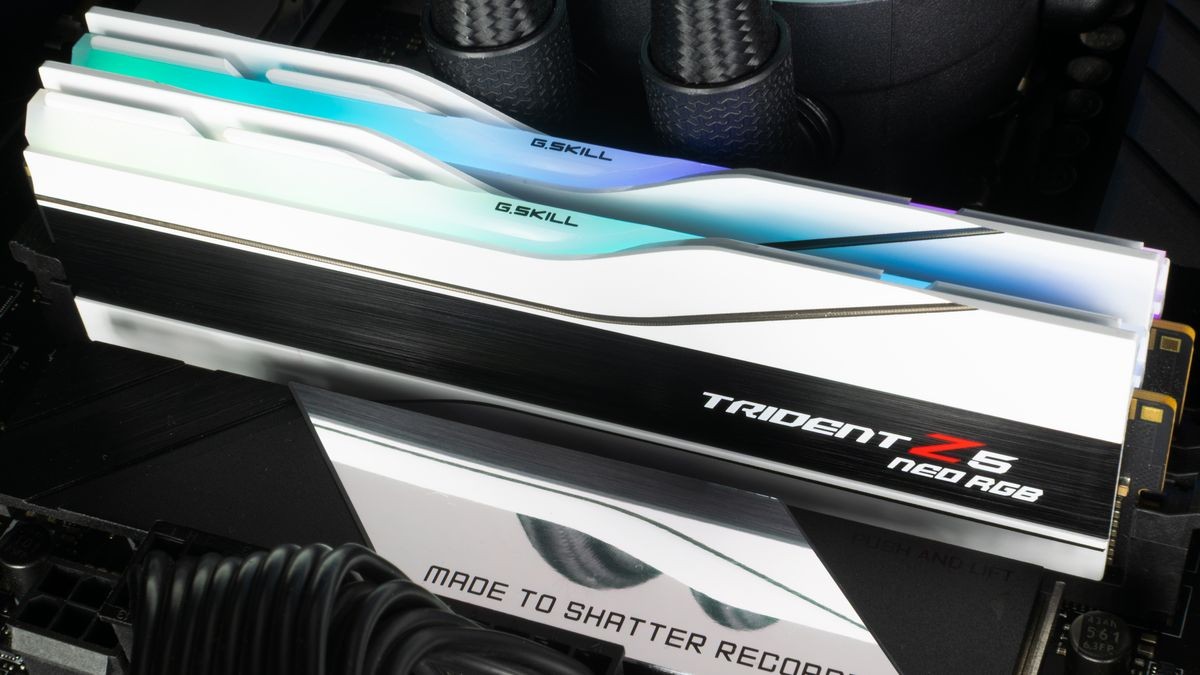
G.Skill, maker of some of the best RAM for PC gaming, has begun sending payments to claimants in the $2.4 million class action lawsuit over claims that it falsely advertised the speeds of its memory, misleading customers because the very fastest speeds could only be obtained by overclocking. According to screenshots from different users, reimbursements range from a paltry $20 to $25.
Go deeper with TH Premium: Memory
According to the lawsuit filed in 2022, G.Skill reportedly did not make it clear to consumers that overclocking was necessary to reach the advertised memory speeds on its DDR4 and DDR5 offerings from the Trident Z and Ripjaw series. The plaintiffs claimed that G.Skill’s packaging did not warn consumers about the potential risks associated with overclocking, such as system instability, or even possible hardware damage.
While G.Skill denied the allegations and asserted that its products were properly labeled, the company eventually reached a $2.4 million settlement with the plaintiffs. As part of the settlement, G.Skill would send cash payouts to eligible U.S. consumers who purchased certain DDR4 or DDR5 memory kits during the period mentioned in the lawsuit.
The exact payout amount for each claimant depends on the total number of claims submitted and how many qualifying G.Skill memory kits each person purchased. For example, one X user shared that they received $19.68, while separate reports on Facebook indicated that two users received $24.60 each.
In addition to the cash payout, G.Skill agreed to update the packaging for its memory kits and online product listings with clear disclaimers that consumers must overclock the memory kit, whether through Intel XMP or AMD EXPO enablement, to reach the rated memory speeds.
Memory speeds are a complex topic for the average computer user. Not everyone understands that memory kits default to the JEDEC baseline, whether DDR4-2133 or DDR5-4800, for maximum compatibility. However, to reach advertised speeds above the baseline, you need to overclock. Multiple hardware variables affect whether you can successfully use a memory kit that exceeds the manufacturer's specification.
For starters, the processor’s integrated memory controller (IMC) determines whether it can run memory above the manufacturer's specification, for example, DDR5-5600 for AMD Ryzen 9000 or DDR5-6400 for Intel Core Ultra 200S processors. That is the memory speed that the chipmaker guarantees will work on the chip. Furthermore, the motherboard must support the desired memory speeds. The QVL is a good place to start since it includes memory kits that the vendor has tested and confirmed to work on the motherboard. However, the QVL is not foolproof because the motherboard is only one of two factors at play, and sometimes the processor's IMC plays a bigger role.
Get Tom's Hardware's best news and in-depth reviews, straight to your inbox.
Less experienced consumers may blame a memory kit for not working in a system. However, they fail to consider that the processor and motherboard are equally important. Memory speeds above the processor's default specification are not always plug-and-play, and it is good that manufacturers communicate this clearly to avoid consumer confusion and disappointment if a memory kit does not perform as advertised.

Follow Tom's Hardware on Google News, or add us as a preferred source, to get our latest news, analysis, & reviews in your feeds.
Zhiye Liu is a news editor, memory reviewer, and SSD tester at Tom’s Hardware. Although he loves everything that’s hardware, he has a soft spot for CPUs, GPUs, and RAM.
What's Your Reaction?
 Like
0
Like
0
 Dislike
0
Dislike
0
 Love
0
Love
0
 Funny
0
Funny
0
 Wow
0
Wow
0
 Sad
0
Sad
0
 Angry
0
Angry
0







Comments (0)