

How to Tell a Finished Photograph From an Unfinished One
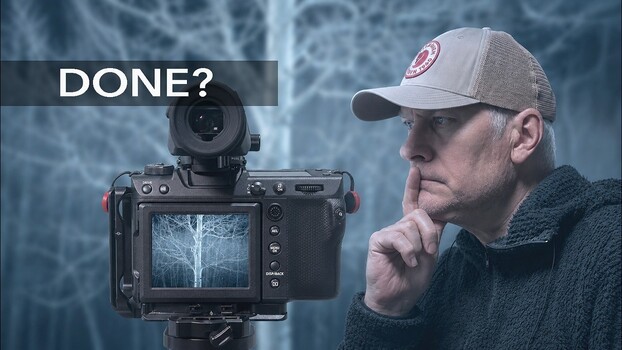
After more than three decades behind a camera, one photographer still stands in the field asking whether he can make an image any better. Knowing when to stop is one of the least discussed parts of the craft, and it separates people who finish a photograph from people who wander away from it.
That tension sits at the center of a video from Adam Gibbs, who continues his series on composition by turning to a question he says he's never actually been asked: how do you know when a photograph is finished? Gibbs admits he rarely arrives at a scene, sets up, and captures his favorite frame right away. Something catches his eye first, the light or a shape or a tree, and that's only the starting point. Stopping, he points out, isn't the same as finding the photograph. The work begins after you stop.
His process leans on movement before commitment. Gibbs walks around with the camera in his hands, looking through the viewfinder and trying ideas, rather than locking his tripod into place too early. He isn't making random adjustments. He's hunting for relationships between shapes, watching how the eye travels through the frame. Every change now has to answer one question: why am I doing this? If moving closer or lowering the tripod doesn't clearly improve something, he calls it fiddling, and fiddling leads nowhere. Experience, he says, hasn't made him move more. It's made him move less.
There's a shift worth borrowing here that goes beyond landscape work. Gibbs describes the moment he stops seeing trees and rocks and mountains and starts seeing shapes, lines, brightness, darkness, texture, and space. That's the same mental switch painters and designers make, and it's the reason two people can stand in identical spots and come home with different photographs. Training yourself to read a scene as visual weight rather than as a list of objects is a skill you can practice anywhere, with any camera, even the phone in your pocket. Gibbs mentions using a phone screen to scout compositions precisely because it's larger than most viewfinders and always with you. The tool matters far less than the way you're looking, and that habit of seeing arrangement instead of subject carries over into portraits, street work, and still life just as cleanly as it does into a mountain pass.
Balance is where he spends real time, and he's honest that it's hard to define. It isn't about making both sides of the frame equal, since nature almost never cooperates with that. It's about visual weight. Does one part keep pulling your eye away? Is there a bright spot in a corner that shouldn't be there? Is a single shape dominating for no reason? Working out why a composition doesn't sit comfortably can take several minutes, and once you find the cause, the fix is often small. Then comes the part Gibbs calls the hardest for him: waiting. The light might not be right, the tide might need another twenty minutes, or nothing might change at all. He suggests previsualizing what you're waiting for, and notes a composition is often finished long before the photograph is.
The payoff from all those years, by his account, is confidence. Not the confidence that every frame will succeed, but the confidence to stop chasing something better around the next corner. Early on he always felt a more epic shot was waiting nearby. Now he's content to spend half an hour with one scene, work it slowly, and accept he's taken it as far as he can. When he looks back through decades of images, he never thinks he should have moved the tripod six inches. He remembers the weather, the silence, the excitement of finding something unexpected. The video is sponsored by Squarespace, if you're curious about the website side of things, but the heart of it stays on that quiet decision every photographer eventually has to make.
Press play on the video above to hear how Gibbs describes the exact feeling of a photograph "pushing back" when it's finally done.
What's Your Reaction?
 Like
0
Like
0
 Dislike
0
Dislike
0
 Love
0
Love
0
 Funny
0
Funny
0
 Wow
0
Wow
0
 Sad
0
Sad
0
 Angry
0
Angry
0






Comments (0)