

Intel commits to 14A mass production in 2028 as its sales rise 25% year-over-year
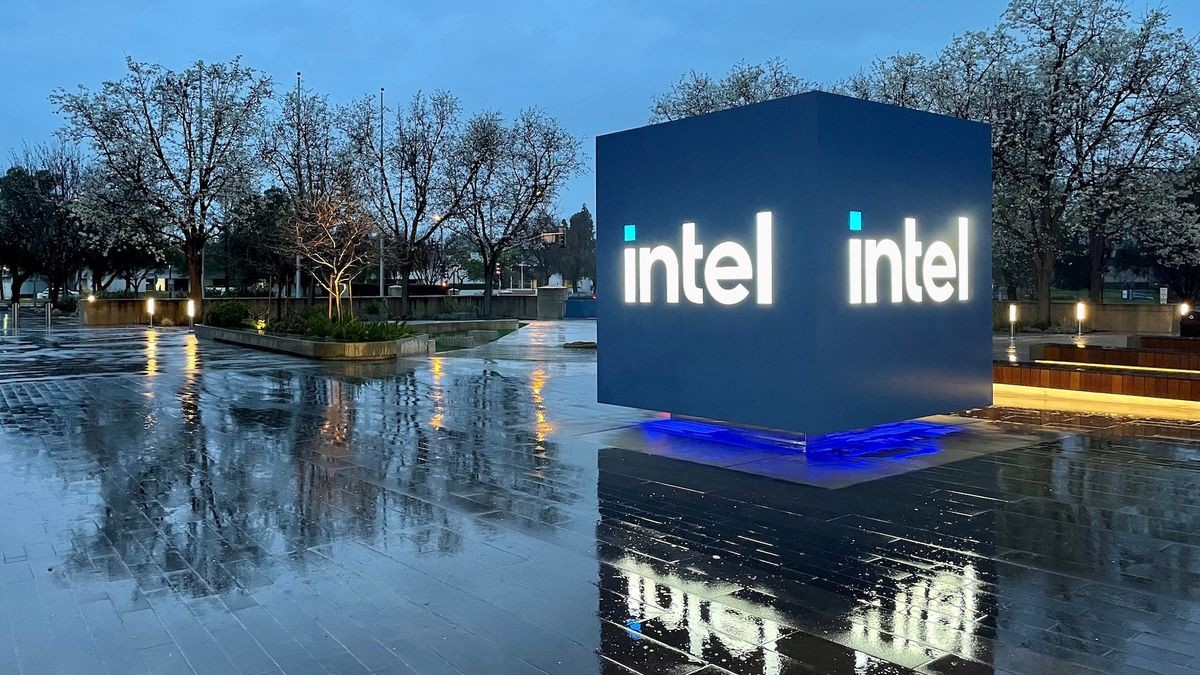
 (Image credit: Intel)
Intel on Thursday published its financial results for the second quarter of 2026, posting revenue of $16.1 billion — a 25% rise year-over-year — amid high demand for client and data center products. The company also said that due to extraordinary demand for its own CPUs, it will initiate mass production using its 14A (1.4nm-class) fabrication technology in 2028, which is in line with TSMC's plans for its A14 process technology.
"With encouraging external customer progress and increased demand for our internal products, we remain on track for 14A risk production for our internal products in the second half of 2027, and we made the decision in Q2 to fully commit to high volume ramp in 2028," said Lip-Bu Tan, chief executive of Intel, during the company's earnings call with financial analysts and investors.
Go deeper with TH Premium: Chipmaking
Typically, companies initiate high-volume manufacturing (HVM) using a new process technology about a year after initiating risk production. Assuming that Intel intends to start risk production using 14A in the second half of 2027, it is reasonable to expect the company to start 14A HVM in the second half of 2028. It remains to be seen whether by the 'second half' Intel means July or December. If Intel initiates high volume ramp in November or December 2028, actual products made using the technology will emerge in 2029. In any case, Intel typically begins manufacturing using its leading-edge nodes in its development fab in Oregon and while it formally calls it HVM, actual volumes produced at such fabs are relatively low.
Another thing to note about Intel's 14A is that in 2028 it will start making its own products using this process, not products from external customers. Apparently, Intel still does not have any external clients that have committed to use the technology to make their products.
TSMC typically initiates production using its latest nodes in December and usually calls it the 'second half of the year.' Assuming that it follows the same pattern with A14 (though the progress of the node can enable the company to pull mass production in provided that customers' designs are ready), then the volume ramp will occur in 2029. TSMC claims that multiple customers have already taped out their ICs on A14.
Intel reported a strong second quarter as its revenue reached $16.1 billion, up 25% year-over-year and $1.8 billion above the midpoint of its guidance. Formally, Intel's GAAP losses reached a whopping $11 billion. However, this was driven by the $13.619 billion of mark-to-market losses on Escrowed Shares related to Intel's CHIPS Act Secure Enclave agreement with the U.S. government. Meanwhile, the company's non-GAAP net income was $2.2 billion, which reflects profitable underlying operations. The company's GAAP gross margin increased to 40.1%, up from 27.5% in Q2 2025. Intel's Operating cash flow totaled $7.0 billion, prompting the company to raise its capital spending outlook for both 2026 and 2027 as AI-driven demand continues to exceed available supply.
Intel's Client Computing and Physical AI Group (CCPG) generated $8.9 billion in revenue, up 13% year-over-year. The company confirmed that the CCPG result was not driven by increased unit sales, but was a result of higher average selling prices (ASP) due to supply constraints.
"Client obviously exceeded expectations. I would say it was largely ASP, of which some of that was mix related, some of that was our own like-for-like changes in ASPs where we thought we had seen some inflation on our cost and needed to pass that on to the end customer," said David Zinsner, chief financial officer of Intel, during the call.
The Data Center and AI (DCAI) business delivered the strongest growth as its sales climbed 59% year-over-year to $6.3 billion amid surging demand for Xeon processors, expanding AI infrastructure deployments, and rapidly growing purpose-built silicon sales.
"Q2 year-over-year server growth was the strongest on record, Xeon 6 continue to be one of the fastest ramping products in Intel history, reflecting improving execution and strong customer demand," Tan said.
"We also continue to see strong momentum in our purpose-built silicon product line, with revenue up roughly 20% sequentially and nearly tripling year-over-year," Zinsner said. "Purpose-built silicon revenue nearly tripled year-over-year."
Intel Foundry posted $5.8 billion in revenue, an increase of 31% year-over-year, as Intel 18A production ramped. At the same time the production units losses dropped to $2.1 billion — down from $2.4 billion in the previous quarter and $3.2 billion in the same quarter a year ago. External foundry revenue reached $293 million.
"Intel Foundry operating loss in Q2 was $2.1 billion and $348 million better quarter-over-quarter as higher yields improved cycle times and increased factory scale across Intel 4, Intel 3, and 18A drove improved wafer costs," Zinsner said.
Intel guided its third-quarter revenue to $15.8 billion – $16.8 billion and a projected non-GAAP gross margin of 42% and an EPS of $0.38.

Follow Tom's Hardware on Google News, or add us as a preferred source, to get our latest news, analysis, & reviews in your feeds.
Get Tom's Hardware's best news and in-depth reviews, straight to your inbox.
Anton Shilov is a contributing writer at Tom’s Hardware. Over the past couple of decades, he has covered everything from CPUs and GPUs to supercomputers and from modern process technologies and latest fab tools to high-tech industry trends.
What's Your Reaction?
 Like
0
Like
0
 Dislike
0
Dislike
0
 Love
0
Love
0
 Funny
0
Funny
0
 Wow
0
Wow
0
 Sad
0
Sad
0
 Angry
0
Angry
0









Comments (0)