

James Gray Looks Back at His Confident, Dangerous First Film ‘Little Odessa’
It’s a good time to be a James Gray fan. The writer/director’s latest and best film, the delicate, beautiful, and harrowing crime movie “Paper Tiger,” is on its way to theaters on November 13, and his 1994 debut feature “Little Odessa” is now available in a gorgeous new 4K UHD and Blu-ray package from Criterion. Both films are richly textured family dramas with genre elements, one the work of a passionate novice, the other a precise and refined masterwork by an experienced veteran, and to watch them back to back is to see two movies engaged in a fascinating conversation with each other.
For Gray, revisiting a movie he made over 30 years ago to supervise the Criterion transfer was a surreal experience. “It’s the first time I ever made a film, watched it, and had trouble remembering what was coming next,” Gray told IndieWire. “So it was a little bit fresh in a weird way. What I saw was a movie made by a very young person. I can’t say that I didn’t see my mistakes — I certainly did.”


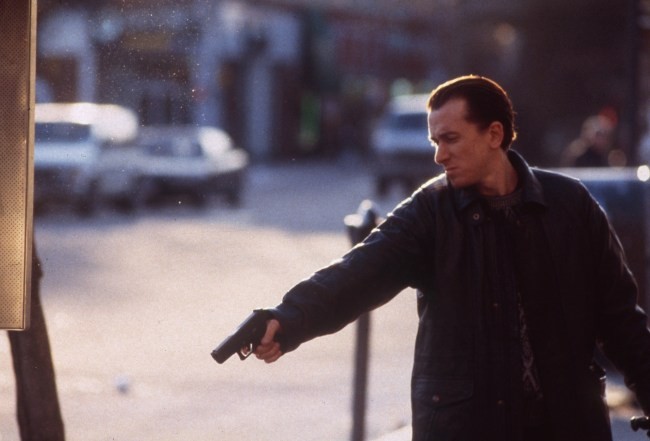
To an outside observer, however, the astonishing thing about “Little Odessa” is how confident it feels; its story of a hit man (Tim Roth) who returns to his old neighborhood to deal with traumas past and present is told with verve and style, qualities Gray says were perhaps more present in his younger self, whatever he may have lacked in filmmaking craft.
“I was 23 when we started making it, and I was totally fearless,” Gray said. “I made mistakes, but I was a little more of a stylist than I am now. I took real risks with pace, and in some sense was very willing to reject the audience’s needs. There is something bold about that; there’s something good not feeling beholden to be tense in this moment, funny in this moment, to just do exactly what you think you should be doing. Sometimes that confidence is wrong, but sometimes the confidence gives you shots that I wouldn’t do today.”
One such shot is a hypnotic camera move in which the point of view lurches over Tim Roth as he opens an envelope revealing his next assignment. “I don’t know where I got that shot from,” Gray said. “I would never do that today. I wish there were a way to liberate myself a little. In youth you’re so dumb that you don’t know what won’t work, so you make stupid decisions, and sometimes those stupid decisions are interesting. I’m more rigorous now, and with rigor comes control, but with rigor comes something that maybe isn’t dangerous enough.”
For Gray, those pros and cons are part of what makes filmmaking interesting — and difficult. “ The thing about cinema, is you’re not always improving,” Gray said. “It’s not like a steady progression where practice makes perfect. It doesn’t work like that. Different filmmakers peak at different times. There is no recipe. I personally think ‘Ran’ is Kurosawa’s greatest movie, and he was what, 75? I also think ‘The Conformist’ is Bertolucci’s greatest work, and I believe he was 33.”
As Gray puts it, “the alchemy is always different,” and a lot of what makes a film work has to do with the collaborative process on any given movie. On “Little Odessa,” Gray “took risks, and I had a very young crew who were very willing to do stupid things with me. Really, it’s an act of insanity when somebody allows a first-timer to direct, because those people don’t know anything. Even Orson Welles didn’t know what he was doing on ‘Citizen Kane’ — which is part of why it’s great.”
 ‘Little Odessa’©Fine Line Features/Courtesy Everett Collection
Gray was thrilled when Criterion wanted to release “Little Odessa” in 4K and remaster it, since the condition of the original materials wasn’t great — and Gray’s own 35mm print of the film had deteriorated in its cans with vinegar syndrome, as he discovered to his dismay when preparing to screen it at the American Cinematheque. Unlike directors who use new releases as opportunities to tinker with their old material, however, Gray chose to let “Little Odessa” stand, warts and all, as a representation of what he was capable of and who he was when he made it.
“Of course I was dying to change everything, but I always tell myself, ‘No, that’s the person you were at 23 or 24,'” Gray said. “I might have done one reposition because I thought I saw a light stand, but other than that I denied myself the right to change it. You have to respect what you made in the heat of creation. Stepping back with distance doesn’t mean you’re right — you’re in a different place in your life. I would not go back and change it for what my taste is now — to me, that would be a gigantic mistake. Because you move on, you’re different. In 1993 I had no awareness of my process at all. I was just beginning.”
The 4K UHD special edition of “Little Odessa,” which features an audio commentary by James Gray and new supplementary features, is now available from Criterion.
What's Your Reaction?
 Like
0
Like
0
 Dislike
0
Dislike
0
 Love
0
Love
0
 Funny
0
Funny
0
 Wow
0
Wow
0
 Sad
0
Sad
0
 Angry
0
Angry
0






Comments (0)