

‘Like a tired boxer, battered by applause’: as Andrew Scott’s biopic premieres, Richard Eyre remembers Ian Charleson’s superb, near-death Hamlet
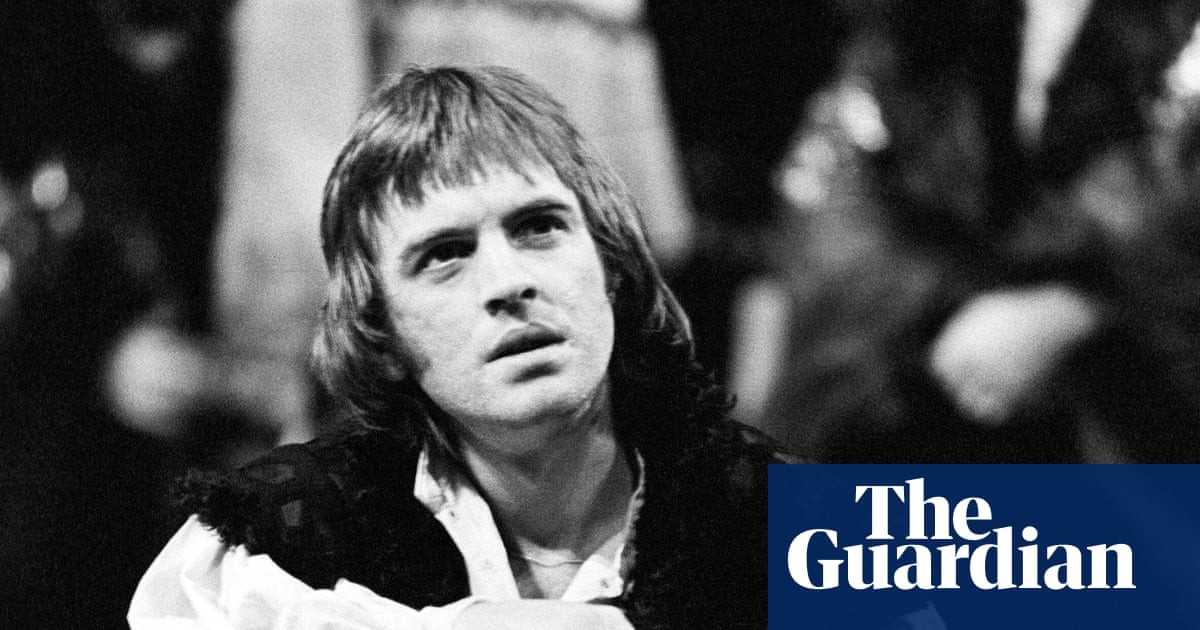
Ian Charleson was one of the finest actors of his generation and an important figure in the fight for gay rights. Yet the extraordinary circumstances of his final performance as Hamlet, just months before his death, are less familiar.
Now, a new film is bringing that haunting production back to life. Elsinore, directed by Simon Stone and starring Andrew Scott as the Scottish actor, will premiere at Telluride this weekend before opening the London film festival in October.
Charleson was 40 and terminally ill with Aids when he was cast as Hamlet in Richard Eyre’s 1989 production at the National Theatre, after Daniel Day-Lewis abruptly left the role. Charleson had first played Hamlet 15 years earlier and persuaded Eyre to let him reprise it, despite the director’s misgivings about his health.
“Ian was very bright, very witty, mischievous,” Eyre told the Guardian. “He was beyond good-looking. He was beautiful, and he had a beautiful singing voice.”
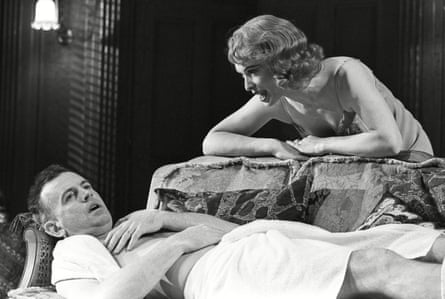
Eyre remembered sitting with Charleson in the National’s canteen a year earlier, when the actor was starring in Cat on a Hot Tin Roof. “He said, ‘I’m hungry for the big Shakespeare roles’. So when Dan had his breakdown” – Day-Lewis believed he saw the ghost of his father onstage – “I thought, I will approach Ian. We met, and then I realised Ian was was very ill. But I thought I will go with him anyway.”
The cast, crew, and audience were told that Charleson’s face was swollen after a sinus operation. In reality, he was suffering from septicaemia, enduring painful acupuncture during rehearsals and, later, chemotherapy.
“Ian’s beautiful face was actually deformed by the disease,” Eyre said. “But I just thought, he is determined, and I felt determined, and it was sort of an act of love for a friend. Most people told me I was absolutely insane. The press were characteristically loathsome in their probing. I just stubbornly stuck to my decision. In retrospect, it was the right one. He was heroic, and utterly brilliant in the part.”
The production ran for six weeks and was widely regarded as one of the finest Hamlets seen on stage. The day after Charleson’s last show, Ian McKellen refused the Evening Standard award for best actor and gave his statuette to Charleson instead.
Charleson died on 6 January 1990, eight weeks later, having asked that Aids be recorded as the cause – an unusually public act at a time when the disease was feared and stigmatised.
Eyre has written of how fitting it was for Charleson to play Hamlet in the last months of his life. “Do you think I can go on as Hamlet looking like this?” Charleson asked him. “You’ll get better,” Eyre replied. “We have to be positive,” Charleson said.
“Hamlet is a poem of death,” Eyre wrote. “It charts one of the great human rites of passage – from immaturity to accommodation with death. Hamlet grows up, in effect, to grow dead.”
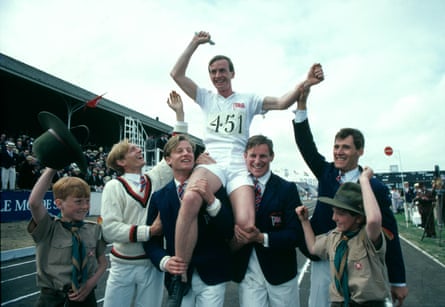
Born in Edinburgh in 1949, Charleson trained at the Bristol Old Vic. He played Eric Liddell in Chariots of Fire, which won four Oscars including best picture, and also appeared in the following year’s best picture winner, Richard Attenborough’s Gandhi.
Charleson seemed to have all the ingredients of a major film career: he was handsome, charismatic and intelligent, with a formidable technical ability. Yet his film career never took off as expected. Instead, he repeatedly returned to the stage, performing Shakespeare, Tennessee Williams, Chekhov, Sam Shepard.
Michael Billington, the Guardian’s former chief theatre critic, remembers Charleson as Eddie in Shepard’s Fool for Love at the Cottesloe in 1984. Initially unconvinced by his interpretation, Billington later came to remember the performance for its “mixture of masculinity and sensitivity”. Charleson performed Cat on a Hot Tin Roof, he said, with “the same blend of supposedly contradictory qualities: athleticism and delicacy”.
Charleson was gay at a time when being openly so could damage an actor’s career. Diagnosed with HIV in 1986, he took part in Before the Act, McKellen’s 1988 anti-Section 28 gala, alongside Judi Dench, Vanessa Redgrave and Stephen Fry.
Scott, who played Hamlet 150 times in London in 2017, has found himself returning to the role while portraying the actor who performed it at the end of his life.
“The idea that Ian was doing this when he was so sick is still, to my mind, just completely mind-blowing,” Scott told People. “And his decision to do it was just incredibly courageous.”
Scott said he was moved by “the opportunity to play a part that Ian and his contemporaries would not have gotten while they were working actors.”
He added: “I wanted people to be able to understand that he was trying to live – it’s not about fetishising his death. He was so full of life and fun, and he did this extraordinary thing.”
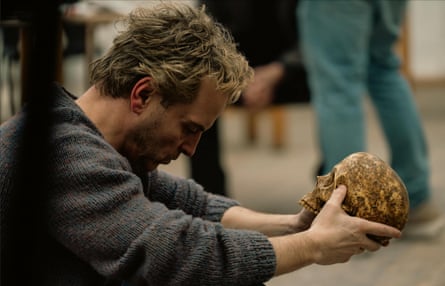
Critics and industry insiders are heavily tipping Scott for a best actor Oscar nomination following early praise for his performance. Eyre called it “brilliant”. “He looks like Ian, and he touches the heart like Ian,” he said.
Charleson’s most celebrated performance was never preserved on film. What remains are recollections, photographs and accounts of an actor performing with extraordinary intensity while his body failed him.
Eyre recalled that Charleson had flu and missed two nights, but felt guilty: “If they pay you, you should turn up.” His final, Monday night performance, Eyre wrote, was “like watching a man who had been rehearsing for playing Hamlet all his life. He wasn’t playing the part, he became it.”
At the curtain call, Charleson stood “like a tired boxer, battered by applause”.
A few weeks before he died, just before Christmas, he wrote to Eyre: “One day when I’m better I’d love to attempt Hamlet again, and all the rest; and together we can revitalise Shakespeare. Anyway I hope this is not a dream and I can’t tell you how much of a kick I got out of doing the part, if only for the short time I could …”
What's Your Reaction?
 Like
0
Like
0
 Dislike
0
Dislike
0
 Love
0
Love
0
 Funny
0
Funny
0
 Wow
0
Wow
0
 Sad
0
Sad
0
 Angry
0
Angry
0






Comments (0)