

Martin Scorsese's Controversial 10/10 Psychological Thriller Is Officially Free on Streaming


Published Aug 30, 2026, 6:00 AM EDT
Days go on and on. They don't end
 Image: Columbia Pictures
The 1970s saw the sudden rise of neo-noir for good reason. Filmmakers like Sydney Pollack and David Lynch brought back classic film noir tropes only to subvert them, introducing a true-to-reality grittiness that reflected the times. These stories were visually distinct with their high-contrast palettes and often featured graphic violence and psychosexual themes while focusing on a complex anti-hero. Films like Chinatown (1974), Blue Velvet (1986), and The Fourth Man (1983) began shaping the genre, marking a shift towards raw urban realism on film, along with the portrayal of tense socio-political backdrops.
Martin Scorsese’s Taxi Driver (1976) is a groundbreaking entry in film noir. The Mean Streets director succinctly captures the moral rot of 1970s New York City through the eyes of Travis Bickle (Robert De Niro), a taxi driver whose deteriorating mental state propels him into violence. This celebrated classic is endlessly rewatchable — and now is your chance to experience it on Pluto TV, where the film is streaming for free.
What is Taxi Driver about?
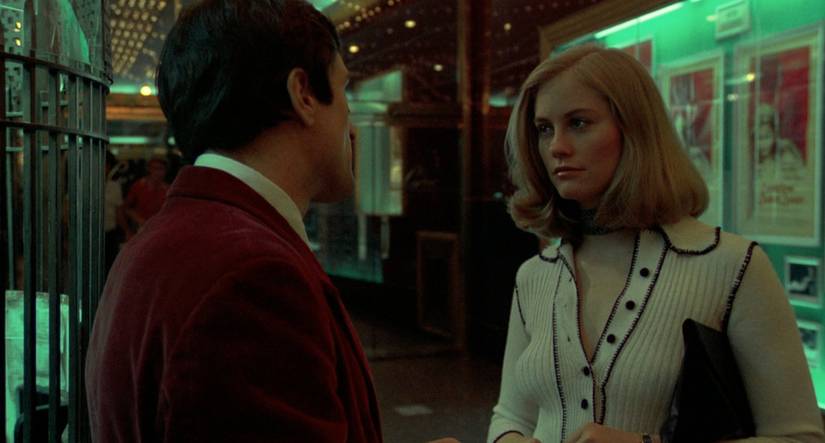 Image: Columbia Pictures
Travis, a Vietnam War veteran, spends most of his time as a night-shift taxi driver to cope with his chronic insomnia. When he’s not driving through the neon-tinged streets, Travis frequents adult movie theaters and maintains a diary to temper his nihilism. Unfortunately, the streets are overrun with crime and corruption, which is why Travis begins to dream about becoming a vigilante. While Travis’ sense of alienation is already troubling when he’s first introduced, his infatuation with campaign worker Betsy (Cybill Shepherd) and her subsequent rejection of him push Travis towards ruin.
Taxi Driver doesn’t deny Travis’ incredibly painful everyday existence. We’re meant to sympathize with this aggrieved blue-collar worker trapped inside a grim cityscape, especially as he constantly seeks an escape that doesn’t exist. Travis’ fixation on Betsy is a result of this alienation, as he views her as someone worth putting on a pedestal. That said, these sympathetic sentiments curdle when we see Travis indulge in racism and misogyny, which are byproducts of a mind that refuses to hold itself accountable. Although vigilantism requires a clear-eyed view of social ills, Travis’ inability to self-reflect feeds into his grandiose delusions about moral responsibility.
Scorsese uses disorienting shots to heighten Travis’ paranoia and isolation. As Travis drives only at night, and his days are hazy due to sleep deprivation, his mind latches onto the seediest underbellies of the city. When he has several accidental encounters with Iris (Jodie Foster), a child who is severely abused and exploited before being sold into prostitution, Travis has no choice but to intervene. Needless to say, this savior complex is severely misguided, eventually leading to extreme violence and a deeply satirical conclusion.
Taxi Driver explores the abject isolation of urban living
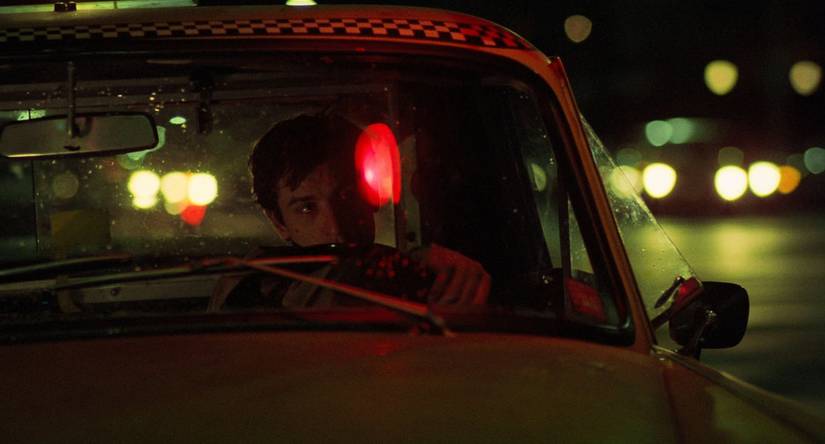 Image: Columbia Pictures
This isn’t the first time Scorsese has explored the lurid sleaziness of nocturnal adventures within an urban setting. His After Hours follows a mild-mannered clerk named Paul Hackett (Griffin Dunne), who gets trapped in a Kafkaesque nightmare while attempting to return home one night. Although After Hours is a surreal black comedy that’s lighthearted in nature, it also captures a similar sense of paranoia, where Paul feels as if the world is out to get him. In Travis’ case, trauma informs his twisted view of the world. With no support systems in place, he lashes out violently, and the results aren’t pretty.
Perhaps Taxi Driver taps less into abject isolation and more into the cruel indifference of a city that never sleeps. Children like Iris can often be seen in the streets, living reminders of a justice system that isn’t doing enough to protect the vulnerable. Bickle attempts to make fleeting conversations with passers-by, but there’s always a gaping divide between how he comes off and who he truly is.
The only sincere connection Travis yearns for is with Betsy, so when that snaps after a date gone horribly wrong, our taxi driver unleashes his pent-up wrath on society. In hindsight, these are obvious markers of an incel, whose distorted view of women (and the world) stems from a complex web of socio-personal factors.
Taxi Driver brings the most compelling aspects of neo-noir to the fore. It is a breathtaking nightmare woven by a master auteur who understands the subtlety required to present his leading man as a tortured, morally dubious individual. Few films feature such a dense character study inside a puzzle-like narrative that only feels more riveting with every watch. It almost seems surreal that we can watch this neo-noir masterpiece for free.
Taxi Driver is streaming on Pluto TV.
What's Your Reaction?
 Like
0
Like
0
 Dislike
0
Dislike
0
 Love
0
Love
0
 Funny
0
Funny
0
 Wow
0
Wow
0
 Sad
0
Sad
0
 Angry
0
Angry
0









Comments (0)