

Microsoft CEO says new AI data centers use as little water annually as a restaurant — closed-loop cooling system aims to slash consumption from millions of gallons as AI infrastructure faces mounting environmental scrutiny
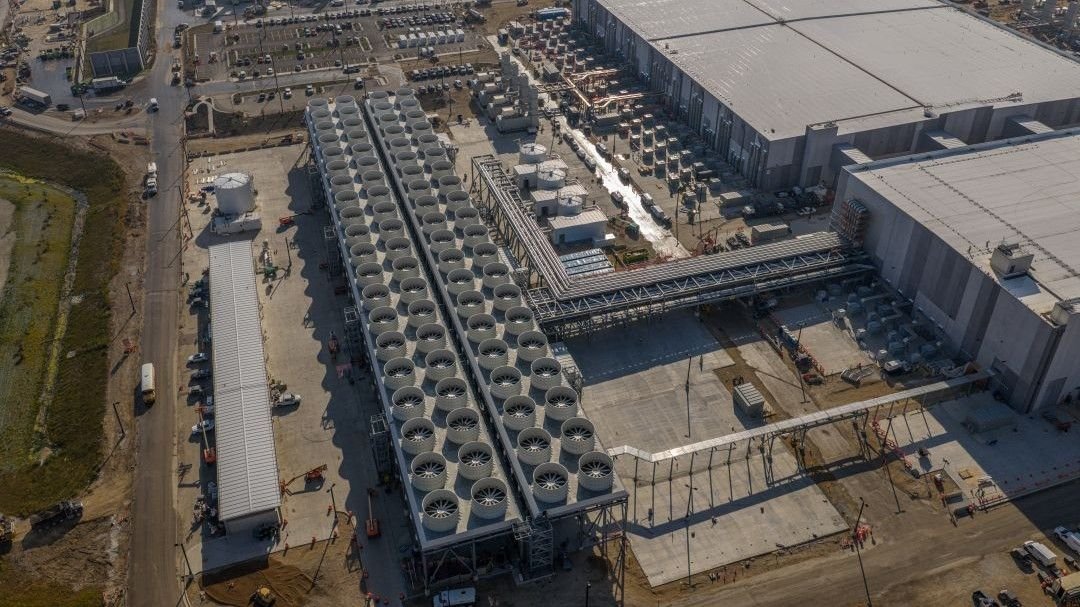
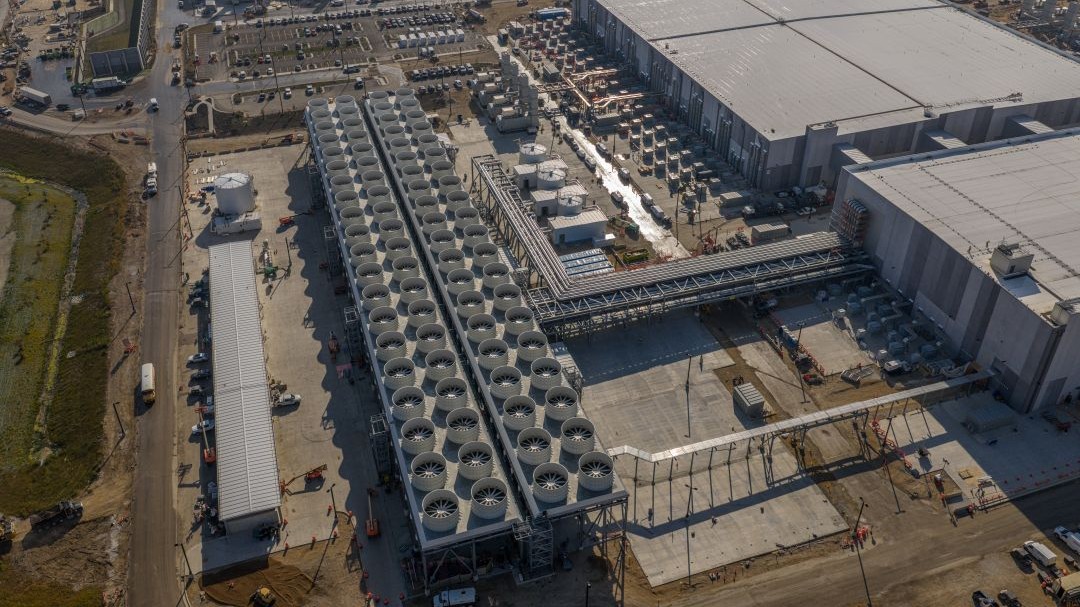 Microsoft's Fairwater data center
(Image credit: Microsoft)
Microsoft's Fairwater data center
(Image credit: Microsoft)
Microsoft CEO Satya Nadella has claimed that the company's newest generation of AI data centers uses so little water that its annual consumption is roughly equivalent to that of a single restaurant. Speaking at Microsoft Build 2026 on June 2, Nadella made the claim while outlining Microsoft's "Community-First AI Infrastructure" strategy aimed to address growing concerns about the impact of data centers on local communities.
"The cooling loop is filled once, and the data center can operate effectively with zero water consumption," Nadella said during his keynote, while describing how new architectures are redefining data center water consumption. "The daily water usage over the course of an entire year is roughly equivalent to what a single restaurant would use."
Go deeper with TH Premium: AI and data centers
While Nadella did not specify the size or type of restaurant used for comparison, the claim is striking given the scale of modern hyperscale AI facilities. Industry estimates suggest that restaurants can consume anywhere from several hundred thousand to more than a million gallons of water annually, while 100MW+ hyperscale data centers have historically required tens to hundreds of millions of gallons of water annually for cooling, depending on climate, workload, and cooling design.
Nadella's statement — not the first time Microsoft has used a restaurant comparison — is based on Microsoft's new closed-loop liquid-cooling architecture. Traditional data centers often rely on evaporative cooling systems that continuously consume water to remove heat generated by servers and networking equipment. In Microsoft’s new approach, over 90% of the facility's cooling relies on a closed-loop liquid cooling system that is filled during construction and then continuously recirculates the same water rather than constantly consuming a fresh supply. The remaining portion of the cooling system primarily relies on outside air and only uses additional water in the hottest conditions.
The system works by circulating cooled water through heat exchangers connected to the AI hardware. As the water absorbs heat, it is routed to a massive chiller plant where large cooling fans dissipate the heat before the water is recirculated back through the facility. Because the water remains in the cooling loop rather than evaporating and being discarded, ongoing water consumption is dramatically reduced. This can translate to savings of multiple billions of gallons of water across Microsoft’s data centers.
The current reality is much more subdued. The new cooling design and its water savings are currently implemented only at Microsoft's Fairwater AI data center campus in Mount Pleasant, Wisconsin. On the other hand, the company has stated that the new cooling approach will become the standard design for future AI-focused data centers. Microsoft has confirmed that multiple identical Fairwater facilities are already under construction elsewhere in the United States as part of a broader expansion of its AI infrastructure footprint. The rollout forms part of Microsoft's longer-term goal of becoming water positive by 2030, meaning the company aims to replenish more water than it consumes globally, as part of its community-first strategy.
While the new cooling design will substantially reduce water use in future facilities, critics note that Microsoft already operates a vast global network of data centers. Azure now spans more than 500 facilities across 80 regions worldwide, many of which were built before Fairwater's cooling architecture was introduced.
Get Tom's Hardware's best news and in-depth reviews, straight to your inbox.
Microsoft has not announced a comprehensive retrofit program that would convert existing data centers to the new closed-loop design. As a result, the "restaurant-level" water footprint applies primarily to newly built facilities that use the Fairwater blueprint, rather than to Microsoft's entire global infrastructure estate.
The debate reflects a broader challenge facing the AI industry. Companies, including Microsoft and Google, are racing to build ever-larger AI clusters while facing mounting public pressure to reduce their environmental impact, as communities grow increasingly disapproving of large-scale AI infrastructure projects. Google recently announced a series of water stewardship commitments of its own, including a pledge to replenish more water than its data centers consume by 2030.

Follow Tom's Hardware on Google News, or add us as a preferred source, to get our latest news, analysis, & reviews in your feeds.
Etiido Uko is a news contributor for Tom's Hardware covering the latest updates in big tech and the PC industry. He is a mechanical engineer and senior technical writer with over nine years of experience in documentation and reporting. He is deeply passionate about all things engineering and technology, and is an expert in gadgets, manufacturing, robotics, automotive, and aerospace.
What's Your Reaction?
 Like
0
Like
0
 Dislike
0
Dislike
0
 Love
0
Love
0
 Funny
0
Funny
0
 Wow
0
Wow
0
 Sad
0
Sad
0
 Angry
0
Angry
0









Comments (0)