

MSI, Gigabyte debut new 5K 27-inch Mini-LED monitors with 2,304 dimming zones and glossy panel — both models double the native 180 Hz refresh rate to 330 Hz at 1440p
 (Image credit: MSI)
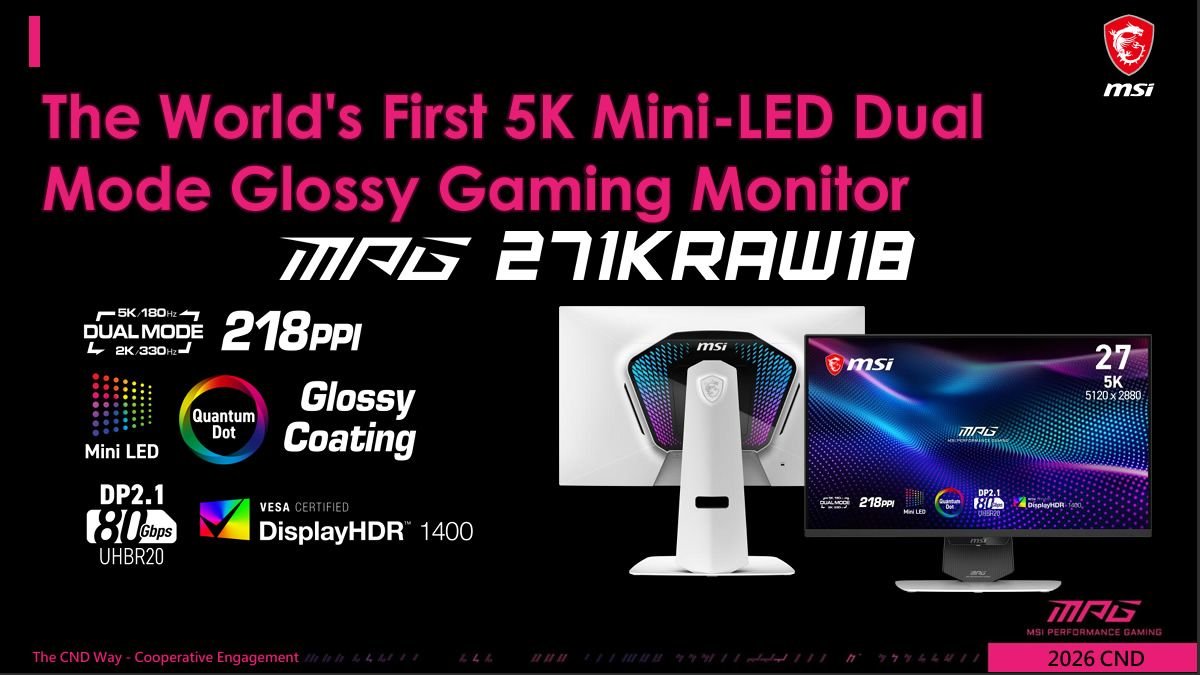
Everyone is talking about next-gen OLED monitors at Computex, but there's a high-end LCD panel slowly creeping up with insane specs. MSI and Gigabyte have announced new 27" Mini-LED monitors featuring a native 5K resolution, enabling retina-level pixel density across 2,304 dimming zones that are further enhanced by a glossy coating. With dual- and even multi-mode support, along with a range of other features, these new monitors can genuinely rival OLEDs for certain use cases.
Both monitors use the same panel underneath (made by BOE), so they share identical specs for the most part. LG has already released its own model featuring this panel, but it has a matte coating instead. Glossy coatings are generally preferred for punchier colors and deeper blacks, and they can particularly help sell the illusion of pixel-level control with Mini-LED technology. But since Mini-LED monitors use IPS or VA panels, they've been almost exclusively matte... until now.
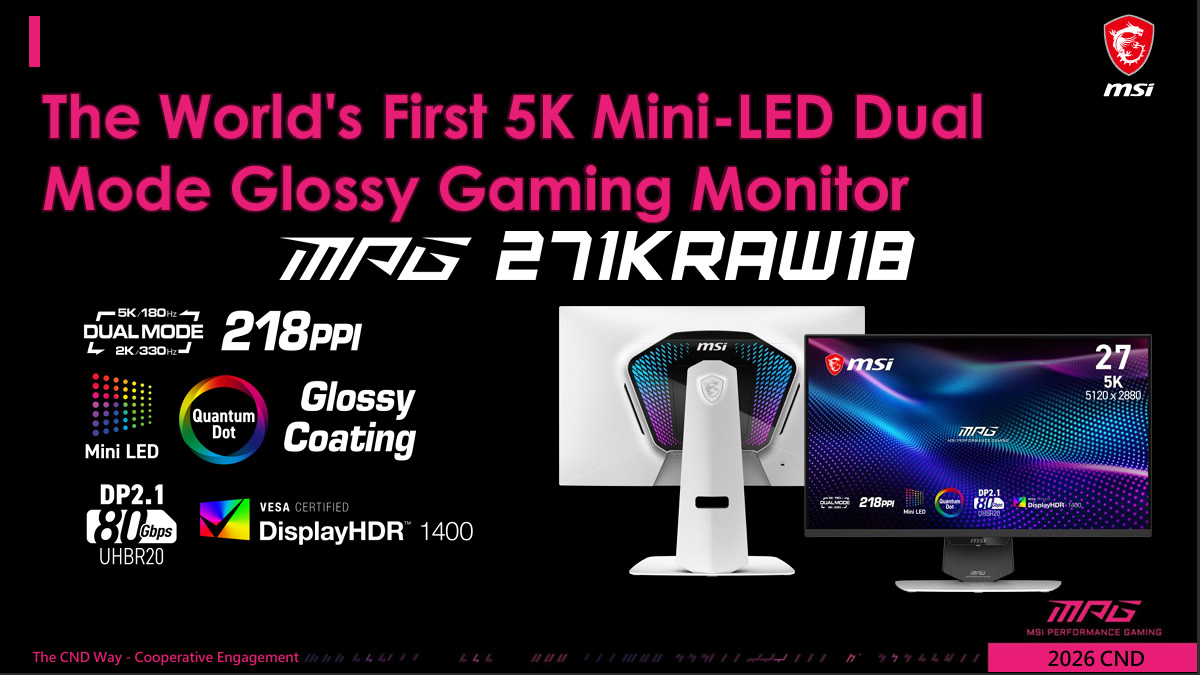
Let's start with MSI's offering, which is called the "MPG 271KRAW18." It uses a 27" Rapid IPS panel with a native resolution of 5,120 x 2,880, which comes out to 218 PPI and would be classified as "Retina" according to Apple. That means you won't be able to discern its individual pixels at regular viewing distances. At 5K, the monitor has a native refresh rate of 180 Hz that can be doubled to 330 Hz at 1440p, thanks to dual-mode support.
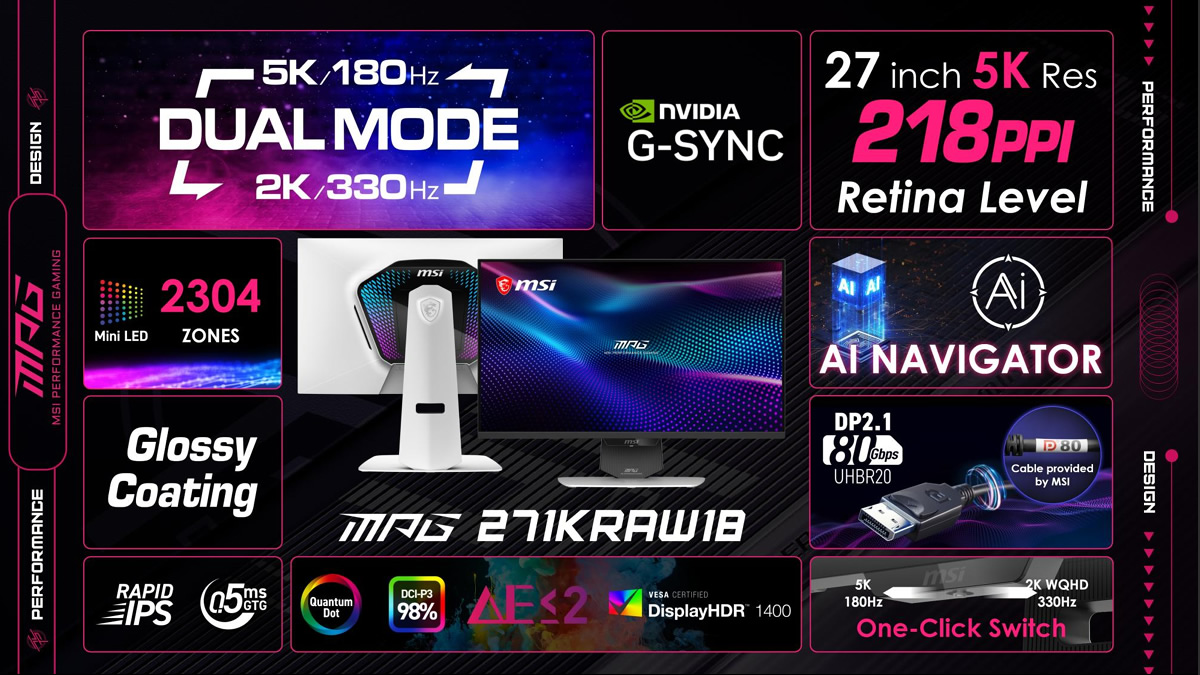
The Mini-LED backlight here consists of 2,304 dimming zones, up from 1,152 zone count limit we've seen for a long time. That allows for a DisplayHDR 1400 certification, meaning this monitor has a peak brightness of 1,400 nits. There's a quantum-dot layer in the LCD stack as well, which enables 98% coverage of the DCI-P3 color space and an average Delta-E of less than 2, so it's ready for even professional work.
For connectivity, you get a full-fat UHBR20 DisplayPort 2.1 port for up to 80 Gbps of bandwidth. There's also 1x HDMI 2.1, 1x USB Type-C (with DP Alt Mode and 98W power delivery), 2x USB Type-A, 1x USB Type-B and a 3.5mm audio jack. The monitor has a bunch of AI features and support for Nvidia G-Sync. There's no pricing but MSI says the MPG 271KRAW18 will come out next year in January.
Moving on to the Gigabyte model, it's called the "Aorus FM275K16P" and it has the same base features and specs. The main difference lies in its unique multi-mode support. Unlike the MSI that can only switch between 5K and 1440p, the Gigabyte model has a third mode. By default, it's 165 Hz at 5K, but it can be overclocked to 180 Hz, then you can switch to 330 Hz at 1440p, or 220 Hz at 4K.
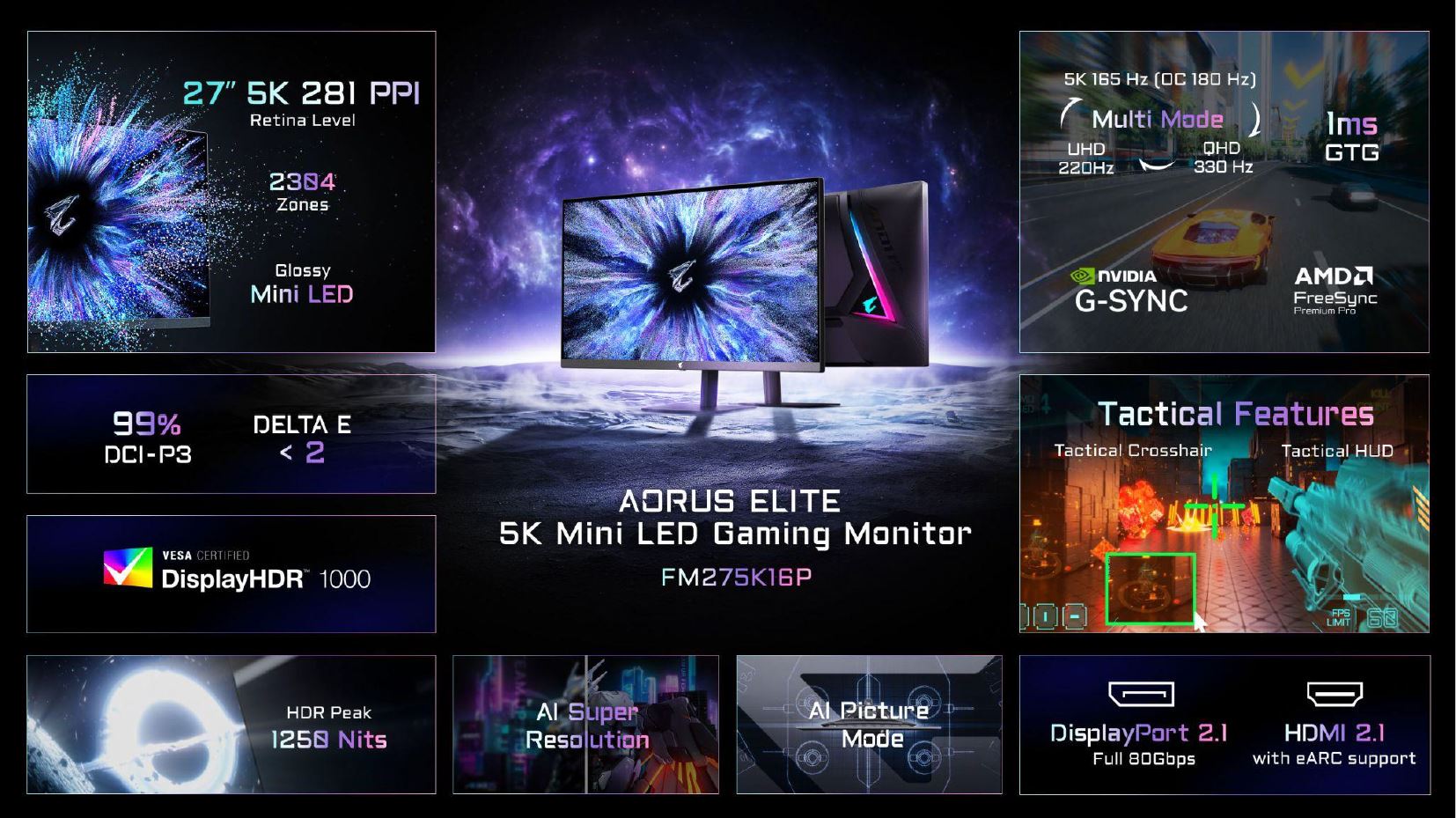
The HDR certification is also different; Gigabyte only advertises DisplayHDR 1000 but says the monitor can hit 1,250 nits of peak brightness. Lastly, the connectivity gets a boost because the HDMI 2.1 port also features eARC, which is incredibly rare on monitors. But the power delivery on the USB-C port drops to just 15W. Apart from that, we get the same 2,304 dimming zones and a glossy coating.
Get Tom's Hardware's best news and in-depth reviews, straight to your inbox.
Each of those zones is made up of 4 LEDs, which means there are almost 10,000 LEDs behind the IPS panel. And they're really right behind it because the BOE panel has "0-OD" or zero optical distance, meaning there's no physical gap between the backlight and the panel itself. This helps with dimming, reducing blooming and halos while maintaining proper blacks that aren't crushed by an aggressive dimming algorithm.
Gigabyte has both a price and a release window for this monitor. The Aorus FM275K16P is supposed to launch sometime in Q4 2026 and will cost $999. That's around $200 cheaper than LG's equivalent, but still in 4K OLED territory. Current 4K-class Mini-LED monitors retail for around $500, but since these 5K models bring so many improvements together, it makes sense why they'd be expensive initially.
Lastly, it's important to mention that the Gigabyte model comes with a built-in upscaling chip that handles 4K to 5K upscaling on the hardware level, similar to LG. MSI has not spoken of dedicated silicon, but it does have AI-based upscaling features that work at the software level. We'll have to wait and see how either implementation fares in person, but for now, these monitors look like a robust overall package.

Follow Tom's Hardware on Google News, or add us as a preferred source, to get our latest news, analysis, & reviews in your feeds.
Hassam Nasir is a die-hard hardware enthusiast with years of experience as a tech editor and writer, focusing on detailed CPU comparisons and general hardware news. When he’s not working, you’ll find him bending tubes for his ever-evolving custom water-loop gaming rig or benchmarking the latest CPUs and GPUs just for fun.
What's Your Reaction?
 Like
0
Like
0
 Dislike
0
Dislike
0
 Love
0
Love
0
 Funny
0
Funny
0
 Wow
0
Wow
0
 Sad
0
Sad
0
 Angry
0
Angry
0









Comments (0)