

Netflix Is Finally Reporting Box Office Data. Why Is It Starting with ‘La Bola Negra’?

The edict at Netflix has always been, we want you to watch movies on Netflix. It has begrudgingly put some movies into theaters for awards-qualifying runs or to appease auteur filmmakers like Guillermo del Toro and Martin Scorsese, and it has even purchased and restored a few movie palaces to demonstrate its love of cinema.
But putting movies into theaters and boasting about how much money they make has never been its M.O. Even when it looks like it has a hit on its hands with a sing-a-long version of “KPop Demon Hunters,” Netflix has never wanted to take a victory lap, because doing so would open it up to having egg on its face when things don’t go so well. Hits and flops come for every studio. Just ask Apple how it enjoyed the scrutiny it received back when it was all in on theatrical.


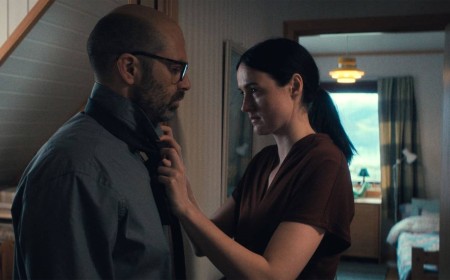
That’s finally changing with Netflix’s big awards play of 2026, Cannes and TIFF darling “La Bola Negra.” It’s an ambitious and sweeping Spanish war and LGBTQ epic that demands to be seen on the big screen because of how it has inspired record-breaking standing ovations and won audience awards from the festival crowds who have seen it. The film will open in limited release on just four screens on Friday in both Los Angeles and New York, including at Netflix’s The Paris and also two major AMCs in Los Angeles, a chain that historically refused to play Netflix films.
Co-CEO Ted Sarandos in his Screentime conference interview said that Netflix released 30 movies into theaters last year, each with their own bespoke, limited release strategy, and that “La Bola Negra” is really no different.
What is different is that it will offer the longest theatrical exclusive window — 47 days — it has ever offered before the film drops on streaming, and it will be the first time it’s actually reporting what the movie makes in theaters. The hope is that a strong per-screen-average will lead to a longer word-of-mouth campaign for the film over those 47 days, and it is designing the platform rollout in a way that it won’t harm the movie once it goes on streaming later.
“We’re looking at this model and saying, how do we serve movie lovers who may want to see this movie in a theater, and how do we not harm value to Netflix, and how do we position the film best in the world,” Sarandos said. He added that it requires treating art house films like “La Bola Negra” and “Train Dreams” differently than how it treats four-quadrant films like Greta Gerwig’s “Narnia: The Magician’s Nephew” or its animated “Charlie and the Chocolate Factory” film.
Whatever “La Bola Negra” makes, it will be a box office record for Netflix, but only because Netflix has literally not publicly reported what any of its other theatrical, awards plays have brought in over the years. Not once. The streamer has bucked a tradition that every film studio has always done when discussing the performance of their films, and it has created the perception that, fair or not, Netflix hasn’t cared about theaters and the theatrical experience the way others have.
Netflix’s messaging began changing when it was lined up to buy Warner Bros. Discovery’s film assets, before Paramount swooped in with a better deal for the whole entity. Suddenly CEOs Ted Sarandos and Greg Peters were talking about how much they loved movie theaters, and they were throwing around promises about 45-day windows to convince skeptics about how it would be handling a legacy studio like Warner Bros.
So why is Netflix doing all this now, and why with a movie like “La Bola Negra,” which doesn’t have stars, isn’t in English, and isn’t based on IP? Because Sarandos is a smart cookie. Perhaps contrary to some belief, Sarandos didn’t crack open Warner Bros.’ books and realize for the first time that movies can actually make money in theaters.
 ‘Narnia: The Magician’s Nephew’ Peter Mountain/Netflix
Coming up later this year is another potential awards play with David Fincher’s “The Further Mis-Adventures of Cliff Booth,” which is a sequel to a box office hit and stars Brad Pitt. It also just dropped the first trailer for its highly-anticipated “Narnia: The Magician’s Nephew” from Gerwig coming early next year, and it wouldn’t be a surprise if people saw that trailer playing ahead of “La Bola Negra” screenings. Both of those films, as well as Danny Boyle’s “Ink” and Peter Berg’s “Mosquito Bowl,” will have traditional box office reporting just as “La Bola Negra” does.
With “Cliff Booth” and “Narnia,” those films are each in IMAX, and Netflix is currently having conversations with exhibitors on “Cliff Booth” to lock in that film’s footprint, but AMC and its roughly 200-300 IMAX locations have already agreed to screen it over Thanksgiving. “Narnia” will open even wider beyond just IMAX, and the hope is that both of these major tentpoles can deliver strong results.
“La Bola Negra” then is the test balloon of sorts, even if it ends up not being a major hit. It will let Netflix get its feet wet for how it will report data moving forward and how it can hone that process before “Cliff Booth” and “Narnia.” That’s important because what Netflix has not done as it has ramped up its theatrical ambitions is aggressively hire numerous executives who are experienced in the theatrical space. Netflix’s distribution chief, Spencer Klein, has been with Netflix for some time and knows the nuts and bolts of reporting box office from his stints at Fox and The Weinstein Company, and its existing team has had experience with these platform releases over the years. That’s not a worry. But it hasn’t sought out new talent to determine how to best market and release these films in a theatrical-first setting. And it ultimately did not buy a movie studio that has all of those people and processes built in. Netflix did recently enlist Katie Martin Kelly, a veteran of Warner Bros. and Paramount, to join its communications team.
But to secure these relationships with exhibitors and get the screens it needs to make theatrical viable, IndieWire understands Netflix has had to agree to some more favorable terms than those that theaters usually reserve for other major studios, which tends to be an even 50-50 split of ticket sales. That might’ve also been necessary as a means of getting a theatrically exclusive window that Netflix wants. Netflix had no comment to add.
There’s a few things that may have changed that led Netflix to this point, and the streamer’s rationale is likely a combination of all of them rather than just one. The first, most obvious one is that theatrical brings in a caliber of filmmaker that Netflix has had trouble securing previously, with Gerwig on the top of that list. Star talent also needs box office, not just streaming figures, to secure those bigger paydays down the road. The second is that Netflix likely has seen how its licensing deal with Sony has worked for those films: generally, the Sony movies that perform best in theaters are the ones that also perform best on Netflix (with some exceptions for something like “Madame Web”), though Sarandos argued in his Screentime interview that theatrical films don’t necessarily outperform all of Netflix’s other originals. Third, if Netflix wants to be able to release movies in theaters and then quickly move them directly to Netflix, the window to do so may be closing as other studios start to agree to other windowing standards about when a movie can go from theaters to PVOD and then to SVOD.
 ‘The Further Mis-Adventures of Cliff Booth’Courtesy of Netflix
But the real challenge that may be tipping the scales is that any streamer, not just Netflix, is starting to hit a plateau of finding new subscribers in the U.S. market (Netflix no longer regularly reports its total subscribers either, saying revenue is its main metric of success). Netflix has introduced an ad-supported pricing tier, it has gone heavy on live events and sports, it has ramped up gaming and podcasts. It has to find something else different in order to help its bread and butter of growing the streaming service. Putting movies in theaters and reaching a crowd that perhaps doesn’t normally subscribe to streaming but might be convinced if they know this big movie it has made will eventually be there, could be a smart approach toward growth. Netflix just on Wednesday laid off about 1,000 workers, one of its biggest staffing cuts in its history, because of that slower growth.
The extra piece Netflix has to contend with is marketing spending. Theatrical movies require shelling out tens of millions of dollars on trailers and promotional materials to create awareness and get people out to the theater, which is a bigger ask than getting them to click a button to start streaming a movie they may not have heard of. Many studios have a habit of throwing a lot of good money after bad in hawking a movie, even when a film is underperforming (here’s looking at you “Digger”), so finding the right balance is something Netflix will have to figure out.
But the secret that streamers like Amazon and Apple (when it was tinkering with theatrical) have figured out is that, though they want all these movies to be theatrical hits, if the box office can cover the marketing costs, it’s done its job and essentially provided a big free marketing campaign for when the movie is set to hit streaming. It’s been proven that movies that have that theatrical push tend to perform better on streaming down the road, and Netflix may finally want to reap the benefits of that. Sarandos said if a movie is going to take somewhat of a hit on Netflix itself by going theatrical, it should be because it has big upside at the box office. Moreover, how many Netflix original movies have entered the cultural conversation the way theatrical films have? “KPop Demon Hunters,” “The Kissing Booth,” maybe “Bird Box” and some others, and after that it gets challenging unless you’re a “Bright” stan.
Netflix will likely say that even with these big movies coming to theaters soon, it reporting box office numbers doesn’t represent a shift in strategy on the whole. It still produces dozens of movies that are only streaming plays and will do great with or without theatrical. But it does represent a shift for the industry on the whole. And if a few Netflix successes can create a more robust theatrical marketplace, it benefits everyone.
What's Your Reaction?
 Like
0
Like
0
 Dislike
0
Dislike
0
 Love
0
Love
0
 Funny
0
Funny
0
 Wow
0
Wow
0
 Sad
0
Sad
0
 Angry
0
Angry
0











Comments (0)