

Quantum Efficiency: The Sensor Spec Nobody Publishes
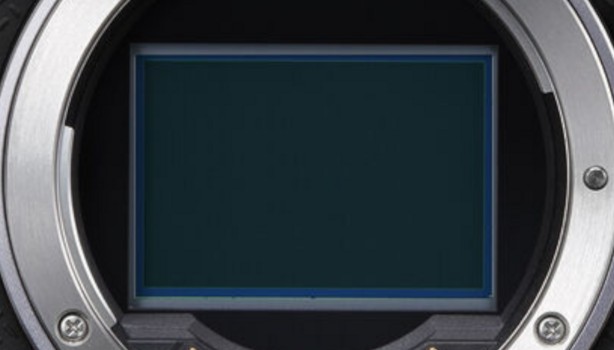
Almost every consumer camera you have ever bought came with a spec sheet, and that spec sheet left out the one number that most directly describes how good the sensor is at its actual job: catching light and turning it into signal. It told you the megapixel count, the ISO range, the frame rate, the buffer depth, the number of autofocus points. It did not tell you the sensor's quantum efficiency, and Canon, Nikon, Sony, Fujifilm, and the rest of the consumer camera business have quietly settled into never printing it.
Quantum efficiency is arguably the most honest sensor spec there is. It is also the one you will not find in a product announcement, a marketing page, or the fine print at the back of the manual. The reasons it stays buried turn out to be more interesting than a simple cover-up, and understanding them tells you a great deal about how modern sensors actually work.
What Quantum Efficiency Actually Measures
Light arrives at your sensor as photons. The sensor's job is to absorb those photons in silicon and collect the electrons they free, which get counted and turned into the numbers that become your image. Quantum efficiency, usually written QE, is the percentage of arriving photons that successfully produce a measurable electron.
If a sensor has a QE of 70 percent at a given wavelength, then for every ten photons of that wavelength landing on a pixel, seven free an electron that gets read out as signal. The other three do nothing. They hit the sensor and vanish, and the information they carried is gone. There is no software, no ISO setting, no post-processing move that recovers a photon the sensor never registered.
That is the whole concept, and its simplicity is why it matters. QE sets a hard ceiling on how much of the light reaching your sensor you get to keep. A camera that catches 60 percent of incoming photons collects more real signal, in the same exposure, than one catching 40 percent. More signal means a better signal-to-noise ratio, which means cleaner shadows, more usable high-ISO frames, and more headroom before noise swallows detail.
It's worth being precise about the payoff, though, because it is easy to overstate. Moving from 40 percent to 60 percent QE gives you 1.5 times as many electrons. Where photon shot noise dominates, meaning the unavoidable statistical scatter in how many photons happen to arrive, things follow a Poisson distribution so that the noise equals the square root of the signal, signal-to-noise also scales with the square root of the signal. There, 1.5 times more light buys roughly 1.22 times better signal-to-noise, not 1.5. In the deepest shadows, where the signal is low and the camera's read noise sets the floor, the arithmetic works differently, but higher QE still helps, because it raises the electron count before read noise is added. Either way the gain is real and visible. It is not miraculous, and no software outruns it, because shot noise is a property of light itself, not a defect in the camera.
Which QE Are We Even Talking About?
Here is the trap that catches most casual discussions of QE, and the one that makes cross-comparisons treacherous. There is no single universal QE number for a sensor. Several different quantities travel under the same three letters, and blurring them together is how people end up comparing figures that have nothing to do with each other.
Three are worth separating. Relative QE is a curve normalized to its own peak, showing the shape of a sensor's spectral response without committing to absolute percentages, which is how Sony has historically published its sensor curves. Internal QE describes the photosensitive silicon itself: of the photons that actually reach the light-sensitive layer and get absorbed there, what fraction produce a collected electron. External, or system, QE describes the finished device, all losses included: the cover glass, the ultraviolet and infrared cut filters, the color filter array, everything the light must survive on its way in.
External QE is always lower than the intrinsic efficiency of the photodiode, because it counts the optical losses that happen before a photon ever reaches charge-generating silicon. It is also the number that governs your actual photographs. And it is the reason the comparisons you see quoted are so often apples to oranges. The 90-plus percent figures that dedicated scientific and astronomy cameras advertise are typically peak, monochrome, absolutely-calibrated sensor values. The 50-to-60 percent figures floating around for consumer cameras are derived, whole-system estimates. Set them side by side without flagging the difference and you have compared two different quantities and learned almost nothing.
One more boundary worth drawing: none of this includes the lens. A T-stop loss happens in the glass before the light ever reaches the sensor, so lens transmission sits outside QE entirely, even though it spends from the same photon budget. QE is a property of the sensor package, not of the system you actually shoot with.
Why It Is Always a Curve, Never a Single Number
QE is not constant across the spectrum. Silicon responds to different wavelengths with different efficiency, so a sensor's QE has to be plotted as a curve running from violet through to the near infrared.
For many photographic sensors, that curve rises through the blues, peaks somewhere in the green-to-yellow region, and falls off toward the reds and into the infrared, though the exact peak depends on the sensor's thickness, structure, coatings, and filters rather than being fixed. Past roughly 1,100 nanometers the response collapses to nothing, because silicon's bandgap means photons at those wavelengths no longer carry enough energy to free an electron at all. The short end suffers too, since ultraviolet light struggles to reach the photosensitive layer through the cover glass and microlenses.
So when a maker quotes a single QE figure, they mean the peak of that curve, at the one wavelength where the sensor is most efficient. Everywhere else the number is lower. This is why anyone serious asks for the full curve, not the headline. Two sensors can share an identical peak QE and behave completely differently at the wavelengths you care about.
The Number That Makes Camera Makers Nervous
Now the reason this spec stays buried, and it is not the reason you might expect. It is not that consumer cameras use cheap, inefficient silicon. They don't.
Many high-end mirrorless cameras now use back-illuminated or stacked back-illuminated CMOS sensors, especially in Sony and Nikon's upper lines and in newer flagship bodies. Back-illuminated design flips the sensor so the wiring sits behind the photosensitive layer instead of in front of it, clearing the light path toward the physical limits of silicon. Sony brought this to full frame consumers with the a7R II back in 2015. Not every serious camera is built this way, and makers do not always disclose the architecture clearly, but in the best modern back-illuminated sensors the photodiodes themselves are not the obvious weak link.
The large loss in a finished color camera, then, is usually not primitive silicon. It is the optical stack above it, and above all the color filter array, intentionally rejecting part of the light. That is a far more awkward thing to explain on a spec sheet, because it means admitting exactly how much light the pursuit of a color photograph forces you to discard.
The main culprit is that color filter array, the red-green-blue mosaic, usually a Bayer pattern, that gives you color in the first place. Each colored filter attenuates and spectrally selects the light reaching its pixel, so a green pixel is largely blind to red and blue. These filters are not perfect passbands, their responses overlap, and the exact penalty depends on the filter dyes, the wavelength, and the illuminant. But the direction is not in doubt: depending on those factors, the color filter array costs a large fraction of the photons a monochrome version of the same sensor would have collected. Stack the infrared and ultraviolet cut filters and the cover glass on top, and the external QE of the finished camera falls well below the near-perfect silicon underneath.
The microlens array over each pixel earns its place here, though what it does depends on the sensor generation. On older front-illuminated sensors, the wiring sat on the light-facing surface and occupied part of every pixel, so the fraction that could actually collect light, its fill factor, fell well below 100 percent. There the microlens funneled photons off that dead circuitry and onto the photodiode, a large and direct QE gain. Back-illuminated design mostly removes that problem by moving the wiring behind the photosensitive layer, so a modern BSI pixel already has a high native fill factor and the microlens is no longer compensating for surface dead space. It still matters, for a different reason: it steers incoming light into the correct pixel and bends oblique rays down into the well.
That steering job is where a catch relevant to photographers shows up. A microlens works best on light arriving close to straight down the axis. Light striking the extreme corners of a large sensor at a steep angle, as it can from non-telecentric wide angle designs, especially compact mirrorless wides and adapted rangefinder lenses, hits the microlenses obliquely and a chunk of it misses its photodiode. Effective QE literally falls off toward the edges of the frame, which is one of the mechanisms behind corner shading and color shift with fast wide lenses. Makers offset the corner microlenses slightly inward to fight this, but they cannot fully cancel it, which is a reminder that system QE is not even a single number within one sensor.
Oblique light causes a second problem worth noting, because it shows how much engineering the color array demands. A photon entering at a steep angle can refract past its own pixel and land in a neighbor, so a photon metered as green contaminates the red pixel's well. Sensor makers fight this crosstalk by etching microscopic walls, deep trench isolation, down into the silicon between pixels to keep photons in their lanes. Building physical barriers inside the chip is part of the ongoing cost of chasing color at all.
The honest summary is that the silicon is often not the main bottleneck. The color filter array is a pair of sunglasses bonded over the entire sensor, doing precisely what you asked it to.
The Proof Sitting in the Catalog
If this thesis is right, then a camera identical to a normal one but with the color filters removed should show a large jump in sensitivity, and one that fights the filters should recover some of the loss. Both exist, and you can point to them.
Take the color array off entirely and you get a monochrome camera. The Leica M11 Monochrom and Pentax's K-3 Mark III Monochrome are closely related to standard color models but use monochrome-dedicated sensors with no color filter array. The result is exactly what the physics predicts: markedly higher luminance sensitivity, no demosaicing, cleaner high-ISO files, and finer pixel-level detail, straight out of the same silicon, purchased entirely by giving up color. No processing trick produces that gain; it comes from ceasing to throw the light away. These cameras are genuinely niche and the segment is thin. The Pentax K-3 Mark III Monochrome has reportedly disappeared from major retail channels, while Leica's Monochrom bodies and the Ricoh GR IV Monochrome carry the idea forward.
The opposite approach is to keep color but redesign the filter to leak more light through. Smartphone makers, starved for sensitivity on tiny sensors, have shipped exactly this. Huawei's RYYB sensors, built by Sony, replace the two green filters of the standard array with yellow ones. Yellow passes both red and green, so more light reaches the silicon, and Huawei claimed the design meaningfully increased the light captured, with the missing green channel reconstructed computationally from the neighboring pixels. The trade is squarely in color accuracy and demosaicing complexity, which is why this stays largely in the phone world rather than in cameras where color fidelity is the product. But it demonstrates the same underlying truth from the other side: the industry knows the color filter is the primary efficiency bottleneck, because when low light matters enough, it is the first thing they redesign.
Why the Astronomy Comparison Is Only Half a Story
It is tempting to leave the argument at the filter stack, but a cooled monochrome astronomy camera beats your mirrorless body in low light for reasons beyond QE, and I would be dishonest to imply otherwise. Those cameras are actively cooled, often far below ambient, which suppresses the thermal dark current that accumulates during the long exposures they are built for. Many also carry very low read noise. In a single deep-sky exposure, cooling and read noise can matter as much as the missing color filters. QE is the cleanest part of the comparison, not the whole of it.
The fair version of the claim is narrow and still damning: strip the color array off a modern high-quality consumer sensor and much of the efficiency gap closes. The rest of the astronomy camera's advantage is cooling and noise control, which your handheld hybrid stills-and-video body was never built to provide.
Why the Number Stays Off the Page
There is a subtler reason for the silence than embarrassment. QE, combined with two other specs that also rarely appear, read noise and full-well capacity, lets you calculate real sensor performance from first principles rather than from marketing.
Dynamic range, for instance, is essentially the saturation capacity divided by the noise floor, the read noise at base ISO. Full-well capacity is a big part of that, but it does not set dynamic range on its own; the noise floor does the other half. And from QE and read noise you can derive a sensor's absolute sensitivity, the minimum number of photons needed to reach a defined signal threshold, a hard physical measure of low-light capability that owes nothing to noise reduction or in-camera color processing.
Published together, these numbers would let buyers rank sensors on physics alone. That is precisely the comparison the industry has little interest in enabling, because it collapses years of differentiated branding into a short column of numbers where the current full frame bodies sit within a narrow band of one another. The marketing depends on the gaps looking larger than the physics says they are.
Where to Actually Find It
Unpublished does not mean unknowable, because QE can be reverse-engineered from data the makers cannot hide. Signal-to-noise measurements, like the ones DxOMark performs and posts, encode enough information for someone who understands the math to estimate a sensor's external quantum efficiency.
Bill Claff's Photons to Photos site maintains derived sensor characteristics for a large catalog of cameras, calculated from measured data rather than manufacturer claims. The caveats are real. These are derived, effective values that rest on modeling assumptions, and Claff himself warns they can go wrong and that a direct measurement always beats a derived one. Treat them as well-informed approximations, not gospel. But they are free, and they will tell you roughly what the spec sheet withheld. Note also that the machine-vision world does publish QE directly, under EMVA-1288 testing; makers like FLIR and Teledyne list separate monochrome and per-channel color QE values for specific industrial cameras. The silence is a consumer-camera habit, not a universal one.
Why You Should Care as a Working Photographer
You will probably never make a purchase decision on QE alone, and you should not. Full-well capacity and the noise floor together govern dynamic range. Read noise governs how deep into the shadows you can push. Pixel size, dual-gain architecture, and the color rendering of the raw pipeline all shape the final image in ways a single efficiency number cannot capture. QE is one term in a longer equation.
But it is the term that describes the sensor's fundamental transaction with light, and it is the one you are never handed. Knowing it exists changes how you read every other spec. When two cameras deliver visibly different high-ISO results despite similar sensor sizes and pixel counts, external quantum efficiency is very often part of the answer, sitting underneath everything, unlabeled and unadvertised. If low-light and night work is where you push your gear hardest, the astrophotography and post-processing techniques in Photographing the World 2: Cityscape, Astrophotography, and Advanced Post-Processing are built around exactly the conditions where a sensor's efficiency stops being academic. The most physically revealing number about your sensor is the one nobody prints. Now you know where to look for it, and why they would rather you didn't.
What's Your Reaction?
 Like
0
Like
0
 Dislike
0
Dislike
0
 Love
0
Love
0
 Funny
0
Funny
0
 Wow
0
Wow
0
 Sad
0
Sad
0
 Angry
0
Angry
0







Comments (0)