

Rebellion review – story of Bradford 12 revisits Britain’s ugly racist past
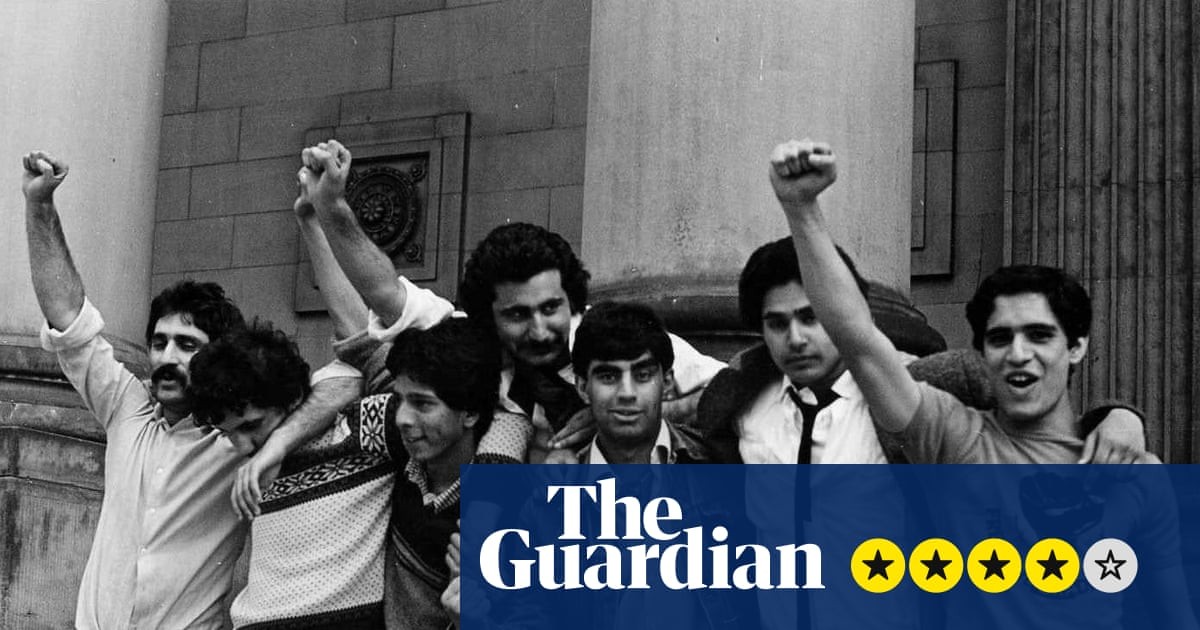
This fierce film from socialist film-makers Ken Fero and Tariq Mehmood gives us the story and the context of the Bradford 12. Twelve south Asian members of the United Black Youth League in 1981 were arrested on a charge of conspiracy to cause explosions for possessing dozens of molotov cocktails – milk bottles filled with petrol, with a rag through the lid – allegedly for throwing at the police. To the intense irritation of the British authorities, a mixed-race jury acquitted them, accepting their argument that it was in self-defence (and that the items themselves were closer to fireworks than bombs), because black and Asian communities were routinely and systematically attacked by skinheads and racists whose activities were shrugged at by the powers that be.
It is a reminder of a particularly ugly, squalid, bigoted and mediocre era in British public life, when Margaret Thatcher, just before becoming prime minister, tried to siphon off some of the far-right National Front’s political energy by declaring that people felt “swamped” by immigrants, the most earsplittingly loud dog whistle in Tory history. It was also the era when anti-racist protester Blair Peach was killed by the Met’s yet-to-be-disbanded special patrol group, when the still-unsolved New Cross fire in London took the lives of 13 young black people, when the south Asian woman Anwar Ditta was subject to a spitefully obstructive move from the Home Office to prevent her bringing her children into the UK – supposedly because they weren’t really hers, though a DNA test finally proved her right. Perhaps most of all, it was an era when the witness-box testimony of uniformed police officers was increasingly seen as almost valueless in these cases; the film also reminds us how culpably lackadaisical and incompetent the Yorkshire police were in catching the serial killer Peter Sutcliffe.
Rebellion is concerned with giving us a larger picture of liberationist politics, citing Frantz Fanon and bringing in Palestinian, South African, African American and Northern Irish voices. Here, however, I have one criticism: it is a shame, given the avowed importance of solidarity, that no interviewee can find it in their heart to say the word “antisemitism” – especially as the film uses a good deal of footage of the National Front, which had very open opinions about, and regularly attacked, Jews. It is clear that racism was something that was in the air then, along with casual misogyny and contempt for working people. Perhaps people conceal it better these days, but it’s still a shock to remember the sheer heavy weather of prejudice in those days, and to be reminded of those who stood up against it in court.
What's Your Reaction?
 Like
0
Like
0
 Dislike
0
Dislike
0
 Love
0
Love
0
 Funny
0
Funny
0
 Wow
0
Wow
0
 Sad
0
Sad
0
 Angry
0
Angry
0






Comments (0)