

Rogue iOS developer creates app that simulates messages sent by carrier pigeon; messages only travel at 100mph — LA to NYC correspondence takes 22 hours to deliver; virtual birds can get distracted or even lost
 (Image credit: Future)
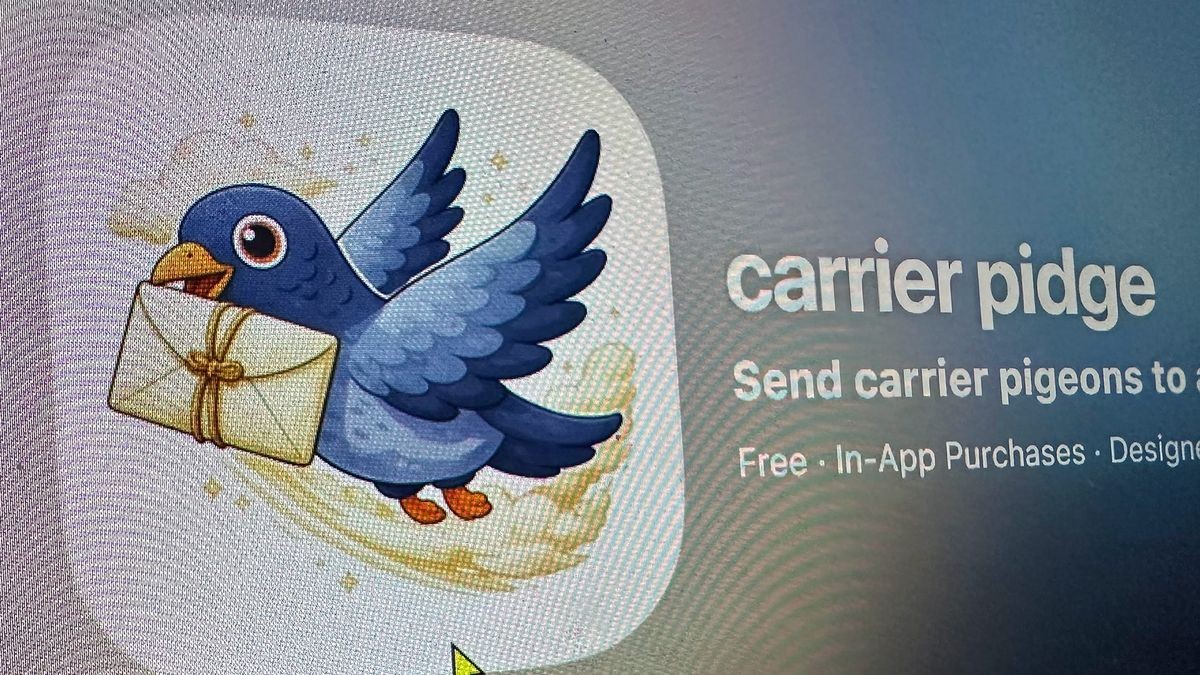
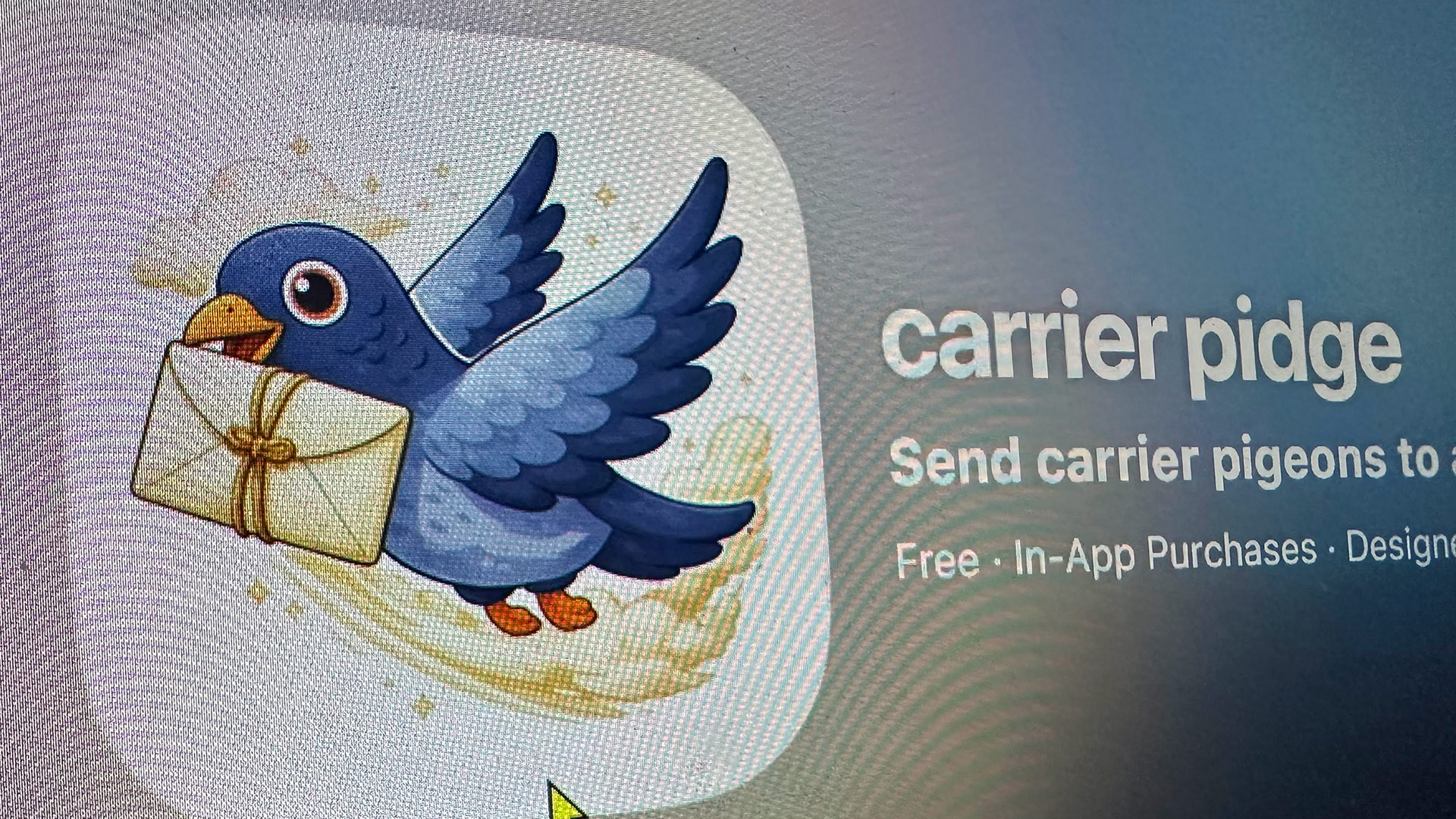
Are you perturbed by the hectic pace of modern life and the attention-seeking immediacy of instant messaging (IM) platforms? Do you even find email a bit too high-octane? Developer Noah Larrobino may have the solution you seek with the new Carrier Pidge app for iOS, an app that sends messages at the speed a carrier pigeon would travel.
Spent 3 weeks building a texting app slower than email. Messages fly at pigeon speed — LA to NYC takes 22 hrs. Sometimes the bird dies & the message isn’t delivered. pic.twitter.com/MwHcldFr0YAugust 12, 2026
As outlined by the dev, the key feature of Carrier Pidge is that it slows down electronic communications to a more natural speed. Specifically, any messages you send to other app users will arrive at pigeon speed, based on your respective GPS locations. According to the app store page for Carrier Pidge, that means your messages travel at 110 mph. Not slow, but if one is messaging a contact on the other side of the continent, from LA to NYC, for example, the recipient won’t see the message until 22 hours after it was dispatched.
The carrier pigeon analog is stretched further by some other features of the app’s messaging engine. As your message flies through the ether attached to your virtual bird’s virtual ankle, some birds will get distracted, slowing their progress by as much as 25%.
There’s a real-time flight tracker in the app. In Noah’s tweet, you can see they are tracking a message sent from NYC to somewhere in the UK. The on-screen text suggests the pigeon is still 1 day and 2 hours away from its destination.
Your virtual bird can get lost or die
More hazardous to your messaging hopes is the fact that anytime you send a communication via Carrier Pidge, there’s a 0.2% chance the virtual bird will get lost. So you can’t guarantee your chosen recipient will get the message.
On the other side of the flight path, there are no read receipts generated. This might give Carrier Pidge app users some graceful leeway to ignore messages they’d rather not deal with, while shielded by a little plausible deniability – a much better outcome than seemingly, rudely, ignoring a friend. However, if the dev is serious about extending such comfort to users, they should make sure the real-time flight tracker also has some built-in inaccuracies or foggy areas.
Lastly, Noah says that the virtual pigeon will sometimes just die en route to its destination. That’s another level of realism that elevates this app against its peers, as long as the dev has properly researched and implemented pigeon fatality chances across the routes, environments, and weather systems they would encounter.
Get Tom's Hardware's best news and in-depth reviews, straight to your inbox.
While Carrier Pidge has debuted on Apple’s App Store for iOS, Noah says it will “come to Android eventually.” This new messaging app is monetized by allowing users to expand their aviary with as many as 10 extra pigeons.

Follow Tom's Hardware on Google News, or add us as a preferred source, to get our latest news, analysis, & reviews in your feeds.
Mark Tyson is a news editor at Tom's Hardware. He enjoys covering the full breadth of PC tech; from business and semiconductor design to products approaching the edge of reason.
What's Your Reaction?
 Like
0
Like
0
 Dislike
0
Dislike
0
 Love
0
Love
0
 Funny
0
Funny
0
 Wow
0
Wow
0
 Sad
0
Sad
0
 Angry
0
Angry
0












Comments (0)