

Sid Meier's Civilization games: the oral history
❮1 / 8❯
❮2 / 8❯
❮3 / 8❯
❮4 / 8❯
❮5 / 8❯
❮6 / 8❯
❮7 / 8❯
❮8 / 8❯
Several years and military simulator games later, however, Meier itched to do something new. He'd seen how players found joy in watching their decisions shape a simulation and, following the positive reception to Railroad Tycoon, had an instinct that history could capture people's imaginations.
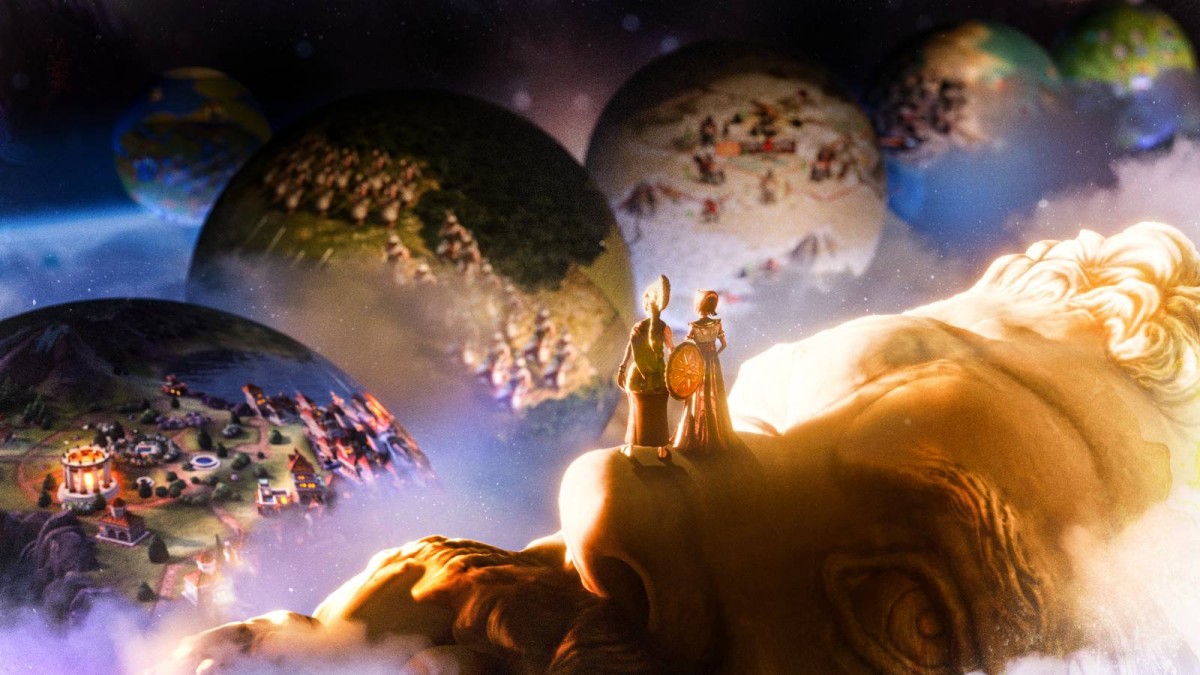
Thus was born Civilization and, equally important, the creative pattern that shaped the genre-defining series over the next 35 years. Even as the series changed hands over the years, each successive game came into existence facing the same challenges: tumultuous changes in leadership and vision, tension between tradition and innovation, and no shortage of doubt from backers and consumers. And yet Civilization has endured, shaped as much by the people who play it as the ones who create it and etched into the video game landscape as one of the greats.
To mark the 35th anniversary of Civilization, Polygon spoke with some of the people who created and stewarded the series over the decades. Below, they tell the story of how Civilization became the franchise we know today. Rome, it seems, was not built in a day.
The cradle of Civilization
Sid Meier (Creator of Civilization, co-founder of MicroProse and Firaxis): I was always playing with toys as a child. I remember spreading my blocks and soldiers and ships over the living room floor until my mom said, “Somebody’s coming over — you gotta clean up!” And I had an interest in history; I read about airplanes and ships, pirates, for example. As I got a little older, I got into board games and strategy games. This was all before computers appeared. When computers appeared, my first computer was the Atari 800. Whoa, I can make my own games. That was super cool.
And, you know, the rest is history. Literally.
In the late 1980s, MicroProse was in the business of making realistic military simulation games like Meier's F-19 Stealth Fighter, not historical city builders. But 1990's Railroad Tycoon sparked an interest in something bigger for Meier.
Meier: The backstory of Civilization is kind of interesting. We had actually done a game previous to that called Railroad Tycoon, which was our first “God game,” a game where you start with a little tiny nugget and you gradually build it into something more and more interesting. In this case it was a railroad empire. I was talking to my collaboratorBruce Shelley began his game design career in tabletop gaming, working on Tolkien-inspired RPGs at Iron Crown Enterprises and classic strategy games at Avalon Hill, before his five years at MicroProse with Sid Meier and his eventual role as a founding member of Ensemble Studios, where he helped create Age of Empires and shape one of gaming’s defining strategy franchises. , I think we were on a train to New York or something, and I asked, “What should we do next?” That idea of building something as opposed to blowing everything up is kind of cool. What’s a topic we could tackle? And we looked at each other and said, “How about the entire history of civilization?” It has that quality of starting small and growing, and having all these different aspects: economics, military, diplomacy. Could we do it? Probably not.
 Photo: GDC
Ed Beach (Creative director for Civilization at Firaxis): That’s why the computer game was so mind-blowing. Sid’s original premise was: Let’s put all of human history in a box and make it fun. They achieved that.
Meier: The aspect of creativity in making a game is exciting. It’s empowering. It’s a wow thing. In the same way that an artist starts with a blank canvas, a writer starts with a blank piece of paper, a game designer starts with a blank screen, starts typing some code, and stuff starts to happen. It’s magical.
Brian Reynolds (Lead Designer on Civilization 2): I was a brand new employee [at Sid’s company MicroProse] and my manager introduced me while we were passing in the hall. The funny thing was I’d somehow made it to that point without particularly having heard of Sid personally. He was the only person at the company allowed to do both programming and design work.
Meier: Bruce and I created Civilization, and he was really my perfect alter ego. Every night when I left, I would drop a floppy disk on his desk. When he came in in the morning he would load it up and start playing, give me all sorts of really interesting feedback about what was working and what was not working, how we might fix this, how we might deal with that. Having a person like that, who is willing to spend the time to play your game with all its warts and faults, is invaluable.
The real nugget of Civilization was bringing that fascination and discovery that’s exciting as a kid, combining that with strategy gameplay, decisions that an adult might appreciate. We say that we do a lot of our research in the kids section of the library.
 Image: Firaxis
Reynolds: Sid’s main advice was actually, “Have fun!” I think at the time what Sid mostly wanted to accomplish was spend as much time as he could working on his own new games.
Meier: The original iteration of the game was much more like SimCity. It was zoning and watching things grow. Eventually changing something over here and watching for a while, then changing something over here. But it just didn’t capture the fun. We actually put it aside for a while, did another game, Covert Action, and when I came back to it, we introduced the turn-based idea, which really revolutionized the experience.
You had a lot of things to do and you were always thinking: What am I going to do next? Your mind was always in the future: “Once my wonder’s finished, then I can do this.” “Once I discover this, I can do this.” “Once my library’s finished, this is going to happen.” “Once I explore this continent…” — the player’s imagination was all of a sudden totally engaged in what was happening.
Reynolds: He was early in the prototyping of the original Civ when I was introduced, and I remember accidentally staying up very, very, very late playing his prototype the first night I got one from him on a floppy disk.
Meier: The fun was the ownership that the player felt because every game was different. The story of your game is different from everybody else’s, and you would realize that because of all the critical decisions that you made along the way. One of the things that we talk about is that people enjoy learning, and you really feel at the end of a Civ game you’re a little tiny bit smarter than you were when you started.
But we were almost overconfident. We initially had this gigantic map that would take forever to explore and conquer, and towards the end we said, “Oh, let’s cut it in half. Oh no, let’s cut it in half again.”
 Image: Firaxis
Soren Johnson (Co-designer, Civilization 3; Lead Designer, Civilization 4): Civilization was a game I played a lot in college. I bought my first copy of Civ the first week of school. I went to the school bookstore to buy my books for the quarter, and they had a very small game section. Down there — I remember it was actually on the bottom row — I saw this game called Civilization. I just knew as soon as I picked up the box that I was going to buy it. At the time, games were getting more complicated and more ambitious, and reaching for broader subject material. So it just made sense to me that Sid would try to make a game about the history of the world.
Meier: When Civilization initially shipped, it was a gigantic question mark. It was different from any other game out there. It was kind of side by side with our military simulations. That’s what our players really were familiar with. It didn’t really have a marketing budget or things like that, so it kind of went out very quietly.
Meier knew players loved making small, impactful decisions in his previous games. Instinct and experience gave him hope that adapting this style of decision-making to a larger scale would prove just as successful, though MicroProse had concerns that Civilization wasn't enough like the other strategic military simulators in its portfolio. Those concerns were soon proved to be unfounded. Civilization launched in September 1991 to widespread praise and eventually sold nearly 1.5 million copies. The single recurring strain in the chorus of acclaim was how the breadth of choices and the way their consequences rippled out meant no game was the same.
Johnson: I think I played two or three complete games within the next few weeks. Stayed up very late at night, had the traditional "one more turn" experience. Of course, I had to kind of put it away just so I could continue on with the things I needed to do in college.
Meier: I will claim that Civ is not only a game design achievement, but also a technical achievement. Our technology was limited at that time. It was programmed on the IBM computer, and we implemented a technology called “overlays.” You can see in the game that there are a lot of separate screens, like the city screen. An overlay allows us to bring in code up and beyond the 640K limitation of the IBM computer.
Johnson: Even though there’s a lot in the game, it’s not actually all that complicated. Each of the systems is fairly straightforward. It’s just that when you put them all together, you get this really interesting mix of technology and military and diplomacy and exploration.
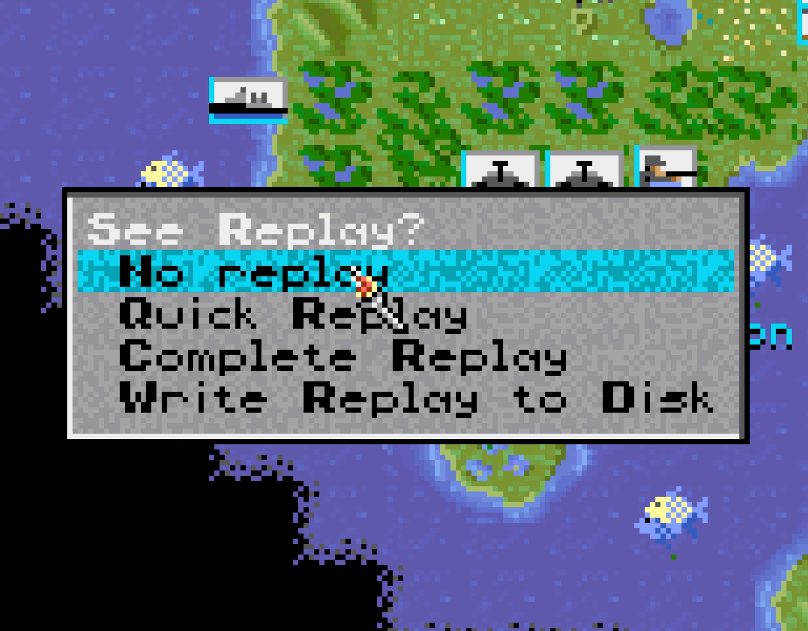
Meier: We probably couldn't have done without that tech. I even designed a font that allowed me to pack more information on the screen. We used color cycling to show rivers flowing in the 256 color mode. We knew we were done when we filled up the memory. That really was the way it worked back in those days.

Johnson: I immediately could tell this was one of the best games that I’d ever played. It was super addictive, obviously, but it really gave you a chance to touch history in a way. You saw that Sid had some ideas about how history developed. Just from the tech tree itself, you could look at it and see that you combine these two ideas together and it leads to this other thing. It’s making sort of an argument.
Meier: I remember a couple of months after it shipped, I got a call from Bill Stealey. He was at some sort of convention and he said, “Sid, people are talking about the Civilization game. Tell me more.” It was word of mouth, players communicating. It just kind of evolved into this thing where one person told another. It was not by design. It was not because of a gigantic marketing push. It was just people playing and encouraging others to play.
Heather Hazen (President, Firaxis Games): I have the pleasure of seeing Sid Meier very frequently, and we talk a lot about how Civilization all started in comparison to where it is today [...] There are very few game companies in our industry that have been around as long as Firaxis. There are very few game franchises that have lasted as long as Civilization.
Dawn of a new era
After Civilization's surprise success convinced MicroProse there was a bigger market for strategy games, Brian Reynolds spun its historical empire-building into Colonization, an Americas-set game blending Civ-style military strategy with Railroad Tycoon-style trade.
Meier: Civilization went out and after a while we realized, “Wow, this is good. People are liking this. What are we going to do next?” I was like, “Everything I could imagine I put into that game. I can’t even think about it.” I actually started working on a project called CPU Bach, which was a music composition program and as far as I could get from Civilization. But Brian Reynolds came along and said, “I’ve got some ideas about what could be done.”
Reynolds: Colonization came out and did pretty well — not quite Civ-level numbers, but I think it was the most successful game for MicroProse that year — so it had a real impact, and definitely made me seem useful to the company. Meanwhile I’d just met my soon-to-be-wife Jill, and she was about to do a Fulbright in England for a year. I’d decided to marry her and go with her, and went to break the news to the company that I’d had a great time working there. This was 1994, before there was even very much internet and certainly long before remote work became a thing. I had just assumed that would be that for my MicroProse job.
My various levels of bosses were pretty visionary. They asked me if I’d like to take a project and a computer over there and just send them stuff from time to time. The remaining question was what project I would work on. SimCity 2000 had recently been released and been successful — one of the early successful “full sequels,” and it was a strategy-adjacent kind of game. I ended up taking a portable computer with me, bigger than a laptop, weighed like 40 pounds, and was a 486/66 with a 500MB hard drive.
I was just way out in Yorkshire for a year by myself. I could dial into MicroProse’s office down in the south of England and get intra-company emails and have some phone calls, but I was substantially on my own as far as making anything happen with Civ 2000, as we were originally calling it.
Meier: For me, it's always fun to try something new. So once I had done the original Civ, I was very happy to let somebody else kind of play with those same toys and see what they came up with.

Reynolds: Civ 2 was the ultimate incremental approach. Civ was already a masterpiece, and so it was carefully improving as many aspects of the game as we could — what did we want as fans? My motto for Civ 2 development was I didn’t want to be “the guy who broke Civilization.”
[Sid and I] had some similar talents and some different talents. Sid was more wildly original; I was more of a methodical improver-of-things. But mostly we both did the same overall job, which meant we actually worked best together when we each had our own project and just gave each other advice. At first, of course, that was mainly Sid giving me advice, but later in the Firaxis years, I would have a lot of input for him.
One portentous and fateful decision was to move from DOS to Windows. PC games up until then had basically all run under DOS, which led to more of a limited potential audience of techy gamers who could faff around with their autoexec.bat and config.sys to coax games to run well. With Civ 2 we made the decision together that we were not only going to go for Windows, but we were going to lean into Windows — have little subwindows that were adjustable and configurable, rather than just a minimum “it boots under Windows and then takes over your whole screen like a DOS game” approach. One of my core interests is user interfaces, so I was very interested in trying to do a Windows-y Windows game and tweak it out so that it felt at home in the operating system.
The most famous Civ criticism was theThe logic that made Civilization work sometimes had less-than-logical consequences. One of the Civ communities' longest-running memes is "phalanx beats battleship," where players could combine stat bonuses for veteran units with protection conferred by fortifications and create foot soldiers capable of withstanding battleship assaults and even nuclear attacks. issue with the original combat system. We originally planned to address that with a tactical battle system where you zoomed in and somehow fought each combat in detail.
In the original kickoff meeting with Sid andbefore I left the country, the original idea had been that perhaps Sid would prototype that part and I’d work on the main strategic map play. But as I repeatedly played and revised my Civ 2 prototype, I went ahead and made a few tweaks to the combat system — health bars, for example. Meanwhile, Sid may have played around with a tactical combat prototype, but he didn’t find inspiration.
Meier: I said, "I've got an idea about the battles!” I thought they could go onto a different map, use more units, more tactics. I played around with that… then I called Brian and said, "Forget that, Brian. It was a bad idea. Don't do that."

Reynolds: One of [Sid’s] design principles was “make one game at a time.” So we ended up with the health bar and repair rules I’d put in kind of by default, but it seemed to at least mostly solve the original problem.
Meier: That gave me the freedom to do CPU Bach and Gettysburg and Pirates! and things like that. It’s fun to break new ground for me, but I was happy and really thrilled with the work that other designers had done with the Civilization fundamentals.
Reynolds: Another criticism I remember several of us had [of the first game] was when the computer opponents would fortify a military unit right next to your city, and even if you made a peace treaty with them they wouldn’t get it out of the way. We put a two-space buffer around cities and let peace treaties banish opposing military units from that zone. We didn’t yet feel like we had the processing power on the average computer to successfully pull off the full national borders thing — that would wait until the Alpha Centauri [engine], which then led to them being in Civ 3. But Civ 2 anticipated the need for those mechanics.
Meier: [Brian] came back after a year with Civ 2 with the Windows 95 advancements, modding, cheat codes — all sorts of things that I thought were bad ideas and turned out to be really good ideas.
Reynolds: We specced the game so that any system that would run Windows could run Civ 2. I think this played a huge part in introducing the game to a much bigger market of potential players, and after release I really enjoyed seeing people playing Civ 2 on their laptops on airplanes when I was flying places. It’s hard to remember now, but before Civ 2 there weren’t many games you could play on a laptop besides Solitaire and Minesweeper.
Meier: My son was playing [Civ 2], I was watching him play it, and he went to one of the menu items, which was cheating. I said, “No, you shouldn’t be cheating. That’s bad.” And I watched him bring out, like, 10 different tanks onto the screen and start rolling over everything. There was a huge smile on his face, and it was like, “Well, OK, maybe cheating isn’t as bad as I thought it was. Play the game your own way.” Just watching him enjoy that was a light bulb going off in my head.
Rebuilding an empire from scratch

At the end of 1993, MicroProse merged with Spectrum HoloByte, another sim-game studio. Spectrum bought MicroProse co-founder Bill Stealey's shares the next year and acquired a majority share in the company. Over the next two years, Spectrum closed satellite offices and cut numerous MicroProse jobs. The shift prompted Meier, Reynolds, and Jeff Briggs to leave MicroProse in 1996 and found Firaxis, with the intent of making an even better Civilization game.
Johnson: When Sid and Jeff and Brian left MicroProse after Civ 2, it was assumed that they were leaving Civilization behind. It really wasn’t clear what was going to happen to the franchise.
Meier: Civ 3 came after a lot of the corporate shenanigans that really muddied the Civ waters. We had formed Firaxis and Civ rights went here or there, everywhere.
Johnson: For a long time it looked like when Sid left MicroProse, he was leaving the Civilization brand behind. Maybe someone else would take it over? Maybe not? Who knows. But multiple parties realized the best situation of all would be if Firaxis could actually work on Civilization. They were able to work on a deal, and there was this big announcement that Civ 3 was going to be made.
Meier: It was an opportunity for us to revisit Civ after we had kind of given up on it. It was an opportunity to go back to the roots of Civ, make a real Civ game with all the elements that we knew were fundamental to Civ. That was really the goal of Civ 3: to establish, “We know how to make Civ games.”
 Photo: Polygon
Reynolds: I was leading Civ 3 for the first six months, working withon design brainstorms and using a cut-down version of the Alpha Centauri engine. I remember a few of the key features we’d prototyped — in particular the enhancement to the behavior of “special resources” and the way you’d build roads to them to open up options for units and so forth, finally fulfilling the promise of fleshing out trade — made it into the final game. And of course Alpha Centauri had created the “national borders,” and we always knew those were a perfect fit for Civ. But lots of other stuff, for example Culture, was added by the team who took over from us.
Johnson: A few months after that, word came out that Brian had left Firaxis to startFounded in 2000 by Brian Reynolds, Big Huge Games became known for acclaimed strategy games like Rise of Nations before closing in 2012, reemerging under former developers in 2013, launching the mobile hit DomiNations in 2015, and being acquired by Nexon in 2016.and a number of developers had gone with him.
Reynolds: It was a huge disruption to everyone when we left, and I don’t think anybody had a fun, happy, carefree year. With all of that now 26 or more years in the rearview mirror, I think it was probably the right step for the folks who left. We all had a hunger to make a real-time strategy game, a huge undertaking that just didn’t logically fit with Firaxis’ capabilities and business model at the time. I mean, if you’re a small studio and you have the Civ license, how do you not devote most of your resources to that?
Johnson: Firaxis had to essentially rebuild their programming staff. I got hired,Jake Solomon joined Firaxis Games as a programmer in 2000, and became one of the studio’s defining creative voices during his 23-year tenure, leading the acclaimed XCOM reboot, XCOM 2, and Marvel’s Midnight Suns. Midsummer Studios, which Solomon founded in 2023 to develop a life sim, sadly shut down this past February.got hired around the same time, and I was essentially hired to be the AI programmer on Civ 3. That was my initial position. But I always made clear at the time that what I really wanted to work on was design.
Reynolds: I think it was honestly better for Civ because it ended up getting fresh talents. That’s when Soren joined the team.

Johnson: Being dropped into a code base that all the people who had written it were gone, we were trying to decide: Do we keep this? Do we rewrite it? What are we supposed to do? There was a design that had been written down by Jeff Briggs, the president, and he would say something like, “I think Culture should be important,” and turn that over to me, and I’d be like, “OK, Culture. How should that actually happen?”
We had to attach Culture to specific buildings. If you build a temple instead of a warrior, there could be this long-term impact. But if you get Culture, that has to actually mean something. At some point I was like, maybe it should affect your territory. Civ 1 and Civ 2 didn’t really even have territory, and Alpha Centauri had territory. I was like, you know what would make Culture feel powerful? When your Culture grew, that’s what spread your borders. It’s like soft power. It’s this representation of your influence, which you can’t just do by the sword.
There was a little fear of, “Are the players going to dislike that?” It’s like, no, we had to have some stakes into this new system to make it matter. This is what happens with a lot of new ideas. This idea is interesting, but we have to find a way to carve out space. We have to almost take some stuff away so that this new idea can actually have some space to matter.
Meier: Civ 3 was designed primarily by Jeff, but [Soren] really demonstrated his understanding of the game and his ability to be creative and give us good feedback. He understood what the appeal was, how to bring it to life, how to add variation, variety to it, where to make the changes and where to keep things the same.
Johnson: Jeff would say, “How should resources work?” So I came up with the system we have in Civ 3 where you can’t build swordsmen without iron. You have to connect it to your road network, you can trade it. There’s this idea of limited luxuries: if you have multiple incense, it doesn’t help you because only the first one matters, and this was to encourage trade. If we’ve got a bunch of this and someone has a bunch of that, you should trade with each other so you’re both better off. It took a while before it was, “No, we really have to commit to: you can only build swordsmen if you have iron.” We were afraid players might not like that if they just researched the tech but couldn’t actually build the swordsmen. It was like, no, now there’ll be a reason to go to war because you don’t have iron and your neighbor does.
As Johnson discovered, the release of Civilization 3 was only the beginning of his journey with Civilization 3.

Johnson: My education designer really began with the patching process for Civ 3.
After Civ 3 shipped, I had plenty of feedback. I had many, many ways to find out what the ramifications were of my decisions. I waded right into the forums. I was on the pulse all the time. I was reading all the feedback from the game and I was talking directly to the players. They were like, “Oh, I don’t like this, this and this.” I’m like, “Can you tell me more? Can you give me a save game? What do you think about this?” I got to know some of the best players and most interesting people in the community, who tended to have really good instincts for things that are good or bad about the game.
We got to do four official patches for Civ 3 and that was like doing four different game releases. Some players would give me a list of 10 things they thought were the most important to fix. It’s not like I would just implement that, but I’d think very hard about each one. Then I would go immediately to the forum as soon as the patch came out to see, “How did this work? Did it work out the way I thought it would?” I’m pretty proud about where Civ 3 ended up at the end of the patching process.
The age of expansion
Meier: Civ 4 was kind of the moment where we had put all of our business problems behind us. And Soren did a really great job of designing that game, a lot of focus on multiplayer. We had kind of figured out the rules, we figured out what worked, figured out many avenues for innovation.
Johnson: I wanted to build it as a multiplayer game from the beginning. That was a first for the series. With Civ 3, we didn’t even have multiplayer until we did the Play the World expansion. Multiplayer came later for Civ 2 as well. I said, “We’re going to build Civ 4 as a multiplayer game from the very beginning.” We were actually playing multiplayer games of Civ 4 within the first six months.
 Image: Firaxis
Meier: When you’re designing with a single player in mind, that player is the star. The player is the most important person in the game. The way the different civilization AIs react, the information that’s presented, what you see is all focused on making that one player’s experience the best it can be. In multiplayer, fairness is more important. And so that’s some of the things we looked at more closely with Civ 4: How do we make sure that what’s happened to this player is perceived as being fair by another player?
Johnson: You can't trust your own instincts for your designs because you always think your own designs are good, otherwise you wouldn't have come up with them. That doesn't mean they're good. But Civ is a big tent. There are a lot of players who come from different perspectives and some stuff you just flat out get wrong. So I got very familiar with the community.
So when it came time to start working on Civ 4, I said, “What if we get these people to play the game before we ship it?” It doesn’t sound revolutionary, but it was not done here at that time, and I think not done very commonly in the industry at the time at all. This would have been 2003. I identified the top 100, 150 voices from the community, got them all to sign NDAs, and got them a version of the game.
People played the game for hundreds of hours a year and a half before we shipped. We actually got feedback on the stuff that worked or didn’t work. I really believe that’s the number one thing that made Civilization 4 a great game: we got genuine community feedback early enough that we could still do something about it. I think it’s why that game came out with such a high level of polish.
Meier: Civ 4 was kind of the first time that all the pieces really came together for us with a Civ game.
Dennis Shirk (Executive producer at Firaxis Games): I was just discovering Civilization 3 when Civilization 4 was still in development. I came here at the tail end of Civilization 4 and watching that team and the magic happen between Soren Johnson and Sid and that entire team, getting the first 3D version of Civ 4 off the ground was fascinating.
Johnson: There were big systems I wanted to put into the game, like religion. We never really had religion in the Civ game where, instead of this vague idea that you could build temples, it’s like, no, we’ll have Christianity, Islam, Buddhism, Hinduism, Daoism and so on. What I really needed it for was to give some bite to diplomacy. I wanted there to be reasons why these diplomatic blocks form.
We committed to amazing modding from the very beginning because we’d seen that Civ 2 had a great scenario editor and Civ 3 had a great rules editor. I was like, “Okay, I want to do something where we do everything. We commit as much as we can to allowing people to change any part of the game that they want to.” We put all of the game data in XML. The user interface was in Python. Eventually we released all of the game code and AI code. You could make a completely different game with it. The mod community from Civ 4 is still active today because it was such an open game to develop.
Meier: We have a "one-third rule" that applies to sequels. How do you approach a sequel in terms of a design philosophy? One third are the proven elements, things that made the original and the previous game successful, what people are really expecting and will be disappointed if it’s not there. One third is improved: things that we probably could have done better now that we have the experience and player feedback. And one third is new. Let’s be creative. Let’s give the player something new that still works within the system. So it’s one third proven, one third improved, and one third new ideas.
Civilization 5 presented a different kind of challenge to Johnson: How do you improve the Civ experience when you've put every idea you had into the last game? The designer decided the best approach for the sequel was one where he was less involved.
Johnson: Civ 4 was one of those projects where everything seemed to work out well. The problem was they said yes to everything. After that, what do I ask for? I really didn’t know what to do with Civ 5. That’s the reason why I couldn’t work on it.
I had to get out of the way because I had my chance and someone else needed to try to make their own sets of mistakes and successes. Which is what Sid did for me. He was always ready to talk about the game and give me feedback if I wanted it, but generally speaking he trusted me with the work that I did, especially on Civ 4.

Jon Shafer (Lead Designer of Civilization 5): I had spent thousands of hours with Civ 2, 3, and 4 before hopping the fence and becoming a developer. In high school, a history teacher introduced me to Civ 2 shortly before 3 came out. Civ 3 was where I really fell in love with the series. I played for hundreds of hours, but quickly found my way into a less conventional relationship with the game. I was an early member of the “democracy game” community on fan sites like Apolyton, where teams of players would run a single civ like a country or political party, voting on decisions and electing members into leadership roles like minister of war.
Civ 3 shipped without modding support, but around a year after launch the team released a very basic map editor. I was one of the first people who started making maps for Civ 3. I was 17 at the time, and that early relationship with modding and development deepened over time and opened the door to me joining Firaxis.
I was originally brought on as a programming intern, but my true passion lay on the design side. My manager wasn’t entirely sure what to do with a 19-year-old former modder, so I took it upon myself to start building tools and scenarios.
Johnson: I knew Jon really well, and there was the opportunity that I could have stayed on and been like a creative director for him. And I was like, no — I knew that I would make his life miserable. He was going to tell me all the things he wanted to do, and I’d be like, “No, no, no, you can’t do that, it should be like Civ 4.”
Shafer: Soren, [senior producer] Jesse Smith, and Sid were a big part of me getting opportunities at Firaxis. I was young and eager and put myself in the position to take on more responsibility, but I owe a lot to them and several others for actually pushing Firaxis to take the risk on a hungry designer early in their career.
Once the bulk of my work on the second Civ 4 expansion wrapped up, I started prototyping ideas for Civ 5 in the Civ 4 engine, largely focused on one-unit-per-tile combat. At this time I hadn’t yet been named lead designer for the game, but I’ve always been someone looking ahead to the next idea, the next experiment.
Meier: Every time we look at doing the next version of Civilization, we say, “Anybody interested in doing that?” And a lot of people take a step back. For Civ 5, Jon Shafer stood there and said, “I’ll do it.”
Shirk: We had a couple different competing ideas in the, in the studio for what Civilization 5 was.Dorian Newcomb contributed art to Civ 3, 4, and 5, before heading to Mohawk Games. He most recently served as art director on Ara: History Untold.was the art lead andWade has contributed to franchises like Civ, Command & Conquer, Battle for Middle-Earth, and most recently worked as creative director on Ara: History Untold.was the engineering lead.
Shafer: We actually kept a lot under the hood. The core gameplay code for Civ 5 was basically just a fork of Civ 4. Back in the earliest days when I was the only one working on the game, I was just building a Civ 4 Python mod which added some rules to enforce one-unit-per-tile, add ranged attacks, and so on. The rest of the game remained Civ 4.
Shirk: When Civ 5 started, we were also making our own engine, our first iteration of CivTech. We used GameBryo originally in Civilization 4, and Civ 5 was using CivTech. We were using Forge, our own UI engine, our own rendering engine, the whole nine yards. We were building it from scratch. It was a bootcamp for me as a new producer because we weren't using an off the shelf engine. There was no documentation for me to pick up, and I was just riding along with all the graphics team and the engineering team and systems just watching this thing be built from scratch. And it was glorious.
Shafer: The biggest early change was lead programmer Brian Wade converting our prototype fork to a hex map instead of a square one. Hexes made sense to me because the game which inspired a lot of the combat changes, Panzer General, was already using hexes. The series had avoided using them before because they were considered too hardcore. By the time we were working on Civ 5, myself and our art director Dorian Newcomb could make the case that switching to hexes would actually allow us to make the game more beautiful, and thus approachable. It wasn’t a hard sell, and pretty quickly everyone was on board, including Sid.
 Image: Firaxis
Meier: We very seriously discussed the controversial question of hexes versus squares in the original Civilization game, but we didn’t want to blow people’s minds too much with the game. We decided we could make it work with squares. Everybody loves squares, everybody understands squares. [But] I was all in favor of eventually putting hexes in the game. I think our players were ready for that. They trusted us, they understood, they were willing to think a little more interestingly about the possibilities.
Beach: When I joined Firaxis, the game worked on a hex-based grid. It didn’t look like it yet — it was still visualized in Civ 4 with all the squares offset from each other as if it was a hex grid — but the game logic had been switched over. It had already been set up so there was a strict rule that you can only have one unit in each tile. But we were still a couple years away from shipping that game, so a lot of the detailed development of the systems, the social policies, diplomacy and how the AI would use all those systems, still needed to be done.
Shafer: The combat system was my first and primary focus when prototyping Civ 5. A lot of the ideas were inspired by Panzer General, which was my first “map game.” Combat in that game was tactical and so much fun. One-unit-per-tile, zone of control, and ranged attacks all brought more life out of the map. That single forest could be the pivot point in the enemy line. Can you soften it up enough to charge in? These were also considerations in the earlier Civ games, but in Civ 5 positioning became even more important relative to sheer numbers.

Shirk: Before, you could stack as many units as you wanted on the same tile. And our fans affectionately call it the “Stack of Doom” because you just push it around and then you have two stacks and it just spends the next 10 minutes attacking one unit at a time until the entire stack gets whittled down to nothing. The affectionate term in Civ 5, when we went to one unit per tile, which ended up being tongue in cheek, was the “Carpet of Doom” because you had it spread out in tiles and moving in a specific direction. So there's always going to be challenges with those kind of things. Like in six and then in six they allowed a little bit.
Shafer: Pacing, generally, and combat feel took a long time. The one-unit-per-tile shift had huge ripple effects all across the game, from computer faction competence to how long it takes to build your first military unit. It was a challenge in Civ 5 1.0 and remains a challenge to this day in every 4X game with a one-unit-per-tile system.
Critics largely welcomed Civilization 5's changes at launch, but vocal segments of the playerbase were less enthusiastic about seeing their favorite strategy game series change so dramatically. Some embraced hexes and the changes in military strategy that accompanied them. Others emphatically didn't, or they were unhappy at the prospect of managing citizen happiness. Civ, they thought, just wasn't for them anymore — until they came around to the new ideas, anyway.
Beach: Coming out with the next installment, to some extent the players are expecting you to do something bigger and better and more exciting than the previous installment. There’s a big challenge there. It’s a fun challenge, but it certainly has its ups and downs, as sometimes you’re not sure that you have the right formula for the next edition.
Shafer: Strategy games almost always come in hot, so a mixed reception isn’t too surprising. You launch, then get back to work making the game better. On my end, in those first few months it was a sprint getting the first big patch together to smooth over the roughest edges. I wasn’t able to attend the Civ 5 launch party, so for me it wasn’t quite as celebratory a launch as it could have been. My focus was squarely on improving the game.
Beach: I stepped into that lead role in the middle of Civilization 5, and I think that was actually sort of an ideal time. We knew what Civ 5 was. I had a lot of experience with taking other people’s designs and working with them to offer up a more complete experience. That was what the position for Civ 5 was like: Do the Gods & Kings expansion, do the Brave New World expansion, figure out things that could be plugged into the framework that Civ 5 had very well established. But it needed more depth on the culture side. It didn’t have trade systems yet, and it didn’t have a religion system. So there were very clear objectives that we could meet over those first three or four years that I was in that role.
Shafer: In the early Civ games, every faction was the same, minus leader art, city names, and border or banner color. This started to shift in Civ 3, and by the time we got to Civ 5, I decided it would make sense to push each playable civ further than before for the sake of replayability and flavor. The RTS genre, and games like StarCraft in particular, had already proven more asymmetric factions could work. With Civ 5 I decided to place less weight on competitive multiplayer, which freed us up to get a bit more creative on the balance front.

Beach: In Civ 5, we put Poland into the game for the very first time, and that actually became a moment for Poland as a nation. They didn’t want to just ship the standard 2K/Firaxis cover. They wanted a unique cover for the product when it was on the shelf in Poland. We could just tell we were making a tremendous impact on that nation. If people care that much about whether they’re included or not in the Civ franchise, we need to be very deliberate about our choices and make sure we’re thinking this through very carefully.
Shafer: Over time, as the team fleshed out the game and refined what was there, largely under Ed with the expansions, the sentiment turned [for Civ 5] — and it’s now regarded as one of the best Civ games. It was quite a roller coaster and the post-launch and expansion teams deserve a lot of the credit for Civ 5’s great reputation today.
The modern age
Beach: Civ 6 was quite different because there I was establishing the vision. The franchise had moved to hexes, moved to one-unit-per-tile combat, so what was next for that game? That was the first time I was really serving in that sort of creative director role: I’ll come up with new ideas, and this is why they’ll be so exciting for the series.
Meier: One of the new innovations was to really make the map more of a very important part of the gameplay, and spreading cities out into different districts and having the terrain be important. Having a lot of the tech evolution also be map-based. One of the things we’ve done with our maps since Civ 1 was make them random, make them procedural. The focus in many ways on Civ 6 was to really make the map a player in the game, make the differences in each map very significant.
Beach: While we were working on Civ 5, we had some ideas that seemed very exciting to the team, but we knew we didn’t have time to explore them. The main one was the fact that there are all these tiles outside your city that could be used to show what’s going on in that city, but all the way through Civ 5, cities were a single hex. We actually talked to Jon Shafer a couple times: “Can we put the Wonders out there on their own tile?” And he was like, “No, I think that breaks the vision I have for Civ 5. It’s a cool idea, but I don’t think we should do that yet.”
Shirk: Just like Jon Shafer went in to unstack the units, Ed Beach went in to unstack the cities. Before, in Civ 5, you just had these single-hex monsters of cities. Everything was built in there. This was the first game where you actually got to choose your tiles. You can make a campus over here and build all your science buildings on that campus next to mountains.
 Image: Firaxis
Matt Schembari (Creative Director, Civilization): One of the biggest defining choices for the franchise is when we put more on the map. It lets you see the beauty of the game. It lets you see how you’re shaping the world and you have agency over the creation of the world as well, not just your civilization.
Beach: So that’s where adjacency bonuses got brought in. It was just that one idea we started with for Civ 6 — that the Wonders in Civ 5 would have looked better if they each had their own tile — and everything for Civ 6 unfolded from there.
Shirk: You had placement now and you could play that placement game. For me as a builder, that was the biggest, coolest thing ever, because now as a builder I can do whatever I want and I can min-max in something that I actually enjoy the most, which is making my city not only look awesome, but actually be awesome at the same time.
Beach: When the base game that shipped out first, I was able to put a lot of personal stamp on the systems that went in early. I did a lot of actual initial testing and development of those systems. Things like adjacency bonuses and tech boosts and the split tech tree were all things that I pushed for and made sure were working before we committed to them. And they did work out!
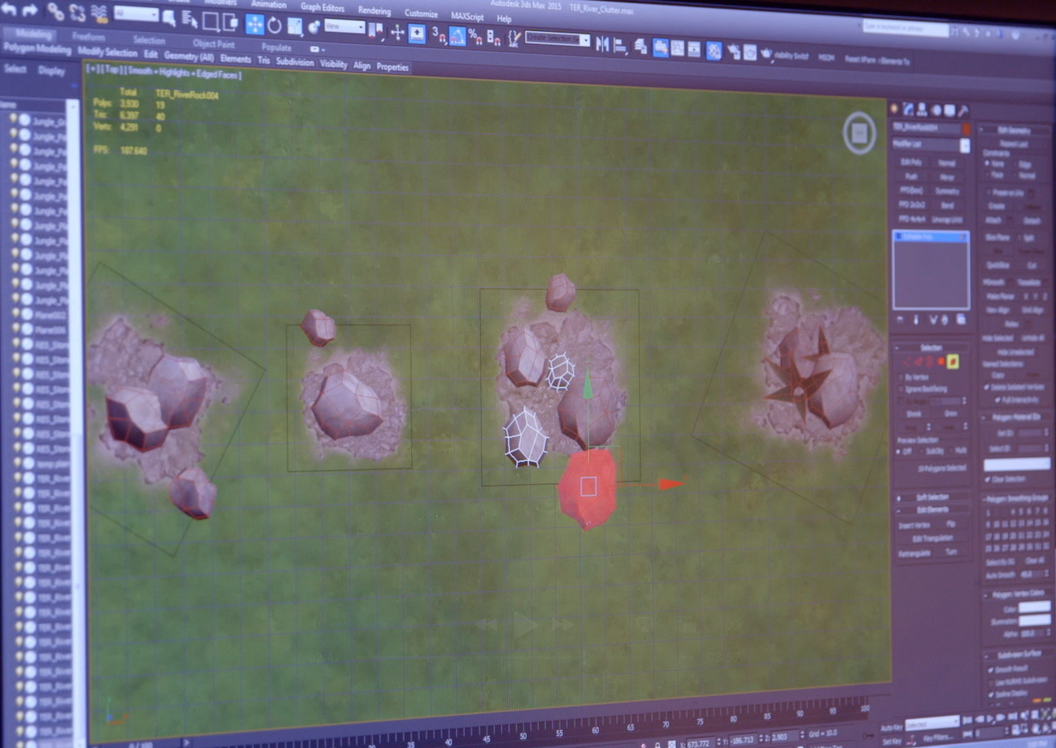
Schembari: A couple things set Civ 6 apart for me: You’ve got the graphical style. It takes a more stylistic approach, more vibrant, more colorful, and I think a lot of that optimism really comes through in that game. You also get richer personalities from the leaders because they’re more exaggerated, more stylized, more animated.
Beach: Civ 6 was originally supposed to have a couple of expansion packs like all of our products do. We put out Rise and Fall and Gathering Storm, but we just kept going.
Shirk: When we come to Gathering Storm, the second expansion for Civ 6, Ed put in climate change. That was my favorite thing that we ever created for that game. All of the climate models that he put into that were just fascinating to me. That was the first time we’d done that in Civilization either. Ed will go down any rabbit hole that fascinates him. He did a deep dive in how these climate models worked, how they work over time, how sea-level rise works. He had all the math and simulations working in the game early on. It was all ugly. It was all math. It was the spreadsheets. That’s where I like to think that I had the biggest impact, when we were actually trying to visualize that so a normal person like me could understand what he was trying to get across to the player.
Beach: Then we did the New Frontier Pass, then we did the Leader Pass. We kept adding more and more content, and that’s why we got to things like zombies and Apocalypse Mode, because it got a little wild at the end. The designers had been working on that game for a long time and they knew that transition from Civ 6 to Civ 7 was their chance to bring in fresh ideas, maybe clean house a little bit. If there was something that had gotten too complex and they were looking for a more elegant solution, this was the time to express those opinions.
We spent a lot of time at the end of Civ 6 getting ready for Civ 7. The design team had the most thorough design postmortem process I’ve ever been involved in. We went through every single subsystem and looked at which things are working, which do we like, which will we carry forward, and which ones do we see having opportunities for improvement.
The biggest area we felt like was really working well in Civ 6 was when you had units on the battlefield, how the combat worked between them. We didn’t want to touch that at all. We knew we wanted to do something for the military side of the game, but we had the idea of commanders and the idea of cities having more than one fortified district, and we felt like that was enough. Maybe 80, 90% of the gameplay on the military side could stay the same from Civ 6 to Civ 7.
I was looking at how many people were interested in changing, and I’m like, “We’re past the rule of thirds.” I actually did a spreadsheet at one point where I tried to measure how far past that we were, and we were a good 20% over it. I could make the case with the design team that there were a couple systems that we were going to have to leave alone because they worked well enough in Civ 6, even if they had a new idea to improve it, just to make sure the players didn’t experience too much of a shift from Civ 6 to Civ 7. So we made adjustments.
Heather Hazen (President, Firaxis Games): Innovation in our industry is extremely difficult. It’s difficult when you’re starting from a blank sheet of paper. I think it’s even more difficult when you’re starting from player expectations, like we do with Civilization. At the end of the day, it requires someone like Ed to have a really strong vision for what he’s trying to accomplish, to help direct a team in that space. We took a risk with the core game progression of Civilization.
Like the changes Firaxis made for Civilization 5, this risk made sense for the series — though not everyone agreed.
Meier: Civ 7 is quite different from Civ 1, but it’s the result of a journey that we’ve taken with our players [...] My philosophy is there’s gotta be one mind that really makes all the decisions. We can say, “That sounds cool,” or, “You’re sure about that?” but you’ve gotta give somebody the freedom to exercise their creativity.
I was always frustrated by playing a Civ game and having a civilization with one period of time, where I had special abilities and special powers, and for the rest of history I would just play sort of as a vanilla Civ where I didn’t have anything unique about what I was doing.
Shirk: We introduced an Ages system so that we can actually play each civ in its peak. America in Civilization 6, their uniques only came online really late in the game, and otherwise you’re just a standard civ. Ed wanted to play with that.
Beach: I know, just as a fan of history, that all civilizations have a long lineage where they came from Rome, or they came from Greece, or they came from an African civilization or a Mesoamerican civilization, and those cultures were all very unique in history. Why can’t I capitalize on that and be able to have something cool and unique and fun about myself throughout all of history?
Shirk: It ended up really polarizing the audience. Our hardcore players that have been around since Civ 1 didn’t necessarily want that direction. They wanted to play the same thing and have that fantasy of playing it nonstop straight through. Whereas a lot of our newer audience said, “This is great. This is really cool. I really enjoy that.”
Hazen: There are people who say Civ 7 is the best Civilization game ever, and other people who say, “Hey, you broke the core player fantasy of that continuity across time.” Our intention was to be additive, to create an innovation that allowed players more optionality in how they played. And I can also understand that some players just didn’t want that optionality.
We wanted to do something different and address those concerns. We had some ideas, and as with anything, it would be easy to say, “Well, we know the answer, so let’s just move forward.” You have to start there because you can’t ask players what they want until you give them an option to experience something.
Beach: The Test of Time update was personally challenging for me because it wasn’t part of the original vision of the game. But it was clear that a lot of fans wanted to be able to say, “I started as a certain set of people and I want to see their story all the way through.” That was a vision that we needed to get back into the game because people definitely wanted to play that way and they had not been given full service by the game as the way it first shipped.
Hazen: We made a strategic choice for Firaxis and 2K to take these new concepts into a public test before we ever launched it. That process of bringing ideas that are not quite fully formed in front of a group of people who have their own opinions was really quite stressful. And to do it three times was great. Fortunately for us, we were already directionally accurate about what our fans would want. But that was a brand-new and pioneering way of thinking about bringing our fans into the development cycle with us.
Beach: By the time we got to May and were shipping the Test of Time update, I knew it was going to be well received because we had gone through that process in the workshop. We made some key changes during that workshop that really elevated the experience. That’s a really good process for us, and we want to keep those types of engagements with the fans going and bring the workshop back whenever we need to.
Schembari: I played a big role in the Test of Time update, working with Ed and a lot of the designers. One of the features was syncretism. I spent many hours in [game director] Matt Owens’ office trying to convince him not to do it, which I got wrong. I will acknowledge that was wrong. I remember multiple times telling him, “I don’t know. I think we should cut this. It feels like it’s too much.” We put it out there. We got positive feedback from the player community, but they also did have some issues with it. As we went from workshop round to round, we kept refining the feature. By the end of it, I think it’s an excellent feature. I’ve since gone to Matt and been like, “You were right.”
Hazen: The great thing about making games is that all of our fans have an opinion. The hard thing about making games is that all of our fans have an opinion.
Shirk: There are some places that we found, even when we want to take those big swings to really change the formula and give players something new to chew on, that is a step too far. We found that out with Civilization 7. With all the things that we were doing well in Civilization 7, that was one where it just was one step too far for some of our fans. So we’ve been working ever since to keep putting in things that will surprise and delight our new audience, really re-engage our existing older audience and have them take a second look.
Hazen: We hear, we adjust, we adapt, and at the end we come out with something that’s better than it could have been if we’d done it in a vacuum.
Shirk: And there is always another deeper problem to crack. No matter what solution you have, you can always make it more elegant. That’s been the case with Civ 5, Civ 6, Civ 4. They’ve all got such long tails, and our fans will be releasing mods for years afterwards.
The past is prologue

Schembari: One of the really interesting things about Civ in particular is that the franchise essentially grew up with the internet. Civ 1 came out in 1991. The earliest player communities would have been modding the game by editing INI files and sharing them on BBS forums. As the franchise continues, each iteration is going further and further down the path of the internet. By Civ 3 there are rich online communities and forums. Eventually, you get to Civ 5, and now you’ve got social media, YouTube, people creating online video content and sharing that with people. Now you go all the way up to today and you’ve got streaming on platforms like Twitch and short-form content on YouTube and TikTok. What’s really interesting is how the players themselves have adapted with the technology and how the community enjoys the game with each other, as well as how many of these communities have actually stuck around.
Today we’ve got a great relationship with the people who make content for Civ. These are players who love the franchise as well, and they know the franchise super well. When Civ 7 first came out, there was this particular player, Ursa Ryan, who would post these videos online of basically breaking the game. He’d be like, “Hey, look, if you do this combination, it’s super overpowered.” The subreddit would discuss it and have these conversations about what the balance is. We would see that and make adjustments based on the feedback they had. These players would actually have direct suggestions for how to make the game better. We’re now at a point where when we do patch notes, we actually acknowledge the community members where we got the idea from so that they know that we’re listening.
At a 2026 PAX West panel, Firaxis announced the first expansion for Civilization 7, titled Earthrise. It's set to take Civ players to space for the first time.
Beach: I’m particularly excited about it because the name Earthrise comes from the Apollo 8 mission, where the astronauts were the first ones to fly around the backside of the moon and then see the Earth rising up above the moon’s surface. They captured that picture that sort of captured the imagination of the entire world. That picture not only showed the amazing planet that we have and where we are in the cosmos, but it also kicked off the ecological movements here on Earth. So our theme for the Earthrise expansion is a combination of space exploration and the environment back on the planet, challenges to that environment, and your civilization’s ability to adapt to that environment.
Before I came to the video game industry, I worked in the space industry. I was a programmer as a contractor for NASA. I did that for 10 years, worked on the Hubble Space Telescope and some other projects. With that background, I’ve always wanted to bring space exploration to the Civilization franchise at a level that’s never been seen before. People are like, “Well, Civ is a historical game. It shouldn’t be doing science-fiction types of things.” But if you look at the Civ franchise, it has been around for 35 years now. In that 35 years, a lot more human history has happened and a lot of it involves space exploration.
We have 35 years — actually it’s like 50 years — of space exploration content that we’ve never covered in the Civ series before. The missions to the moon, to the nearby planets, even some of the probes that have gone out to the later planets. And right now there’s a whole other space race kicking up with countries trying to establish bases on the moon, maybe to establish a colony on Mars. We’ve never depicted that in Civilization. We’ve always said, “You’re gonna go to Alpha Centauri,” and you just leave our solar system directly. We’ve done a lot of research on how, bit by bit, the space race unfolded, what’s happened in space exploration since then. Those are the types of missions that players can now run with the Earthrise expansion.
Schembari: One of the very funny things about my position right now is I get to talk about the franchise Civilization, and I get to do that with presentations called “The Future of Civilization.” Every now and then I look at that and I’m like, wow, this is kind of a funny thing, that we’re thinking about Civilization the franchise and civilization itself. When you look at the history of Civilization the franchise over the last 35 years, you can see how culture and the industry helped shape Civilization the game as well. With each iteration, feedback from the players, the world itself — Civ 1 didn’t have drone warfare because it was 1991. As civilization, lowercase C, progresses, we get to bring ideas into the franchise as well.
Reynolds: It’s one of the Grand Old Game franchises, to be sure. In addition to dramatically growing the strategy genre in general, it also helped make history games “cool.” We would hear a lot from teachers and other education-adjacent people about how they actually used Civ and Civ 2 to help inspire students. Even though we weren’t directly trying to educate in a formal way, we were very happy to inspire people to get interested in history and so forth.
Shafer: For a lot of people, Civ is the history game. A lot of that is thanks to its 35-year legacy. The series hasn’t sold hundreds of millions of copies like Grand Theft Auto or Mario, but almost everyone I meet has at least heard of “the Civilization games,” paired with a warm sense of them being good for the world and the people who play them.
Reynolds: Sid has quietly mentored all manner of young designers and game developers over the years at both companies, teaching them his iterative-prototyping method of making fun games. A very quick summary is: you get something running bare-bones very quickly to demonstrate your game’s ideas to yourself, and then you keep playing it yourself, pushing on it and improving it, over and over, until one day the game is ready to ship, and it’s actually a super fun game because of all the time you spent playing it and working on it. That’s still a great way to take a game idea and give it that mysterious but essential ingredient: "fun."
Meier: I think the fundamentals of Civ are strong enough to give it a persistence, a grounding, that in some ways, regardless of some of the peripheral things that we do, if we keep to those fundamentals, players will explore those new things and fit them into the fundamentals. I’ve never really had much doubt about why Civilization has continued to be this popular franchise with a lot of players over the years, because the fantasy is so fundamental. It’s so grounded in, "If I were king..." Even today, people are saying, "I wouldn’t do it that way." "If I were in charge..." And in Civ, you are in charge and you get to make those decisions.
My favorite games are kind of like your kids, in a way. You don’t have a favorite child, but you have the smart one, which is kind of like maybe Civilization is the smart kid. The wild kid might be Pirates. Every game has its own personality and makes it my favorite in that way. But it’s hard to not love Civilization. If my tombstone says, "Sid Meier designed Civilization," I’d probably be OK with that.
Credits
This story was made possible by and in collaboration with Firaxis Games. You can find more about where and how to play the Civilization games at the series’ official website. Our companion video documentary was produced and written by Simone de Rochefort and Matt Patches, with additional reporting by Josh Broadwell. The documentary was shot by Black Pug Films and edited by Fellipe Moica. Additional graphics by Grant Walkup. This feature was edited by Ari Notis. Special thanks to all the participants as well as Nick Patterson, the team at Firaxis, and those at 2K who assisted in coordinating our interviews.
What's Your Reaction?
 Like
0
 Dislike
0
 Love
0
 Funny
0
 Wow
0
 Sad
0
 Angry
0









Comments (0)