

Sony Bravia 9 II vs Samsung R95H: which flagship RGB TV is best, and can they compete with OLED?
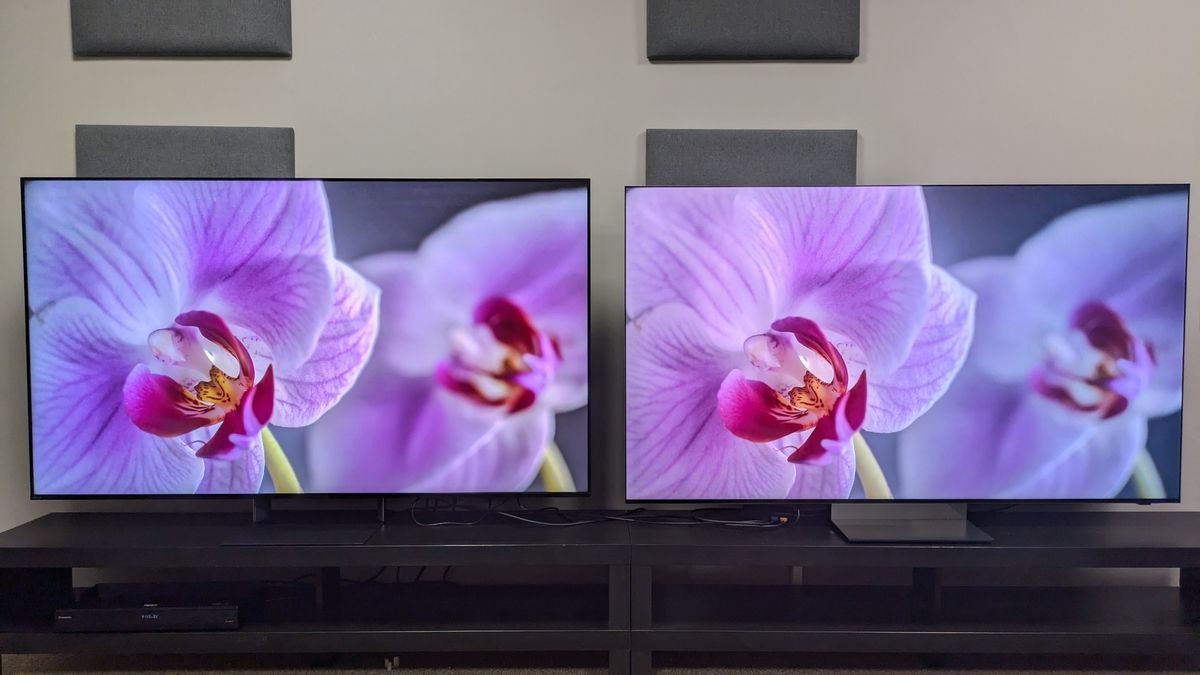
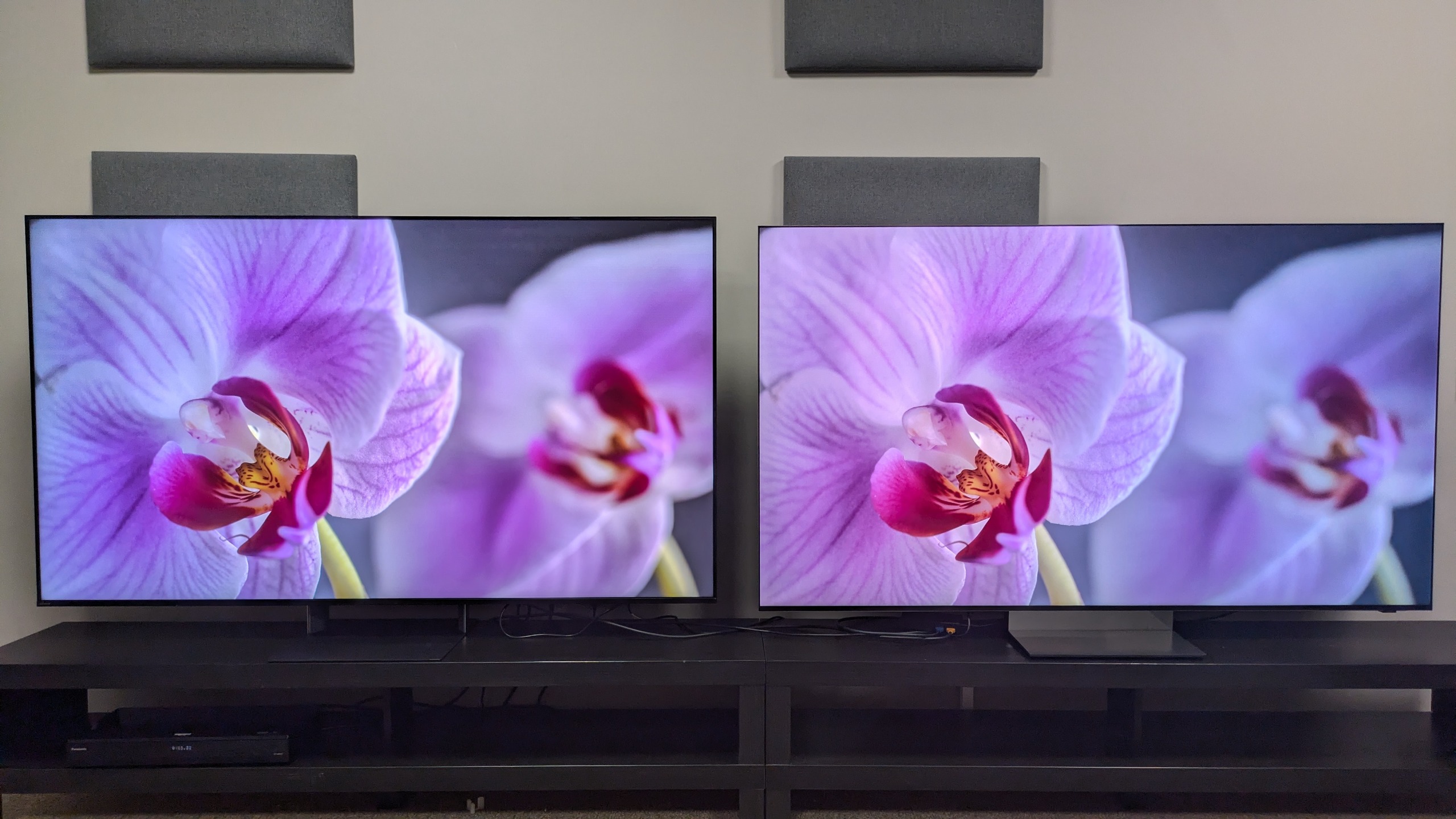 (Image credit: Future)
RGB mini-LED (and its other various names) continues to be the talk of the TV world, with nearly every brand getting involved with the new tech in 2026. I’ve tested several RGB mini-LED/Micro RGB TVs and while it’s been a mixed bag, the new tech shows promise. While these TVs still can’t quite beat the best OLED TVs for the place at the top of the TV food chain, there’s certainly been some impressive RGB models.
One of those is the flagship Samsung R95H, which earned 4.5 stars out of 5 in my recent review. Another is the ‘mid-range’ Sony Bravia 7 II. When I compared both the R95H and Bravia 7 II, I was impressed by the fight the much cheaper Bravia 7 II put up: especially with its picture quality.
Well, now the Bravia 9 II, the Bravia 7 II’s step-up sibling and Sony’s flagship RGB TV, has arrived in our testing lab and since I still have the Samsung R95H in, I thought I’d compare the two to see which flagship RGB model is the top dog.
A quick note on photos: the R95H appears to have a red tint in some images below, but this is the camera interacting with the R95H's matte screen. This red tint does not appear in-person.
Color
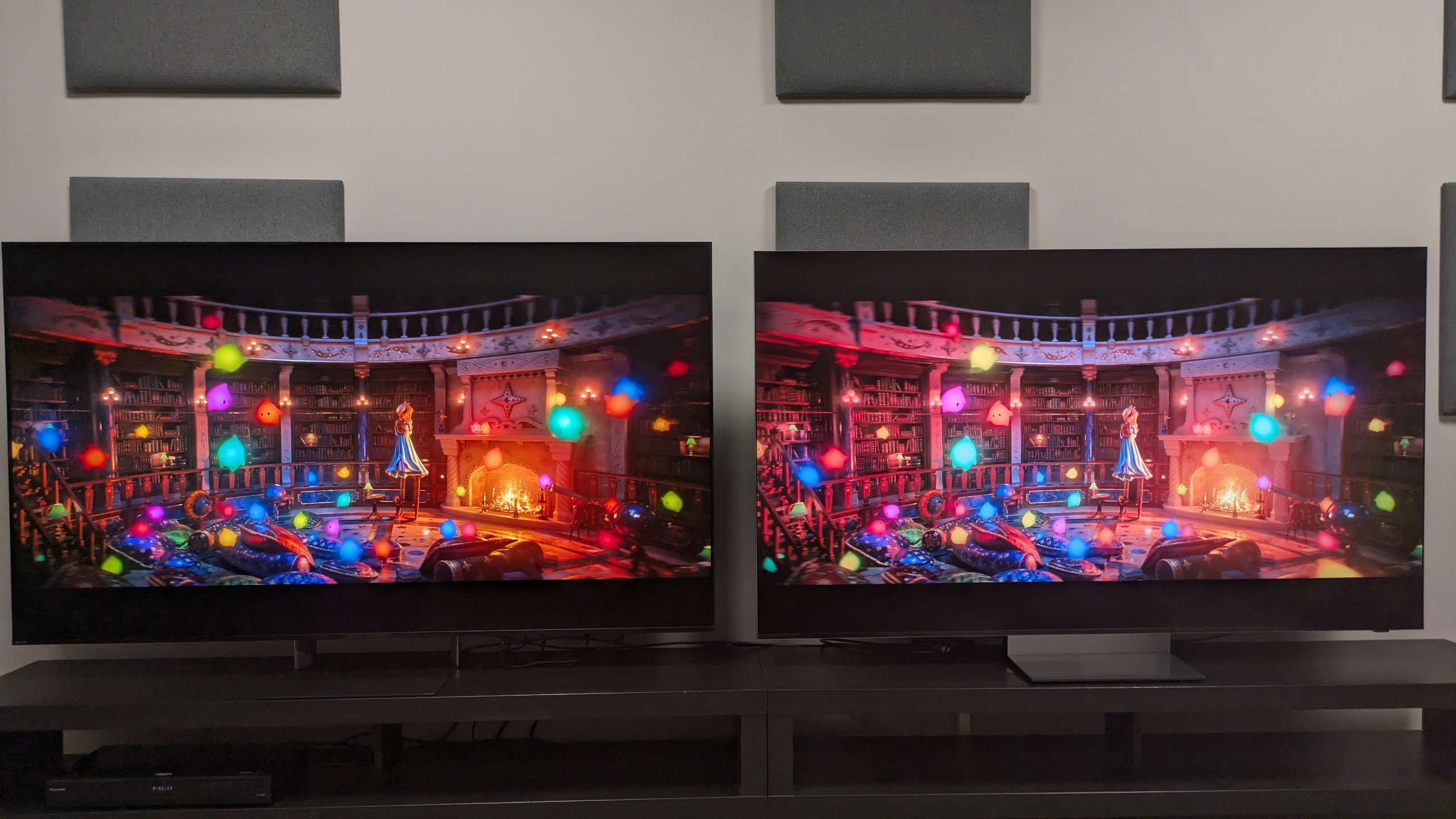
The big selling point of RGB is its color reproduction. And as expected from two flagship models, colors look very impressive on both the Bravia 9 II and the R95H. Watching The Super Mario Galaxy Movie, any scenes involving the Lumas showcases RGB’s excellent colors. While the R95H demonstrated higher color luminance, meaning color looked brighter, the Bravia 9 II’s colors appeared much richer and deeper, giving the Lumas themselves a perceived crisper texture.
As for the character’s outfits throughout the movie, it varied from scene-to-scene which TV produced better colors. Peach’s pink dress benefitted from the R95H’s higher perceived brightness in some scenes, while in others, the Bravia 9 II’s bolder colors made it pop more. The same was true with the reds of Mario’s overalls and Luigi and Yoshi’s greens.
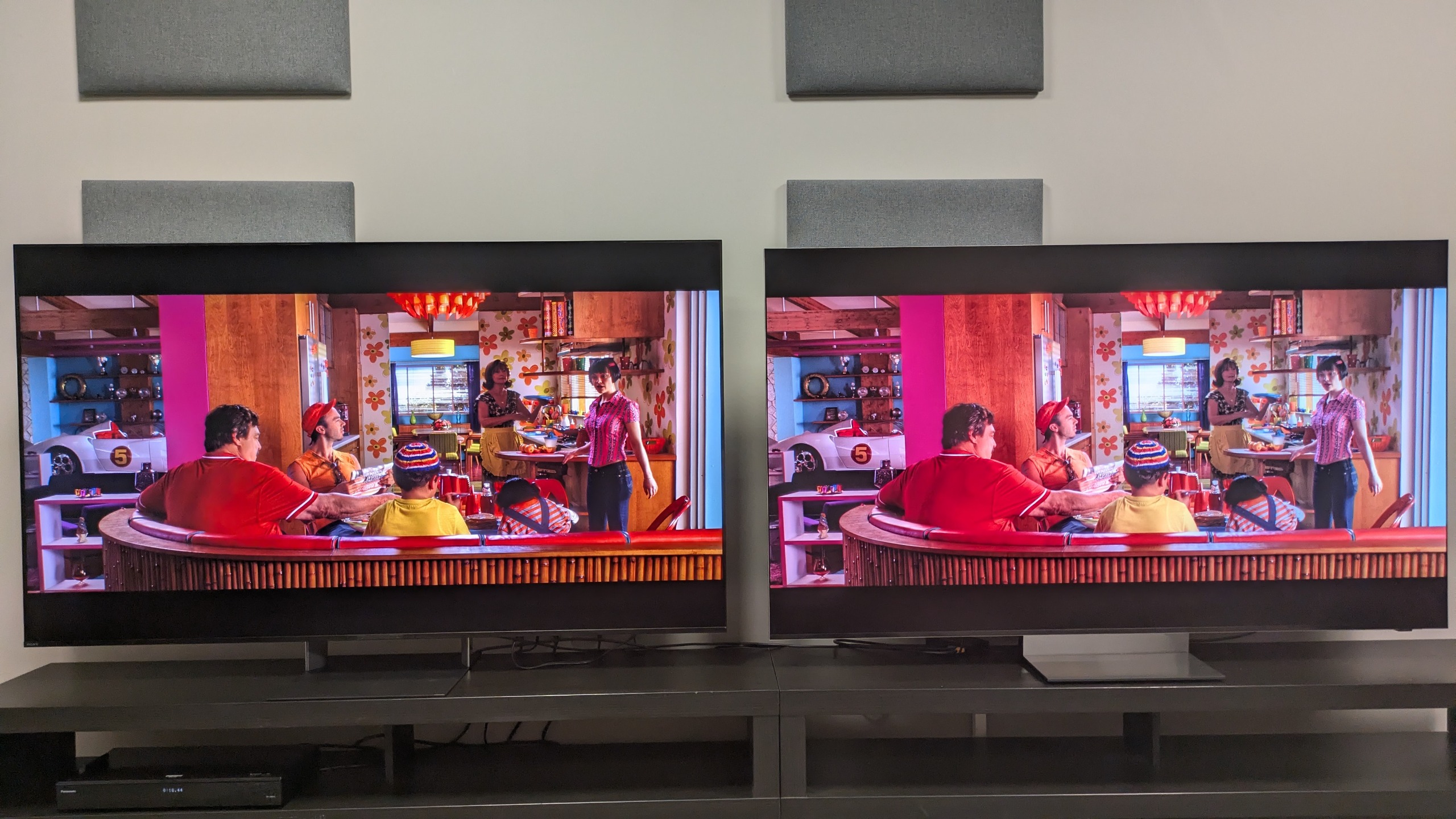
Switching to a real-world movie, Speed Racer, it was more of what I’d found when watching the Mario Galaxy movie. During the breakfast scene at the Racer home, I found some colors, such as yellow, looked better on the Bravia 9 II with the added color depth, while some paler colors such as orange looked more natural on the R95H. The R95H’s higher perceived brightness definitely made colors more impactful, but overall I found myself drawn to the Bravia 9 II’s deeper color profile.
Sign up for breaking news, reviews, opinion, top tech deals, and more.
In terms of skin tones, both TVs showed excellent accuracy, making characters on screen look lifelike. In this scenario, I did find the R95H’s brightness made people look more true-to-life, which I preferred. But the Bravia 9 II did use shadows and contrast in an interesting way to make people look dynamic.
Contrast
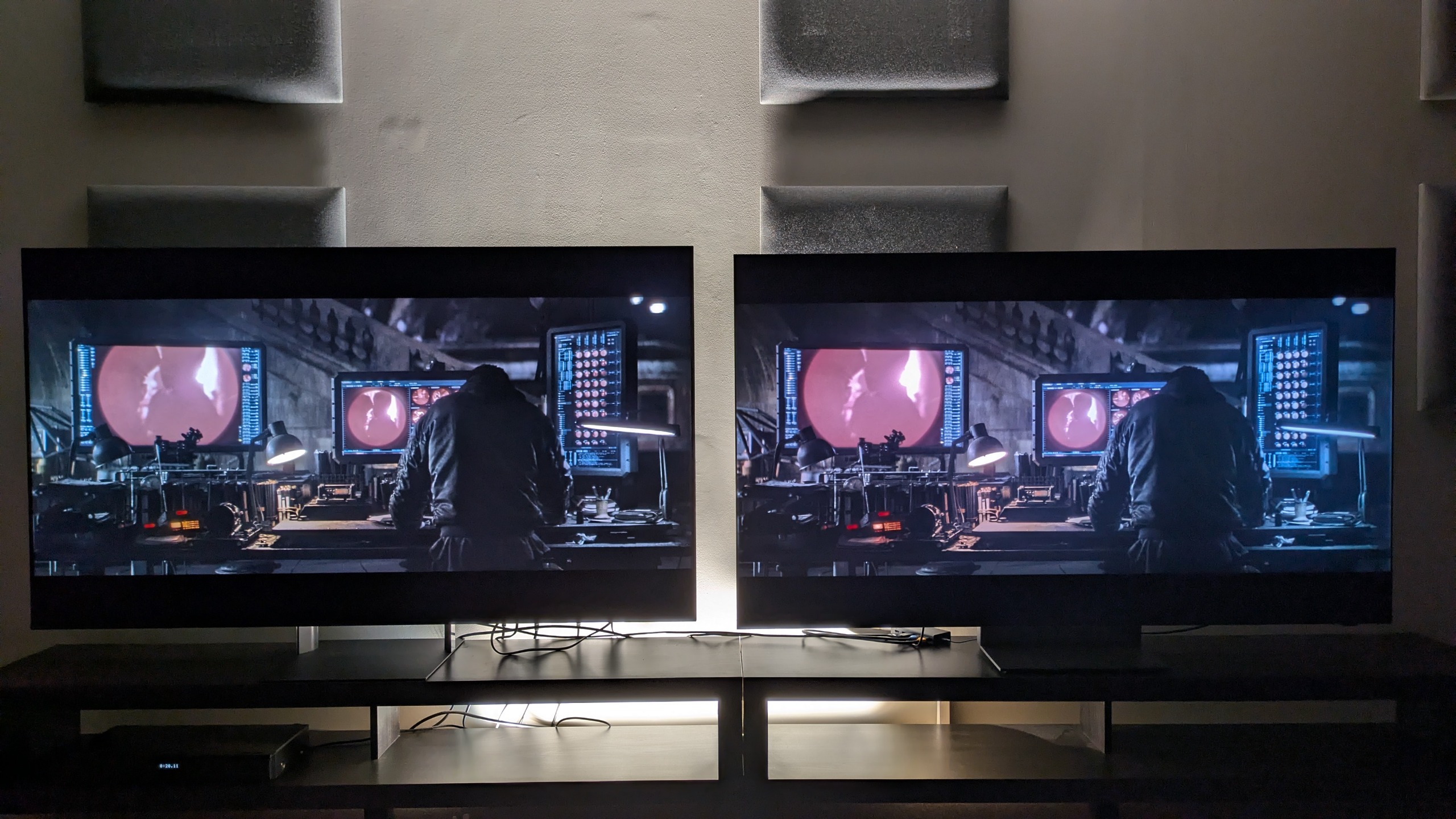
One of RGB’s other selling points compared to other backlit TVs is better backlight control and OLED-rivaling black levels and while this has been a mixed bag in my previous testing of other RGB TVs, these two flagship models demonstrate excellent contrast and backlight control.
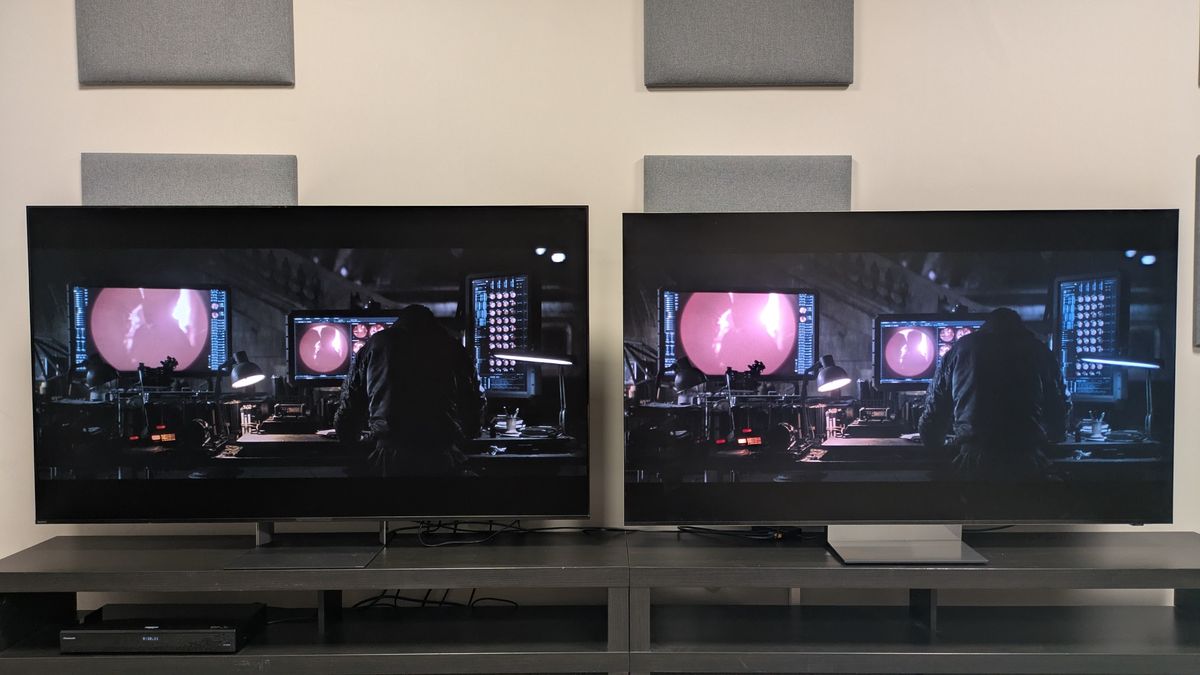
Watching The Batman, both TVs demonstrated strong contrast. As Bruce works in the Batcave at his desk, the light tones of the bright monitors and desk lamps around him contrasted well with the dark tones of the environment and the crevices around the desk. While the R95H’s higher brightness meant some dark areas were more legible, the Bravia 9 II demonstrated richer blacks that created stronger perceived contrast.
Although both TVs were able to render the often challenging picture of The Batman, due to its low brightness, in bright conditions, it was definitely best viewed in ambient or dark, home theater conditions. I also found the R95H’s Movie mode could over-do its brightness, resulting in clipping of bright objects. For The Batman, it was best to use Filmmaker Mode. The Bravia 9 II looked great in Movie mode and Professional mode (its name for Filmmaker Mode), although it lost some of the impact in its contrast when viewed in the dimmer Professional mode.
Image 1 of 2
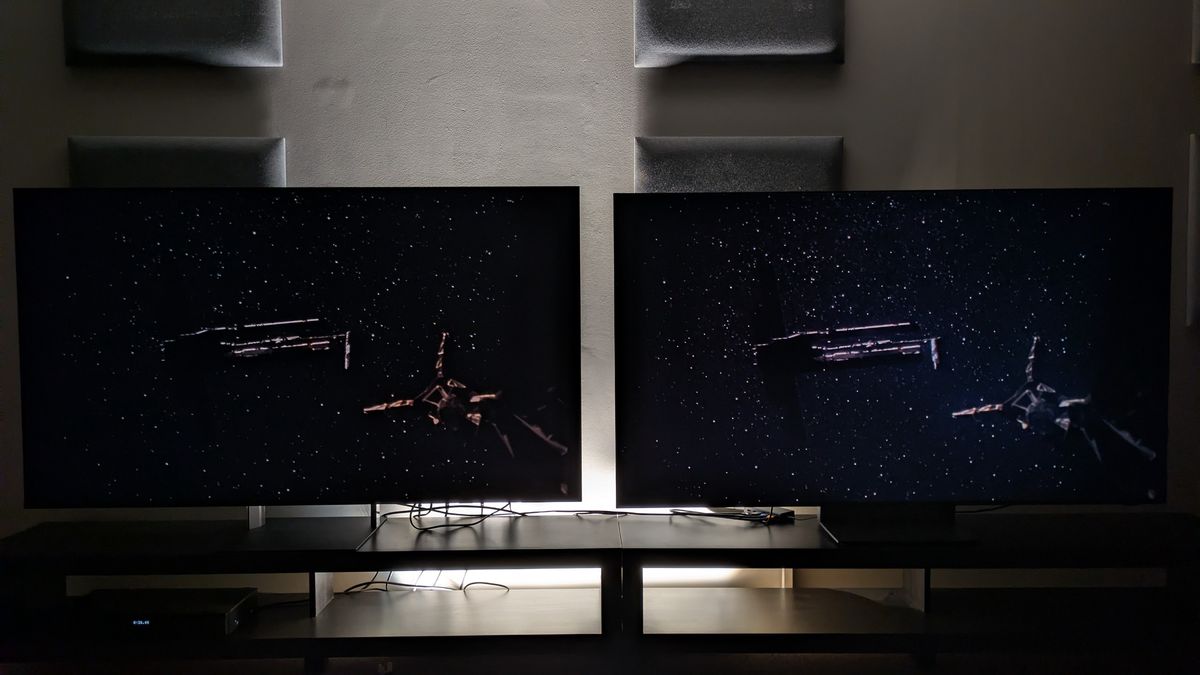
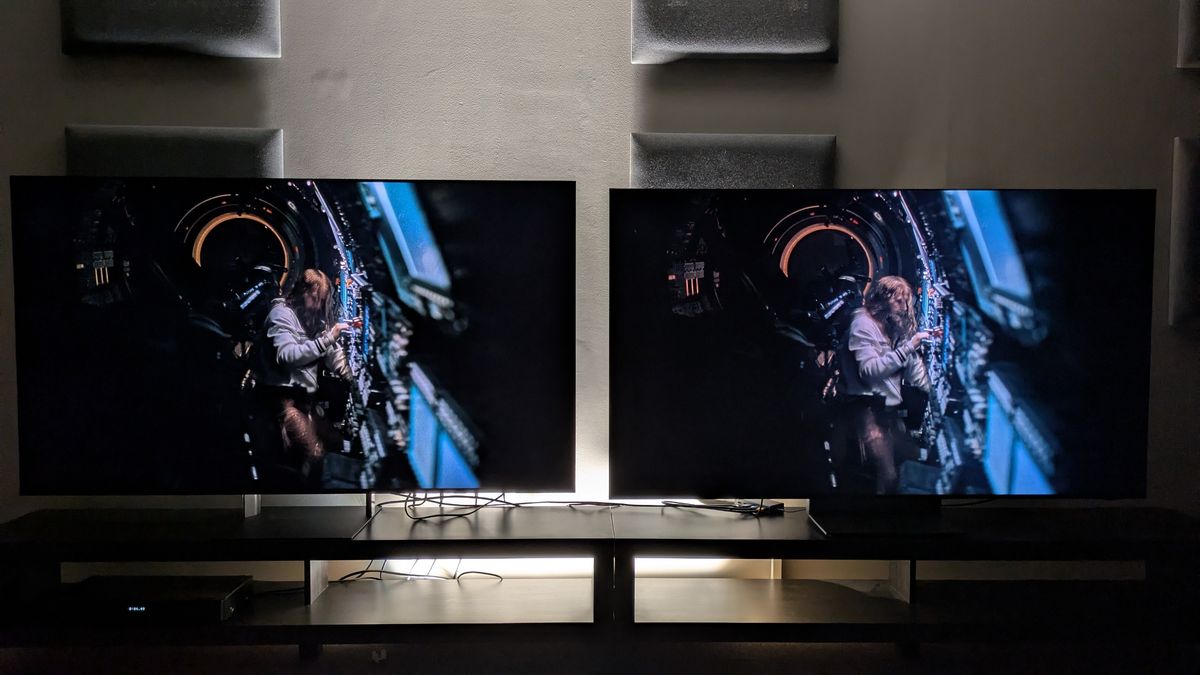
Switching to Project Hail Mary, both scenes delivered inky black tones during exterior shots of space, as well as demonstrating strong shadows as Ryland Grace explored the Hail Mary. I did find that the Bravia 9 II’s local dimming could be aggressive in places, resulting in some black crush in certain scenes. Still, black tones and contrast were incredibly impressive for a backlit TV, and the lack of blooming showed just how good the Bravia 9 II’s backlight control. Though not as impressive, the R95H also showed brilliant backlight control: much better than most backlit TVs I’ve tested.
While the same movies still had more dynamic contrast on the OLED TVs I’ve tested such as the LG G6 and Samsung S95H/S99H, this is certainly a big step in the right direction for backlit TVs.
Brightness and reflections
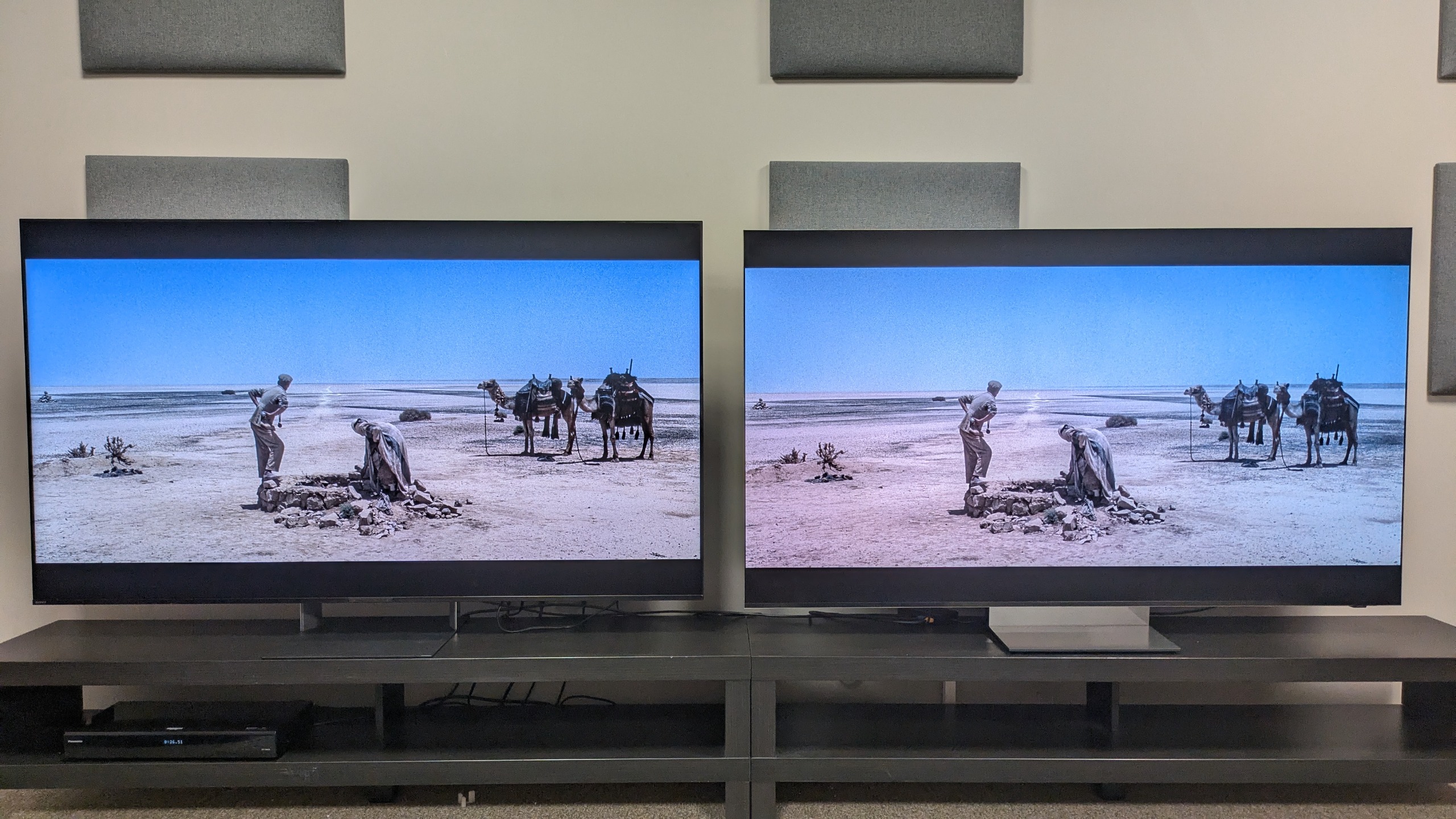
Starting with brightness measurements, I was surprised by how big the gap was between these two TVs: and which was brighter based on testing. The R95H hit 1,977 nits and 612 nits peak and fullscreen HDR brightness respectively in Filmmaker Mode, while the Bravia 9 II registered a much higher 4,414 nits and 974 nits peak and fullscreen HDR brightnrss respectively in its Professional mode. This is a much wider gap than I expected, made all the more interesting on how these TVs rendered brightness in practice with real-world movies.
In the majority of scenes I watched, the R95H delivered higher perceived brightness in both large areas and highlights in high-contrast scenes, such as the lights in the Batcave in The Batman, despite its much lower measured brightness.
Watching a real-world bright scene from Lawrence of Arabia, as Lawrence and his guide were fetching water from a well in the desert, the white sand around them was brighter on the R95H than the Bravia 9 II. HDR highlights in other movies, such as the white paint job of the Mach 5 in Speed Racer or the lights of all the consoles and switches of the ship in Project Hail Mary were closer in brightness and would sometimes alternate on which was brighter but for the majority, the R95H was much more impactful.
This is something I've found in the past when measuring TVs: measurements don't always match up in practice, and I'm noticing that RGB TVs tend to have the biggest difference between results and real-world application. Still, both TVs did deliver impressive brightness overall.
Image 1 of 2
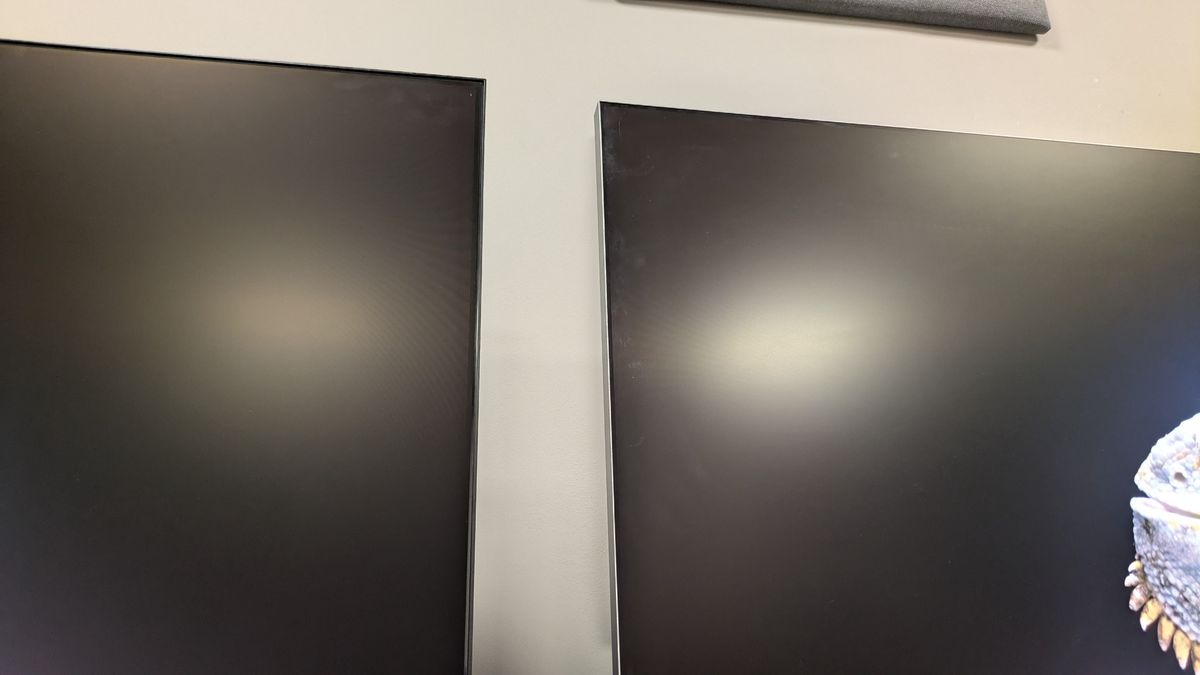
One area where both these TVs really impressed me was in their reflection handling. The R95H obviously uses Samsung’s Glare Free matte screen, which has proven to be incredibly effective at eliminating mirror-like reflections. The Bravia 9 II is also equipped with an anti-reflective screen, and it’s a big improvement over the step-down Bravia 7 II. Watching darker scenes, I was surprised at how little mirror-like reflections were on the Bravia 9 II.
Which TV is the best buy?
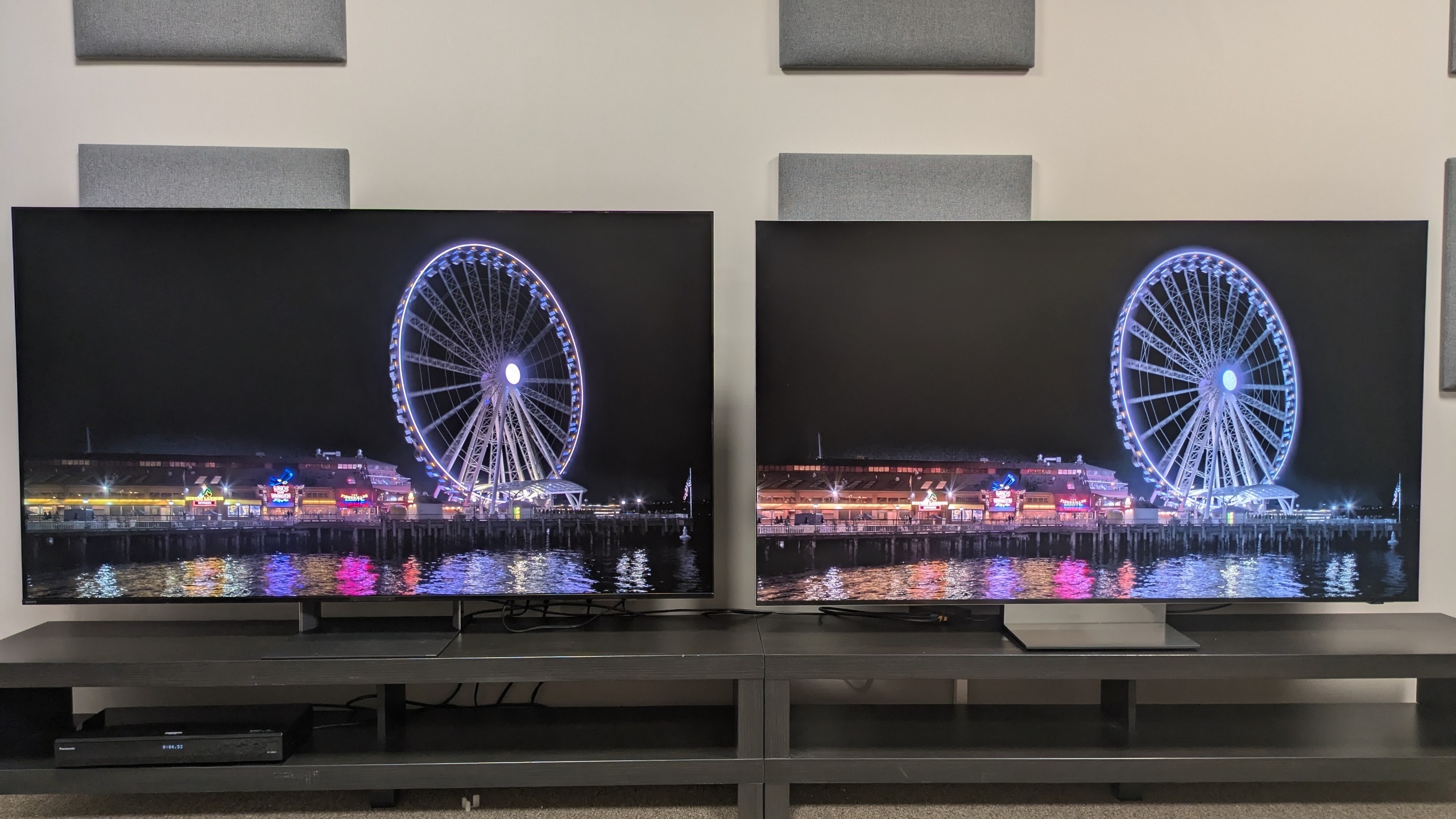
Both the Bravia 9 II and R95H are fantastic TVs. They show a clear evolution of what is capable from a backlit TV and while again I still think OLED is the best TV panel tech, it’s a positive sign of what’s to come from RGB if this is how it performs in its infancy.
When it comes to which TV is best out of the two, I personally preferred the Bravia 9 II’s picture, thanks to its richer, OLED-like colors and richer black tones. The R95H has the brightness battle won and delivers amazing pictures in its own right, but for me the Bravia 9 II takes what I loved about the Bravia 7 II and builds on it.
That being said, price is a factor. For a 65-inch Samsung R95H, you’ll be looking to pay roughly $2,799 / £2,799 / AU$4,495 (though I’ve seen the R95H drop to as low as AU$3,499 in Australia). A 65-inch Sony Bravia 9 II will currently set you back $3,499 / £3,499 / AU$5,999. Considering the R95H is actually packed with more features for gaming, such as four HDMI 2.1 ports, and has a better interface, the extra money is a tough ask.
At the moment, the R95H is the better buy, but if the Bravia 9 II’s prices can be more in-line with its rival, then the Bravia 9 II’s picture is worth the sacrifice of some features. That being said, I’d still recommend OLED right now, as you can get flagship OLED’s from both Sony and Samsung that are the same price or cheaper.
Thinking of buying a new TV?
Try our TV size and model finder! You tell it how far you sit from your TV, we'll tell you what size to buy based on viewing angle advice from image quality experts, and we'll recommend our three top TVs at that size for different prices.

Follow TechRadar on Google News and add us as a preferred source to get our expert news, reviews, and opinion in your feeds.
James is the TV Hardware Staff Writer at TechRadar. Before joining the team, he worked at a major UK based AV retailer selling TV and audio equipment, where he was either telling customers the difference between OLED and QLED or being wowed by watching a PS5 run on the LG 65G2. When not writing about the latest TV tech, James can be found gaming, reading, watching rugby or coming up with another idea for a novel.
What's Your Reaction?
 Like
0
Like
0
 Dislike
0
Dislike
0
 Love
0
Love
0
 Funny
0
Funny
0
 Wow
0
Wow
0
 Sad
0
Sad
0
 Angry
0
Angry
0








Comments (0)