

Steam Machine price is good news for PS5 and Xbox, bad news for PS6 and Project Helix

Published Jun 23, 2026, 11:45 AM EDT
The comparisons with PS5 and Xbox Series X are favorable, but the prognosis for PS6 and Helix is bleak
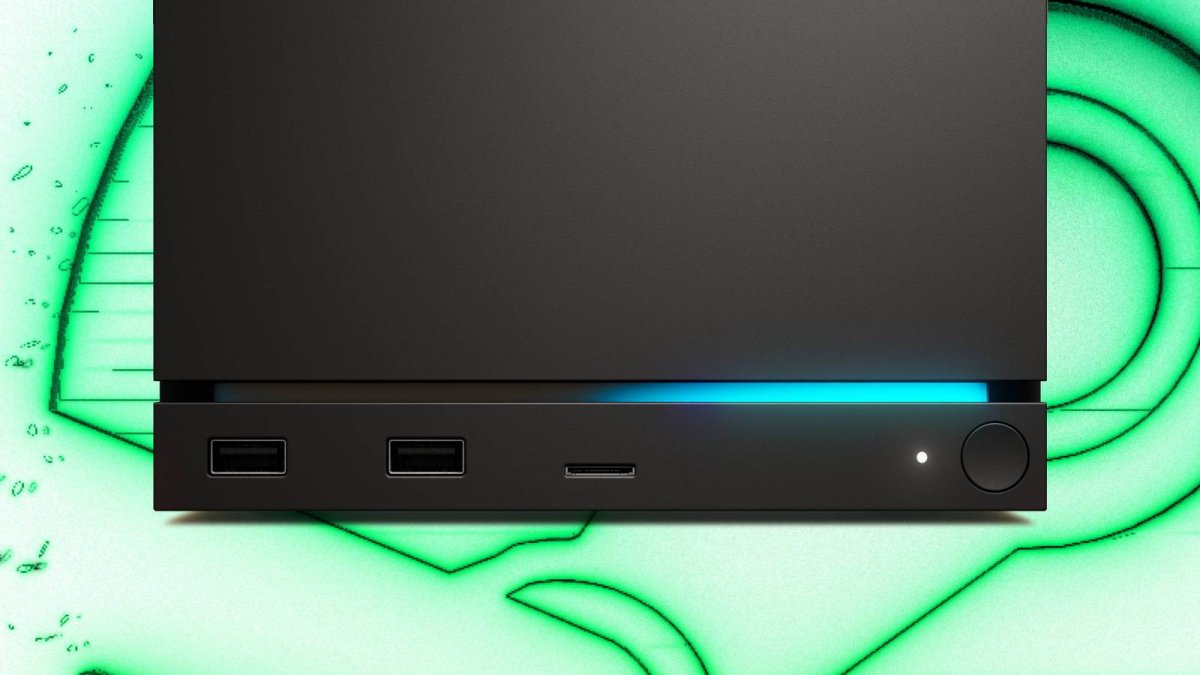
 Image: Polygon. Source images: Valve
Valve has argued that the price of the Steam Machine, which starts at $1,049, shouldn't be compared to the prices of PlayStation 5 and Xbox Series X because it's not a console. The argument has merit. The Steam Machine is an open, customizable system which is capable of so much more than typical consoles, and while it will work best and easiest with SteamOS and the Steam store, it's not locked to them. Also, games tend to be cheaper on Steam. It's a different ecosystem with different economics.
But, and it's a big but, it only takes a small shift in perspective for this argument to make no sense at all. The Steam Machine is a compact, sleekly engineered, stylish device, designed to run the latest games on your TV; it runs silently and won't look out of place in any living room. In its default state, it's swift, simple, and user-friendly. Of course it's a console!
This makes comparisons with PlayStation 5 and Xbox Series X inevitable, and they don't look great for the Steam Machine. Early reviews agree that Valve's device is broadly comparable in power with the two current-gen consoles. It has different strengths and weaknesses; games won't always run at the same frame rates and resolutions as the consoles, and might need a bit of tinkering to optimize. But on your TV, a new AAA release will look about the same on a Steam Machine as on a PS5 or Series X.
Judging this a fair enough fight on performance, we turn to a price comparison, and, well, oh boy:
- Steam Machine 512 GB with Steam Controller: $1,128
- PlayStation 5 Digital Edition (825 GB): $599.99
- Xbox Series X Digital (1 TB): $599.99
That's an 88% price premium for less storage. (And if you're an Xbox Series S owner like me, you'll know how inadequate 512 GB is in this day and age.) You can lose the Steam Controller if you have a compatible game pad already at home, but you'd still be paying 75% more.
Hmm, maybe things look better for the 2 TB model? Nope:
- Steam Machine 2 TB with Steam Controller: $1,428
- PlayStation 5 Pro (2 TB, more powerful): $899.99
- Xbox Series X 2 TB Galaxy Black Special Edition: $799.99
There's no base model of the PS5, but you could get the beefier Pro, which will outperform the Steam Machine on games that have been enhanced for it, and still save over $500. At this level, the Steam Machine costs between 58% and 78% more.
The price hikes that Sony and Microsoft have imposed on PS5 and Series X buyers over the last year in the face of the RAM crisis and general inflation have been eye-watering. But Valve has somehow succeeded in making the consoles look like excellent value by comparison.
Microsoft and Sony have several huge advantages over Valve when it comes to pricing. Firstly, they are willing to sell at a loss; it's unclear if they do, although according to leaks, the consoles are sold at either a small loss or small profit depending on the model and the current economic situation. Secondly, the consoles have been on sale for more than five years already, and have mature supply lines and cost efficiencies coming into effect.
Thirdly, the console platform holders have scale and buying power in the electronics market that surely dwarf those of Valve's relatively tiny hardware operation. Microsoft and Sony order vast quantities of components years in advance. They are still vulnerable to shortages and price increases (and both have been complaining about them), but they're insulated from the full effect of the RAM crisis in a way Valve is not.
You can't play your Steam library on a PS5 or Series X, and no amount of financial saving will offset that. But, all else being equal, the consoles have a massive price advantage. The big question is: Will this advantage last past the current generation?
 Image: Xbox
It's hard to say — almost everything depends on how and when the RAM crisis resolves (or doesn't). But with things as they stand, the prognosis for PlayStation 6 and Xbox Project Helix is bleak. Consider the $900 cost of the slightly more powerful PS5 Pro. That's not coming down any time soon, and in order to offer a meaningful advance on it, it seems inconceivable the PS6 would cost less than $1,000 and instead end up somewhere alongside the Steam Machine.
Things look even worse for Helix. Xbox has made brash promises about the console's "very high end" power that new CEO Asha Sharma probably rues; in interviews, she has openly worried about the precedent of asking "thousands" of dollars for a game console, and simultaneously has floated the idea of "radical" new business models to mitigate these inevitable costs.
Also, for Xbox, the console/PC argument cuts both ways. If the Steam Machine is a PC, then so is the hybrid Helix, which will run Steam as well as Xbox games, and offer native support for other PC launchers like GOG and Battle.net. Microsoft will probably be able to compete with gaming PC manufacturers on price without too much difficulty. But it might find itself outflanked by the Steam Machine, which will offer the flexibility of PC gaming at a (presumably) lower price, yet with seamless, console-like ease of use. If you have used both a Steam Deck and an Xbox Ally, you will know how far behind Valve Microsoft is in this area.
The Steam Machine is a canary in the coalmine for the future of gaming hardware, and while it might be poorly positioned against the current consoles, it seems well positioned against their eventual successors. To put it bluntly, it adds more evidence to the mounting pile suggesting that Microsoft and Sony shouldn't bother with the next generation at all. Even capping performance at the level of PS5, Series X, and the Steam Machine, manufacturers are struggling to keep gaming hardware remotely affordable. Why make this situation any worse?
 Related
Early Steam Machine reviews confirm you should curb your expectations
The first reviews for the Steam Machine are in, and critics aren't entirely sold
What's Your Reaction?
 Like
0
Like
0
 Dislike
0
Dislike
0
 Love
0
Love
0
 Funny
0
Funny
0
 Wow
0
Wow
0
 Sad
0
Sad
0
 Angry
0
Angry
0










Comments (0)