

Taiwan Semiconductor Manufacturing strengthens silicon shield strategy with $250B US investment deal
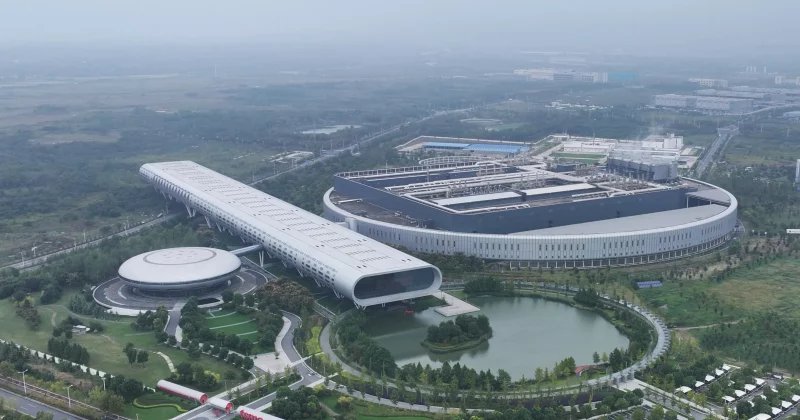
Taiwan’s most valuable export isn’t semiconductors. It’s the fact that the world can’t function without them.
That calculation, often called the “silicon shield,” is getting a significant upgrade. A trade deal set for January 2026 will funnel $250 billion in Taiwanese investments into the US semiconductor sector, while TSMC plans capital expenditures of $52 to $56 billion for 2026 alone, much of it aimed at AI chip manufacturing. The kicker: the most advanced production lines, including cutting-edge 2nm nodes, stay in Taiwan through at least the end of the decade.
The shield gets thicker
Taiwan produces roughly 60% of the world’s semiconductors and approximately 90% of the most advanced chips. That concentration isn’t an accident. It’s a feature.
TSMC has committed up to $165 billion for its facilities in Arizona, with one fab already operational. But the truly bleeding-edge stuff, the 2nm process nodes that will power the next generation of AI hardware, those remain concentrated on the island.
The Stimson Center, a Washington-based think tank, recently published analysis arguing that the deepening US-Taiwan partnership in AI chip production directly strengthens the silicon shield. The logic is straightforward. The more indispensable Taiwan becomes to AI supply chains, the higher the cost of any military disruption, and the stronger the deterrent against Chinese aggression.
The January 2026 trade deal reinforces this dynamic from both directions. Taiwan gets deeper economic ties with the US, including $250 billion in credit support from the Taiwanese government. The US gets supply chain resilience and a manufacturing footprint on its own soil. Tariffs on Taiwanese chip imports have already been reduced from 20% to 15%.
Following the capex trail
TSMC’s projected capital expenditure for 2026, estimated between $52 billion and $56 billion, tells you where the company sees growth. A significant portion of that spending targets AI chip manufacturing across Taiwan, Japan, and the US.
The Arizona operations, while significant at $165 billion in total commitments, still rely heavily on Taiwan for the most advanced production capacity. TSMC can demonstrate goodwill to its American partners while maintaining the manufacturing asymmetry that makes Taiwan geopolitically relevant.
Geopolitics meets silicon economics
Analysts project that Taiwan’s silicon shield will remain intact through the end of the decade, with critical advanced production capacity staying in the region. The tariff reduction from 20% to 15% signals that the US recognizes the value of keeping this relationship smooth rather than extractive.
Investors watching the semiconductor space should pay close attention to whether the 2nm production timeline holds and how quickly TSMC’s overseas fabs ramp to competitive yields. The gap between Taiwan’s domestic capabilities and its international facilities is the core metric that determines how strong the silicon shield actually is.
Disclosure: This article was edited by Editorial Team. For more information on how we create and review content, see our Editorial Policy.
What's Your Reaction?
 Like
0
Like
0
 Dislike
0
Dislike
0
 Love
0
Love
0
 Funny
0
Funny
0
 Wow
0
Wow
0
 Sad
0
Sad
0
 Angry
0
Angry
0






Comments (0)