

The Best Movie From Every Year Of The 1990s
The 1990s were an extraordinary decade for cinema, producing groundbreaking blockbusters, audacious independent films, enduring dramas, and genre classics that continue to influence filmmakers. Hollywood embraced digital effects on an unprecedented scale, independent directors challenged conventional storytelling, and established auteurs delivered some of their most celebrated work.
Choosing the best film from each year inevitably invites debate. Several years offered multiple classics, and box-office success, awards recognition, critical acclaim, and lasting popularity don't always point toward the same winner. The strongest choices here combine exceptional filmmaking with characters, scenes, and ideas that are iconic even decades later.
These aren't simply the decade's biggest hits or Oscar winners. Rather, a selection based on storytelling, performances, cinematic craft, and cultural staying power. While some picks were obvious; others faced formidable competition. These films capture the ambition, experimentation, and sheer entertainment value that made the 1990s such a remarkable period for movies.
Goodfellas (1990)

Martin Scorsese’s Goodfellas is the definitive gangster movie of the 1990s, capturing the seductive glamour and corrosive consequences of organized crime with extraordinary energy. Ray Liotta plays Henry Hill, a Brooklyn kid who grows up idolizing the mob and gradually becomes entangled in its violence, paranoia, and betrayals.
Robert De Niro’s Jimmy Conway is quietly menacing, while Joe Pesci’s Tommy DeVito can turn a friendly conversation into a terrifying confrontation in seconds. Scorsese’s filmmaking makes Henry’s criminal lifestyle exhilarating before revealing its ugliness.
The Copacabana tracking shot draws viewers into his world through seamless movement, while the rapid editing and period soundtrack recreate the intoxicating rush of his rise and the chaos of his downfall. Goodfellas earned six Oscar nominations, with Pesci winning Best Supporting Actor, and is a landmark American crime cinema.
Terminator 2: Judgment Day (1991)

James Cameron’s Terminator 2: Judgment Day delivers blockbuster spectacle with a surprisingly affecting story about humanity and fate. Arnold Schwarzenegger returns as the T-800, this time protecting young John Connor from the T-1000, played with chilling precision by Robert Patrick.
The reversal transforms the original Terminator's relentless killer into an unlikely guardian, while Linda Hamilton’s Sarah Connor evolves into a formidable action heroine. The groundbreaking visual effects are central to the film’s achievement. The T-1000’s ability to reshape its body into blades, imitate other people, and recover from apparently fatal injuries gives the chase sequences a distinctive, uncanny quality.
Yet the spectacle works because Cameron grounds it in John’s relationship with the machine learning to understand him. A commercial phenomenon that helped redefine effects-driven filmmaking, Terminator 2 is an action sequel that improves upon its predecessor.
Reservoir Dogs (1992)

Quentin Tarantino announced himself as a major filmmaking talent with Reservoir Dogs, a lean crime thriller that turns a botched diamond heist into a pressure cooker of suspicion. The criminals are identified by color-coded aliases, including Mr. White (Harvey Keitel), Mr. Orange (Tim Roth), and the sadistic Mr. Blonde (Michael Madsen).
Much of the heist itself happens offscreen; Tarantino instead concentrates on the survivors gathering in a warehouse, where accusations and conflicting accounts steadily dismantle their fragile alliance. That structural gamble makes Reservoir Dogs more gripping than a conventional robbery thriller.
Flashbacks gradually reveal the characters’ relationships, while the audience pieces together what went wrong alongside men who can no longer trust one another. Reservoir Dogs is a confident debut, driven by sharp dialogue, ruthless character dynamics, and a structure that rewards close attention.
Jurassic Park (1993)

Steven Spielberg’s Jurassic Park is the decade’s ultimate adventure blockbuster, combining scientific hubris, suspense, and astonishing visual effects into an enduring cinematic experience. Billionaire John Hammond (Richard Attenborough) invites paleontologists Alan Grant and Ellie Sattler to inspect his dinosaur theme park, where genetically engineered creatures have been brought back to life.
When the park’s security systems fail, the visitors discover how little control humanity has over the animals it has created. Jurassic Park’s greatest achievement is its command of anticipation. Spielberg allows the first dinosaur encounters to inspire wonder before the T. rex attack transforms that wonder into terror.
The blend of computer-generated imagery and practical effects gave the dinosaurs an unprecedented physical presence, helping establish a new standard for visual spectacle. Jurassic Park had an incomparable impact on blockbuster filmmaking and popular culture, becoming a defining cinematic event.
The Shawshank Redemption (1994)

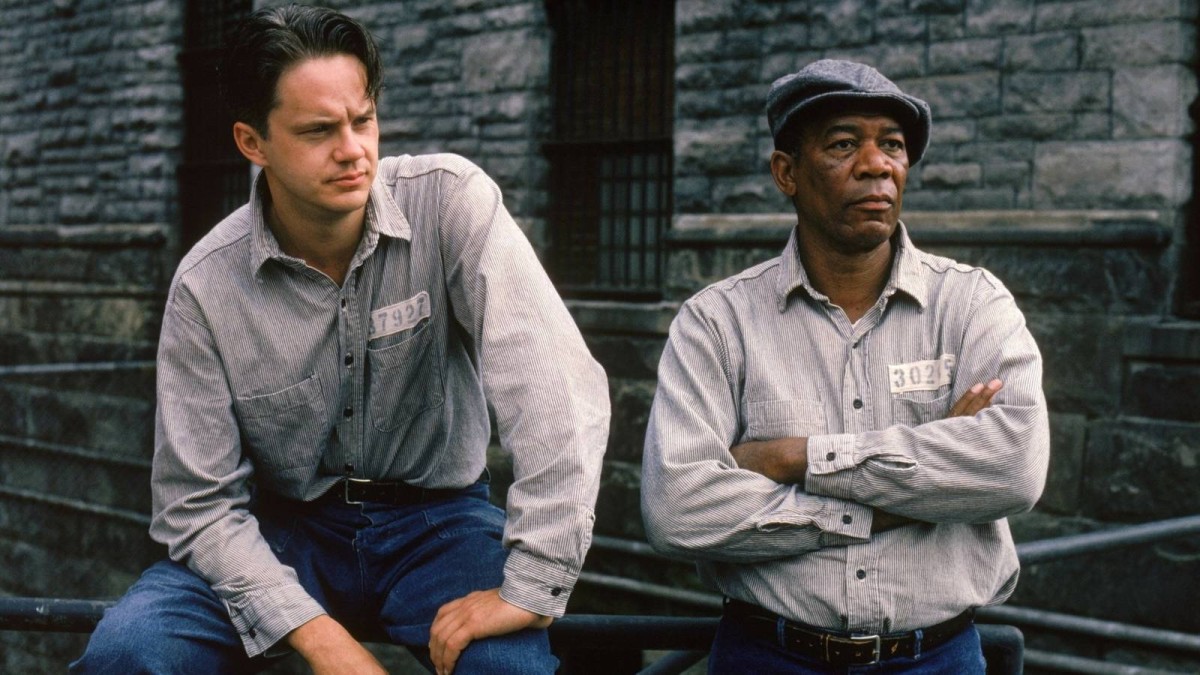
Frank Darabont’s The Shawshank Redemption turns a prison drama into a powerful story about hope, friendship, and the endurance of the human spirit. Tim Robbins plays Andy Dufresne, a banker sentenced to life imprisonment for murdering his wife and her lover.
Inside Shawshank State Penitentiary, he befriends veteran inmate Ellis “Red” Redding (Morgan Freeman) and gradually finds ways to preserve his dignity despite institutional cruelty and corruption. Shawshank’s emotional strength comes from its patient attention to life behind bars.
Freeman’s narration gives the story warmth and melancholy, while the friendship between Andy and Red develops with convincing tenderness. While the year boasted many cinematic greats (Pulp Fiction, Forrest Gump, and The Lion King), Shawshank Redemption achieved extraordinary staying power, consistently ranking at the top of audience movie rankings.
Seven (1995)
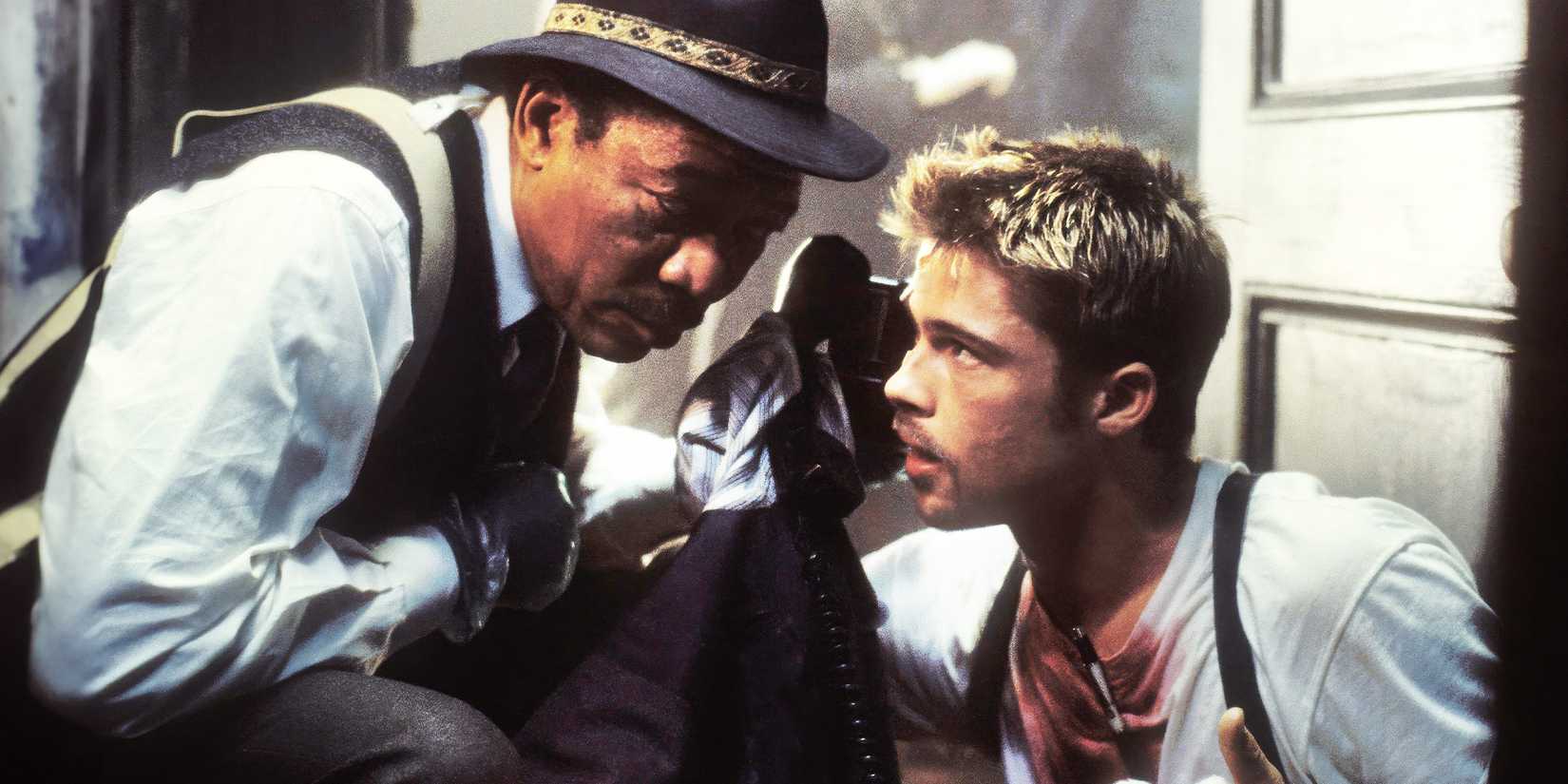
David Fincher’s Seven takes the familiar serial-killer procedural and turns it into a suffocating nightmare. Morgan Freeman plays veteran detective William Somerset, who is nearing retirement when he is paired with the impatient David Mills (Brad Pitt). Their investigation leads them toward a murderer who stages his victims’ deaths around the seven deadly sins, transforming each crime scene into a grotesque statement about human depravity.
Seven’s oppressive atmosphere is as important as its mystery. Rain, shadowy interiors, and an unnamed city that seems permanently exhausted create a world where moral decay feels embedded in the environment.
Fincher withholds the killer’s face for much of the film, allowing dread to accumulate through the detectives’ discoveries. Then the ending delivers a devastating reversal that forces Mills into a final, irreversible choice. Seven is a meticulously controlled film whose bleakness serves its ideas rather than merely shocking the audience.
Fargo (1996)

Joel and Ethan Coen’s Fargo is a crime story in which an absurdly inept scheme produces genuinely horrifying consequences. William H. Macy plays Jerry Lundegaard, a financially desperate car salesman who hires two criminals to kidnap his wife so he can extort ransom money from her wealthy father.
The plan unravels almost immediately, leaving pregnant police chief Marge Gunderson (Frances McDormand) to investigate a trail of increasingly brutal crimes. McDormand’s performance is Fargo’s beating heart. Marge is observant, courteous, and quietly determined, approaching grotesque violence with the practical patience of someone doing her job.
Her decency provides a striking counterpoint to Jerry’s cowardice and the killers’ casual brutality. The Coens’ use of snowy Minnesota landscapes gives Fargo a deceptive serenity, while the exaggerated regional accents and deadpan dialogue create comedy without softening the consequences of violence.
Good Will Hunting (1997)

Gus Van Sant’s Good Will Hunting pairs a compelling character study with one of the decade’s most affecting performances. Matt Damon plays Will Hunting, a working-class maintenance worker at MIT whose extraordinary mathematical talent attracts the attention of Professor Gerald Lambeau (Stellan Skarsgård). Will’s intelligence, however, cannot protect him from the emotional damage caused by childhood abuse, and his self-destructive behavior threatens every opportunity that comes his way.
The film’s central relationship is between Will and therapist Sean Maguire, played by Robin Williams. Their sessions gradually move beyond intellectual sparring as Sean challenges Will’s tendency to use cleverness as a shield against vulnerability.
Williams brings humor and lived-in sadness to the role, particularly in scenes where Sean’s own grief helps him understand his patient. Good Will Hunting won Oscars for Williams’s supporting performance and the screenplay, establishing Damon and Ben Affleck as major talents.
Saving Private Ryan (1998)

Steven Spielberg’s Saving Private Ryan redefined the modern war film through its visceral depiction of combat and its careful examination of sacrifice. Tom Hanks plays Captain John Miller, an Army Ranger ordered to locate Private James Ryan (Matt Damon), whose three brothers have been killed in action.
Miller’s squad must cross enemy territory to bring Ryan home, questioning whether risking several lives to save one man can ever be justified. The opening Omaha Beach sequence is one of cinema’s most harrowing depictions of warfare.
Handheld camerawork, abrupt sound design, and disorienting editing place viewers amid the chaos of the D-Day landings, stripping away any romantic notion of battle. Spielberg sustains that physical immediacy throughout the mission, but Saving Private Ryan’s emotional power comes from the soldiers’ conflicting responses to their orders.
Fight Club (1999)

David Fincher’s Fight Club closes the decade with a vicious satire of consumer culture, masculine insecurity, and the search for meaning in a world organized around work and possessions. Edward Norton plays an unnamed narrator whose insomnia and alienation lead him to Tyler Durden (Brad Pitt), a charismatic soap salesman who introduces him to underground bare-knuckle fighting.
Fight Club’s slick visual style reflects the narrator’s fractured perspective, using intrusive editing, digital effects, and dark humor to blur the line between reality and fantasy. Its most memorable scenes expose the emptiness of consumer identity, from the narrator’s meticulously catalogued apartment to Tyler’s contempt for the idea that possessions define a person.
1999 also offered The Matrix, a landmark of science-fiction action that perfected bullet time and explored virtual reality with extraordinary imagination. However, Fight Club offers the more incisive portrait of the decade’s anxieties, ending the 1990s with an unsettling vision of rebellion turning into another form of control.

Release Date October 15, 1999
Runtime 139 minutes
Writers Chuck Palahniuk, Jim Uhls
Producers Art Linson, Ceán Chaffin
What's Your Reaction?
 Like
0
Like
0
 Dislike
0
Dislike
0
 Love
0
Love
0
 Funny
0
Funny
0
 Wow
0
Wow
0
 Sad
0
Sad
0
 Angry
0
Angry
0










Comments (0)