

The Last Photograph Review: Zack Snyder's Worst-Ever Movie Is Missing His Touch [TIFF]
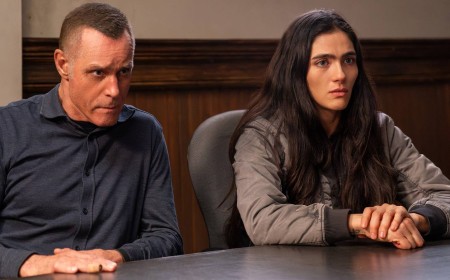
![The Last Photograph Review: Zack Snyder's Worst-Ever Movie Is Missing His Touch [TIFF]](https://ranzware.com/uploads/images/202609/image_1200x_86a2192fdf7fdf59e4044f13d0b39978.jpg)

Snyder’s The Last Photograph desperately wants to be profound, but its pacing, melodrama, and self-seriousness make it unintentionally funny.

Published Sep 14, 2026, 4:22 AM EDT
Josh is a film critic and journalist with over nine years of experience in the entertainment industry. Entering the field at just 17 years old, Josh went on to make his own website, The HoloFiles, and social media brand Star Wars Holocron, the most followed Star Wars fan account on Twitter/X.
A member of both the Chicago Indie Critics and the Hollywood Critics Alliance, Josh has covered major industry events including Star Wars Celebration and, most recently, CinemaCon for ScreenRant. His work has appeared in outlets such as Game Rant and Comic Book Resources (CBR), and he has been featured in publications including the BBC and The New York Times.
Few contemporary directors inspire the kind of devotion that Zack Snyder does. For nearly two decades, his films have attracted a passionate fanbase, though his signature combination of stylized visuals, grim subject matter, slow-motion action, and larger-than-life imagery producing just as many detractors as devotees. Unfortunately, even as an admirer of much of Snyder’s prior work, this writer finds there to be precious little of merit in The Last Photograph.
Making its world premiere at this year’s Toronto International Film Festival, The Last Photograph follows Ethan Black (Stuart Martin), an ex-military man who travels to Colombia after his niece and nephew are kidnapped and his brother and the one he loved are murdered. On his journey, Ethan is joined by Joe Wallace (Fra Fee), who happened to witness the events that uprooted Ethan’s life.
What follows is ostensibly a revenge road thriller, although Snyder seems far more interested in convincing the audience it is a profound examination of grief, guilt, masculinity, violence, and artistic morality. The problem is that almost none of those ideas are explored with enough subtlety to justify the film’s extraordinary self-seriousness.
Zack Snyder Has Never Taken Himself This Seriously
The Last Photograph announces its intentions with perhaps the least subtle opening imaginable. Within minutes, Snyder serves up explicit sexual imagery alongside the graphic murder of children. It is a genuinely jarring introduction, but the sequence also inadvertently establishes the film’s greatest problem: The Last Photograph desperately wants to be taken seriously while possessing almost no awareness of how absurdly unserious it really is.
Zack Snyder has always embraced brooding characters and portentous dialogue, but there was usually enough style, energy, or pulpy excess elsewhere in his movies to make the approach work. Here, the solemnity becomes suffocating. Characters routinely speak in painfully unnatural language. Conversations that should feel intimate instead come across as strained attempts to communicate pretentious ideas about life, death, and the morality of war photography. The film constantly announces the importance of its own themes rather than trusting its characters or story to convey them.
Then there is the nudity. The Last Photograph repeatedly features gratuitous shots of women’s bodies that contribute virtually nothing to the narrative. Coupled with the complete absence of any meaningful female character, this excess becomes particularly ridiculous when paired with Ethan’s fixation on an old, nude photograph of his sister-in-law (which he comically loses and then tries like a madman to find midway through the movie). Given the circumstances surrounding their relationship, the movie seems to believe this material will deepen Ethan’s psychological torment. Instead, it frequently plays like an overwrought soap opera that wandered into an action movie.
There is an almost impressive disconnect between what Snyder appears to think he is making and what is actually unfolding onscreen. He reaches for a serious, festival-friendly prestige drama about damaged men confronting war, violence, guilt, and mortality. What he has made instead is a melodramatic revenge picture straining for profundity and repeatedly collapsing into camp.
The Middle Act Is A Rare Bright Spot, But The Last Photograph Fumbles At The Finish Line
For all its considerable shortcomings, The Last Photograph teases that it may have something to salvage in its second half. After a laborious beginning, the pace finally improves, the central relationship between the two men becomes slightly more interesting, and the journey itself provides enough danger and forward momentum to keep the film from becoming entirely inert.
Ethan’s background as a DEA agent allows Snyder to indulge in the sort of action that comes naturally to him. He dispatches waves of criminals with relative ease, providing occasional bursts of kinetic energy amid the film’s otherwise sluggish pacing.
Wallace, meanwhile, gets the more interesting internal journey. His substance use and experiences as a war photographer force him to confront the morality of documenting violence and the psychological consequences of repeatedly witnessing human suffering. There is a potentially compelling character study buried somewhere within that material.
And perhaps most disappointing of all is how little The Last Photograph feels like a Zach Snyder movie in the ways that actually matter.
Whatever fragile intrigue Snyder manages to establish in the second act eventually evaporates during the film’s disastrous conclusion. The Last Photograph spends much of its runtime suggesting something larger is behind the kidnapping and murders, but then confirms there is no grand reveal on the way.
After following up the absolutely glacial first act with a middle section that finally provides some reason to keep watching, the movie throws away much of that goodwill with a finale that feels dramatically empty. Snyder somehow manages to make the runtime feel even longer than the Snyder Cut of Justice League, which is an achievement in itself.
Even Snyder Fans May Struggle With The Last Photograph
As someone who admires the likes of Watchmen, 300, and Zack Snyder's Justice League, this writer finds unfortunately gargantuan issues across the board with The Last Photograph.
It often feels strangely anonymous. The irony is that Snyder has stripped away much of the bombast that traditionally defines his filmmaking without replacing it with greater emotional or thematic sophistication. What remains is a movie that seems desperate to demonstrate how gritty, mature, and important it is.
Most damagingly, The Last Photograph is unintentionally funny. There are films that embrace absurdity, and films that stumble into it. Snyder's latest belongs firmly in the latter category. Watching a movie this relentlessly committed to misery become increasingly hilarious is fascinating in its own right, but that is hardly the kind of fascination the director wanted to inspire.
For a filmmaker whose most fervent supporters have spent years insisting that there is always something fascinating to find in his movies, The Last Photograph is an unusually bleak counterargument. It is not merely Snyder at his most self-serious – it is Snyder at his least interesting.
The Last Photograph premiered at the 2026 Toronto International Film Festival.

Release Date September 13, 2026
Runtime 135 minutes
Writers Kurt Johnstad
Cast
-

Stuart Martin
Ethan Black
-

What's Your Reaction?
 Like
0
Like
0
 Dislike
0
Dislike
0
 Love
0
Love
0
 Funny
0
Funny
0
 Wow
0
Wow
0
 Sad
0
Sad
0
 Angry
0
Angry
0







Comments (0)