

The Lord Of The Rings' Real Villain Isn't Sauron (It Isn't Even Morgoth)
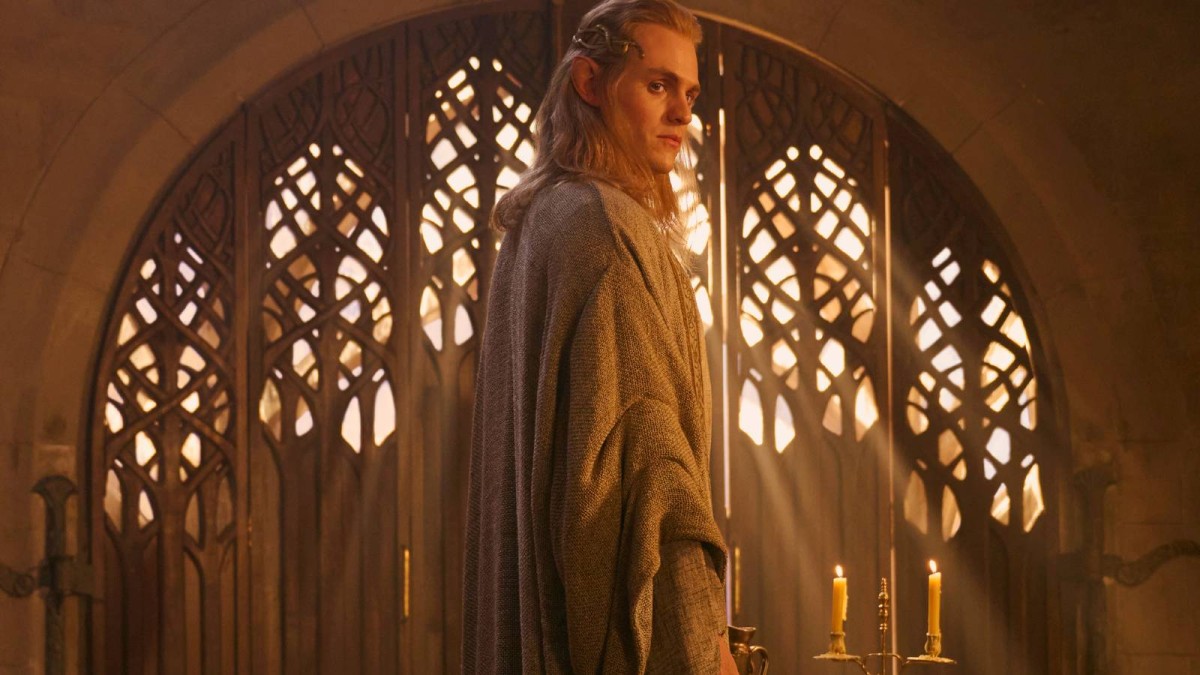
 Image via MovieStillsDB
Published Aug 16, 2026, 5:30 PM EDT
Craig began contributing to Screen Rant in 2016 and has been ranting ever since, mostly to himself in a darkened room. After previously writing for various outlets, Craig's focus turned to TV and film, where a steady upbringing of science fiction and comic books finally became useful. Craig has previously been published by sites such as Den of Geek.
Craig is an approved critic on Rotten Tomatoes.
LinkedIn: https://www.linkedin.com/in/craig-elvy-5b31a3381/
Sign in to your ScreenRant account
Every epic fantasy story needs a great villain, whether it be the White Witch, the Night King, Voldemort, or even Emperor Palpatine. J.R.R. Tolkien certainly knew how to craft a top-tier baddie, with Sauron, Morgoth, Saruman, Smaug, the Nazgûl, and Ar-Pharazôn just a selection of the iconic evildoers found within The Lord of the Rings' legendarium. Many of those have provided endless inspiration for Tolkien's successors, with Sauron in particular creating a template fantasy authors have revisited throughout the decades.
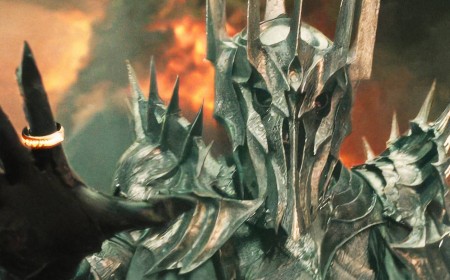
Sauron is also the character widely thought to be The Lord of the Rings' main villain. Undeniably, the quest of Tolkien's trilogy is designed to bring about the Dark Lord's downfall, and the primary narrative ends once that goal is achieved. Sauron is the overriding threat to peace in Middle-earth, and no other antagonist throughout The Lord of the Rings harbors as much power, with even Saruman's wizardry paling in comparison.
Such is Sauron's reputation, it's easy to overlook the fact that he's a passive force across the entirety of The Lord of the Rings.
Sauron barely utters a line, is never seen beyond a vague description from Gollum, and although we can assume he commands the war from his hideaway in Barad-dûr, it's also likely that Sauron's most trusted generals hold enough autonomy to devise their own strategies, so long as their master's overall goals are served. Looking at The Lord of the Rings in isolation, Sauron has no characterization of his own, rarely displays any personal desire, and hardly ever takes direct action.
The Witch-king of Angmar is the primary villain in The Fellowship of the Ring, then Saruman becomes the focus in The Two Towers, but for The Return of the King and the trilogy overall, it's the specter of Sauron's return that our heroes are battling against, not truly Sauron himself.
Some would argue that Morgoth is The Lord of the Rings' true villain, as it was he who sent Sauron down a dark path to begin with. Alas, Morgoth is even less present in the trilogy than his favorite student, only getting a couple of passing references at best.
It's almost unthinkable that The Lord of the Rings, the greatest fantasy story of all time, really has no villain waiting for our heroes at the end of it. The bigger surprise, however, comes upon identifying the story's real, true, singular villain.
The Lord Of The Rings' True Villain Is The 'Villain Within'

Most fantasy stories externalize evil. All the darkness of the world is projected onto a single figure, usually one with a gothic wardrobe and a throaty laugh. These stories essentially tell us, "Get rid of this one bad apple, and all will be well." Defeat the Witch, and Narnia is protected. Beat Voldemort, and everything will be groovy in the Wizarding World. Throw the Emperor down a big shaft, and peace will be restored to the galaxy until he somehow returns.
With The Lord of the Rings, J.R.R. Tolkien does the exact opposite and internalizes evil. Because as much as Sauron is a sinister and shadowy figure causing everyone trouble, he isn't the one Middle-earth's heroes are fighting. The real enemy in The Lord of the Rings is the corruption picking away inside each individual character, with Sauron merely an avatar to facilitate that temptation.
Every physical and mental battle in The Lord of the Rings is, on some level, a battle against the corruption of a person's morality. Saruman, seduced by a thirst for order and knowledge, finds himself coaxed down the same dark path as Sauron. The Nazgûl, promised wealth and power, pay the price by becoming Sauron's loyal ghouls.
Members of the Fellowship battle corruption to differing degrees and with varying levels of success. Frodo resists the One Ring until the very last moment when its power is strongest. Sam's humble perspective and honest heart keep him shielded from its influence. Gandalf and Aragorn remain wise enough to know they can never give the Ring an opportunity to consume them. Boromir finds himself pulled into evil's orbit, but breaks free in his final moments. Legolas and Gimli manage to overcome millennia of racial prejudice, a corruption triggered by the Silmarils in a bygone age.
Gollum is a reflection of what happens when corruption's rot runs too deep. Denethor shows that hubris can be a blindfold to the creeping fingers of a corruptive force. Bilbo proves that even the kind and just can be twisted by the desire for youthfulness and vitality.
Everywhere there is villainy in The Lord of the Rings, there is a once-honest character being touched by the tendrils of evil. So, when Barad-dûr comes tumbling down, Tolkien isn't reassuring us that everything will be fine now that Sauron is properly dead (he isn't, incidentally). The tower's destruction symbolizes the rejection of influences that attempt to corrupt, whether that be the One Ring or something closer to home.
The Lord Of The Rings' Real Villain Is Clearer In The Books

That message is even clearer in the books thanks to Tolkien's "The Scouring of the Shire" chapter, which was omitted for Peter Jackson's movie adaptations. In this story, despite Sauron's defeat, the four hobbits return home to find the Shire corrupted by an escaped Saruman, morphed from their idyllic rural home into an industrial abomination, and some of the more nefarious hobbits gleefully joining in.
Before The Lord of the Rings reaches its happy ending, Frodo's troupe must purify the Shire and expel the corruption Saruman brought. This quasi-epilogue shows us that Sauron never held a monopoly on being absolutely awful, and the real battle against evil will always mean fighting the shadow within, not just the shadow looming over Mordor commanding an army of orcs.
This is one of many reasons The Lord of the Rings remains the greatest fantasy story of all time. There might be a scary fallen angel with black armor and a big hammer to kill, but he's a scary fallen angel with black armor and a big hammer who is pretty much peripheral to the story. Tolkien's depiction of an internal evil is a more effective, more terrifying, and more relatable antagonist than anything his successors have conjured up in the years since.
Created by J.R.R. Tolkien
What's Your Reaction?
 Like
0
Like
0
 Dislike
0
Dislike
0
 Love
0
Love
0
 Funny
0
Funny
0
 Wow
0
Wow
0
 Sad
0
Sad
0
 Angry
0
Angry
0








Comments (0)