

The Panasonic Lumix L10 Is a Compact Camera That Might Change How You Think About Photography
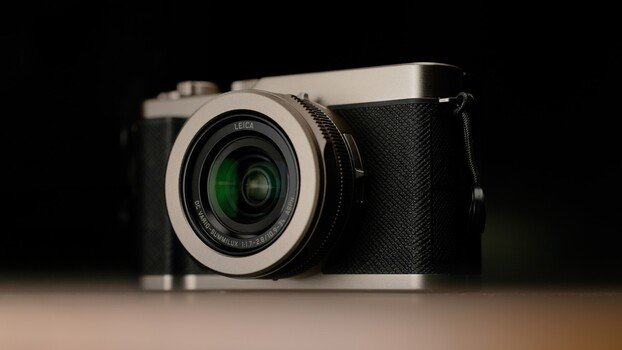
The Panasonic Lumix L10 lands in a crowded field of compact everyday-carry cameras, but it takes a noticeably different approach from most of its competition.
Coming to you from Benj Haisch, this detailed hands-on video puts the Panasonic Lumix L10 through its paces across real-world situations over several weeks. Haisch compares it physically against the Fujifilm X100F and the Panasonic Lumix S9, and the bodies are remarkably close in size, though the S9 runs slightly thicker due to its full frame sensor, IBIS, and interchangeable lens mount. The L10's built-in grip is small but genuinely functional, and Haisch notes it's far better thought-out than the gripless S9 body. He also tested a SmallRig cage grip with the camera, which adds utility for video work but softens the "grab and go" experience that makes the L10 appealing in the first place.
The lens covers a 24–75 mm equivalent range at f/3.5–5.6 in full frame terms, which Haisch points out covers the focal lengths most people actually shoot. That range isn't going to give you the shallow depth of field you'd get from something like the Sony RX1R II or a Leica Q3, and Haisch is upfront that he's someone who typically chases shallow depth of field. His personal compact camera of choice is the Sony RX1R Mark III specifically because it has a full frame sensor with a 35mm f/2 lens. Despite that preference, he found himself genuinely enjoying the L10's versatility, particularly the ability to punch in to 75mm for tighter snapshots. He's been shooting black and white JPEGs straight from the camera using the Leica Monochrome profile with added grain, then processing the Raw files separately through his own LUTs in Aftershoot, and says the results have been some of his most enjoyable shooting in recent memory.
A few things on the L10 stand out in ways that earlier cameras in this category didn't offer. It has an EVF, which Haisch says is his primary way of shooting and kept the rear screen closed almost the entire time. There's a hot shoe, a leaf shutter with flash sync up to 1/2,000 s, and the autofocus system uses phase-detection points with subject tracking pulled from the GH7 and G9 sensor platform. He also runs PolarPro ShortStache everyday filters on the lens, including a circular polarizer and a gold mist, to allow shooting at f/1.7 in bright Pacific Northwest summer light without relying on the electronic shutter. One quirk worth knowing: the L10 doesn't auto-detect subjects versus objects within its tracking system, so you have to manually toggle between subject tracking and standard tracking depending on what you're shooting. Haisch also flags a subtle color-matching inconsistency on the titanium colorway that he says he hasn't seen anyone else mention.
Check out the video above for the full rundown from Haisch, including sample images from baseball games, family walks, and everyday life, plus his take on whether this camera's tradeoffs actually hold up over time.
What's Your Reaction?
 Like
0
Like
0
 Dislike
0
Dislike
0
 Love
0
Love
0
 Funny
0
Funny
0
 Wow
0
Wow
0
 Sad
0
Sad
0
 Angry
0
Angry
0










Comments (0)