

The Retro Camera Trend Is the Smartest Pivot the Industry Has Made in Years
Almost nobody needs a dedicated camera anymore. That is the uncomfortable truth sitting underneath every camera launch in 2026, and the sooner the industry says it out loud, the better its decisions get.
For the overwhelming majority of people, the phone in their pocket is not just good enough; it is better than good enough, with computational tricks no standalone camera can match for casual shooting. So the question that should keep camera executives awake is not how to make a sharper sensor or a faster burst rate. It is far more existential than that: if nobody needs your product, why would anyone buy it? The answer the industry has stumbled into, almost by accident, is the most important strategic insight it has had in a decade. People do not buy cameras because they need them. They buy them because they want them. The path to survival runs through desire, not capability.
The Spec Race Was a Dead End
For years, the camera industry competed the way it always had, on numbers. More megapixels. Higher frame rates. Wider ISO ranges. Bigger figures on the side of the box, each generation leapfrogging the last by margins that mattered enormously in marketing copy and almost not at all in real photographs. The result was a generation of cameras that were technically magnificent and emotionally inert, capable black boxes that did everything well and made you feel nothing picking them up.
That race was always going to be lost, because it was a race against the smartphone, and for casual photography the smartphone wins it on the fronts that matter most to ordinary shooters. A phone is more convenient, more connected, more computational, and always in your pocket. Dedicated cameras still hold real advantages in optics, sensor size, lens choice, ergonomics, long-lens reach, and professional video work, but for the everyday snapshot that most people actually take, competing with a phone on convenience and processing is like competing with a calculator on arithmetic. The camera industry spent years sprinting to win back the one customer, the casual shooter, who had the least reason to come back.
The Pivot to Desire
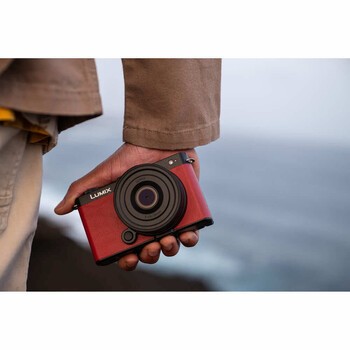
Then something shifted, and a handful of cameras proved there was another way. The Fujifilm X100VI, the Nikon Zf, the Panasonic Lumix S9, and a growing list of others embraced a radical-sounding idea: that a camera should be a beautiful object you want to pick up and use. For the X100VI and the Zf, that means tactile dials you set with your fingers instead of menus and vintage designs that reference the golden age of photography. For style-led compacts like the S9, it means small, characterful, experience-first bodies built around the pleasure of shooting and sharing rather than the spec sheet. Either way, these cameras competed on exactly the thing a smartphone structurally cannot offer, the experience of shooting itself, and the market responded in a way that should have ended the spec-race argument for good.
The numbers are not subtle. The X100VI launched in early 2024 and immediately became almost impossible to buy, generating six-month waiting lists and selling well above its list price on the secondary market, a situation that persisted for roughly two years. It was the best-selling camera at Japan's Map Camera in 2024, beating every compact, every interchangeable-lens body, and every full frame camera on that retailer's list, despite being perpetually backordered. The Nikon Zf, a full frame retro body at around $2,000, ranked fourth overall at the same retailer, a camera designed around how it feels to hold outselling every more conventional Nikon there. Map Camera is a single major specialty shop in Shinjuku rather than the whole market, but the broader picture pointed the same way: Japanese domestic camera sales grew in 2023 for the first time in over a decade, with the trend continuing since. Post-pandemic travel and leisure spending were part of that rebound, and the sales success of cameras like these suggests renewed desire was another important piece of the story, with Japanese compact-camera sales more than doubling year over year in 2025 by some retail tracking.
Credit where it is due. Sony arguably lit the fuse, even if partly out of self-interest, by making smaller, characterful bodies that reminded people cameras could be objects of want. But it was Fujifilm and Nikon that understood the assignment most fully, Fujifilm with its film simulations and dial-driven controls that turn shooting into a tactile ritual, and Nikon by proving a retro full frame body could command a premium price and still outsell everything around it. They stopped asking what a camera needs to do and started asking what a camera should make you feel.
The Cheap Cameras Prove the Point Even Harder
Here is where the desire thesis stops being a theory and becomes undeniable. If the premium retro bodies showed that people will pay a lot for a camera they want, the explosion of cheap, low-quality cameras shows that desire has almost nothing to do with image quality at all.
Consider the Kodak Charmera, a thumb-sized keychain camera that costs about $35 and shoots 1.6-megapixel images roughly 1,440 pixels wide, the resolution of an early camera phone. By every technical measure, it is bad. Reviewers have called it one of the worst cameras they have ever used. Your smartphone beats it effortlessly in every category that a spec sheet could name. And it went viral anyway, sold out on launch, attracted scalpers, and, most tellingly of all, won both the iF Design Award and the Red Dot Design Award, two of the most prestigious honors in the entire design world. A 1.6-megapixel toy that takes soft, noisy snapshots is being celebrated by the same industry that obsesses over corner sharpness and dynamic range.
The reason is the whole point of this article. The bad photos are not a flaw the Charmera overcomes; they are the product. Its lo-fi images carry the imperfect, nostalgic, of-the-moment look that a generation raised on flawless phone output is actively chasing, a reaction against images that are too clean, too corrected, too perfect to feel real. The camera is sold in blind boxes, turning the purchase into a collectible game, and it clips to your bag as a charm as much as a tool. Nobody is buying it to make good photographs. They are buying it because it is fun, distinctive, and theirs, the purest expression imaginable of want over need. The same logic powers a whole category now, and it is broader than "retro" alone. It runs from Fujifilm's dial-driven bodies to pocketable Ricoh GR IV compacts, from creator-focused compacts to budget point-and-shoots and the screenless, distraction-free Camp Snap, the Paper Shoot made of stone paper, and the toy and keychain cameras that exist entirely to deliver a feeling rather than a file. What ties them together is not a vintage look; it is that they are compact, low-friction, and personality-forward, cameras you want to carry because using them is an experience rather than a chore.
That a $35 toy and a $4,000 Leica are riding the same underlying force tells you everything about where the industry's value actually lives in 2026. It is not in the sensor. It is in the wanting.
The Honest Tensions
None of this means the pivot is without risk, and pretending otherwise would be a disservice. Desire is a far more fragile thing to build a product strategy on than capability ever was. A spec advantage is measurable and durable; a vibe can evaporate the moment the culture moves on. The cheap-camera boom in particular has the texture of a fad, and some of it clearly is one, a fact that should temper any manufacturer tempted to bet the business on keychain novelties.
There is also the matter of substance behind the styling. A retro body with real engineering inside, like the X100VI or the Zf, is a genuine product. But the trend invites cynicism too, and the industry has earned some of it. Canon recently reissued the PowerShot Elph 360 HS, a 2016 point-and-shoot brought back in 2025 with largely the same specs, fewer wireless features, and a higher price, riding the compact-camera wave without offering anything new. Retro styling can be a thin coat of paint over indifference, and buyers will eventually tell the difference. Even the genuine efforts have seams: the Nikon Zf is beautiful until you mount a modern Z lens covered in buttons and no aperture ring, and the carefully built vintage spell breaks the moment dial meets plastic barrel.
And then there is the scarcity question. Fujifilm's CEO has said it would be unfortunate to produce too many cameras and lower the price, pointing to Leica as a premium-value model to aspire to. Fujifilm has also denied that the shortages are a deliberate strategy, saying it is making and shipping the X100VI as fast as it can. Both things can be true: the company may be genuinely supply-constrained while also being comfortable with the prestige that permanent waitlists confer. The risk is in how it reads. A buyer who simply wants to purchase a camera at its stated price, without entering a lottery or waiting six months, may reasonably come away feeling that scarcity is being tolerated rather than fought, even if that is not the intent. Desire is a powerful engine, but an industry that leans on frustrated demand for mystique is playing a game that can curdle into resentment.
Why It Is Still the Right Call
Even with all of that, the pivot is correct, and it is correct because the alternative is worse. An industry that keeps competing with smartphones on capability is an industry slowly arguing itself out of existence. By rediscovering that a camera can be an object of desire, something tactile and characterful and worth wanting for its own sake, the industry has found the one piece of ground a phone cannot take from it. The phone will always be more convenient, more connected, and more capable for casual computational shooting. It will never be the thing you reach for because using it feels good. That difference, the pleasure of the object and the deliberate act of making a picture with it, is not a marketing gimmick. It is the entire future of the dedicated camera, and the companies that understand it are the ones that will still be here in ten years.
The smartest thing the camera industry has done in years is to stop trying to be needed and start trying to be wanted. It turns out that was the winnable fight all along.
If the appeal of all this is the deliberate, hands-on craft these cameras invite, Photography 101 is a solid foundation in using manual controls with intention, and The Well-Rounded Photographer: 8 Instructors Teach 8 Genres of Photography shows how working photographers put simple, characterful tools to use across very different kinds of work.
What's Your Reaction?
 Like
0
Like
0
 Dislike
0
Dislike
0
 Love
0
Love
0
 Funny
0
Funny
0
 Wow
0
Wow
0
 Sad
0
Sad
0
 Angry
0
Angry
0











Comments (0)