

This Firework-Like Supernova Remnant Is the Result of an Explosion People Saw 845 Years Ago
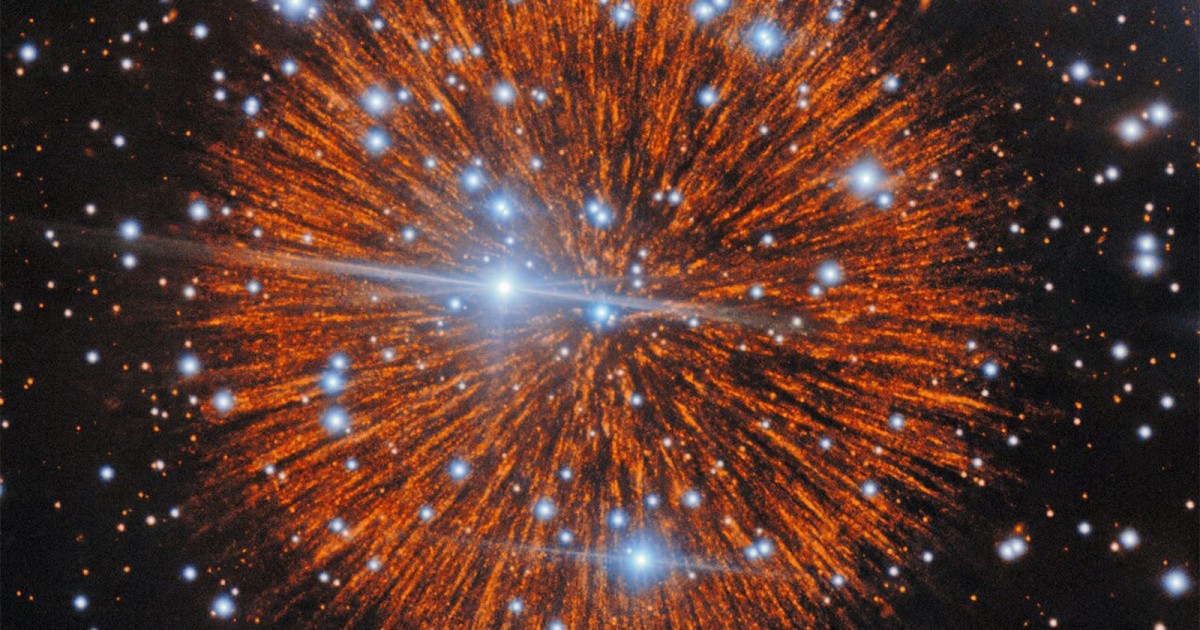
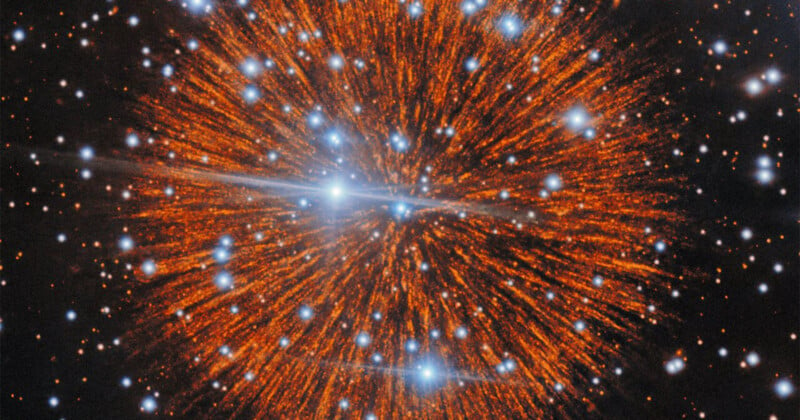
Scientists using the Gemini North telescope in Hawai’i captured a new photo of Pa 30, a supernova remnant believed to be the remains of a supernova that people witnessed in August 1181.
The historic supernova, SN 1181, is one of just five supernovae in the Milky Way that humans provably witnessed before the invention of the telescope. Eight texts in Chinese, Japanese, and Arabic detail astronomical observations of the supernova between August 4 and 6 in 1181. Modern scientists and historians believe the supernova was visible in the constellation Cassiopeia for 185 days.
Based on modern understanding of supernovae, which keeps improving thanks to telescopes like Gemini, this 1181 supernova would have undoubtedly left evidence behind. Scientists think Pa 30 is that evidence. It is by far the leading candidate for the remnant of the famous 1181 supernova.
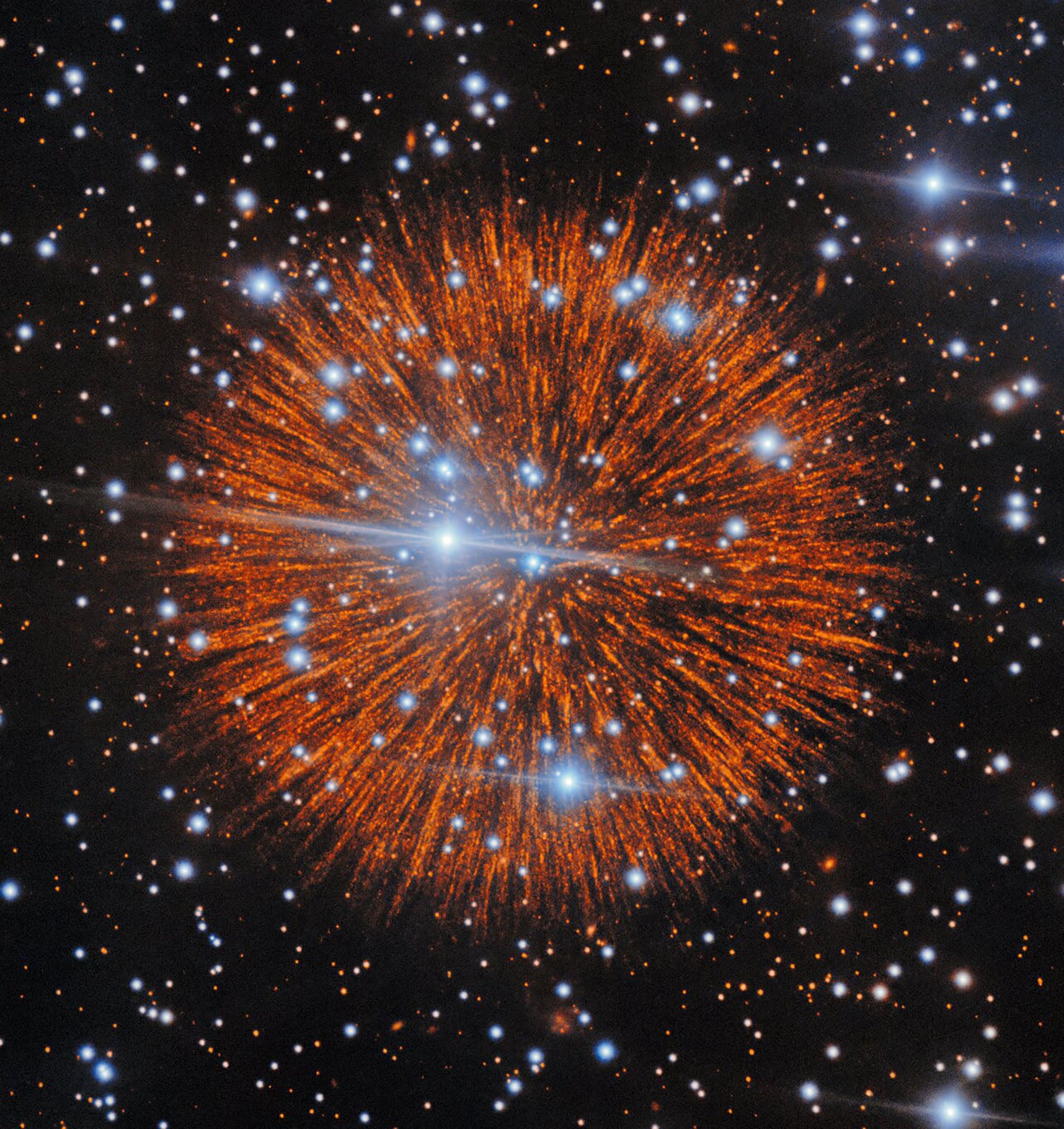 Pa 30 | Credit: International Gemini Observatory/NOIRLab/NSF/AURA Acknowledgment: PI: T. Cunningham (Center for Astrophysics — Harvard & Smithsonian) Image Processing: J. Miller & M. Rodriguez (International Gemini Observatory/NSF NOIRLab), T.A. Rector (University of Ala
Somewhat surprisingly, while people observed the supernova in 1181 without telescopes, it wasn’t until 2013 that Pa 30, very likely the remnant of that supernova 845 years ago, was discovered. It was found through a citizen science program to help find planetary nebulae in the Wide-field Infrared Survey Explorer (WISE) dataset. Pa 30 was the 30th nebula found by amateur American astronomer Dana Patchick. Pa 30 stands for Patchick #30.
Scientists promptly followed up on Pa 30 with observations from the NSF Kitt Peak National Observatory. Initial data on its estimated age and brightness led scientists to theorize that it was likely the remnant of SN 1181.
This newest image was captured using the Gemini Multi-Object Spectrograph (GMOS), which reveals the remnant’s incredible, firework-like structure in excellent detail. It has about 10 times better resolution of Pa 30’s filamentary structure, which offers fresh insights into its chemical composition and history.
The remnant’s “knotty structure suggests that there may have been thermal or density variations in the circumstellar medium that shaped the supernova ejecta as it expanded radially away from the explosion,” NSF explains.
Pa 30 is a unique supernova remnant. The remaining central star is spectacularly hot, around 200,000° C (360,000° F), and it has extremely fast stellar winds whipping at about 16,000 kilometers (10,000 miles) per second. It’s also very weird that the central star is nearly perfectly centered. The stars remaining after supernova events are almost invariably off-center.
“From this, the researchers conclude that SN 1181 was an extremely rare Type Iax supernova. Unlike the standard high-energy explosions of Type Ia supernovae that wipe out their stars, Type Iax supernovae are lower-energy, incomplete explosions that leave behind a surviving remnant star. Pa 30 is the only known Type Iax remnant in the Milky Way,” NSF says.
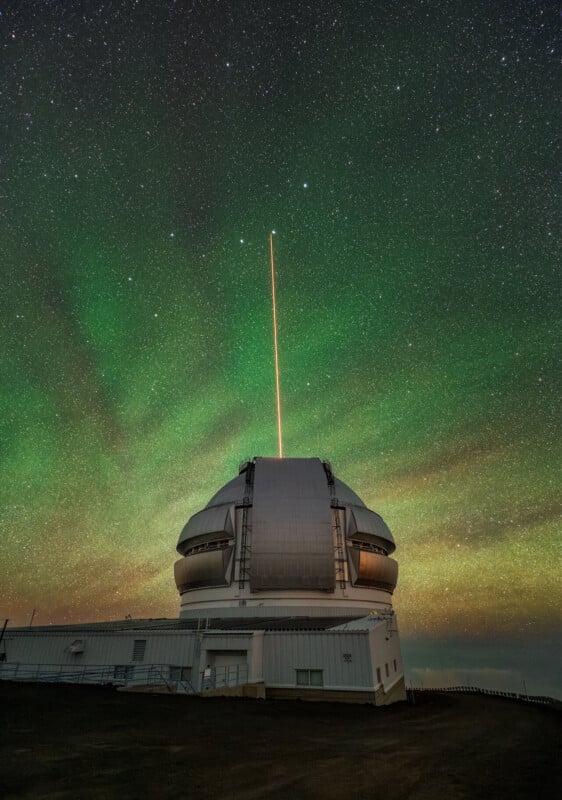 The Gemini North telescope’s laser guide star shoots up into the night sky. | Credit: International Gemini Observatory/NOIRLab/NSF/AURA/M. Rodriguez (International Gemini Observatory/NSF NOIRLab)
SN 1181 is an incredible supernova not just because of its beauty but because of how people have seen and studied it. Thanks to observations people made in 1181, long before the advent of even rudimentary telescopes, scientists today in 2026 are learning more about the Universe, its history, and how it changes. It’s scientific cooperation across nearly a millennium.
Image creditsInternational Gemini Observatory/NOIRLab/NSF/AURA. Additional credits available in the image captions. The news here is detailed in a new research paper, “Detection of Knots in the Type Iax Supernova Remnant Pa 30,” published on October 6, 2026, in The Astrophysical Journal. The research authors are Tim Cunningham, Illaria Caiazzo, John C. Raymond, and Scott J. Kenyon.
Affiliate Disclosure PetaPixel articles may include affiliate links; we may earn a commission if you buy through one.
What's Your Reaction?
 Like
0
Like
0
 Dislike
0
Dislike
0
 Love
0
Love
0
 Funny
0
Funny
0
 Wow
0
Wow
0
 Sad
0
Sad
0
 Angry
0
Angry
0












Comments (0)