‘We’ll be the first to mine Bitcoin in space’ says Nvidia-backed startup
Sep 22, 2026 - 19:08
01
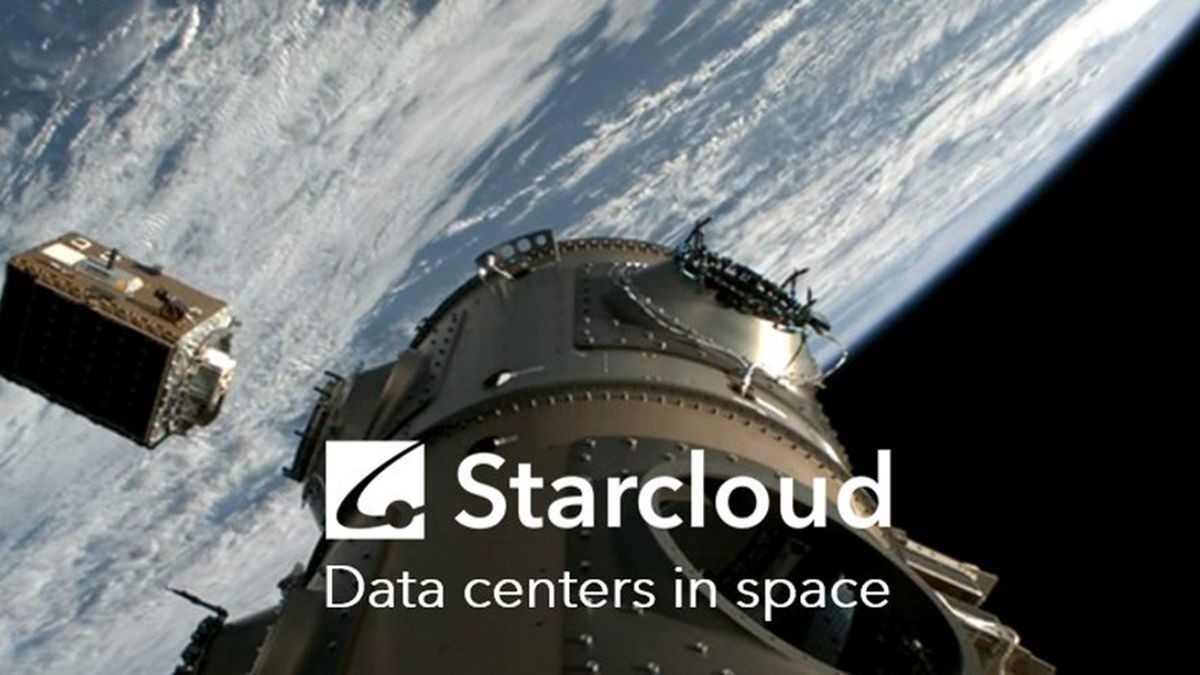
An Nvidia-backed startup plans to establish a Bitcoin mining operation in space before the year is out. Starcloud will fire up its cryptocurrency mining ASICs after its second spacecraft reaches orbit later this year. “We’ll be the first to mine Bitcoin in space,” claimed Starcloud CEO Philip Johnston in a recent interview with Documenting Bitcoin.
₿𝗥𝗘𝗔𝗞𝗜𝗡𝗚: The first company to mine bitcoin in space will be Starcloud, says CEO Philip Johnston“We’ll have some bitcoin mining ASICs on the second spacecraft launching later this year” pic.twitter.com/6LjTj1j0fISeptember 21, 2026
Starcloud was founded in 2024 with the headlining goal of moving data centers to space. “As launch costs fall, data centers in space will leverage continuous solar energy and radiative cooling, rapidly scaling to gigawatts while avoiding permitting constraints on Earth,” reads its mission statement. The firm spells out its proposition in far greater detail in a white paper on its website, highlighting the appeal of training AI in space. However, the ample supply of solar energy is also great for cryptomining.
So, when Starcloud-2 reaches orbit, it will be tasked with raising some crypto-cash. In the embedded interview segment, Johnston said: “We’ll have some Bitcoin mining ASICs on the second spacecraft launching later this year.” At the time of writing 1BTC is worth roughly $86,000, quite a way down from highs several months ago.
Starcloud-2 is just the second of four currently planned satellite launches from the startup. It is framed as the company's first commercial mission, and like the prior satellite, will feature a GPU cluster. Interestingly, the official Starcloud-2 project page doesn’t mention Bitcoin mining or ASICs, so Johnston’s reveal is quite eyebrow-raising. Moreover, for something that seems a bit like an afterthought, “Potentially it [Bitcoin mining] is one of the most compelling use cases of space compute,” the Starcloud CEO told Documenting Bitcoin.
Johnson provided some financial insight into why there is now a Bitcoin side gig or pivot being considered. He cited the lower costs of ASICs vs. GPUs: they are about 30x cheaper than GPUs per kilowatt, he told the host. A specific example given was a 1KW Nvidia B200 chip at $30,000 vs. a 1KW ASIC at $1,000. Solving the energy supply situation in space for GPUs, or for ASICs, isn’t relevant to the business, said Johnson. We wonder what Nvidia will think about that.
While the availability of near-uninterrupted solar power is a big attraction of space-based compute, there are downsides. For example, satellites aren’t easy to service, and convection cooling doesn’t work in a vacuum. Commercial space-based data centers are so new that some of the problems and solutions will only become entirely clear after pioneering deployments like the Starcloud-2.
Get Tom's Hardware's best news and in-depth reviews, straight to your inbox.
Mark Tyson is a news editor at Tom's Hardware. He enjoys covering the full breadth of PC tech; from business and semiconductor design to products approaching the edge of reason.



 Like
0
Like
0
 Dislike
0
Dislike
0
 Love
0
Love
0
 Funny
0
Funny
0
 Wow
0
Wow
0
 Sad
0
Sad
0
 Angry
0
Angry
0





Comments (0)