

What the Hell Is Indie Slop? How the Video Game Insult Found Indie Film
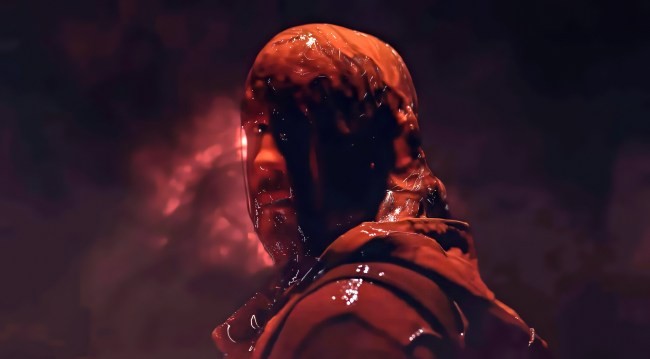
Over the weekend, I participated in my tried-and-true pastime of throwing back a few beers and disagreeing with people on the internet. I typically reserve my film and TV takes for work hours, but between clips debating the merits of Perez Hilton’s humanity and the murder trial of Lindsay Clancy, a handful of vertical film reviews got me crawling the comments.
The first time I saw the term “indie slop,” I resisted the Streisand effect, clocked it, and moved on. But after spotting the phrase at least a dozen times since (it’s particularly cruel to witness in the context of Kickstarter campaigns), I turned insult into investigation.


“Indie slop” is nowhere near as common an accusation as the classic “AI slop” getting slung around these days. But broadly speaking, it does carry the same sense of poisonous wholesale dismissal. If “AI slop” implies that a machine produced something too easily for it to matter artistically, then “indie slop” suggests that work made by real people through visible effort and care should be labeled worthless, too.
What exactly were these indie films (which I won’t disrespect by naming here) actually being accused of? And how had “slop” become the shorthand for refusing to even watch them?
Welcome to the Basement, Film Bros
Assuming you still believe search portals like Google Trends can tell us anything substantive about human behavior, “indie slop” is still too uncommon a term in the film world to produce meaningful data. In that light, it’s better understood as an emerging social media vernacular we can still hope will go away— but that you might see migrating between various online communities or anecdotally on set.
The phrase has circulated on gaming platforms for years, although its exact origins aren’t really known. (Technically, I think it appeared in music criticism first but without the same impact.) Its earliest uses in major video game publications trace back to the late 2010s in the aftermath of #GamerGate… which, if you haven’t heard of it, was an astoundingly hostile time for everyone in the video game industry but particularly tough on creators and critics.
 ‘The Super Mario Bros. Movie’ (2023)©Universal/Courtesy Everett Collection
Business was nevertheless booming, thanks in part to the growing popularity of mobile gaming and rising console sales. Digital storefronts like Steam made independent games easier to distribute, while increasingly accessible technology and innovative gaming engines like Unity and Unreal made indies cheaper to produce. But spanning every price point — from costly AAA titles to tiny projects made by just one person — the resulting abundance was routinely described as a kind of nuisance or contamination by some consumers.
The “indie slop” moniker should have tied together that aggressive concern over marketplace clutter and the broader public’s general annoyance with amateurs into a pretentious little bow. But its emergence was part of a much longer and thornier fight over what a “healthy” games industry should look like: which projects pushed the medium forward, which provided the correct kind of entertainment, and which deserved to exist at all.
Gaming already had more precise language for its alleged contaminants. “Shovelware” described cheap titles produced or ported in bulk. An “asset flip” was assembled largely from premade materials with minimal transformation. “Clone” accused a game of imitating an existing success, while “cash grab” suggested that its creators were exploiting a trend, franchise, or audience for quick profit. Depending on the forum and the speaker’s particular grievance, “indie slop” could gesture toward any one of those accusations.
But precisely because it could mean all of them, it eventually stopped pointing to any of them with specificity. Over time, “Indie slop” became less a description of how a game was made than a weapon against whatever kind of game somebody did not want the industry to encourage. The insult expanded to cover less-than-ideal graphics, glitchy mechanics, dialogue-heavy stories, conspicuous artistic influences, the very concept of narrative sincerity, and plenty of indies that simply failed to resemble the games a loud online audience (think of “Call of Duty”) had already decided were worth taking seriously.
 ‘Five Nights at Freddy’s 2’ (2025) ©Universal/Courtesy Everett Collection
More recently, the related term “friendslop” emerged to critique inexpensive co-op games like “Peak” and “R.E.P.O.,” which mostly derive their entertainment value from allowing gamers to produce chaos with other players. Translated imperfectly into the movie world (since both examples I’m using here come from major studios), you might compare them something like “A Minecraft Movie” or “Five Nights at Freddy’s”: films known for encouraging audiences to create unique theatrical experiences for themselves through collective celebration and reaction. On the gaming side, some fans and developers have responded by embracing the “friendslop” attack as evidence of the games’ popularity and have actually attempted to reclaim “slop” as a kind of quasi-genre.
We have yet to see that kind of approach take hold for either “indie slop” or the much better-known “AI slop” in the film industry. But the parallels between what has happened to the video game market over the last decade and the trends reshaping Hollywood right now are striking.
When I pitched this story during an IndieWire editorial meeting on Monday, my colleague Sarah Shachat offered a warning: “What’s happening to games now is coming to us in six months.”
That timeline might be theoretical, but the concerns beneath it are not.
B.Y.O.S. (Build Your Own… Slop? Studio? Salary?)
Video game development has long been plagued by “crunch.” That’s the deadline-driven overtime that many programmers and designers have been expected to endure to maintain their spot in the industry. Over the years, major companies, including Activision Blizzard and Riot Games, have reached multimillion-dollar settlements over toxic workplace allegations — sometimes involving harassment, discrimination, and professional retaliation.
In 2026, a seemingly never-ending wave of layoffs and studio closures has made jobs so scarce that workers may feel more pressure to tolerate abusive conditions. GDC’s 2026 State of the Game Industry survey found that 28 percent of worldwide respondents had been laid off within the last two years. That stat rises to nearly one-third when narrowed to those inside the United States.
 ‘Sonic the Hedgehog 2’ (2022)©Paramount/Courtesy Everett Collection
Creatively, indie development can offer a kind of escape. You get more control, of course. But you’re also guaranteed ownership, better positioned to work with smaller teams, and empowered by the freedom to pursue projects that major publishers might reject.
That said, going indie does not eliminate risk so much as privatize it. In GDC’s 2025 survey, more than half of respondents said they had put their own money into one or more games. As excited artists effectively self-impose crunch through their personal devotion to the medium, the strain they put on themselves as people can actually make things worse.
That is the labor market “indie slop” is mocking.
If AAA games can mostly conceal brutal conditions beneath shiny surfaces (though, check that GDC report again and you’ll see they have the most layoffs by far right now), then indie game development is more likely to leave those cracks visible. God forbid an indie creator employ AI to cut fiscal corners, then they’re practically begging to get double-slopped. In a backward way, “indie slop” can functionally reward concealment and use honesty as proof no one cared.
You can see the film industry reproducing that same degrading sequence for countless emerging creatives as we speak. Studios make fewer movies and employ fewer people than they did before the pandemic, while traditional financiers have retreated in spectacular fashion. That leaves indie artists and indie distributors particularly vulnerable to viral abuse. Forced to mount grassroots campaigns in public, they’re seeding institutional support in unusually scary soil and hoping whatever roots they put down can survive.
So, Is Everything Just Something-Slop Now?
While researching this piece, I also came across another creator raising a similar question about the flattening happening in Hollywood today: Do indie films even exist anymore? (Hap tip: Melvin Benson of the Cinematic Doctrine podcast, whose account I stumbled on via TikTok.)
In my view, the answer depends on what you mean by an “indie” film.
A movie can be independently financed, independently produced, and authorially autonomous without looking or feeling the way many cinephiles once thought independent cinema should. Conversely, a project resembling a 2000s-era Sundance submission can now employ major stars, receive corporate financing, and be sold by a studio division as “indie” when, spiritually speaking, it is anything but. Add the fact that an online creator like YouTube’s Markiplier can self-finance both a feature and its release, and “indie” starts to describe so many different relationships to the mainstream film and TV industry that it’s functionally meaningless.
 ‘Ice Cream Man‘ (2026)Courtesy Everett Collection
Still, I wouldn’t go so far as to call anything “indie slop.” Underneath the hostility baked into that term (yes, I’m about to dip my toe into AI discourse here, bear with me) lurks a very real economic anxiety that sometimes manifests in a toxic way but is also broadly understandable. Creative labor certainly seems to be disappearing as studios experiment with generative AI, and artists and craftspeople are rightly afraid of being further mistreated, devalued, or replaced. But that fear is also producing an increasingly dangerous critical climate in which audiences are being subtly encouraged to inspect every project for a philosophical smoking gun.
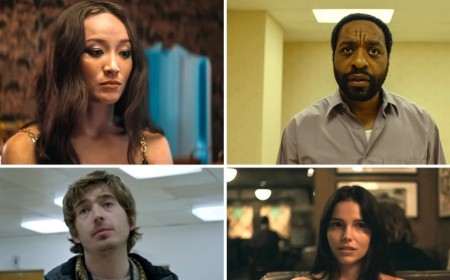
The Onion recently summarized that feedback loop beautifully with the satirical headline “Eli Roth Admits Most Of ‘Ice Cream Man’ Not Made Using AI.” I respect myself too much to go down a rabbit hole explaining everything that happened there, but the first film Roth directed for his independent genre label, The Horror Section, is a great example of how “AI slop” rhetoric can erase the merit of human labor behind even the worst indie movies.
Criticism is allowed to be mean, and adding the “slop” suffix absolutely makes a takedown sound better. But mistaking barbarity for honesty is so intellectually lazy that some of these chuckleheads have me ready to contort pig wordplay into a troll-ish monosyllabic “oink.”
If we really need a jazzy term for the garbage flooding our feeds, may I instead reluctantly propose “asshole slop”? On this day, defined as any content produced when some dickhead combines limitless contempt with zero curiosity. (Y’know, assuming that phrase hasn’t already been claimed by the diarrhea community. Surely, they’ve suffered enough.)
What's Your Reaction?
 Like
0
Like
0
 Dislike
0
Dislike
0
 Love
0
Love
0
 Funny
0
Funny
0
 Wow
0
Wow
0
 Sad
0
Sad
0
 Angry
0
Angry
0








Comments (0)