

‘Widow’s Bay’ Cinematographer Reveals How He Created The Show’s Distinctive Look
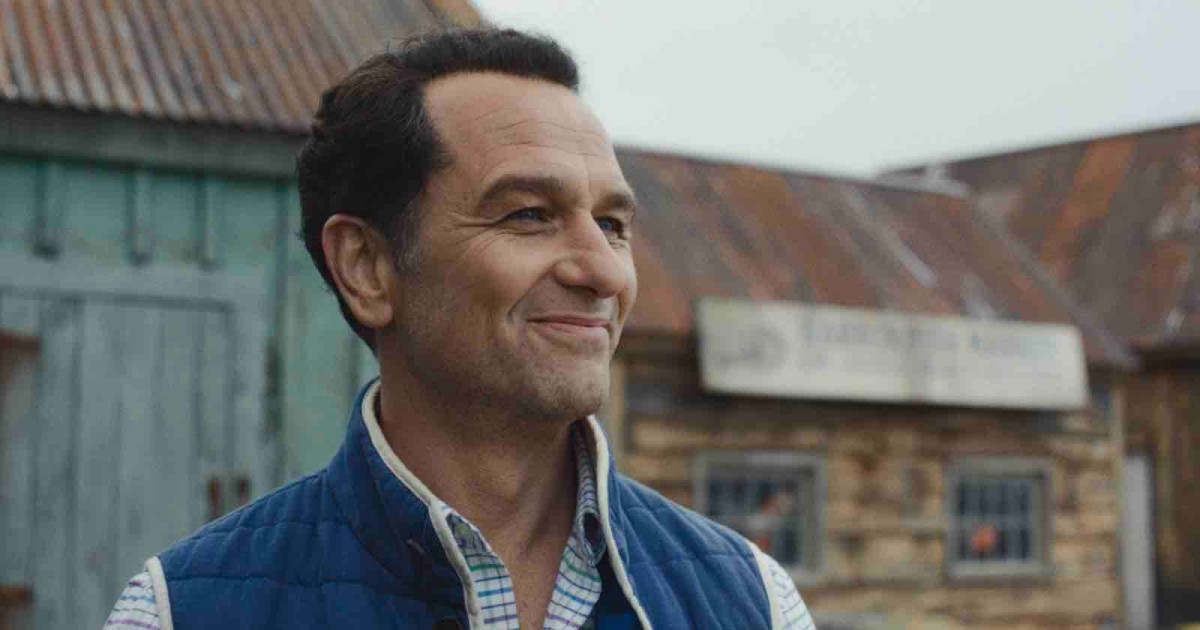
The cinematographer behind the acclaimed horror-comedy TV show Widow’s Bay has revealed how he created the series’ distinctive cinematic look.
Apple TV’s brilliant Widow’s Bay, directed by Hiro Murai, became one of 2026’s breakout hits — earning 19 Emmy nominations last month. The TV series stars Matthew Rhys as Tom Loftis, the well-meaning mayor of a fictional New England island town who is determined to turn it into a popular tourist destination. But his plans are complicated by the possibility that the island is haunted and afflicted by a centuries-old curse, something the superstitious locals are quick to warn him about.
For Widow’s Bay, Murai reunited with longtime cinematographer Christian Sprenger, continuing a creative partnership that began with a Nokia commercial. Murai and Sprenger worked together on the TV show Atlanta, and the pair’s collaboration has since extended to more than 50 episodes of television.
A Producer as well as a Cinematographer
In fact, Sprenger was not only a cinematographer on Widow’s Bay, sharing the role with Director of Photography (DP) Cody Jacobs, but also a producer on the show — a rare credit given to cinematographers.
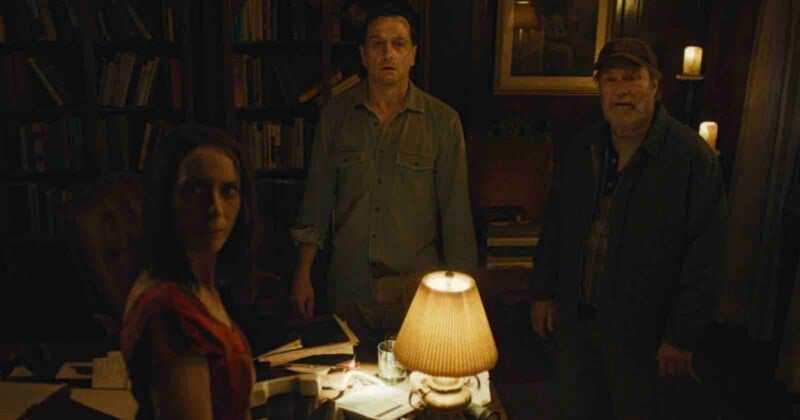 Kate O’Flynn, Matthew Rhys, and Stephen Root (left to right) in Widow’s Bay.
In an interview with the Motion Picture Association’s The Credits, Sprenger says because the island of Widow’s Bay and its story feel removed from the modern world, they wanted the cinematography to have an old-fashioned, nostalgic movie look, particularly inspired by films from the 1970s.
Sprenger says he and Murai wanted the series to have the feel of classical cinema, using deliberate static shots, slow pacing, as well as traditional lighting and color grading.
“Hiro kept going back to this idea that he wanted it to feel more like classical cinema, even down to how it was lit and color-corrected. We wanted a lot of very intentional static coverage and very slow methodical pacing as ground rules,” Sprenger explains.
According to a further interview with Variety, Sprenger primarily shot the show on the Arri Alexa 35, paired with Olympus Zuiko OM and Ancient Optics’ Tamashii lenses. The setup was chosen to avoid an overly crisp, polished, contemporary look, instead giving the footage a more timeless, cinematic quality that could feel as though it had been shot 20 or more years ago. Above all, the aim was to keep the visuals grounded and realistic.
Bringing the 1700s to Life in ‘Widow’s Bay’
For the sixth episode Our History, the series takes a visual departure from its established style. Set in 1702, the standalone episode explores the origins of the island’s curse through Sarah Warren (played by Betty Gilpin), who arrives on the island for an arranged marriage to Richard Warren (Hamish Linklater) and soon discovers disturbing secrets about her husband.
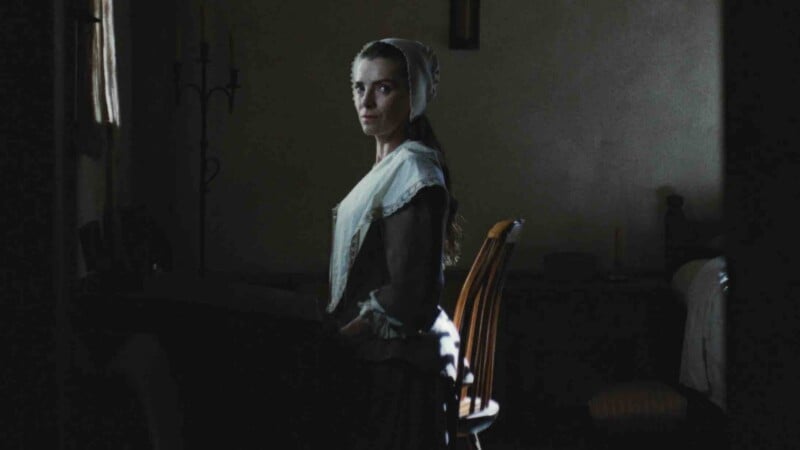 Betty Gilpin in Episode Six ‘Our History’ of Widow’s Bay.
To distinguish the episode from the rest of the series, Sprenger used the Arri Alexa 265 and a 1.43:1 aspect ratio, the taller, more square format associated with IMAX. The combination gave the episode a more distinctive and enclosed visual style.
“We decided to shoot in a different aspect ratio and on the Alexa 265, which is a medium-format camera to give it some gravitas and make it feel different,” he tells The Credits.
The Credits reports that the cinematographer also switched to ASC Todd-AO lenses, originally manufactured in the 1950s, which had recently been restored in collaboration with the American Society of Cinematographers and Zero Optik for large-format photography. Widow’s Bay was the first production to use the vintage lenses in four decades.
Furthermore, Sprenger adjusted the lighting to reflect the period setting of Our History, relying on sources that would have been available in the 1700s rather than modern artificial light.
“We tried to use firelight, naturalism and candles as much as we could, and not artificial lighting,” Sprenger tells Variety. “The theory was that we could change technical aspects of it that would shift the audience’s perception a little bit, and you would subconsciously feel that there were things different about this.”
Sprenger says the episode’s director Ti West also wanted the camera to stay close to Gilpin throughout the episode, helping the audience connect more closely with her character. The episode was shot entirely with a handheld camera.
“The camera is physically a lot closer to Betty [Gilpin], and we’re on wider lenses, experiencing her perception of the world,” he explains. “When we’re seeing Richard Warren, we’re seeing him from over her shoulder or from what feels like her angle of perception, and the same thing with lighting.”
Image creditsAll photos via Apple TV.
Affiliate Disclosure PetaPixel articles may include affiliate links; we may earn a commission if you buy through one.
What's Your Reaction?
 Like
0
Like
0
 Dislike
0
Dislike
0
 Love
0
Love
0
 Funny
0
Funny
0
 Wow
0
Wow
0
 Sad
0
Sad
0
 Angry
0
Angry
0










Comments (0)