

10 Best Postmodern Books of All Time
 Image via Penguin Group
Published Jun 13, 2026, 10:28 AM EDT
Jeremy has more than 2500 published articles on Collider to his name, and has been writing for the site since February 2022. He's an omnivore when it comes to his movie-watching diet, so will gladly watch and write about almost anything, from old Godzilla films to gangster flicks to samurai movies to classic musicals to the French New Wave to the MCU... well, maybe not the Disney+ shows.
His favorite directors include Martin Scorsese, Sergio Leone, Akira Kurosawa, Quentin Tarantino, Werner Herzog, John Woo, Bob Fosse, Fritz Lang, Guillermo del Toro, and Yoji Yamada. He's also very proud of the fact that he's seen every single Nicolas Cage movie released before 2022, even though doing so often felt like a tremendous waste of time. He's plagued by the question of whether or not The Room is genuinely terrible or some kind of accidental masterpiece, and has been for more than 12 years (and a similar number of viewings).
When he's not writing lists - and the occasional feature article - for Collider, he also likes to upload film reviews to his Letterboxd profile (username: Jeremy Urquhart) and Instagram account.
He has achieved his 2025 goal of reading all 13,467 novels written by Stephen King, and plans to spend the next year or two getting through the author's 82,756 short stories and 105,433 novellas.
Sign in to your Collider account
Postmodernism is a term that’s a little hard to define, and the word can mean different things depending on what medium you're talking about, but postmodernist literature is what’s being stuck to here. It is indeed (and unsurprisingly) a movement that came about after modernism, with postmodernism being a bit more abstract and willing to tackle confounding things in life to an even greater extent than modernist works might've.
There’s also some really interesting language used throughout most great postmodernist novels, and it’s therefore not too surprising that some rank among the very best – and most important – books of the second half of the 20th century. Postmodernism, as a literary genre, really came about in the 1950s, and was probably at its peak in the subsequent two decades, with many (but not all) of the following novels, which can be considered among the best postmodern books ever written, being from that time.
10 'Mason & Dixon' (1997)
 Image via Henry Holt and Company
There is probably a Thomas Pynchon book you're expecting to see here, even if you’ve not read it, because it’s kind of infamous (one that got a shout-out in Knives Out, of all places). And it will be here, a little later. For now, though, here’s another Pynchon novel: Mason & Dixon. This one’s challenging, but not so much because of its disturbing content, as other Pynchon novels are more confronting, as well as probably more confounding when it comes to things like narrative.
The story in Mason & Dixon is almost straightforward, at least by Pynchon’s standards, being a story within a story about Charles Mason and Jeremiah Dixon, who, in the 18th century, surveyed parts of North America together and established the Mason-Dixon line. The perplexing part of Mason & Dixon is the language used, as it’s done in a way that does some combination of homaging and parodying the literature of the time in which it’s set, but once you get used to that style, it’s a compelling read. Hell, it’s compelling in a weird way even if you don’t 100% get used to that style.
9 'The Curious Incident of the Dog in the Night-Time' (2003)
 Image via Doubleday
Just to show that a book doesn’t have to be grim, confusing, and aimed at an adult audience to technically be postmodern, here’s The Curious Incident of the Dog in the Night-Time. Sure, it’s not as “important” or “classic” as some of the other books mentioned here, but it could work as a great introduction to unconventional literature, for younger readers. It’s postmodernism, but with the postmodernist training wheels still on (postmodernist wheels are like, triangles, or something, and there are two and a half wheels per set, because **** you, that’s why).
The Curious Incident of the Dog in the Night-Time is about a teenage boy who observes the world in a unique way, and what happens when he becomes fixated on solving the murder of a neighbor’s dog. The first-person narration here is really what carries the whole book, and makes it stand out, as does the use of maps and other images used throughout; they help make this somewhat postmodernist, and also, they help elevate what’s an already solid mystery novel into something of a modern classic.
8 'Underworld' (1997)
 Image via Scribner
The idea of the “Great American Novel” has been a thing for so long, and the search for it has been so built up, it might well never be a thing. There might well never be a definitive “Great American Novel.” That doesn’t stop there from being contenders, though, with Underworld by Don DeLillo being at least worth considering… and it was even linked to the idea of the “Great American Novel” as early as the year it was first published.
What Underworld does narratively might not sound too wild, since it’s about the baseball that was hit by Bobby Thomson in 1951: the one in the so-called Shot Heard 'Round the World. It’s about that baseball over the years, and the different people who obtained it at some point, but after the prologue dealing with the New York Giants vs. Brooklyn Dodgers match, Underworld jumps forward to the 1990s, and then each part of the book goes back 10 or so years, until things are back in the 1950s. That structure is very postmodernist, as is DeLillo’s general style, not to mention the sprawl and different tangents of Underworld. It’s huge, strange, overwhelming, and almost always very impressive, as a novel.
7 'Lolita' (1955)
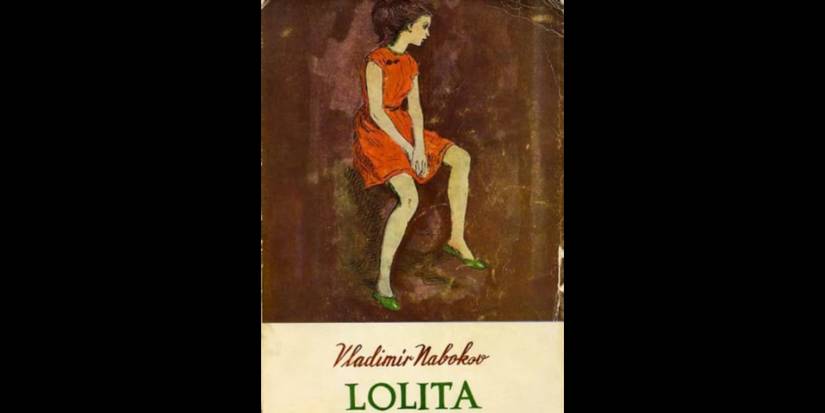 Image via Olympia Press
You probably know what Lolita is about, and it is, but it’s also very different, in practice, than how some people like to describe it. On one hand, Lolita is easier to read than you might expect a book with such subject matter to have, as it is equal parts witty and poetic. But then it is somehow darker and more uncomfortable than you might be prepared for, and you're already going to be prepared for something dark and uncomfortable.
It might be the fact that Lolita is funny and horrifying without it feeling like two different books clashing that makes it such a harrowing read. You're always yanked around, and you feel like you're being tormented, toyed with, and sometimes controlled by the book’s narrator… a man who infamously exerts control over the young girl he calls Lolita, all while attempting to manipulate other characters alongside those he’s telling his story to, too. The effect is dizzying, impressive, and hard to read, but persevering through this particular book is ultimately worth it.
6 'The Unbearable Lightness of Being' (1984)
 Image via Harper Perennial
Of course The Unbearable Lightness of Being is postmodernist, with a title like “The Unbearable Lightness of Being” and all. This is a book about a womanizer and the two women who have had the biggest impact on him, though he does have many more women in his life, and he’s far from a likable protagonist (it doesn’t feel like he’s supposed to be, either, but this still might be a turnoff for some readers).
Well, actually, that synopsis applies to the movie adaptation of The Unbearable Lightness of Being. The book is also somewhat about those things, but is a lot more poetic and kind of dreamlike, de-emphasizing what narrative there is here while often being more concerned with philosophical ideas and other musings on life and love (or a lack thereof) more generally. It’s better – and more readable – than all that might make it sound, promise.
5 'Slaughterhouse-Five' (1969)
 Image via Dell Publishing
Slaughterhouse-Five tackles so many genres at once, which is impressive, considering it’s not a long book, by any means. The first edition came in at under 200 pages, but in that time, Slaughterhouse-Five is about World War II, time travel, and trauma, being a satirical book, a work of science fiction, and a war novel (plus some other things, probably) all at once.
It’s the novel for which Kurt Vonnegut is best known, and it’s also up there among the greatest books of the 20th century, however you might be willing to define it; whatever category it gets slotted into. While The Curious Incident of the Dog in the Night-Time might be more approachable, Slaughterhouse-Five is also a good novel to read if you want a (relatively) gentle introduction to postmodern literature, mostly just because it’s quite punchy and a good deal shorter than some of the other books mentioned here. Speaking of longer books being mentioned here…
4 'Infinite Jest' (1996)
 Image via Little, Brown and Company
…Infinite Jest. Hoo boy. This could be the final boss of postmodernist literature, in the sense that it’s unlikely anyone will write something simultaneously as long, unwaveringly ambitious/strange, postmodernist, and genuinely good in the foreseeable future. For starters, there are so many footnotes throughout Infinite Jest that if you exclusively read those footnotes, it still might take quite a bit longer than some full-length novels (based on the uncut audiobook of Infinite Jest being eight hours longer than the audiobook that only features the main novel, with the footnotes not being read).
And you might think that’s well and good and all, “But what is Infinite Jest actually about?,” you might be asking. Whatever you want it to be; whatever you end up thinking it’s about is what it’s about. It is as postmodernist as things get, while still being actually readable and often surprisingly entertaining. It’s a classic that feels like it has to be read, and yet it also feels very hard to actually recommend. Jest, so confusing.
3 'Gravity's Rainbow' (1973)
 Image via Viking Press
One of the things that gets brought up quite often, when talking about Gravity’s Rainbow, is how it broke the Pulitzer Prize jury the year it came out. Now, it’s not the only time there was some kind of dispute, and the Pulitzer Prize for Fiction was not given out for a certain year, but it’s still interesting. Sorry if it’s something you already knew, but hey, it is a good way to summarize and succinctly explain the notion of Gravity’s Rainbow being challenging and very much not for everyone.
It’s a wild novel that manages to be incredibly long (more than 750 pages, and closer to 900, sometimes, depending on an edition’s formatting) and also remarkably dense, with plenty of sentences you'll feel tempted to read again and again to make sense of them. If sense is even something that can be made here. And then there’s the matter of trying all those sentences, pages, and wildly different episodes together. It is postmodernism squared, and then some, but very much worth tackling whenever you find yourself with quite a bit of free time on your hands.
2 'House of Leaves' (2000)
 Image via Pantheon
The style of House of Leaves is often the story, even more than a book where a distinctive style is used to tell the story. House of Leaves tackles psychological horror in a unique way, and in a manner that could only really be done as a book. If you want a movie that scratches the same itch as some of House of Leaves, there is always Backrooms, and also a rather famous mod for Doom II called MyHouse.wad is almost like a video game adaptation of parts of House of Leaves.
But even with these, it’s mostly just parts of the novel that are represented in these works from different mediums. There are different sorts of horror in House of Leaves, long tangents, supplemental material that helps the overall book (even if such parts aren’t always 100% necessary to read in their entirety), and countless smaller stories told through footnotes. You’ve also got the wild formatting that has to be seen to be believed, and it’s bonkers enough in that department that you probably couldn’t even do an audiobook version of House of Leaves, let alone make it into some kind of movie.
1 'Libra' (1985)
 Image via Viking Press
It was hard limiting this whole ranking to only featuring two Don DeLillo novels, a little like how it was also hard including “only” two Thomas Pynchon ones. They're not necessarily the grandfathers of postmodernism, but they’ve both been active for decades, and they're also living legends in the sense that both have had works published in the 2020s (even if those books haven’t quite been as great as either author’s best works).
With DeLillo, White Noise deserves an honorable mention, but it’s Libra that’s his greatest novel overall. Even if it’s not as aggressively postmodern as Underworld, nor as sprawling, it is DeLillo’s most compelling novel, alongside being the hardest to stop thinking about, once you’ve read it. It’s the best story concerning the John F. Kennedy assassination (and there have been quite a few), and also one of the most paranoia-inducing novels of, potentially, all time. Sorry if that sounds a bit hyperbolic, but it really is something (very) special.
What's Your Reaction?
 Like
0
Like
0
 Dislike
0
Dislike
0
 Love
0
Love
0
 Funny
0
Funny
0
 Wow
0
Wow
0
 Sad
0
Sad
0
 Angry
0
Angry
0








Comments (0)