

10 Fantasy Books Recommended By Ursula K. Le Guin

Known for her incredible contributions to fantasy and science fiction, Ursula K. Le Guin not only knows how to write a spectacular work of speculative fiction; she knows how to recommend one. Drawing from her decades of experience writing within these genres and reading and reviewing new additions, Le Guin provided plenty of suggestions for fans of her writing who wanted to dive into thrilling new fictional worlds. While it will always be easy to reread her most iconic works, audiences can trust Le Guin to know the best fantasy novels to read next.
Le Guin's best books demonstrate the range and breadth of her oeuvre, from sci-fi epics like The Left Hand of Darkness to coming-of-age tales of wizardry like A Wizard of Earthsea. In her recommendations, Le Guin is just as diverse, understanding that for any great writer or reader, the most important thing a person can do is immerse themselves in the greatest examples of storytelling. Until her passing in 2018, Le Guin continued to stay up to date with the most innovative works of fantasy, adding them to her recommendations alongside standbys of the genre.
The Hobbit (1937)
By J.R.R. Tolkien

At this point, there are likely very few fantasy fans who haven't read J.R.R. Tolkien's seminal text, The Hobbit. Le Guin not only recommends The Hobbit, but also the entirety of The Lord of the Rings saga. Its contributions to the genre and influence on the way modern high fantasy is written can't be overlooked, and it helps that Tolkien crafts a world and story that will stay with the reader for years to come.
As one of the best fantasy books of all time, The Hobbit is a lighter, more coming-of-age-oriented work than The Lord of the Rings trilogy. It's clear that Le Guin herself was inspired by The Hobbit, as there are some similarities with the Earthsea cycle. Bilbo and his adventure to find Smaug and reclaim the dwarves' treasure will always hold a special place in the hearts of fantasy lovers, and this love will be passed on through generations.
The Hobbit is available for purchase here.
Islandia (1942)
By Austin Tappan Wright

Blurring the line between utopian fiction and fantasy, Austin Tappan Wright's Islandia sees its protagonist, John Lang, travel to the fictional country of Islandia. Through his perspective, the reader is introduced to an isolated community with more egalitarian views and without the capitalist intent of expansion at all costs, which John must grapple with. Though Islandia is a very low fantasy novel, Tappan Wright makes sharp commentary on the real world.
Le Guin's admiration for Islandia isn't shocking, as Tappan Wright crafts a detailed, vividly realized civilization that drops the reader right into the thick of the world-building. Though Islandia has some political and social policies in common with contemporaneous countries of Tappan Wright's time, it's a very optimistic and enjoyable read. Islandia isn't a work of speculative fiction that leaves the reader worried for humanity.
Islandia is available for purchase here.
Embassytown (2011)
By China Miéville

One of the modern masters of science fantasy, China Miéville expands upon the work done by Le Guin throughout her career and in her creation of sprawling fictional universes, like the Hainish Cycle. Miéville's novel follows the human Avice Benner Cho and her life on a far-flung planet where the aliens speak a language that very few humans can replicate. One of the best parts of Embassytown is the overarching theme that language and the individuals who speak it can change.
The importance of language and communication is at the heart of Embassytown, as the aliens don't have the ability to lie or obfuscate truth in their language. Though Embassytown leans further into sci-fi than fantasy, the near-magical power of language and its position in the alien society is the most gripping part of Embassytown.
Embassytown is available for purchase here.
The Name Of The Wind (2007)
By Patrick Rothfuss
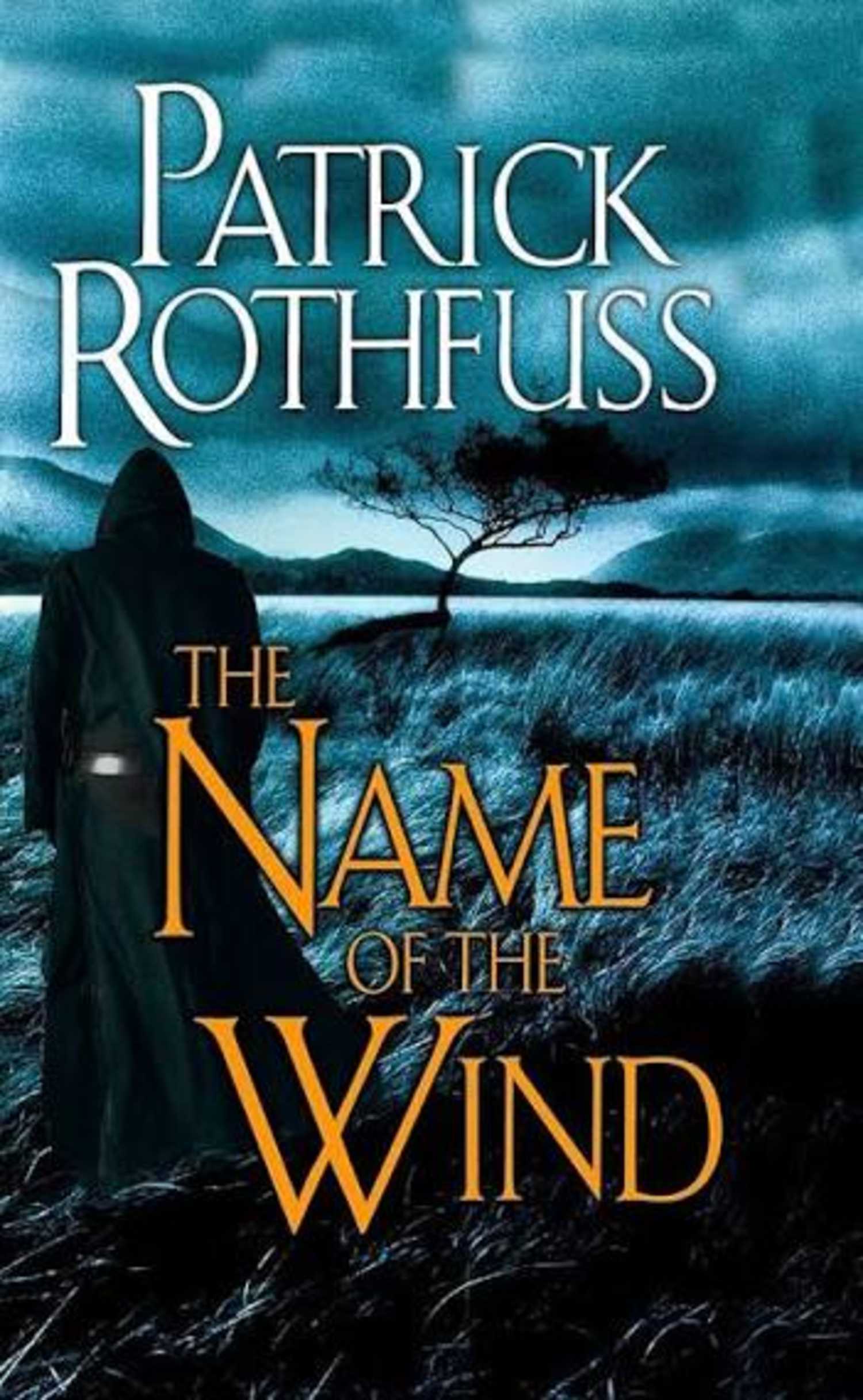
The first installment of the still unfinished Kingkiller Chronicle series, The Name of the Wind, is one of the best modern works of high fantasy readers can consume today. Patrick Rothfuss was clearly inspired by the likes of Tolkien and Le Guin in crafting the legends of the protagonist Kvothe. Told through a frame story, with Kvothe recounting his adventures to a scribe some time in the future, The Name of the Wind sees Kvothe come of age, discover magic, and attempt to avenge the deaths of his loved ones throughout the text.
Le Guin is not the only author or artist who has been captured by the pages of The Name of the Wind, as Lin-Manuel Miranda and George R.R. Martin have both sung the praises of the series. While it's been agony waiting for the final installment, The Doors of Stone, to be published, fans of Rothfuss haven't yet given up hope.
The Name of the Wind is available for purchase here.
The Gormenghast Series (1946–2011)
By Mervyn Peake

Mervyn Peake's Gormenghast series began with the 1946 novel Titus Groan and quickly grew into an impressive, long-running work of fantasy. Primarily set within the confines of the titular castle, Gormenghast, the novels follow the ruling class and residents of the isolated community and their dedication to the many inane rituals they complete throughout the books. The detail with which Peake paints the world of Gormenghast and its inhabitants is a benchmark for fantasy world-building.
It's impossible to fully describe the world of Gormenghast and its peculiarities. In the act of reading Peake's work, audiences will realize why it's considered a masterpiece. The final installment of the Gormenghast series was written by Peake's widow, Maeve Gilmore, and published posthumously in 2011, giving the story a fitting end after so many decades.
Gormenghast is available for purchase here.
Binti (2015)
By Nnedi Okorafor

The Afrofuturism genre is at its best in the tightly paced and enthralling novel Binti by Nnedi Okorafor. The first in a three-book series, Binti follows the titular character as she travels across space to attend a highly selective university, but her place at the institution comes at a cost. A story about coming-of-age and finding ways to communicate and find understanding in the midst of conflict, Binti has plenty in common with the humanist writing that Le Guin is famous for.
With elements of both sci-fi and fantasy, Okorafor transports the reader into a world that might have new technologies and alien species, but says a lot about the human world of today. Binti herself makes for an excellent protagonist who the reader will love spending time with as she develops throughout the story. Any reader who has left home and found themselves changed while still holding onto the parts of their past that define them will understand why Le Guin loves Binti.
Binti is available for purchase here.
The Jungle Book (1894)
By Rudyard Kipling

Reading a book from the 19th century by any author requires some acknowledgments and disclaimers, and even an enduring children's fantasy collection like The Jungle Book is the same. Rudyard Kipling's legacy can't be explored without understanding his xenophobic and imperialist background and upbringing. However, there are resonant themes in The Jungle Book, which can be enjoyed and learned from today while accepting it as an imperfect and dated work of fiction.
With adventure, excitement, and characters that are far more than thrilling talking animals, The Jungle Book remains culturally significant, with the live-action Jungle Book movie coming out in 2016. It's not difficult to see why Le Guin was captured by the messages of living in harmony with nature that are present in The Jungle Book. Her work often tackles themes of environmentalism and the folly of humans thinking they are separate from the natural world.
The Jungle Book is available for purchase here.
Italian Folktales (1956)
By Italo Calvino

There are few things a fantasy writer loves more than a good fairy tale, except, perhaps, a great new interpretation of one. In Italo Calvino's Italian Folktales, the reader is introduced to 200 Italian tales, which Calvino collected and reshaped to be presented in this definitive format. It's a feat of time, skill, and historical dedication that Calvino was able to preserve and popularize the folk legends of Italy in this way.
As Le Guin stated in her review of Italian Folktales, it's no accident that such a vivid and effective restoration of these tales was completed by an author who traditionally works within fiction. Calvino brings his understanding of story structure into the collection, providing the reader with stories that are timeless but are rendered shockingly new through Calvino's practiced hand. Even if they only read one story, Italian Folktales is a masterwork that audiences should pick up.
Italian Folktales is available for purchase here.
Kingdoms Of Elfin (1977)
By Sylvia Townsend Warner

Le Guin is best known for her full-length novels, but the author has contributed her fair share to the short story genre. Speculative fiction works well in the short form, forcing writers to develop their worlds economically and keep the pacing tight. This is what Sylvia Townsend Warner does throughout all of her stories in the collection Kingdoms of Elfin. The 16 stories are all entwined, taking the reader on delightful adventures within the realm of different takes on European fantasy.
With a sharp sense of humor and visionary eye for fantasy, Townsend Warner crafts a beautiful collection that invites the reader to spend time piecing together the connections between stories. Townsend Warner first came into prominence through her 1926 novel, Lolly Willowes. As with Kingdoms of Elfin, Townsend Warner isn't afraid to grapple with themes of feminism through a satirical tone, which was well ahead of its time.
Kingdoms of Elfin is available for purchase here.
The Once And Future King (1958)
By T.H. White

Of all the King Arthur adaptations that bring to life the legends of the titular monarch, T.H. White's The Once and Future King is the most definitive. Le Guin herself praised the novel because of White's ability to capture such strong yet flawed characters on the page, and do so without ever losing the fantastical sense of humor throughout the story. Following Arthur's development from a boy being taught by Merlyn to a young man with the weight of a country on his shoulders, The Once and Future King is deeply emotionally resonant.
The Once and Future King has all the elements of a sprawling fantasy epic, living up to the legacy of its source material while maintaining a strong personal tie to its protagonist, Arthur. However, it isn't just Arthur who takes shape in the mind of the reader throughout the book, but every character who has become enshrined in the legend. Le Guin is far from the only author who recommends The Once and Future King, and will likely not be the last.
The Once and Future King is available for purchase here.
Le Guin's further recommendations can be found on her website and through her many reviews.
What's Your Reaction?
 Like
0
 Dislike
0
 Love
0
 Funny
0
 Wow
0
 Sad
0
 Angry
0










Comments (0)