

10 Far Side Comics Where Animals Expose Humanity’s Weirdest Habits
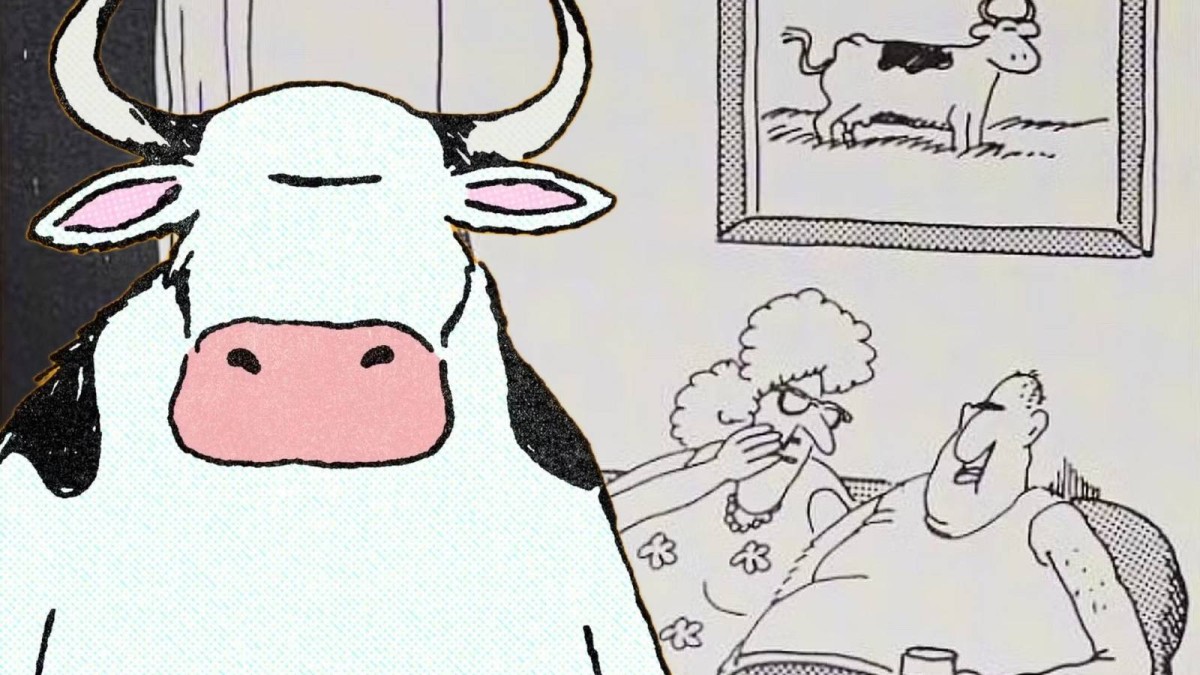
Gary Larson’s legendary comic strip The Far Side is a comedic goldmine that holds a surreal mirror up to human nature. More often than not, this is through the masterful use of creatures from the animal kingdom. Larson took a sharp detour into the absurd by forcing humans to look at their everyday habits through the eyes of various animals.
Consequently, Larson’s genius lay in a simple yet effective role reversal. By elevating animals to observant critics of human life, he effortlessly exposed the bizarre, ritualistic, and unusual quirks that people are oblivious to on a daily basis. What seems completely normal to one person looks completely unhinged from another perspective.
On this basis, this article highlights 10 Far Side comics that use animals to expose humanity’s weirdest habits, ranking among the absolute best animal-perspective gags in the comics. The animals do not merely observe humans but also point out the absurdity of the human experience, turning it into pure comedy gold.
10 “Hey, bucko…I'm through begging."

Humans often forget that, despite being caretakers for their pets, animals ultimately don’t understand what is best for them. A person may walk their dog, take it to the vet, and put it on a diet, but the dog will not understand that this is what is best for it; from its perspective, it just seems like a big hassle.
This comic plays on the expectation that humans have that dogs would beg incessantly for food, landing a hilarious punchline: a dog, fed up with begging, brandishes a gun at its owner. The joke is doubly funny because the overweight owners have a full meal on the table, while the dog is likely starving.
9 “Well, foolish mortals...” (Ants at a Picnic)

Ants at a Picnic turns a minor warm-weather nuisance into an epic tale of conquest and vulnerability. The comic shows a suburban family laying out a lavish picnic on a checkered blanket in the park. Beneath the grass, an ant drill sergeant addresses thousands of troops: “Gentlemen, the time has come. The blanket is spread.”
Naturally, the comic acts as a sharp satire of human arrogance and a false sense of dominance over the environment. While the family was gearing up for a peaceful picnic, the ants were actively planning a tactical strike beneath their feet. This panel shows that the notion that humans are at the top of the food chain has unintended consequences.
8 The Duck Watching You (Anatidaephobia)

“Anatidaephobia” is a classic example of comedic absurdism that pushes human psychological fragility to its limit. The comic shows a lone, stressed man sitting at his office desk and trying to work. At the same time, the caption defines a fictional, highly specific psychological condition: “Anatidaephobia: The fear that somehow, somewhere, a duck is watching you.”
The panel shows how irrational human paranoia and anxiety often seem to come out of nowhere. While animals focus only on real, tangible threats, humans often invent scenarios and battle enemies that exist only in their own thoughts. Larson highlights how often humans obsess over completely harmless, nonsensical situations, panicking over things that have no real-world consequences.
In conclusion, the gag’s genius lies in the contrast between the man’s intense anxiety and the harmless nature of what he fears. A duck is one of the least threatening animals in the animal kingdom, yet it is enough to strike fear into the heart of a grown man, creating pure comedic gold.
7 Human playing cards with a bear - ‘Never trust a grizzly.’

Larson’s signature dark humor highlights a morbid human habit: stereotyping people by race. In the comic, two men are playing cards with a bear that is cheating by “dealing from the bottom of the deck”. After discovering this, one man points a pistol at the bear and says, “My papa always said, ‘Never trust a grizzly.’
The panel suggests racism and profiling in the man’s negative view of bears before meeting one, shaped by his father. It satirizes how racist ideologies are passed to children early, teaching them to view others negatively. The humor comes from the absurdity of him ending up playing cards with the bear.
It is also laughable that, because one bear cheated at a card game, he concludes that his father was right to hate bears. This plays on the fact that humans are constantly seeking information to justify flimsy preconceived notions.

Canine social blunders hilariously explores one of humans’ greatest fears: social anxiety and saying the wrong thing at the wrong moment in a crowded room. In the comic, dogs are having casual conversations, with drinks in their paws, when one blurts out, “Say, I just found out, yesterday I’ve got worms."
Moreover, the comic masterfully exposes and mocks the human tendency to overshare at social gatherings, especially when alcohol is involved. When the music halts, and everyone turns to look at the dog, it becomes a living nightmare for people who mistakenly use oversharing as a conversation starter.
5 “Keep your eye on that guy…He hasn’t said or bought a thing for over an hour.”

Larson does not shy away from the dark, morbid habits humans possess, and this comic is a prime example. A dog in a trench coat wanders through a butcher’s shop while meat sits in the display case. The two butchers behind the case discuss the dog's strange behavior, already profiling him as a thief.
Customer profiling is a problem that many people of color have to go through. Many minorities get judged the moment they enter a store merely because their skin tone is associated with thievery. Though the dog has seemingly done nothing wrong, the butchers have already labeled him a thief in their minds
This comic humorously highlights a real-world problem using a dog in a trench coat. The dog may look suspicious, but there is no way to know whether someone is a thief or a criminal unless they have committed the crime. Nonetheless, the comic urges readers to reflect on their personal biases.
4 “Beware of Doug”

“Beware of Doug” excels as a wonderful subversion of everyday suburban expectations through a single-letter swap. The comic depicts a traveling salesman approaching a front gate, expecting a typical warning about a guard dog. Instead, the sign reads “BEWARE OF DOUG,” and an average, meek man named Doug peeks out nervously from behind a tree on the front lawn.
The brilliance of the comic lies in its satire of human territorialism and suburban paranoia. Larson injects comedy into what would usually be an anxiety-inducing situation, flipping the premise on its head by replacing a human man with a guard dog. This joke highlights how absurdly protective humans can be over a few square feet of private property.
3 “Cat Fud” / The Far Side Cat Decoder

In this Far Side comic, a scientist invents a helmet that translates cat thoughts into English, and while he expects profound wisdom, the readout translates “Meow meow meow meow... I hate you all” as the cat looks blankly at the wall. This joke is a hilarious strike at human vanity and the tendency to project intelligence and personalities onto their pets.
Larson completely shatters the notion that cats are secretive intellectual masterminds plotting something grand. He reveals the stark truth: behind those colorful, mystical eyes is a brain driven almost entirely by basic instinct, food cravings, and mild indifference. The panel blends sci-fi absurdity with relatable truth and builds to a hilarious punchline.
2 What Dogs Hear vs. What Humans Say

In “What Dogs Hear vs. What Humans Say,” Gary Larson brilliantly pokes fun at the one-sided nature of pet ownership. The panel contrasts a human owner delivering a long, serious reprimand to his dog Ginger (“Okay, Ginger! I’ve had it! You stay out of the garbage!” with the dog’s internal translation: “Blah blah GINGER blah blah blah GINGER.”
The comic mocks people’s habit of anthropomorphizing animals. People often vent, lecture, or confide in pets that cannot understand them. Dogs are usually just filtering noise for visual cues, tone, and their own name. The joke is that the human ego makes us imagine animals as furry therapists.
1 “Cow Stand upright... ‘Car!”

“Cow Stand Upright... ‘Car!” is one of The Far Side’s quintessential panels. Its simple execution conceals sharp social satire: a pasture full of cows stands casually on two legs, chatting like neighbors at a backyard barbecue, then drops back onto all fours and chews grass mindlessly the moment a car approaches.
Larson forces readers to face the mundane reality of life. At its core, the comic critiques performative behavior and social code-switching. Similar to people who straighten their posture or adjust their speech when authority figures enter the room, the cows maintain a dim-witted facade solely to keep up appearances for passing strangers.
The comic also makes fun of humanity’s self-centered assumption that nature stops happening the moment we turn our backs. Ultimately, the comic cements its status as a masterclass in satire and comedic expression, and it remains one of Larson’s most beloved gags because it turns our collective anxiety over surveillance and authenticity into an absurdly relatable joke.
Writer Gary Larson
Colorist Gary Larson
What's Your Reaction?
 Like
0
Like
0
 Dislike
0
Dislike
0
 Love
0
Love
0
 Funny
0
Funny
0
 Wow
0
Wow
0
 Sad
0
Sad
0
 Angry
0
Angry
0








Comments (0)