

10 Perfect Vampire Movies That Are Pure Cinema
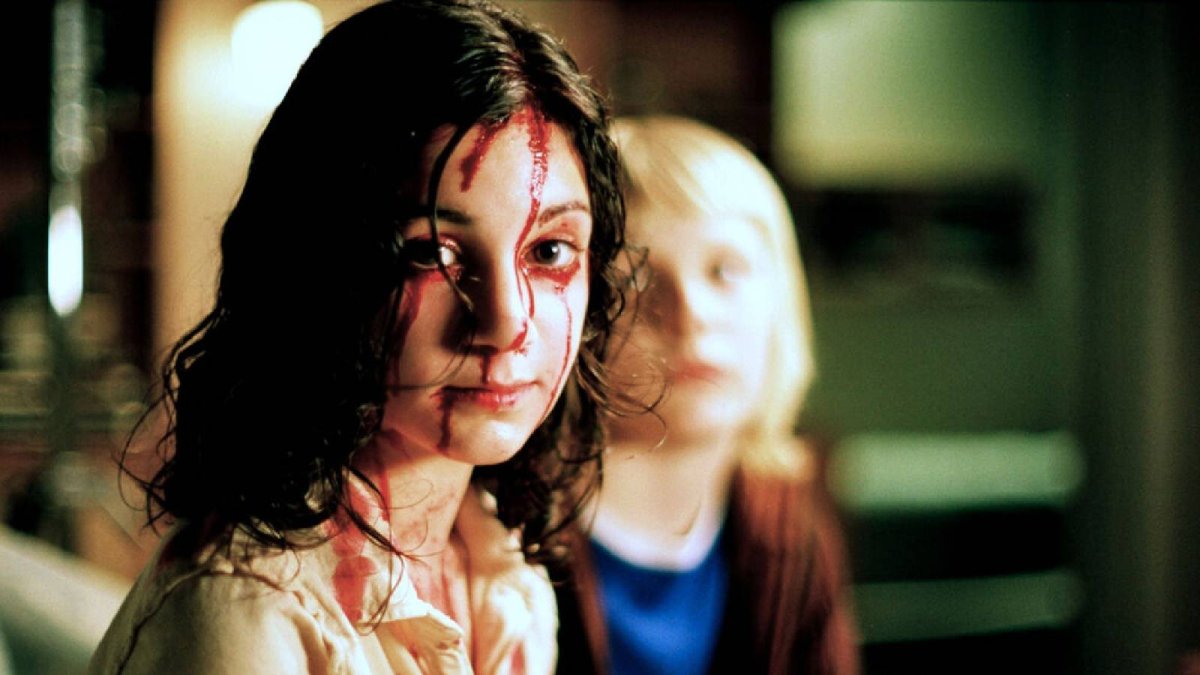
For a long time, I thought vampire movies had a serious repetition problem. Somebody gets bitten, somebody spends half the film staring sadly out a window, almost everytime somebody (a vampire) falls in love with the wrong person (a human), and eventually somebody ends up dead. After a while, a lot of them started blending together in my memory.
The films on this list broke that pattern. These ten films represent some of the most visually striking, ambitious, and unforgettable examples the genre has ever produced, which is exactly why they still feel so alive decades after many of their contemporaries disappeared.
10 ‘Only Lovers Left Alive’ (2013)
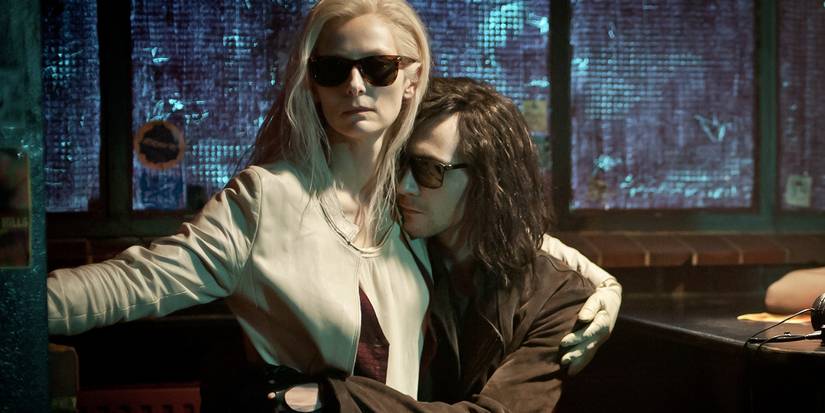 Image via Recorded Picture Company
Adam (Tom Hiddleston) and Eve (Tilda Swinton) have been together for centuries, and by the time the film begins, they are already exhausted by most of modern life. Adam spends his nights recording music in Detroit and avoiding people whenever possible, while Eve arrives from Tangier carrying books, stories, and enough curiosity to make the world seem interesting again. Their relationship is unusually quiet for a vampire film. They are not chasing victims or fighting enemies. Most of the time they are simply talking, listening to music, driving through empty streets, and trying to find meaning in another century of existence.
What stays with me is how much attention the film gives to small things. Adam can spend several minutes discussing a scientist he admires, and Eve can become excited over a stack of old books. Even the cities matter because Detroit and Tangier feel worn down and beautiful in completely different ways. The vampire story almost becomes secondary to two immortal people trying to hold onto the things they still love.
9 ‘Near Dark’ (1987)
 Image via De Laurentiis Entertainment Group
Everything changes for Caleb Colton (Adrian Pasdar) after one night with Mae (Jenny Wright), a drifter who bites him before disappearing into the darkness. By sunrise, Caleb can no longer stand daylight, and he is forced into a nomadic vampire group that travels across the American Southwest. The gang includes Jesse Hooker (Lance Henriksen), Diamondback (Jenette Goldstein), and Severen (Bill Paxton), whose idea of passing time usually involves violence, intimidation, and leaving bodies behind.
A lot of vampire films surround their creatures with castles, ancient legends, or aristocratic manners. Near Dark drops them into motels, highways, and roadside bars instead. One of the most memorable scenes takes place inside a crowded bar where Severen spends the evening terrorizing strangers simply because he enjoys it. Caleb never fully fits into that lifestyle, which gives the story its tension. While the rest of the group accepts endless killing as normal, he keeps looking for a way back to the life he had before Mae found him.
8 ‘Bram Stoker’s Dracula’ (1992)
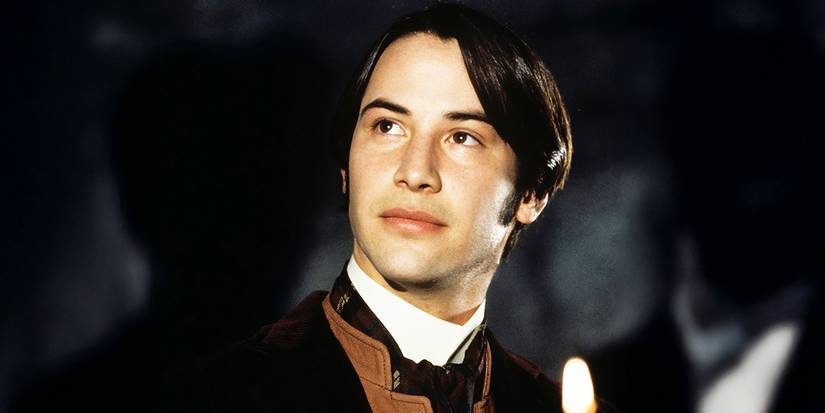 Image via Columbia Pictures
Jonathan Harker (Keanu Reeves) travels to Transylvania expecting a routine legal assignment and quickly realizes Count Dracula (Gary Oldman) is nothing like the wealthy client he imagined. The castle feels isolated from the rest of the world, strange things happen at night, and Dracula becomes increasingly interested in Mina Murray (Winona Ryder) after seeing her photograph. Long before the story reaches London, the film already feels dreamlike, as though reality itself is starting to bend around the Count.
Much of the film revolves around Dracula's obsession with Mina and his belief that she is connected to a love he lost centuries earlier. That idea gives the story a sadness that many vampire films never attempt. At the same time, Francis Ford Coppola fills almost every scene with elaborate costumes, shadows, candles, and practical effects that look handmade. Even people who dislike parts of the adaptation often remember individual images years later because there is so much visual imagination packed into nearly every sequence.
7 ‘A Girl Walks Home Alone at Night’ (2014)
 Image via Vice Films
Bad City looks like a place people forgot to leave. Oil pumps move endlessly in the distance, streets stay empty for long stretches, and most of the people still living there seem lonely in one way or another. Among them is Arash (Arash Marandi), a young man struggling with his father's debts and increasingly difficult life. Somewhere else in the city, a vampire known simply as The Girl (Sheila Vand) spends her nights wandering the streets in a black chador, watching the people around her.
The Girl is not interested in random victims. Drug dealers, abusers, and men who prey on others often attract her attention first. One scene involving a skateboard and an empty street somehow becomes as memorable as the horror moments because the film spends so much time creating a mood unlike anything else in the genre. It moves at its own pace and trusts silence far more than dialogue.
6 ‘Cronos’ (1993)
 Image via October Films
Everything begins when Jesús Gris (Federico Luppi), an elderly antiques dealer, discovers a strange mechanical device hidden inside a statue. The object, known as the Cronos device, was created centuries earlier by an alchemist searching for eternal life. When Jesús accidentally activates it, a metal needle pierces his skin and starts changing him in ways he does not immediately understand. His health improves, his energy returns, and he begins craving things that once meant nothing to him.
The film becomes increasingly sad because Jesús is not somebody chasing immortality. He already has a family, a granddaughter who adores him, and a quiet life he seems perfectly happy with. Dieter de la Guardia (Claudio Brook) desperately wants the device for himself, while his nephew Angel (Ron Perlman) spends much of the story carrying out his orders with growing frustration. As Jesús changes, the film keeps returning to his relationship with his granddaughter Aurora (Tamara Shanath), and those scenes give the story far more emotional weight than a traditional monster movie.
5 ‘Martin’ (1977)
 Image via Libra Films
Martin (John Amplas) arrives in a small Pennsylvania town to live with his elderly cousin Cuda (Lincoln Maazel), who is convinced the young man is a vampire. Martin insists that he is completely ordinary, though his behavior makes that difficult to believe. He stalks women, breaks into homes, and uses syringes to sedate his victims before drinking their blood. Unlike most vampire films, there are no fangs, supernatural powers, or ancient curses here. Everything Martin does could be explained through reality.
That uncertainty hangs over the entire film. Martin tells stories about another life that may or may not have happened, while Cuda treats him as a genuine monster sent from centuries ago. George A. Romero never rushes to answer who Martin really is. Instead, the film becomes a portrait of loneliness, obsession, and a young man who seems completely disconnected from the people around him. Even decades later, very few vampire movies feel this unsettling or this difficult to categorize.
4 ‘Let the Right One In’ (2008)
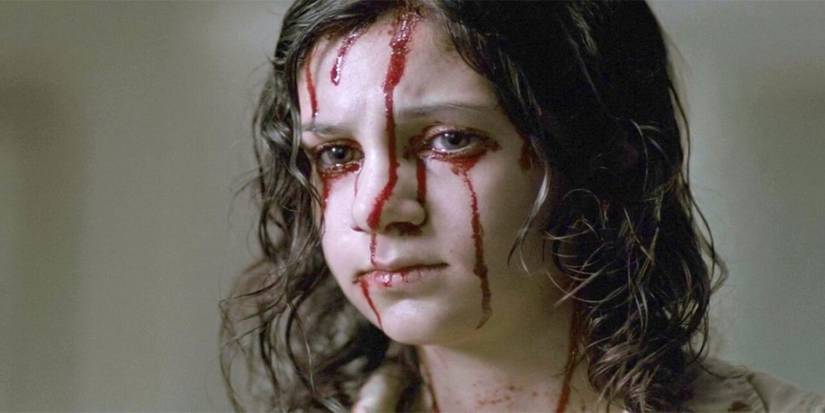 Image via Sandrew Metronome
Oskar (Kåre Hedebrant) spends most of his time alone. He is bullied at school, struggles to connect with other children, and often retreats into his own imagination. Then Eli (Lina Leandersson) moves into the apartment next door. She only appears outside at night, rarely seems bothered by the freezing weather, and immediately feels different from everybody else around her. Their friendship develops slowly through conversations, small moments of trust, and shared loneliness.
At the same time, a series of killings begins attracting attention throughout the area. Eli's connection to those murders becomes increasingly difficult to ignore, though the film never treats her as a simple villain. She remains a child in many ways, despite carrying burdens that nobody her age should understand. The swimming pool sequence near the end has become famous for good reason because it says almost everything about their relationship without showing very much directly. The film is violent when it needs to be, though most of its power comes from watching two isolated children find comfort in each other.
3 ‘Shadow of the Vampire’ (2000)
 Image via Lions Gate Films
During the production of Nosferatu in 1922, director F.W. Murnau (John Malkovich) becomes obsessed with creating the most realistic vampire film ever made. His solution is simple and completely insane: he hires a real vampire to play Count Orlok. Max Schreck (Willem Dafoe) joins the production, and at first the cast assumes he is merely an eccentric method actor. Before long, however, strange disappearances and unsettling behavior begin making that explanation harder to accept.
One of the film's greatest strengths is how seriously everyone treats the filmmaking process. Murnau remains so focused on finishing his movie that he keeps ignoring increasingly obvious danger around him. Meanwhile, Schreck often seems more interested in understanding ordinary human behavior than hiding what he is. Watching Dafoe move through scenes with equal parts curiosity, hunger, and confusion becomes one of the film's biggest pleasures. Instead of telling a vampire story directly, the film turns the making of a vampire movie into the horror story itself.
2 ‘Nosferatu the Vampyre’ (1979)
 Image via 20th Century Fox
When Jonathan Harker (Bruno Ganz) travels to meet Count Dracula (Klaus Kinski), the journey already feels wrong long before they meet. Villagers warn him not to continue, the landscape grows increasingly empty, and Dracula's castle appears almost abandoned by the rest of the world. Kinski plays Dracula as a deeply lonely figure rather than a powerful seducer. From his first scenes onward, he seems trapped inside centuries of isolation.
The relationship between Dracula and Lucy Harker (Isabelle Adjani) gradually becomes the center of the story. Dracula's attraction to her carries genuine sadness because he understands that immortality has left him completely cut off from normal human life. Werner Herzog spends a great deal of time on images that have little to do with plot and everything to do with atmosphere. Empty streets, silent rooms, and entire towns overtaken by plague give the film a strange feeling that never leaves. It is a vampire story, though it often feels closer to a meditation on loneliness and decay.
1 ‘Nosferatu’ (1922)
 Image via Film Arts Guild
More than a century later, Nosferatu still contains images that instantly come to mind when people think about vampires. Count Orlok (Max Schreck) emerging from the darkness, standing rigid in a doorway, or moving through empty spaces remains unsettling because the character looks unlike almost every vampire that followed. He does not charm people, blend into society, or hide behind elegance. He looks sickly, animalistic, and genuinely disturbing.
The story itself follows Thomas Hutter (Gustav von Wangenheim) as he travels to Orlok's castle and unknowingly helps bring the creature back to his hometown. Once Orlok arrives, disease begins spreading through the city, and fear quickly follows. Many modern vampire films focus heavily on romance, action, or mythology. Nosferatu strips things down to something much simpler and more primal. It is built around dread. Even with silent-film limitations, shadows, movement, and composition do so much work that many scenes remain more memorable than sequences from horror films made a hundred years later.
Collider Exclusive · Horror Survival Quiz Which Horror Villain Do You Have the Best Chance of Surviving? Jason Voorhees · Michael Myers · Freddy Krueger · Pennywise · Chucky
Five killers. Five completely different ways to die — if you're not smart enough, fast enough, or self-aware enough to avoid it. Only one of them is the villain your particular set of instincts gives you a fighting chance against. Eight questions will figure out which one.
🏕️Jason
🔪Michael
💤Freddy
🎈Pennywise
🪆Chucky
TEST YOUR SURVIVAL →
01
Something feels wrong. You can't explain it — you just know. What do you do? First instincts are the difference between the survivor and the first act casualty.
ALeave immediately. I don't need to understand a threat to respect it. BStay quiet and observe. If I can see it, I can understand it. If I can understand it, I can avoid it. CStay awake. Whatever this is, I am not going to sleep until I feel safe again. DConfront it directly. Fear grows in the dark — I'd rather know what I'm dealing with. ECheck everything, trust nothing. The threat might be closer than I think — and smaller.
NEXT QUESTION →
02
Where are you most likely to find yourself when things go wrong? Setting is everything in horror. Where you are determines which rules apply.
ASomewhere remote — a cabin, a campsite, off the grid and away from people. BA quiet suburban neighbourhood where nothing ever happens. Except tonight. CIn my own head — the most dangerous place of all, depending on what's already in there. DWherever children are — because something about this place attracts the worst things. ESomewhere ordinary — a house, a toy store, a place where the last thing you'd expect is a threat.
NEXT QUESTION →
03
What is your most reliable survival asset? Every survivor has a quality the villain didn't account for. What's yours?
APhysical fitness — I can run, I can swim, I can outlast something that relies on brute persistence. BSpatial awareness — I always know the exits, the hiding spots, the fastest route out. CPsychological resilience — I've faced my worst fears before. They don't have the same power over me. DEmotional steadiness — I don't panic. Panic is what gets you caught. EScepticism — I don't underestimate threats because of how they look. Size is irrelevant.
NEXT QUESTION →
04
What kind of fear is hardest for you to fight through? Knowing your weakness is the first step to not dying because of it.
AThe unstoppable — something that will not stop, cannot be reasoned with, and is always getting closer. BThe invisible — a threat I can feel but can't locate, watching from somewhere I can't see. CThe psychological — something that uses my own mind and memories against me. DThe unknowable — something ancient, shapeless, that feeds on the fear itself. EThe mundane — a threat so ordinary-looking that no one will believe me until it's too late.
NEXT QUESTION →
05
You're with a group when things start going wrong. What's your role? Horror movies are brutally clear about who survives group situations and who doesn't.
AThe one who says "we need to leave" first — and means it, even when no one listens. BThe one who stays quiet, watches the others, and figures out the pattern before anyone else does. CThe one who holds the group together when panic sets in — because someone has to. DThe one who asks the questions nobody wants to ask — because ignoring them gets people killed. EThe one who takes the threat seriously when everyone else is laughing it off.
NEXT QUESTION →
06
What's the horror movie mistake you're most likely to make? Honest self-assessment is a survival skill. Denial is not.
AGoing back for someone — I know I shouldn't, but I can't leave them behind. BAssuming I'm safe once I've found a hiding spot. That's when it finds me. CFalling asleep when I absolutely cannot afford to. Exhaustion is its own enemy. DLetting my curiosity override my instincts — I always need to understand what I'm dealing with. EDismissing the threat because of how it looks. That's exactly what it wants.
NEXT QUESTION →
07
What's your best weapon against something that can't be stopped by conventional means? Every horror villain has a weakness. The survivors are always the ones who find it.
AThe environment itself — I use the terrain, the water, the geography against it. BPatience — I wait, I watch, and I strike at the one moment it doesn't expect. CLucidity — if I can stay in control of my own mind, it loses its primary weapon. DCourage — facing it directly, refusing to run, taking away the fear it feeds on. EImprovisation — I use whatever's at hand, however unconventional. Creativity over brute force.
NEXT QUESTION →
08
It's the final scene. You're the last one standing. How did you make it? The final survivor always has a reason. What's yours?
AI kept moving. I never stopped, never hid for too long, never let it corner me. BI figured out the pattern before anyone else did — and I used it against the thing following it. CI stayed awake, stayed lucid, and refused to give it the one thing it needed most. DI stopped being afraid of it. And the moment I did, everything changed. EI took it seriously from the start — and I never once made the mistake of underestimating it.
REVEAL MY VILLAIN →
Your Survival Odds Have Been Calculated Your Best Chance Is Against…
Your instincts, your strengths, and your particular way of thinking under pressure point to one villain you actually have a fighting chance against. Everyone else — good luck.
Jason Voorhees
Jason is relentless, but he is also predictable — and that is the gap you would exploit.
- He moves in straight lines toward his target. He doesn't strategise, doesn't adapt, doesn't outsmart. He simply pursues.
- Your ability to keep moving, use the environment, and resist the panic that freezes most victims gives you a genuine edge.
- The Crystal Lake survivors were always the ones who stopped running in circles and started thinking about terrain, water, and distance.
- You think like that. Which means Jason, for all his indestructibility, would face someone who simply refused to be where he expected.
Michael Myers
Michael watches before he moves. He is patient, methodical, and almost impossible to detect — until it's too late for anyone who isn't paying close enough attention.
- But you are paying attention. You notice the shape in the window, the car parked slightly wrong, the silence where there should be sound.
- Michael's power lies in the invisibility of ordinary suburbia — the fact that nothing ever looks wrong until it already is.
- Your spatial awareness and instinct to map every room, every exit, and every shadow before you need them is precisely the quality Laurie Strode had.
- You are not a victim waiting to happen. You are someone who already suspects something is wrong — and acts on it.
Freddy Krueger
Freddy wins by getting inside your head — using your own fears, your own memories, your own subconscious as weapons against you. That strategy requires a target who can be destabilised.
- You are harder to destabilise than most. You've faced uncomfortable truths about yourself and you haven't looked away.
- The survivors on Elm Street were always the ones who understood what was happening and chose to face it rather than flee from it.
- Freddy's greatest weakness is that his power evaporates in the presence of someone who refuses to give him the fear he feeds on.
- Your psychological resilience — the ability to stay grounded when reality itself becomes unreliable — is exactly the quality that keeps you alive here.
Pennywise
Pennywise is ancient, shapeshifting, and feeds on terror — but it has one critical vulnerability: it cannot function against someone who genuinely stops being afraid of it.
- The Losers Club didn't survive because they were braver than everyone else. They survived because they faced their fears together, and faced them honestly.
- You ask the questions others avoid. You look directly at what frightens you rather than turning away.
- That directness — the refusal to let fear fester in the dark — is Pennywise's worst nightmare.
- It chose the wrong target when it chose you. You are exactly the kind of person whose fear tastes like nothing at all.
Chucky
Chucky's greatest advantage is that nobody takes him seriously until it's already too late. He exploits the gap between how something looks and what it actually is.
- You don't have that gap. You take threats seriously regardless of how they present — and you never make the mistake of underestimating something because of its size or appearance.
- Chucky relies on surprise, on the delay between recognition and response. You close that delay faster than almost anyone.
- Your instinct to treat every unfamiliar thing with appropriate scepticism — rather than dismissing it because it seems absurd — is the exact quality that keeps you breathing.
- Against Chucky, not laughing is already winning. You are very good at not laughing.
↻ RETAKE THE QUIZ

Nosferatu
Release Date February 16, 1922
Runtime 95 Minutes
Director F. W. Murnau
Writers Henrik Galeen
What's Your Reaction?
 Like
0
Like
0
 Dislike
0
Dislike
0
 Love
0
Love
0
 Funny
0
Funny
0
 Wow
0
Wow
0
 Sad
0
Sad
0
 Angry
0
Angry
0







Comments (0)