

10 Years Later, Hasselblad’s Mirrorless Gamble Has Paid Off In a Huge Way


Hasselblad’s latest financial statements offer further proof that it is a company in rebirth, and that Hasselblad’s decision to join the mirrorless medium format market was exceptionally shrewd and well-timed.
Since Hasselblad is not a public company, it doesn’t release financial information in the same way as most of its competitors. However, the company still shares annual reports, as spotted by Photo Rumors. Looking at high-level numbers for the past six years, 2020 through 2025, Hasselblad’s sales revenue and operating profit have increased consistently and significantly.
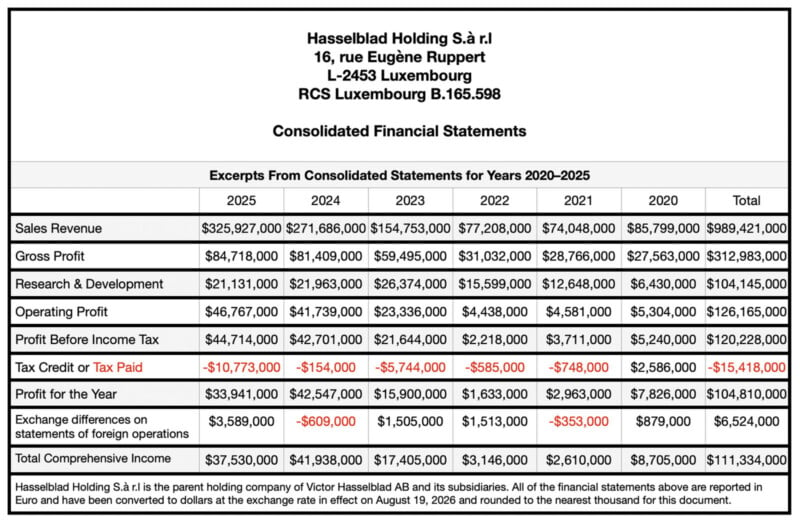 Hasselblad’s consolidated financial statements for 2020-2025. This image was shared on DPReview‘s forums by the user TechTalk2, who also discussed and analyzed some key products Hasselblad released from 2020 through 2025.
While the chart above does not capture Hasselblad’s entire mirrorless era, which started in 2016 with the launch of the 50-megapixel X1D, it does capture the company’s 100-megapixel era, which began in earnest with 2022’s X2D 100C. As the numbers show, this proved to be a big deal for the legendary Swedish photo company’s bottom line.
After three years of middling operating profits, ranging from $4.4 to $5.3 million annually, Hasselblad’s fortunes turned in 2023 with a $23.3 million operating profit, the first full year of its X2D 100C being on the market. 2024 was much better, with a $41.7 million profit. 2025 proved even better still, with the company, buoyed in part by a very successful X2D II 100C launch, posting an operating profit of $46.8 million. The company expects to continue increasing its profits and revenues in the coming years.
Naturally, sales revenue increased in similar ways over those same years, going from the $74 to $85.8 million range annually from 2020 through 2022 to $325.9 million in 2025. Hasselblad’s revenue was much higher last year than it was in 2020, 2021, and 2022 combined.
Of course, Hasselblad has also been releasing some great lenses over the past few years, and we know that lenses typically have higher profit margins than cameras. These aren’t to be discounted, but I think it’s immediately clear that the efforts the company made with its X2D 100C and X2D II 100C cameras have been very well received by serious photographers.
Then there’s the DJI-sized elephant in the room. Back when DJI upped its minority stake in Hasselblad to a majority one in 2017, Hasselblad’s name began appearing in many DJI products, including its class-leading drones. Hasselblad has also been heavily involved in the smartphone industry, including with Oppo and the now mostly-dead OnePlus.
DJI’s influence over Hasselblad has certainly been multifaceted, but there’s no question that the company’s R&D power has made the X2D 100C and especially its recent successor, the X2D II 100C, better and more performant cameras. The X2D II 100C in particular is a technological tour de force, delivering industry-leading in-body image stabilization, improved autofocus, and robust HDR photography support.
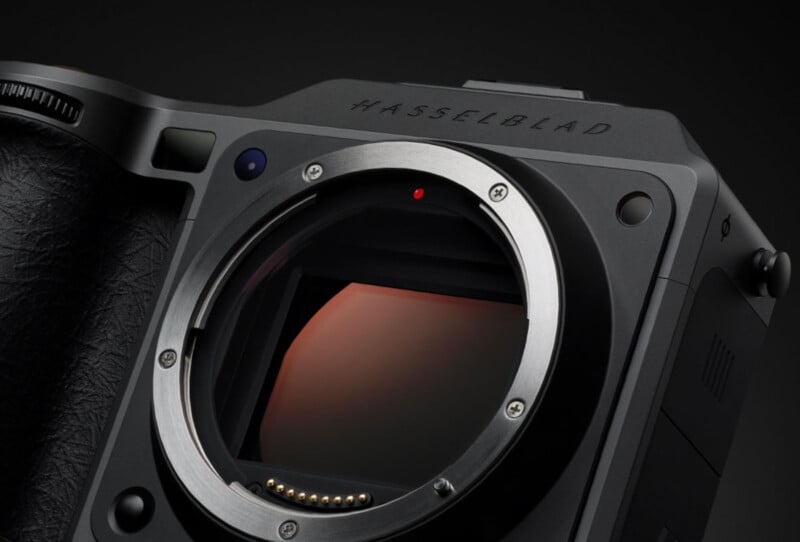 Hasselblad X2D II 100C | Hasselblad
Annual financial statements do not always tell a complete picture, and many financial complexities make it nearly impossible to say with complete certainty whether a company is healthy at any one point. However, in Hasselblad’s case, the trends are clear. The company is in a very healthy position, and it has only gotten better in recent years.
When Hasselblad launched the original X1D in 2016, it was not immediately clear that it was a good decision. The medium format market has always been niche, and a mirrorless camera was a major departure for a company carrying the baggage of its own rich legacy.
But with the benefit of hindsight and a decade of performance, it’s obvious that Hasselblad made the right choice, or at least the one that gave the company the best chance to survive and grow. I’m sure H6D owners and fans of “true” medium format image sensors aren’t thrilled, though.
Image creditsHasselblad
Affiliate Disclosure PetaPixel articles may include affiliate links; we may earn a commission if you buy through one.
What's Your Reaction?
 Like
0
Like
0
 Dislike
0
Dislike
0
 Love
0
Love
0
 Funny
0
Funny
0
 Wow
0
Wow
0
 Sad
0
Sad
0
 Angry
0
Angry
0












Comments (0)