

Photographer Points His Lens At the Growing US Surveillance Camera Network
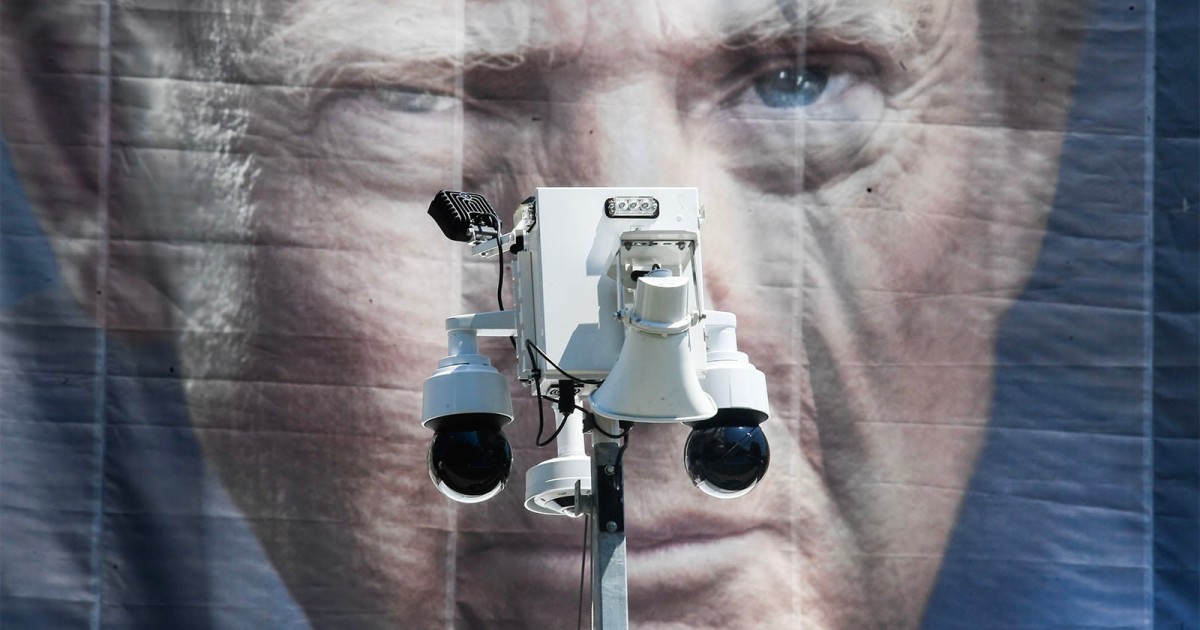
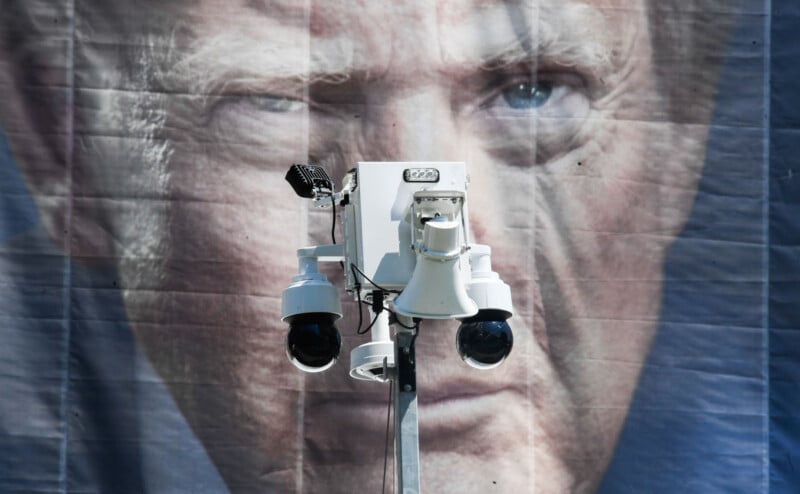 A security system watches over an intersection in Washington, DC, with a portrait of President Donald Trump visible in the background | Photo by Matthew Hatcher
As debate intensifies over surveillance cameras, a photojournalist in Philadelphia has set out to document the omnipresent devices monitoring us.
“In any major urban area, we are under near-constant surveillance,” says independent photographer Matthew Hatcher. “Once you start looking, you will see a camera on nearly every street corner, in parks, stores, and private homes… and more when you’re in major metropolitan areas.”
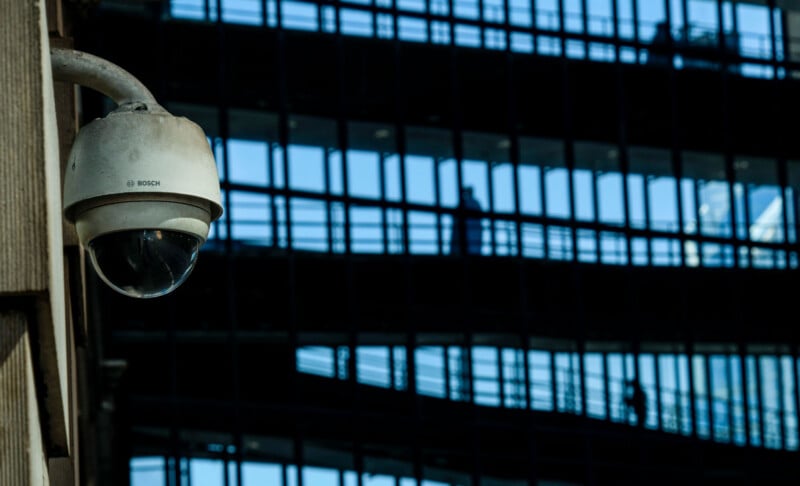 A security camera near Thomas Jefferson University Hospital in Philadelphia, Pennsylvania records the comings and goings of vehicles and pedestrians | Photo by Matthew Hatcher
The average U.S. city had 11 surveillance cameras per 1,000 people, according to research published by Comparitech. The most-watched city, Atlanta, had more than 124 cameras per 1,000 people.
Proponents say surveillance cameras and license plate readers enhance security, generate valuable evidence, enable quicker emergency response, reduce costs, and assist compliance with regulations.
Critics worry about police-state powers, erosion of privacy, over-reliance on technology, and potential for error, hacking, and misuse.
Debate about surveillance tactics, safety, and privacy is generating intense coverage, as shown by reporting from NBC, NPR, and the ACLU.
Who Is Matthew Hatcher?
Photos by Hatcher appear worldwide via news assignments from Bloomberg, AFP, Getty Images, Reuters, Huffington Post, and more.
In 2020, Detroit police officers fired rubber bullets at photojournalists Hatcher, Nicole Hester, and Seth Herald, who were covering protests after the death of George Floyd. The state’s case against an officer was dismissed in 2024. A judge ruled that witnesses were not available and the photographers had moved out of Michigan, according to U.S. Press Freedom Tracker.
Reuters “Pictures of the Day” gallery on December 11, 2024, led with Hatcher’s photo of murder suspect Luigi Mangione arriving at a courthouse for an extradition hearing. Hatcher told PetaPixel that Mangione was in his camera view for seven seconds.
Recent photography assignments have included coverage of immigration enforcement, the Pennsylvania primary election, and the World Cup. Hatcher’s image of a soccer fan from Ecuador was featured in Reuters’ Best World Cup photos from Day 4.
After graduating from college in 2013, Hatcher worked for newspapers in Indiana and Ohio, earning recognition from The Associated Press and the Ohio News Photographers’ Association. He relocated to Philadelphia in January 2024.
Focus on Surveillance Cameras
In 2025, as Hatcher covered protests in Washington, DC, New Orleans, and Philadelphia, he began thinking about police use of facial recognition and data tracking.
At year’s end, Hatcher noticed in a short walk to his gym that he was observed by security cameras.
“I became aware in that moment that we, as American citizens, are not being monitored just at protests or by the police,” recalls Hatcher.
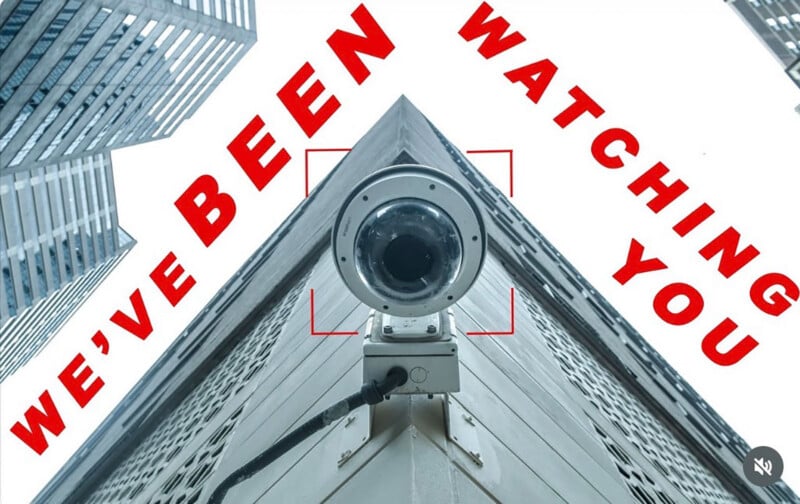
Hatcher has created a self-published booklet (zine) documenting surveillance cameras and the spaces they monitor: “We’ve Been Watching You.” Readers can request a copy here.
Hatcher’s takeaways:
- Surveillance technology can help solve crime, locate missing persons, and enhance safety but also create temptation for abuse
- Misuses include tech-driven mistaken identifications and authorities exploiting license plate reader systems to stalk romantic partners and ex-partners
- Irony: when Hatcher was growing up, he heard U.S. criticism of totalitarian regimes using mass surveillance
- Singling out President Trump is narrow thinking: “What surprises me is that many people seem to think this is an issue simply within the current administration, when it has been building and growing under both Republican and Democratic administrations.”
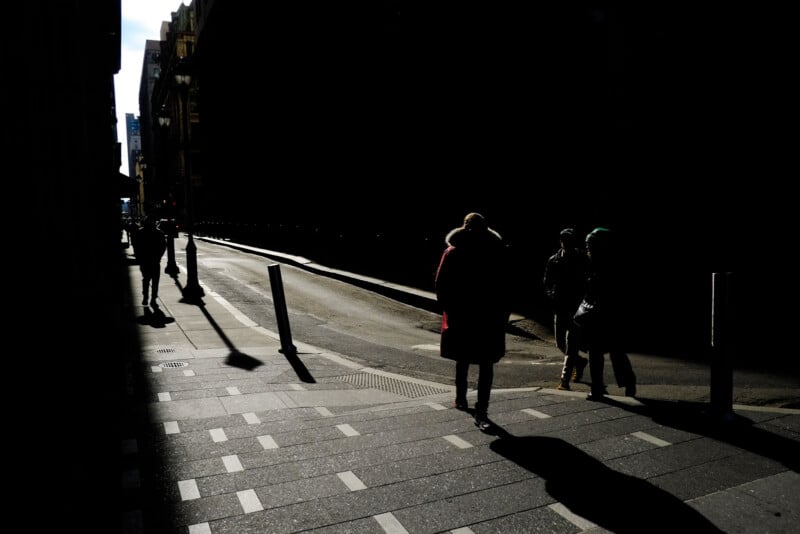 Pedestrians walk near City Hall in Philadelphia, Pennsylvania. In 2024, the City of Philadelphia operated a network of 7,000 security cameras across the city. | Photo by Matthew Hatcher
What’s Next?
Hatcher intends to produce a three-part series of zines. His next topic, after mass surveillance, is militarization of police in the United States and abroad.
Affiliate Disclosure PetaPixel articles may include affiliate links; we may earn a commission if you buy through one.
What's Your Reaction?
 Like
0
Like
0
 Dislike
0
Dislike
0
 Love
0
Love
0
 Funny
0
Funny
0
 Wow
0
Wow
0
 Sad
0
Sad
0
 Angry
0
Angry
0










Comments (0)