

18 Years Later, The Definitive 2000s Gothic Cult Classic is Still a Divisive Guilty Pleasure

Published Oct 28, 2026, 6:00 AM EDT
A forbidden love triangle like no other
 Image: Viz Media
Twilight became a cultural phenomenon in part because it tapped into the adolescent fantasy of all-consuming first love. The messy, often toxic love triangle at the center of Twilight only enhanced its appeal, with Bella Swan serving as a relatable blank-slate protagonist caught between a vampire and a werewolf.
The anime equivalent of Twilight also centers on a messy love triangle in a dark supernatural world, but it takes its story to even more controversial places. Based on Matsuri Hino’s classic shojo manga, the 2008 Studio Deen anime Vampire Knight is a unique relic of the late 2000s.
Like Twilight, it is a quintessential gothic romance that uses its dark academia setting to explore identity, class, trauma, and prejudice. The lore gets creepy and convoluted, deliberate in its intent to shock and entertain.
Vampire Knight is not a run-of-the-mill saga about forbidden love
 Image: Studio Deen
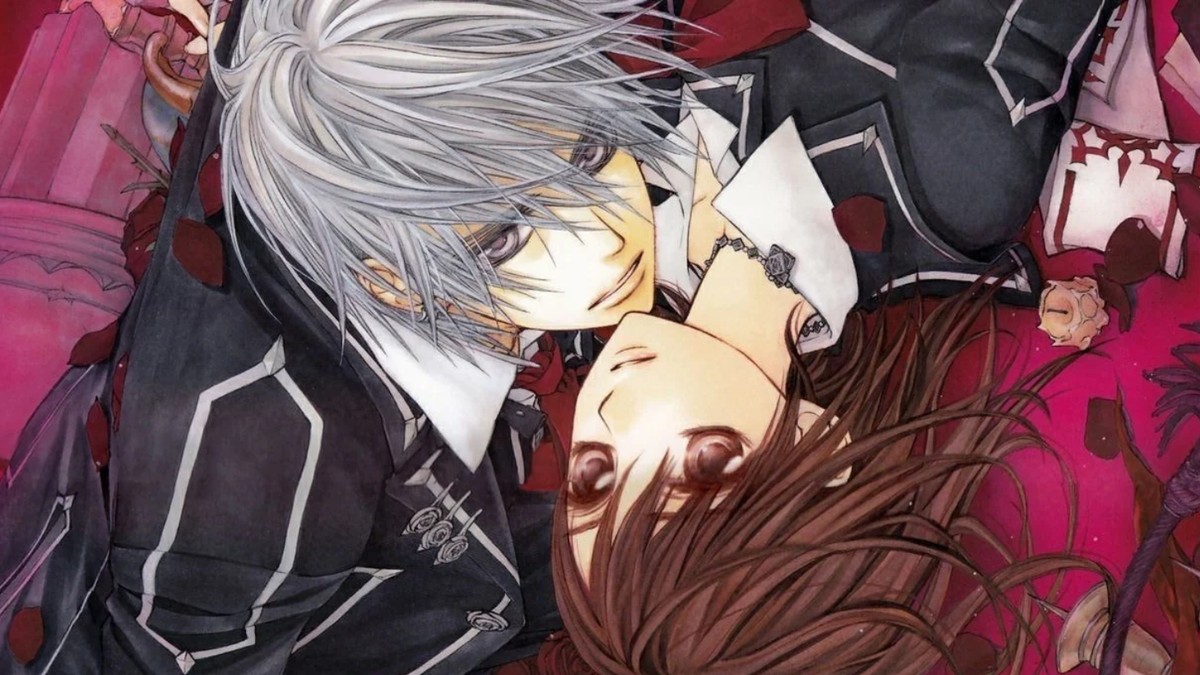
A girl named Yuki is attacked by vampires one winter night, but she is rescued by Kaname Kuran, a charismatic Pureblood vampire. Years later, Yuki becomes the guardian of Cross Academy, which reserves its Day classes for humans and Night classes for vampires. As Principal Kaien Cross’ adopted daughter, Yuki takes on the responsibility of protecting the Day class students in service of preserving the peace between the two species.
Yuki’s friend and fellow guardian, Zero Kiryu, seems opposed to this notion of peaceful coexistence, harboring resentment towards vampires. As a tense love triangle forms, Yuki has to deal with repressed memories while trying her best to preserve inter-species harmony.
 Image: Viz Media
If you think the Bella-Edward-Jacob love triangle is toxic, wait till you witness Yuki, Kaname, and Zero’s dynamic in Vampire Knight. Yuki is susceptible to manipulation and is constantly treated like a pawn in a messed-up game of chess. This severely limits her agency, adding fuel to her turbulent bond with the two men. Yuki and Kaname share a problematic relationship that spills over into pseudo-incestuous territory, which is further complicated by romantic ideation.
Zero, on the other hand, wrestles with internal turmoil to protect Yuki, evolving into Kaname’s angst-ridden archenemy. These relationships are defined by drama, chaos, and eroticism, forever changing the definition of adolescence in a shojo romance.
There’s more to Vampire Knight than meets the eye
 Image: Studio Deen
It’s tempting to dismiss Vampire Knight as yet another genre entry that dabbles in disturbing shock value. While the story can be classified as a guilty pleasure, there’s much to be gleaned from this complex Gothic horror about the terrifying ordeal of growing up.
Gothic horror has always explored what’s considered taboo. Titles like The Turn of the Screw and The Fall of the House of Usher deal with unsavory themes that explore the darkest recesses of the human mind. Vampire Knight does the same with its central theme of predatory bloodlust, where the act of feasting on someone’s blood is both violent and intimate. These psychosexual themes take surprising, noxious turns, where romantic love is defined as an inherently traumatic sentiment. This, however, makes sense within the framework of Gothic romance, where everything from Rebecca to Wuthering Heights operates with the tropes of forbidden love and obsessive feelings.
 Image: Viz Media
Cross Academy also becomes the perfect Gothic horror setting, replete with imposing architecture and stained-glass windows that reflect the supernatural overtones of the Night classes. Moreover, not all vampires are deemed equal, as Purebloods perch at the top of the food chain. Anyone they “turn” carries a high risk of becoming a feral, mindless monster that is eventually hunted down. Purebloods can also manipulate those around them, robbing both vampires and humans of bodily autonomy. Concepts of “purity” and societal hierarchy are questioned, as supernatural powers alone do not make a vampire invulnerable. The threat of going feral, and by extension, becoming a social pariah, looms large over low-level vampires.
Vampire Knight isn’t just a needlessly dramatic love story. It is a layered, if flawed, tale about class-based prejudice and what happens when we allow fear and resentment to jeopardize peaceful coexistence. What’s more, all of this is conveyed through gorgeous, intricate art that effectively captures the dramatic shojo aesthetic of the 2000s with a touch of the gothic. The results are staunchly divisive, yet uniquely unforgettable.
What's Your Reaction?
 Like
0
 Dislike
0
 Love
0
 Funny
0
 Wow
0
 Sad
0
 Angry
0









Comments (0)