

26 Years Later, The Greatest Opening Line In Horror History Remains Undefeated


Published Aug 24, 2026, 2:18 PM EDT
Evan Mullicane is the deputy editor of Screen Rant's comics and anime team. Having started as a writer for the comics team at the beginning of the Pandemic, Evan was swiftly promoted from writer to editor, and then from editor to lead of Screen Rant's newly established anime vertical.
Throughout his time with Screen Rant, Evan has made a handful of appearances at conventions such as Anime Expo and San Diego Comic-Con, and has interviewed some of the biggest names in Anime and Comics history.
In addition to editing anime and manga articles for Screen Rant, Evan is also a science fiction and fantasy author. In 2018 and 2019, his short story "The Demon's Mother" won honorable mentions from the Writers of the Future contest.
You can find Evan on Twitter @EvanDM and BlueSky @evandmu.bsky.socia
Sign in to your ScreenRant account
Though horror is, by its nature, an unpleasant genre of literature, that doesn't mean horror books have to be unapproachable. Successful horror authors like Stephen King, Dean Koontz, and Anne Rice rose to fame partially because their fiction, despite many grim or even outright disturbing moments, is easy to pick up and difficult to put down. While that readability is a solid path to building a literary empire and lasting legacy, it isn't the only option.
On the other end of the spectrum are horror novels that are actively hostile to their readership. Dense prose, endless parades of misery, and extreme gore are all surefire ways to ensure that a horror novel is anything but approachable. While this tactic will undeniably scare off a majority of readers, it can also attract a devoted fanbase who feel that more conventional horror doesn't go far enough. The success of this strategy varies wildly, with some authors' actual writing skills failing to deliver on the twisted ideas their books promise.
When it comes to actively hostile horror literature, though, one novel is still undefeated, and it's a book so good that even Stephen King called it the Moby Dick of horror.
House of Leaves Is A Dense Read That Is Intentionally Obtuse

Written by Mark Z. Danielewski, 2000's House of Leaves is a dense tome that uses every tool at its disposal to challenge the reader. The absolutely massive 709-page tome tells two stories, though really, it's three to four stories depending on reader interpretation.
Layer one is The Navidson Record, a found film horror documentary about a famous photographer, Will Navidson, moving into a house with his family. Though the house initially appears normal, it starts changing in increasingly bizarre and unexplainable ways. This eventually leads to a mysterious hallway appearing that makes no physical sense. As Navidson explores the depths of his house, he grows to suspect that some mysterious creature stalks the labyrinthine halls. The Navidson Record is basically The Backrooms two decades before The Backrooms.
Layer two is an academic paper written about The Navidson Record by a blind man named Zampanò. The old scholar writes about The Navidson Record as though it were a true pop-culture phenomenon, with a slew of academics writing about it and even late-night talk show hosts making cracks at the film's expense. Though there is some debate about The Navidson Record's authenticity, Zampanò asserts that the documentary is indeed a genuine representation of the supernatural.
Layer three of House of Leaves takes the form of footnotes in Zampanò's text by a young and unstable man named Johnny Truant. As Johnny becomes obsessed with Zampanò's paper, his mental state deteriorates. While Johnny is skeptical of Zampanò's story and is unable to find evidence that The Navidson Record exists, he comes to fear that the same creature lurking in the heart of Navidson's house on Ash Tree Lane has now come for him.
Then, as if all that wasn't enough, there is also a team of editors who are editing and correcting Johnny's work.
Understanding these layered stories is already a tall ask for casual readers, but making the task even more difficult is just how much Danielewski pushes the novel format.
House of Leaves Is Not An Easy Read

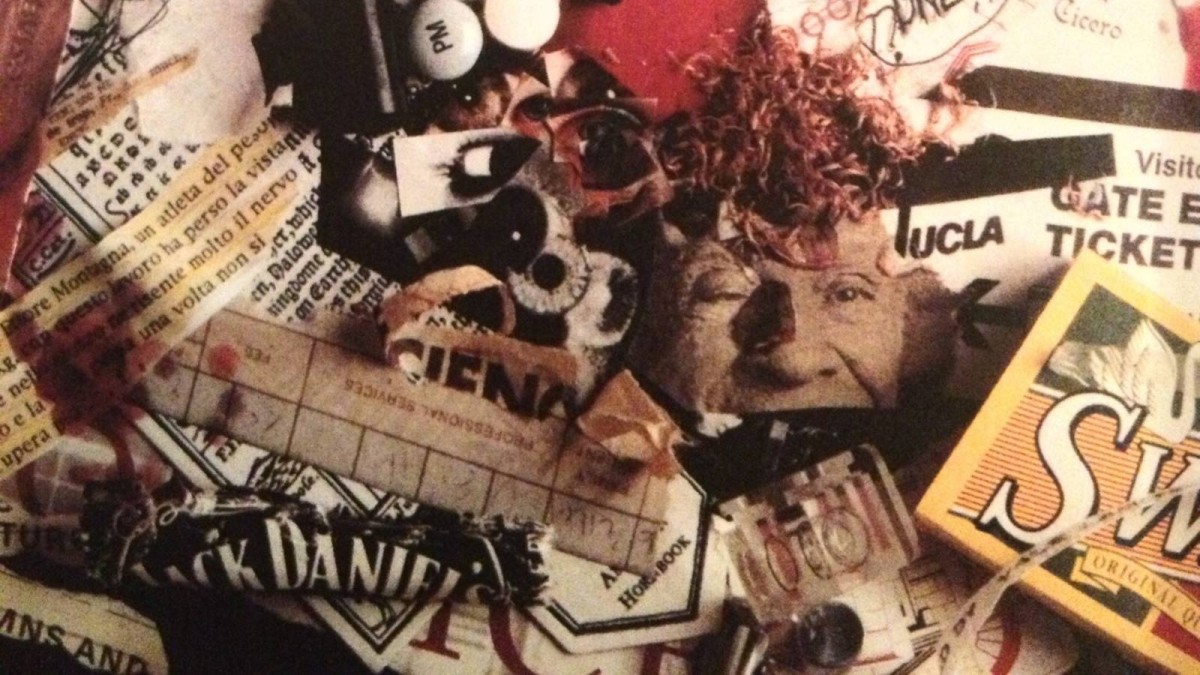
Though House of Leaves is frequently listed among the best horror novels ever, it is infamous for just how unwieldy the text gets. Footnotes within footnotes, upside-down or backward text, codes, and strange page layouts are all utilized in abundance. Additionally, House of Leaves frequently challenges readers to flip between the front of the book and the back to look at various citations and pieces of evidence related to the main events of The Navidson Record.
Far from just a gimmick or being weird for the sake of being weird, these elements enhance the book immensely, cluing readers into the psychological state of the characters and making the entire project feel just as labyrinthine and otherworldly as the house on Ash Tree Lane. Every main character in House of Leaves is mentally lost in some way, and the book's form mirrors that. Additionally, the boundary-pushing elements help cement the titular house's power. This is an entity so vast and powerful that it is able to reach out and warp the very text itself.
Ultimately, the book is a satire of academia, so the dense writing and endless mountain of footnotes are purposeful inclusions meant to be hostile to readers. This is why the book's opening line is so perfect.
House of Leaves' Opening Line Is A Perfect Symbol Of What Makes The Book Special

As is fitting for the novel's avant-garde style, House of Leaves uses its opening dedication page to set up every esoteric style choice and hostile piece of design.
This is not for you.
With just five words, Danielewski immediately begins his opening assault on the reader, telling them upfront that this work of fiction was not written for their enjoyment or understanding. This also effectively signals to readers that the novel is a personal project that will dive deep into the psychology of its characters. If readers get something out of that, then great, but the novel is clear that this is not its goal or purpose.
There is a concept in architecture called hostile design. It is essentially architecture that is purposefully made to be unfriendly to certain groups. Slanted benches and spikes on flat surfaces are examples of architectural elements designed to make it difficult or impossible for homeless people to sleep.
In its own way, House of Leaves is a literary example of hostile design. The layout of its pages and the sometimes meandering prose are all intentional writing choices meant to alienate readers. Every layer of the story is told from the perspective of an unreliable narrator, making it essentially impossible for readers to decide what is actually "real" within the confines of the story. Readers can and have tried to interpret House of Leaves, to pick it apart like a puzzle and 'solve' it, but that makes them fall into the same trap as Johnny and Zampanò, jumping at shadows and trying to find their way out of a maze with no exit.
Of course, none of this would matter if House of Leaves didn't back these bold stylistic choices up with some truly terrifying writing. Luckily, Danielewski proves more than up to the task. At its best and darkest, House of Leaves builds a sense of slow-boiling dread unlike anything else.
One of the true great American novels, House of Leaves is a towering achievement in literature whose influence is still being felt to this day. The recent liminal horror trend that helped inspire The Backrooms can trace much of its DNA back to House of Leaves, as can the new analog horror genre. As its first line clearly illustrates, House of Leaves isn't for everyone, but for those willing to try something artsy and experimental, it's an experience like no other.
What's Your Reaction?
 Like
0
Like
0
 Dislike
0
Dislike
0
 Love
0
Love
0
 Funny
0
Funny
0
 Wow
0
Wow
0
 Sad
0
Sad
0
 Angry
0
Angry
0








Comments (0)