

5 Nintendo Games You Need to Play at Least Once

Published Aug 21, 2026, 4:00 AM EDT
Some of the most pivotal games in Nintendo's modern history
 Image: Nintendo
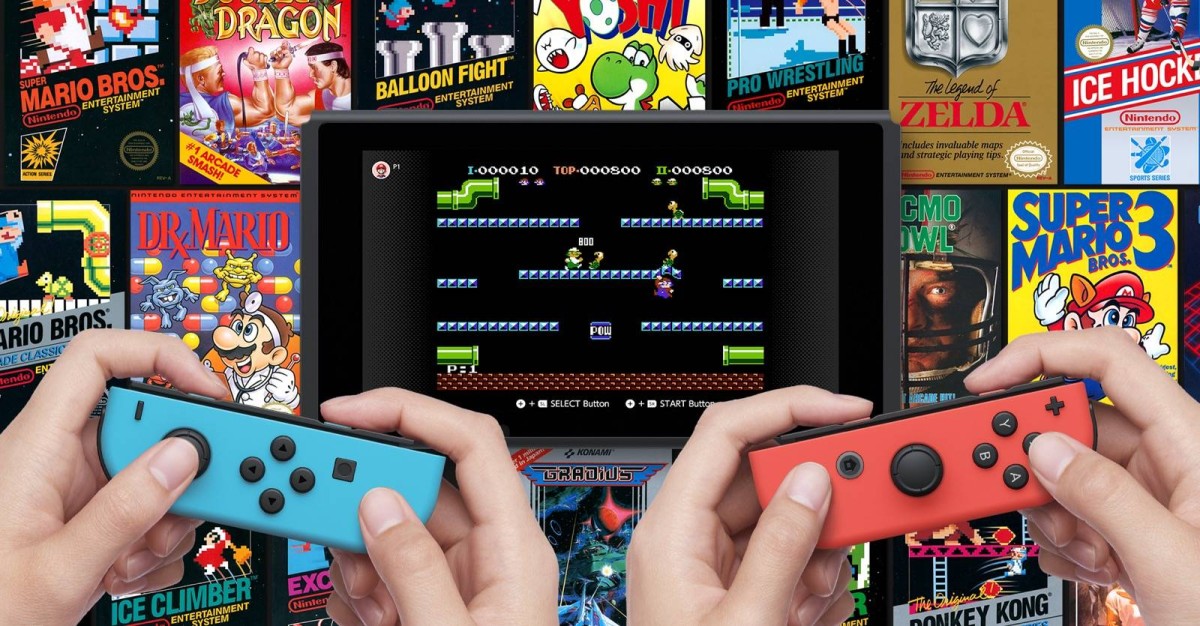
Nintendo's reputation for decades of certified bangers is well-earned, though between new releases and the classics that hog all the attention, it's easy to overlook some of the company's more influential games. Maybe you're young and missed out on entire generations of essential games, or you're (comparatively) old, like me, and got into video games later in life. Whatever the case, learning about them through cultural osmosis isn't quite the same as playing them yourself.
I'm not gonna tell you to go play Super Mario Bros. 3 or A Link to the Past. You should play them, but you've probably heard that from a dozen other people already. This list is more interested in examining a few pivotal games from Nintendo's history that marked turning points for the company, either for the risk involved in making them or by representing a high point in creative design that informed Nintendo's future strategies. All of these are available in some form or another on modern hardware, either via remakes, Nintendo Switch Online's retro library, or even on PC thanks to later ports.
5 Metroid Prime (Remastered on Nintendo Switch)
 Image: Retro Studios, Nintendo/Nintendo
Metroid Prime's a bit of an obvious choice given its popularity, but it's no less deserving of a recommendation. It was a big, potentially risky step forward, a bid to make an obsolete franchise relevant again, and Nintendo adopting a genre that its competitors had dominated in that generation. The gambit paid off spectacularly. Metroid Prime is an exceptional case study in level design and integrating storytelling and puzzles in a type of interactive media that's usually hostile to those things. In other words, it proved FPS games can be smart and shoot-y at the same time without sacrificing anything. It also set a precedent for how Nintendo would approach its other lagging franchises in later years, like Donkey Kong Bananza and Breath of the Wild — redefining them with big creative leaps that defied expectations.
4 Pikmin (Gamecube, NSO)
 Image: Nintendo EPD/Nintendo
Nintendo played it safe with the GameCube. You might think otherwise, what with Mario Sunshine sending the plumber on a goop-cleaning vacation and The Wind Waker turning Link and Zelda into cartoons. These were still Mario and Zelda games, though. And what is Luigi's Mansion, but a Mario is Missing that doesn't suck? Pikmin was something new and wildly different than anything Nintendo had developed for years: A real-time strategy game (a genre that, nearly three decades later, remains quite niche) starring a corporate lackey and an army of sentient, expendable vegetables.
The idea is that the lackey crashed on an alien planet and needs to rebuild his ship, which he can't do alone because everything is gigantic. And he has 30 days before he dies. That's where the sentient veggies come in, to lend a… well, whatever they use in place of hands, by finding and grabbing ship parts and avoiding the murderous indigenous fauna in the process. It's a giant puzzle with a timer, basically, and it makes you feel really, really bad when one of your veggie friends dies. It also features some of Nintendo's best level design, the kind of work that makes me wish the company developed more puzzle games.
3 Fire Emblem (Game Boy Advance, NSO)
 Image: Intelligent Systems/Nintendo
If you liked Three Houses and are excited about Fortune's Weave, you can thank Fire Emblem: The Blazing Blade (just plain Fire Emblem for everywhere outside Japan). It's the seventh Fire Emblem game and the first that Nintendo launched internationally, after years of assuming the series' difficulty would alienate American and European audiences. Maybe it would have. Intelligent Systems found success with Advance Wars a few years before, but that was a different story. Your COs can't die, for one thing, and (on some maps) you can always rebuild units. Fire Emblem's permadeath and lengthy, large-scale tactical battles were a different matter, but Nintendo wanted to make this one of its major franchises. So, Lyn's campaign at the start of Blazing Blade functions as an extended tutorial before you're tossed into the more complicated main story.
As stories go, it's one of Fire Emblem's weaker entries. That said, few video game villains have come close to outshining the absolute monster that is Sonia, a callous assassin-slash-abusive-mother (eat your robotic heart out, Shion from Overwatch). But Blazing Blade introduced what would become the baseline standard of Good Fire Emblem to a global audience for the first time, including things like:
- Fog of war
- Devilishly inscrutable requirements for recruiting certain characters
- Multi-part missions with varied objectives
- Vicious enemy AI
- Surprise depth from support conversations between seemingly incompatible characters (including a few surprise queer relationships. In 2003!)
- Unexpected reinforcements
- Complex maps that demanded careful positioning, not just moving entire armies from point A to B
2 Chrono Trigger (Steam)
 Image: Square Enix
Is it a Nintendo game if it also appeared on PlayStation and Steam? Well, I'm making the guidelines for this article, so: Yes. But seriously, Chrono Trigger epitomized the kind of RPG people expected to play on Nintendo platforms. It was the best of Final Fantasy and Dragon Quest, with innovations that were, at the time, unlike anything Square or its competitors had put out before — visible enemies, position-based combat, dungeons that weren't just corridors with monsters and switches. The story was, and still is, top-notch, an unusual blend of genres and character types (and time travel) that distinguished it from practically everything else in the genre. And it was the last of its kind on a Nintendo console for generations. The RPG crowd migrated to PlayStation, and Nintendo only dabbled in that kind of game over the next decade with Paper Mario and Golden Sun. The mindset that Nintendo wasn't for RPGs eventually ended, but it took a concerted effort to change it.
1 Xenoblade Chronicles (Remastered, Switch and Switch 2)
 Image: Monolith Soft/Nintendo
Okay, if you don't like RPGs, then you probably shouldn't play Xenoblade Chronicles just because it's a very long game. It's also an exceptionally important one in Nintendo's history, though. Nintendo had little intention of releasing Xenoblade Chronicles in North America, despite having published it in Australia and Europe. A concrete reason for that choice never manifested, but the general idea was that Nintendo wanted to capitalize on the Wii's reputation as a console for casual players. The audience, so the theory went, just wasn't there for big RPGs.
Turned out, that was wrong. A fan group called Operation Rainfall gathered a fair amount of support and relentlessly petitioned Nintendo to release Xenoblade Chronicles in North America, which it did in 2011. The game was a hit. The 3DS further proved Nintendo's American audience had an insatiable appetite for RPGs. And now, three Xeno- games and multiple ports and remasters later, Monolith is an integral support studio working with Nintendo, and a new Xeno- game headlined the June 2026 Nintendo Direct.
What's Your Reaction?
 Like
0
Like
0
 Dislike
0
Dislike
0
 Love
0
Love
0
 Funny
0
Funny
0
 Wow
0
Wow
0
 Sad
0
Sad
0
 Angry
0
Angry
0







Comments (0)