

How to Photograph Products in Water and Still Control the Splash
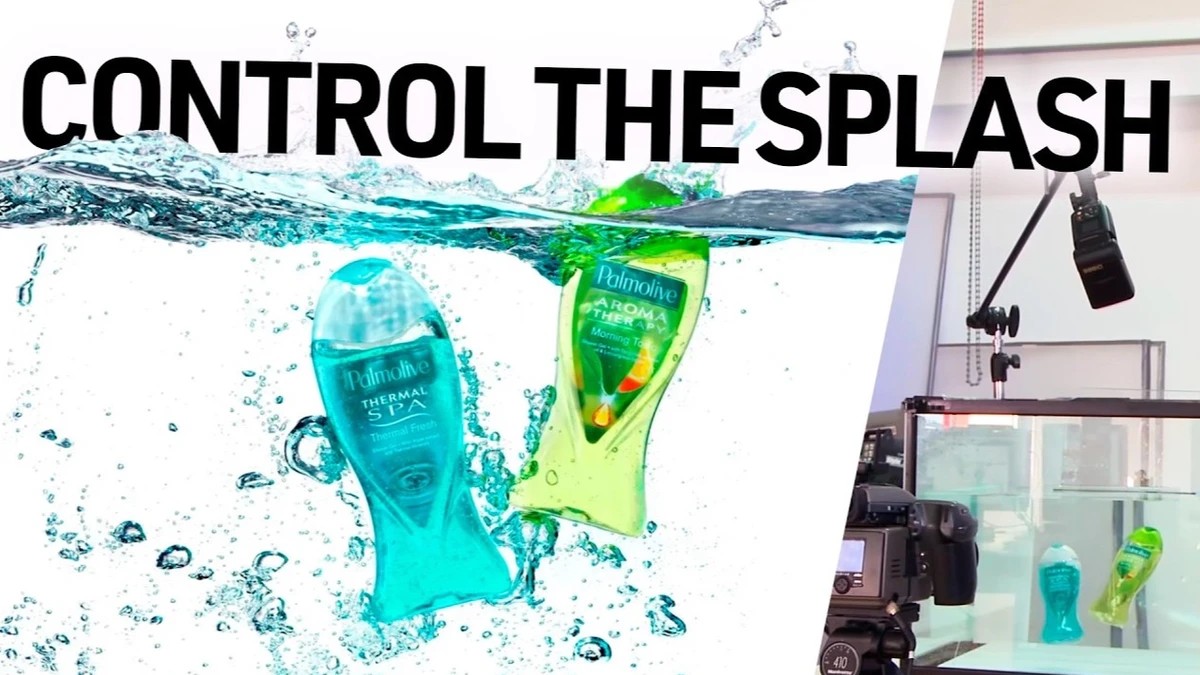
Shots of shampoo bottles plunging into water, wrapped in bubbles and topped with a crown of splash, look like luck caught at the right instant. Most of that look comes from planning, and the planning behind it answers a question you run into across product work: how to keep a subject exactly where you want it while everything around it moves.
Drop a bottle into a fish tank and it will tumble, float, or land on its side, never in the composition you sketched. Karl Taylor of Visual Education gets around this by gluing the products to a clear acrylic sheet with the same silicone sealant used to build aquariums, weighting them down, and letting the bond cure for 24 hours. The whole sheet then goes into the tank, so the bubbles and splash still form naturally around the bottles while their spacing and height stay locked. Taylor made two sheets with slightly different arrangements to test placement lower in the water. A white acrylic panel at the bottom of the tank bounces light back up, and a rubber mat underneath cushions the impact so a sharp corner doesn't crack the glass and put around 50 gallons of water on the studio floor.
The lighting plan changed once testing began. Tracing paper on the back of the tank with flash pushed through it produced a central ball of glow instead of the clean white background Taylor wanted, so he switched to two Elinchrom 600 heads lighting a white wall behind the tank. The motion freezing comes from speedlights: four Nissin Di866 units plus a pair of Canon Speedlite 580EX flashes, all of them older gear, since this shoot comes from Taylor's archive. One Nissin fires down through the water's surface at 1/128 power, and as ripples form, it throws the same dappled light you see on the bottom of a swimming pool across the labels. Two more shine through tracing paper on one side at quarter power to give the bottles shape, with the lens at f/16 for depth of field and a single transmitter triggering one flash while the rest fire on their optical slaves.
On most speedlights, turning the power down shortens the burst of light, because the flash cuts the tube off sooner instead of firing a weaker pulse for the same length of time. That's why small, inexpensive flashes at low settings can stop rising bubbles cold, while plenty of studio strobes at full power leave a soft trail on fast-moving water. The same logic runs through the whole setup: fix every variable you can, so the only thing left to chance is the one element you want to be unpredictable. Glue holds the bottles, flags and white surfaces control the light, and the water gets to be wild. Commercial liquid photography has worked this way for years, with dozens of frames shot under identical conditions so splashes, bubbles, and highlights can be combined later. That approach carries over to pours, falling fruit, powder explosions, and any other shot where you can't choreograph the action but can hold everything else still.
A tank creates problems a tabletop never does. Light hitting the camera or the room can reflect in the front glass, so Taylor shields the speedlights with black card. If that isn't enough, he suggests building an oversized lens hood, a black shield running from the lens out to the tank's edges. The person doing the dunking wears a white suit to keep his arms and body from reflecting in the surface. Reddish-brown floorboards were reflecting color onto the underside of the water's surface, which led to white polystyrene laid across the floor, and he suggests a tank without black edges if you're buying one, since those can cause trouble too. Between takes, a squeegee clears the worst of the droplets off the glass, and a plain frame of the background gets shot for cleanup work in Photoshop later. The light on the labels shifts with every ripple, too, so how much reaches the products depends on the turbulence at the surface in that exact moment.
Taylor ends with two frames to build from. He loves one for its bubble detail, the shafts of refracted light across the main label, and a wave crossing the surface, and he prefers the other for its splashes, which he plans to composite onto the first. He also shot safety frames of the labels and the empty background, then a set of dry frames with no water in the tank to capture more shape and tonal range in the bottles.
One happy accident turns up in the video's review of the results: light from the top speedlight, refracted through the water, happened to fall right across the brand name, as if it had been lit on purpose.
What's Your Reaction?
 Like
0
 Dislike
0
 Love
0
 Funny
0
 Wow
0
 Sad
0
 Angry
0












Comments (0)