

5 Square Enix SNES Games That Were 10/10 Masterpieces

Published Aug 7, 2026, 9:00 PM EDT
Ben Brosofsky has been writing for Screen Rant since 2022 and editing since 2024. He graduated from Vanderbilt University with a Bachelor's in Cinema & Media Arts. Writing serves as a much-needed distraction from tackling a backlog of Steam games that will never be surmounted.
Square Enix has a storied history in gaming, but the RPG powerhouse was arguably at its best during the SNES era. At the time, Square and Enix were still two separate companies, as the merger didn't happen until the 2000s. While all of those games are now under the overall Square Enix portfolio, many fans would argue that the publishers were at their absolute best when they were still operating independently.
Wherever you fall in that debate, there's no denying that Square and Enix were both releasing excellent games on Super Nintendo. Decades later, the best titles arguably remain unsurpassed, continuing to inspire countless games that strive to achieve the same magical quality.
Secret Of Mana

RPGs in the SNES era tended to be dedicated to turn-based combat, but one of the most notable exceptions was Secret of Mana. As a sequel to the Final Fantasy spin-off Final Fantasy Adventure, Secret of Mana featured true action combat that could be paused and manipulated through the Ring Command menu.
For those more accustomed to Zelda than Final Fantasy, Secret of Mana bridges the gap perfectly, providing an adventure experience that blazed a trail for others to follow. Follow they did, and its direct successor, Trials of Mana, might have even taken the formula to greater heights. Unfortunately, Trials of Mana wasn't localized in the West at the time of its release, making Secret of Mana the only SNES experience that most players had with the series outside of Japan.
It might go without saying for a Square game of the era, but Secret of Mana is beautiful, with a lush, vibrant world that effectively lives up to its evocative cover art. The music is just as compelling, somehow managing to convey the richness that you'd expect from an orchestral soundtrack within the limits of the SNES sound chip. Secret of Mana's story isn't on par with Square's best, but its simple charms ultimately suit the game well, avoiding any need to dock points from a 10/10 score.
Terranigma

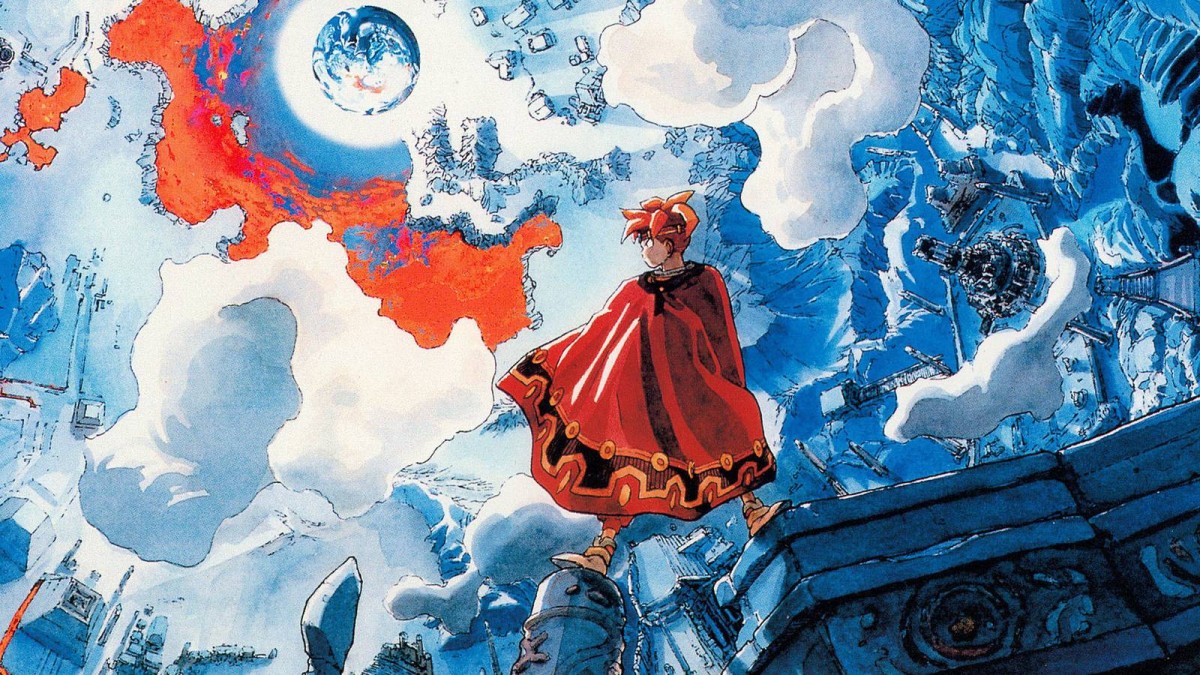
Terranigma was developed by frequent Enix partner Quintet, which was notably responsible for Illusion of Gaia, but this game proved to be much more unusual. Rather than featuring the standard tropes of an RPG adventure, Terranigma takes on grand ideas involving the resurrection of life on a hollow Earth.
Like Secret of Mana, Terranigma embraces action combat, and it's frequently drawn comparisons to games like Link to the Past along with RPGs of the era. In this case, the combat isn't the game's main selling point, although it still provides a nice change of pace from other RPGs of similar ambition. Whether the gameplay is to your liking or not, though, there's more than enough reason to call this a masterpiece.
Terranigma's unusual plot is rich with ambition and emotion, never shying away from a punch in the gut when it could add to the story. A compelling atmosphere complements this journey, as does a fantastic soundtrack (yes, you'll keep hearing this about all the SNES greats). Across the course of the adventure, there's an awe-inspiring variety of interesting places to see, and the knowledge that new sights are always just around the corner makes its long succession of dungeons feel worthwhile.
Dragon Quest 5

Among all the Enix-published games on Super Nintendo, the one that most obviously took things to the next level was Dragon Quest 5. Technically, this never exactly released on the Super Nintendo, as it only made it to the Super Famicon, the Japanese equivalent. The West missed out, sadly, with faltering global sales and the challenges of localization and programming getting in the way of Enix ultimately choosing to bring the game over.
Luckily, Square Enix picked up the slack years later, bringing the DS remake of the game worldwide in 2009 and porting the game to Android and iOS in 2014. After all this time, everyone outside Japan could finally see what they were missing out on, and it turned out to be quite a lot.
Dragon Quest 5 set a new bar for the franchise's storytelling, covering a story that spans childhood and adulthood to deliver a surprisingly mature look at the life of its hero. It also avoids the typical chosen one approach, focusing largely on a character who is more wrapped up in circumstances than fundamentally destined to lead the way. The way it ultimately delivers on the trope is clever and memorable, adding a massive payoff to the game's overall narrative approach.
Final Fantasy 6

Over the decades, it's become increasingly obvious that the debate about the best Final Fantasy game will never be settled. One of the eternal top contenders, however, is Final Fantasy 6, which served as the perfect swan song for the franchise's 2D era.
At a glance, it's immediately easy to see some parts of FF6's attraction. The game is absolutely gorgeous, milking the potential of SNES art for everything it's worth. A setting that leans into magical technology stands apart from most contemporaries with a steampunk feel, and the pixelated renditions of clunky mechs and brassy airships seared their way into many fond childhood memories.
FF6's beauty isn't just skin-deep, though. Beneath its beautiful exterior, FF6 houses one of the best stories in the franchise, providing a cast of well-realized characters with their own emotional stakes. The second half of the game represents a significant shift from the first half, preventing its journey from ever reaching the point of staleness. Topping Final Fantasy 4 and 5 was a tall order at the time, but FF6 arguably managed it.
Chrono Trigger
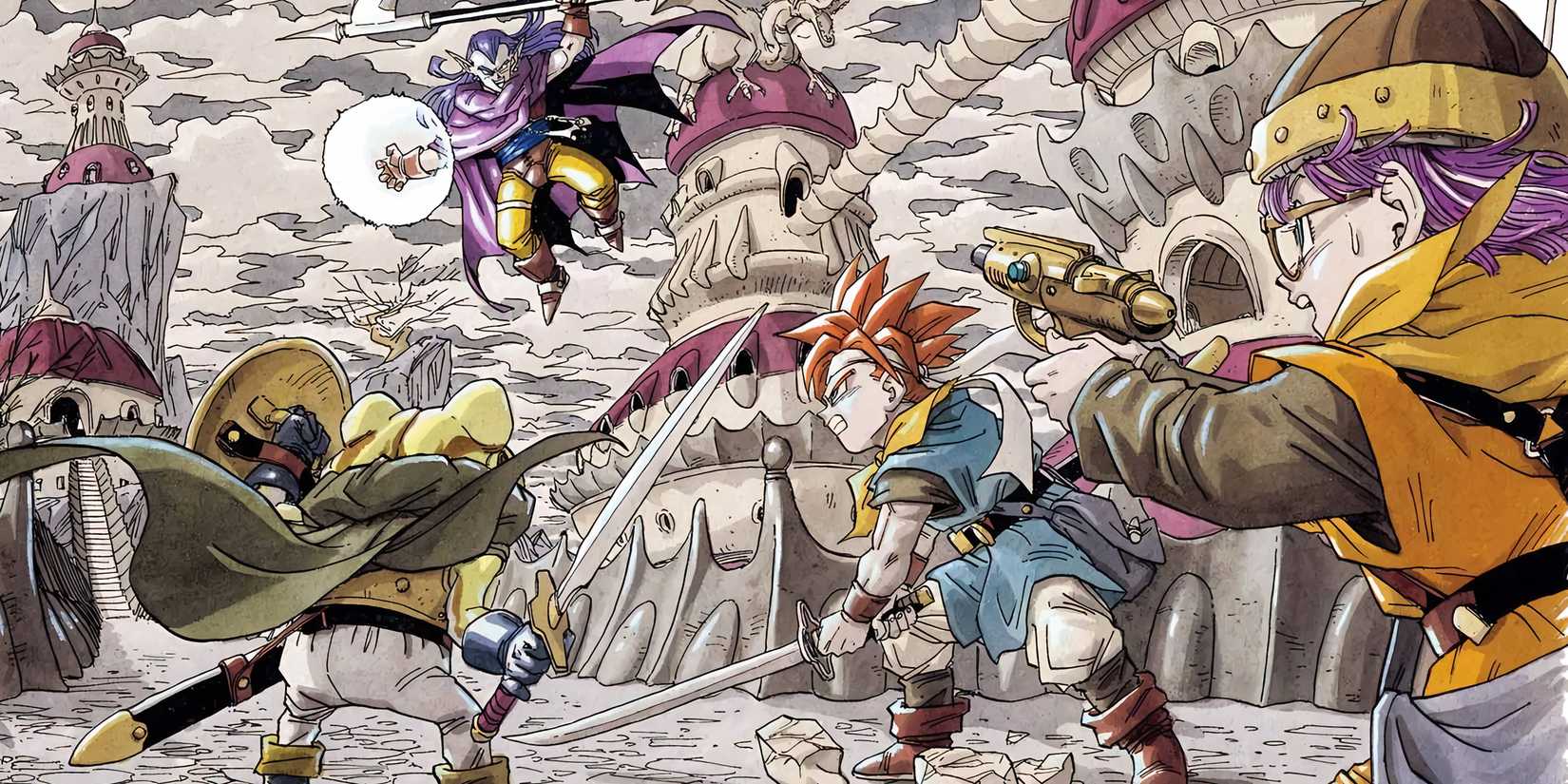
Everything always comes down to Chrono Trigger. At this point, the story of its development is a tale as old as time. Square assembled a dream team of Final Fantasy creator Hironobu Sakaguchi, Dragon Quest creator Yuji Horii (making this, in a way, a true marriage of Square and Enix talents long before the merger), and Dragon Ball creator and Dragon Quest character designer Akira Toriyama. The rest, as they say, is history.
Chrono Trigger builds on the effective Final Fantasy formula, featuring staples like active-time battles, but it also forges its own path. A time-travel story takes a cast of memorable characters on a consistently exciting quest, and a bespoke approach to combat encounters dodges the exhaustion that endless random encounters can induce. It's also undeniably gorgeous, with detailed pixel art and Toriyama's fantastic character designs crafting a truly enveloping world.
If that's not enough to sell it, the list keeps going. Final Fantasy 4 lead designer Takashi Tokita co-directed and co-wrote the game, and lead writer Masato Kato would go on to write for Final Fantasy 7 and Xenogears. Legendary composer Yasunori Mitsuda made his debut crafting the game's music, which delivered rich atmosphere and a sweeping sense of adventure.
Ultimately, almost anyone who loves RPGs will struggle not to love Chrono Trigger. The game remains a massive influence on the genre today, and countless indie titles cite it as a key inspiration. Many great Square Enix SNES games come with certain quirks that simply have to be tolerated, but in the case of Chrono Trigger, everything is exactly as it should be.

Date Founded April 1, 2003
What's Your Reaction?
 Like
0
Like
0
 Dislike
0
Dislike
0
 Love
0
Love
0
 Funny
0
Funny
0
 Wow
0
Wow
0
 Sad
0
Sad
0
 Angry
0
Angry
0








Comments (0)